
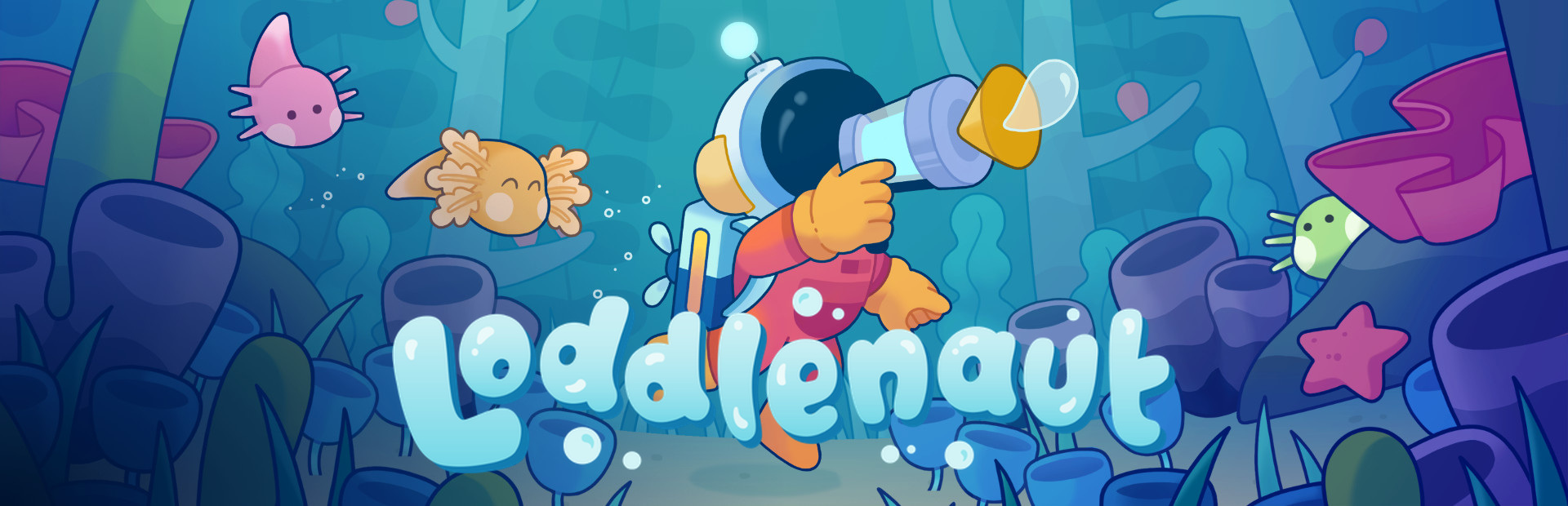
About Loddlenaut
On the ocean world GUP-14, an interstellar custodian is sent to undo the pollution left by the departed corporation GUPPI. Clean the water with specialized gadgets, recycle recovered waste into better equipment, and care for axolotl-like loddles whose needs and growth are shaped by the habitats you restore.
Loddlenaut begins with a cleanup assignment on GUP-14, an ocean planet abandoned after the operations of GUPPI, a spacefaring corporation whose products range from soda to spaceships. The player is an interstellar custodian arriving in waters clouded by oil, litter and toxic goop. Below the surface, the company's buildings, ships and machinery remain as submerged wreckage, turning the cleanup route into an environmental record of the place that was left behind. The story is conveyed through these ruined facilities and the clues found while clearing them, rather than through a cast of human characters or a combat campaign. GUPPI's corporate debris gives each task a concrete cause: polluted scenery and scattered waste are not abstract obstacles, but traces of the industry that has withdrawn. As the custodian works, the contrast between murky water and recovering ecosystems supplies the central arc. The aim is not simply to collect a quota of objects; cleaning makes habitats viable for local creatures and returns visible life to spaces that initially appear damaged and quiet.
The ocean is organized as an open world of distinct biomes, including a kelp forest and a deep-sea trench. Their differences give exploration a change of scale and scenery, while the same broad job—remove contamination, recover debris and make the environment habitable—connects the regions. Polluted plants and surfaces can be cleaned with the bubble gun, and loose objects such as discarded corporate rubbish can be collected for recycling. The submerged remains of GUPPI provide landmarks and environmental clues as the custodian moves through the water. A base gives the player a place to return with recovered materials and to build a home for loddles. Upgrades to the gun and jetpack open new interactions and areas, so the world expands alongside the worker's tools. This progression makes return trips meaningful. A previously inaccessible stretch can become reachable with improved movement, while a different pollution type calls for an appropriate gadget. The result is a connected cleanup expedition in which traversal, discovery and restoration feed into one another.
Movement takes place underwater in a diving suit, with a jetpack used to boost around the environment. The suit's oxygen supply creates a practical limit on how long the custodian can stay out before returning to a refill point. Oxygen-producing bubbles from plants offer replenishment in the world, and crafted oxygen rings can provide a more deliberate support point during a longer trip. The rings matter because exploration is not just a matter of swimming in a straight line: the player carries collected waste, seeks out polluting patches and may need to cross between the base and remote parts of a biome. Jetpack upgrades extend boosting range and can unlock routes or interactions, tying movement improvements to the same recycled-material economy that powers cleanup tools. The combination gives the ocean a light survival structure without turning the assignment into combat. Planning a route involves considering air, carrying capacity and what equipment is useful for the next area. Cleaner habitats and plant bubbles can make travel easier, so environmental repair also changes how the custodian navigates the waters.
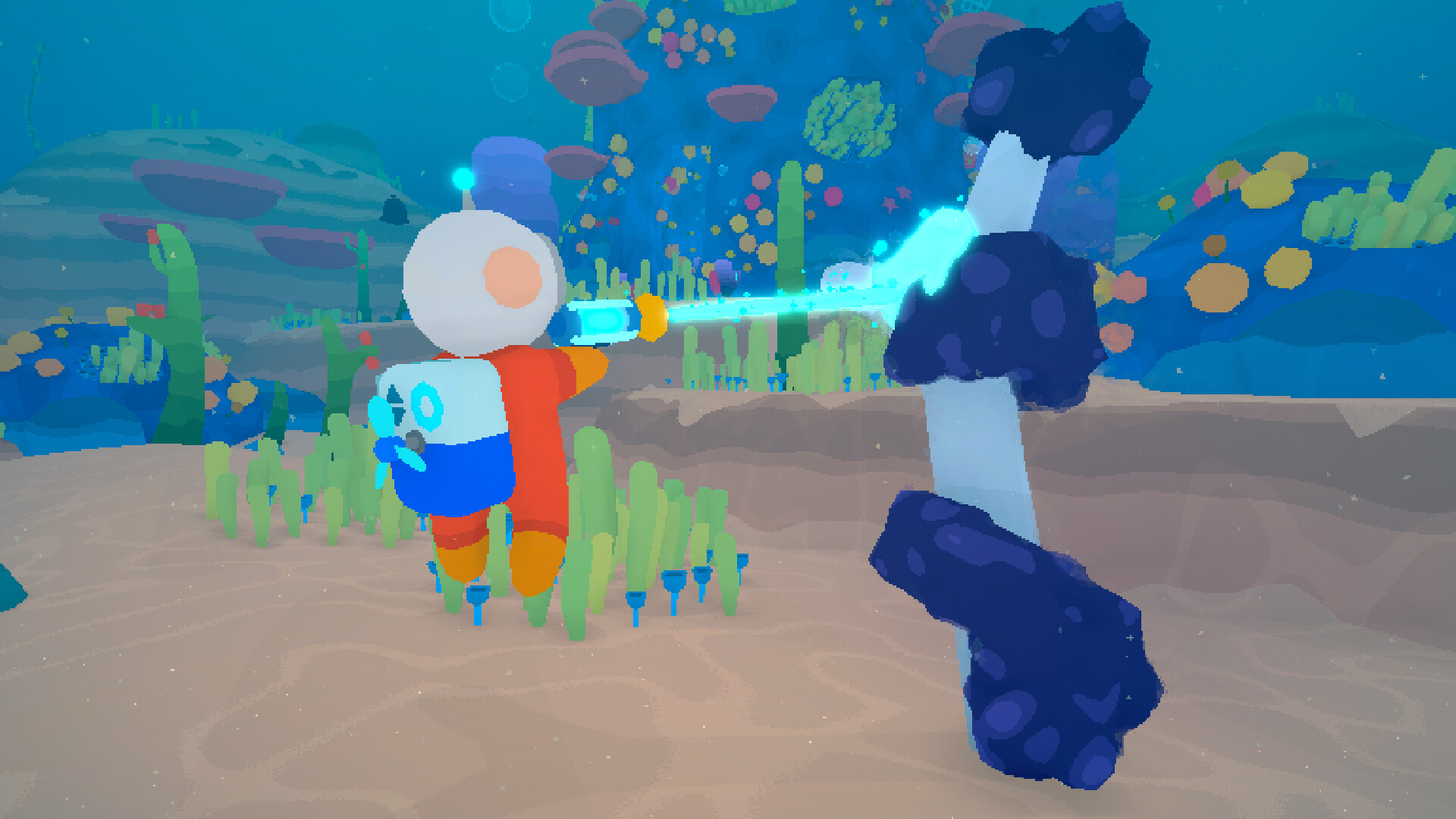
The main cleanup tool is a bubble gun. It captures floating debris and removes goop from contaminated surfaces, giving the player different targets to identify while moving through a biome. Specialized gadgets unlock to handle different forms of ocean pollution, developing the single basic cleaner into a kit for varied restoration jobs. Rather than treating every patch as the same interaction, the equipment asks the player to match a tool to the pollution encountered. Waste collection also has a second function: rubbish is taken back to recycling machines, where it is converted into materials. That return trip links the hands-on cleaning to upgrades and crafted support items. The effect is a loop with a visible before-and-after result: clean an area, gather what can be salvaged, recycle it, then use the resulting resources to improve the next outing. No conventional enemy combat system is described for the game; the challenge comes from navigating polluted environments, managing the suit and choosing how to approach the different cleanup tasks.
Recycling is the bridge between local work and longer-term progression. The recovered trash is not merely removed from the scenery; it becomes material for useful items and equipment improvements. Upgrades to the bubble gun and jetpack unlock new interactions and areas. Additional support items can make the routine more efficient, including oxygen rings for diving and tools that help with cleanup or loddle care. The broader progression is thus expressed through capability: stronger or more specialized equipment lets the custodian tackle pollution that could not be handled before, while improved movement carries them farther through the ocean. The later Goddles update adds gardening, seedling collection and biome pollution resistance, alongside a Global Pollution Tracker and an Inventory Capacity Module. Those additions extend the established relationship between resource use and ecosystem health: gardening supports habitats, the tracker helps locate remaining contamination, and extra carrying room changes how much can be brought back before a return to base. The update also ties gold tools to milestones, giving completion objectives a visible equipment reward.
Loddles are axolotl-like aquatic aliens who need protection from polluted water. The player can clean goop from them, feed them aquatic fruits and help make a biome habitable enough to become a home. Diet affects how a loddle grows, producing different forms, traits and abilities; caring for them is therefore linked to both exploration and the condition of the surrounding environment. A cleaner area becomes a place where local creatures can live again, giving the restoration work a visible purpose beyond the changed scenery. The loddles can eventually be released back into the wild once they are strong enough and the water is cleaner. The care loop also tracks a loddle’s cleanliness, hunger and happiness. A suitable home depends on purifying a biome, and meeting these needs helps the creatures evolve. It also describes naming companions and crafting toys and snacks. The Loddlepedia update adds a record of discovered evolutions, new abilities and personality traits. Together, these systems make creature care a parallel progression track: the player restores habitat while learning what different diets and needs produce.
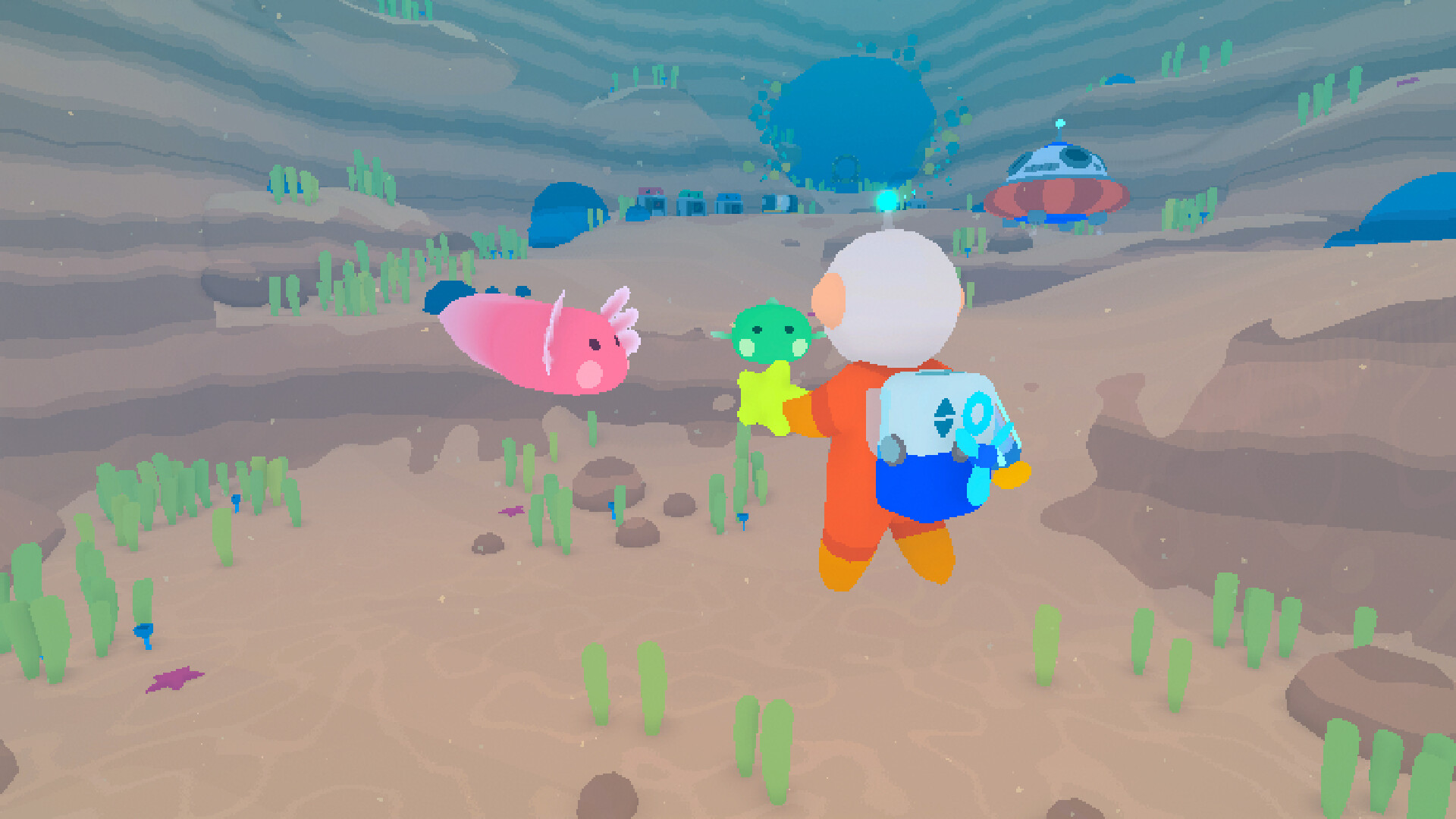
The presentation centers on colorful underwater environments, animated alien wildlife and the contrast between contaminated water and restored plant life. Its premise combines an environmental cleanup adventure with virtual-pet care: Moon Lagoon's press kit describes early pet simulations such as Tamagotchi and the Chao Garden among the inspirations, alongside aquatic exploration games. That combination shapes the pace of play. The custodian spends time moving through open water, tending to loddles and returning to familiar habitats as better tools become available. The PC release is a single-player game for Windows and macOS, and a separate Nintendo Switch edition is also available. Later updates, including Goddles and Loddlepedia, add areas, gardening, mutations and creature-record features. The soundtrack is sold separately from the game. The Goddles update also expands the ocean with three caves, each holding a lost loddle with a rare cosmetic mutation, and a hidden sixth biome called Goddle Grotto. Its three mythical Goddles sit alongside the new gardening system, where collected seedlings grow flora that increases pollution resistance in each biome. These additions give restoration a longer arc: planting supports habitat stability while discovering the caves adds new creatures to seek out.
- Developer
- Moon Lagoon
- Genre
- Adventure; casual; indie; ocean cleanup adventure