
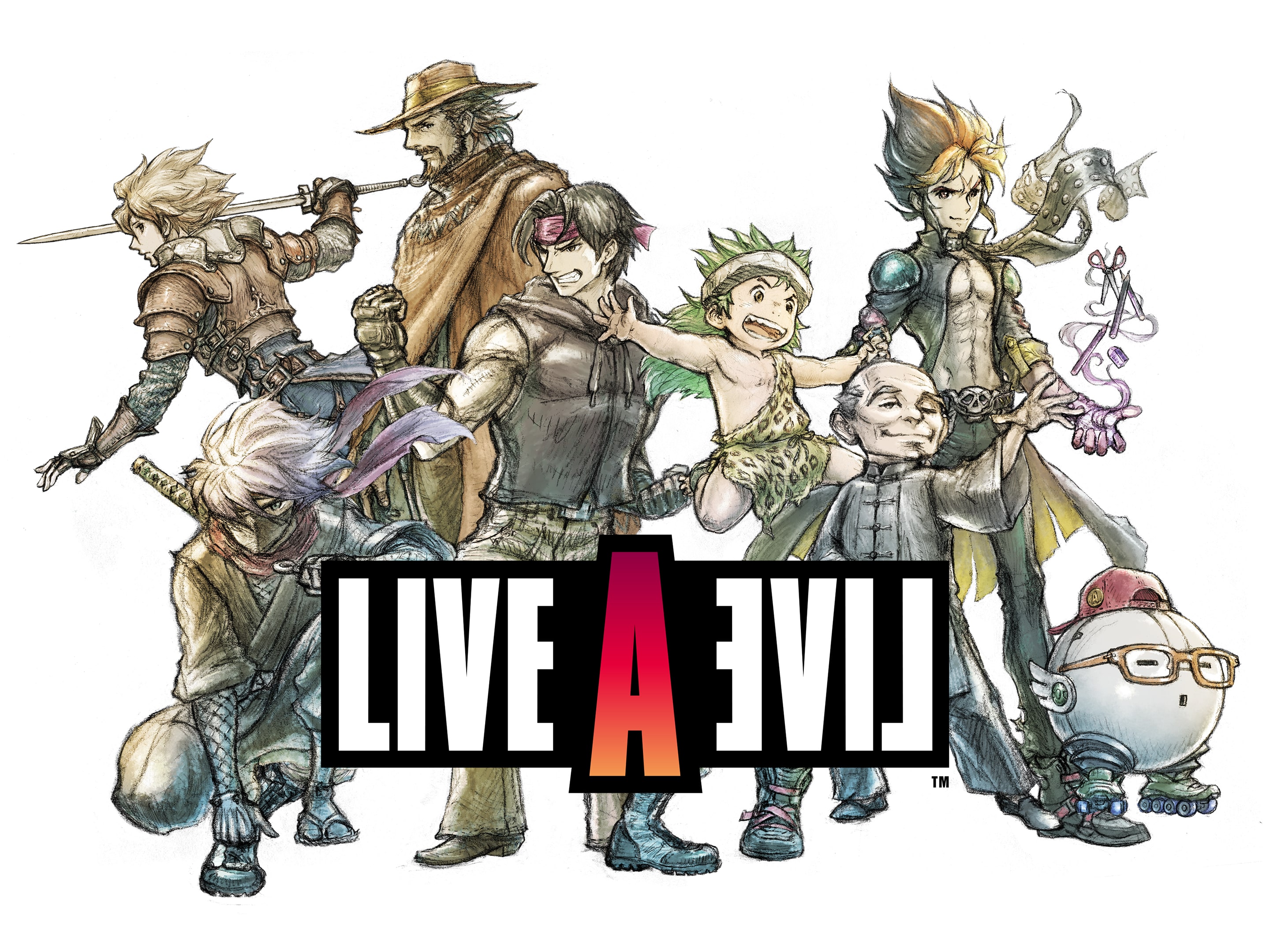
About LIVE A LIVE
Seven heroes inhabit separate eras, from a wordless prehistoric wilderness to a cargo ship drifting through space. Their chapters can be tackled in any order and use different approaches to exploration, stealth, crafting and combat. The Steam remake retells the Super Famicom RPG in HD-2D, with rearranged music and English or Japanese voice audio.
LIVE A LIVE is an anthology role-playing game built from seven initially selectable stories, each following a different protagonist in a distinct historical or speculative setting. Pogo comes of age among a prehistoric tribe in a world without spoken language; the Sundown Kid rides into a frontier town threatened by outlaws; and the Earthen Heart Shifu seeks a successor to his kung fu tradition. Oboromaru, a shinobi in Twilight of Edo Japan, undertakes a secret mission, while present-day fighter Masaru Takahara wants to become the world's strongest warrior. Akira, a rebellious youth in the Near Future, becomes entangled in a conspiracy, and Cube, a newly built robot aboard the cargo freighter Cogito Ergo Sum, is caught up in a crisis among its crew. These lives are not simply seven chapters of one conventional party's journey: each has its own cast, setting, goals and rules. The shared structure invites the player to move among different kinds of RPG story before their broader relationship becomes clear.
The chapters can be selected in any order at the beginning, and progress is saved separately when the player leaves one story for another. That lets the anthology alternate between its different tones and mechanics rather than requiring every episode to be completed in a fixed sequence. Each era is a contained environment with its own locations and local concerns. In the Wild West, the Sundown Kid helps residents prepare for an outlaw attack; in Imperial China, the Shifu searches for someone to carry on his teachings; in the Distant Future, Cube moves through a spaceship where disputes among the crew deepen the danger. Pogo's prehistory relies on sensory clues and survival, while Akira's setting brings psychic powers into a modern conspiracy. The player explores, talks to characters and advances each chapter according to its particular objective. The recurring chapter select makes these sharply different settings part of one game, while allowing their separate progress to remain intact when attention shifts to another era.
Exploration changes with the protagonist. Pogo cannot rely on conversation in his wordless world, so scent helps him track animals and find useful resources; items gathered in the wilderness can be used to craft weapons and armour. In Akira's Near Future, psychic ability gives him a way to read people's minds, providing information as he investigates the surrounding conflict. Oboromaru's castle mission is organized around infiltration: the player can fight through guards or use concealment and stealth to evade them. The Wild West episode uses its town and its residents as part of the preparation for a confrontation, with the player placing traps before the outlaws arrive. By contrast, Cube's isolated spaceship story emphasizes exploration and dialogue as the robot investigates events aboard the freighter. These differences make navigation and interaction serve the local premise instead of acting as identical routines in every chapter. The game does not present one universal traversal skill tree; it gives each protagonist a way to engage with the spaces that matter to their story.
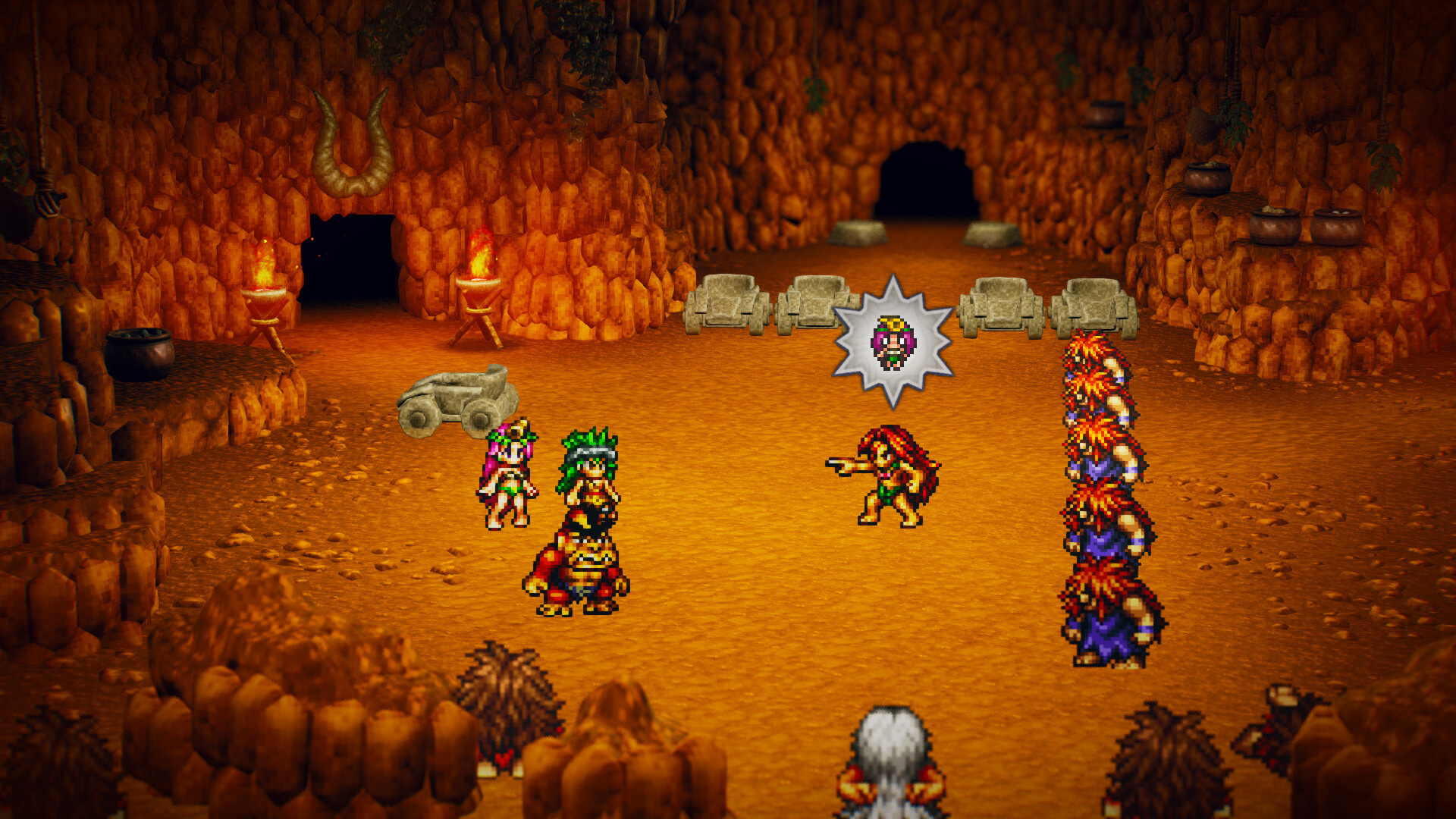
Most chapters use turn-based battles on a grid, where position, attack range and the direction of an enemy's threat affect what a move can accomplish. Characters and foes occupy spaces on the same battlefield, and moving into a useful position is part of selecting an attack: a technique can miss if its target is outside its path, and standing in a dangerous lane can expose a character to retaliation. Some abilities take time to charge, so the player must consider what an opponent may do before the action resolves. Attacks can cover different areas, making the alignment of allies and enemies as relevant as the choice of technique. Each hero's abilities shape how this shared system is used, and the battles themselves are not equally prominent in every chapter. Some stories focus more on conversation, stealth or a specific scenario, while others put recurring fights and character development near the center. The grid gives the chapters a common tactical language without making their objectives or encounter rhythms identical.
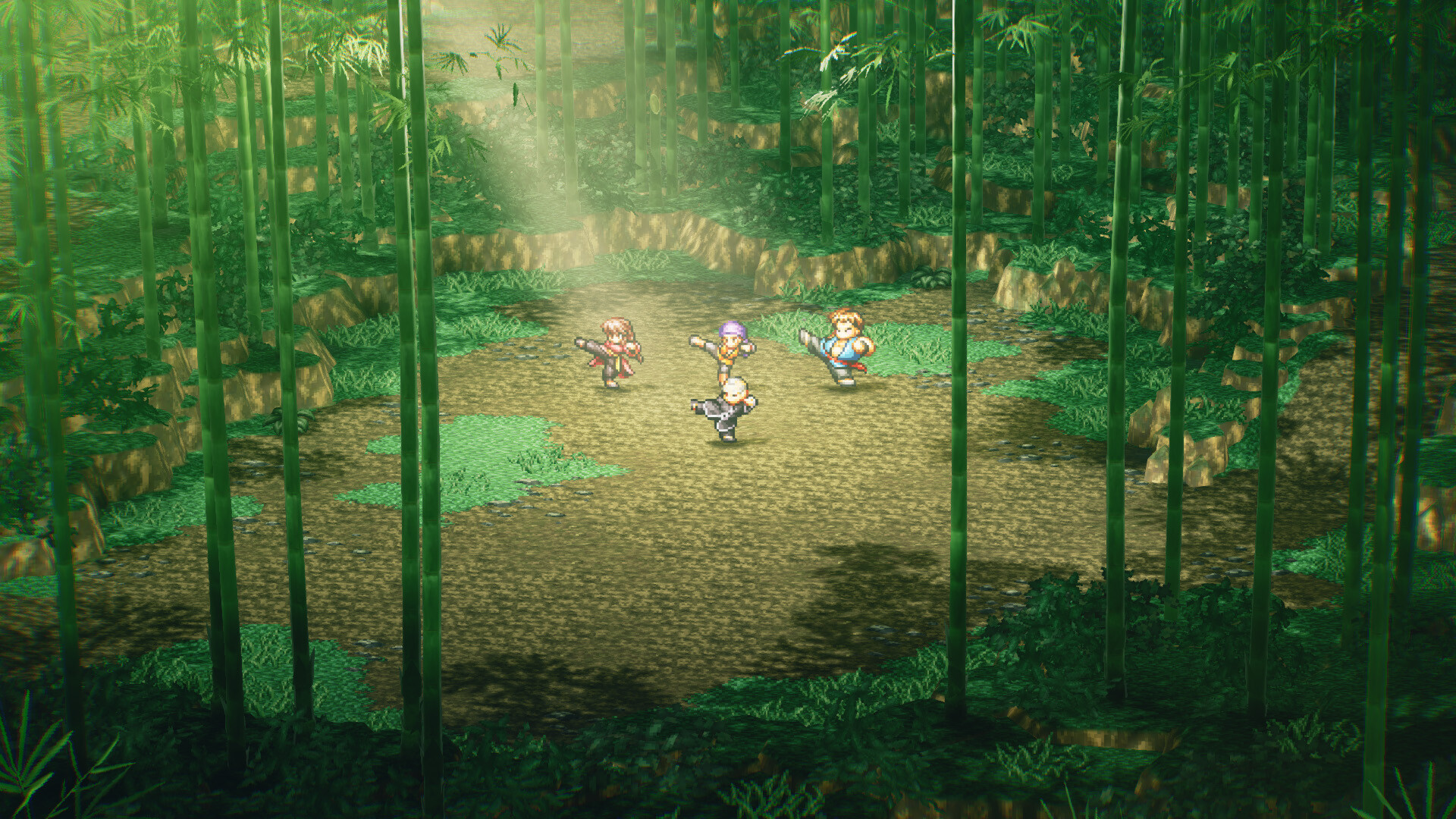
Several chapters build progression around their premise rather than relying on one uniform equipment-and-leveling loop. In Imperial China, the Earthen Heart Shifu trains three disciples and must decide where to focus that instruction as he searches for a successor; the chapter's fights provide occasions for those students to develop. Masaru's Present Day story centers on learning an opponent's signature techniques, which he can then use in later martial-arts bouts. Akira's psychic abilities contribute both to investigation and to battle, while Pogo can fashion useful gear from materials found in his environment. The Wild West episode asks the player to gather help and set traps before a planned attack, so preparation changes the form of the coming encounter. Cube's development is tied to its role as a robot rather than to the conventional growth expected of a human adventurer. These tailored systems mean that progression is measured differently from one era to another: training, learned techniques, crafted equipment, scenario preparation and investigation each take the lead where they fit the protagonist. The structure also makes a decision about attention part of the story: the Shifu cannot preserve every pupil equally, so the player chooses which of the three disciples receives his training. For Masaru, learning an enemy technique expresses his attempt to build a fighting style by studying other masters, rather than acting as a reward detached from the scene. These examples show how a chapter's ambition supplies its progression rule.
The Steam release is the 2023 PC version of Square Enix and historia's remake, a full game rather than the separately listed demo. The remake presents pixel-art characters against three-dimensional environments and modern lighting and effects in an HD-2D style. Yoko Shimomura rearranged the original soundtrack for the new version, and the PC listing includes full English and Japanese audio, with interface and subtitle support in additional languages. Takashi Tokita, director of the original game, produced the remake. Its visual treatment keeps the compact character art legible while giving the different eras distinct scenery, from wilderness and settlements to an enclosed space freighter. The turn-based grid and the chapter-specific scenes both benefit from this layered presentation: an attack is staged against a three-dimensional field, while dialogue and character movement retain the recognizable proportions of pixel-art RPGs. The remake was released first on Switch and later on PC and PlayStation 4 and 5; the Steam edition keeps the same seven-story game and chapter-switching structure.
The seven opening scenarios are not the whole structural arc. The full game has an eighth tale set in the Middle Ages, but it becomes available only after all seven initial chapters are completed. This staged access gives the anthology a two-part shape: first the player chooses and orders separate period stories; later, an additional era follows that completion gate. The opening stories provide varied perspectives and distinct protagonists, while the broad premise establishes that their histories share a connection. The Middle Ages chapter extends the collection from prehistory through the distant future into a fantasy-kingdom setting, adding a different historical frame. Because this chapter is not selectable at the start, its placement differs from the free ordering of the opening set. The player can move among those initial stories, but completing all of them is the condition that changes the chapter menu and makes the final period available.
- Developer
- Square Enix and historia Inc.
- Genre
- Role-playing game