
About Little Nightmares
Little Nightmares is a horror puzzle-platform adventure about Six, a child trapped aboard the Maw, a vast vessel populated by grotesque adults. Move through its rooms, climb and manipulate the oversized environment, and avoid the creatures that patrol it. Six’s route toward the surface combines quiet observation, environmental puzzles and sudden escapes.
Six wakes in the lower reaches of the Maw, a huge metal vessel whose rooms make ordinary furniture feel architectural. The 2017 game follows her attempt to reach the surface and escape, with little dialogue explaining how she arrived or what the vessel is for. Instead, the setting supplies fragments: barred rooms, discarded objects, signs of work and consumption, and inhabitants whose scale turns a hallway into exposed ground. Six wears a yellow raincoat and carries a small brass lighter; she is a child moving through an adult world built around needs and routines she cannot control. The Maw is both a physical route and a series of strange spaces, each revealing another part of its operation without settling every question about its history. The story stays close to Six’s immediate effort to survive, leaving its wider meaning in images and contrasts rather than spoken explanation.
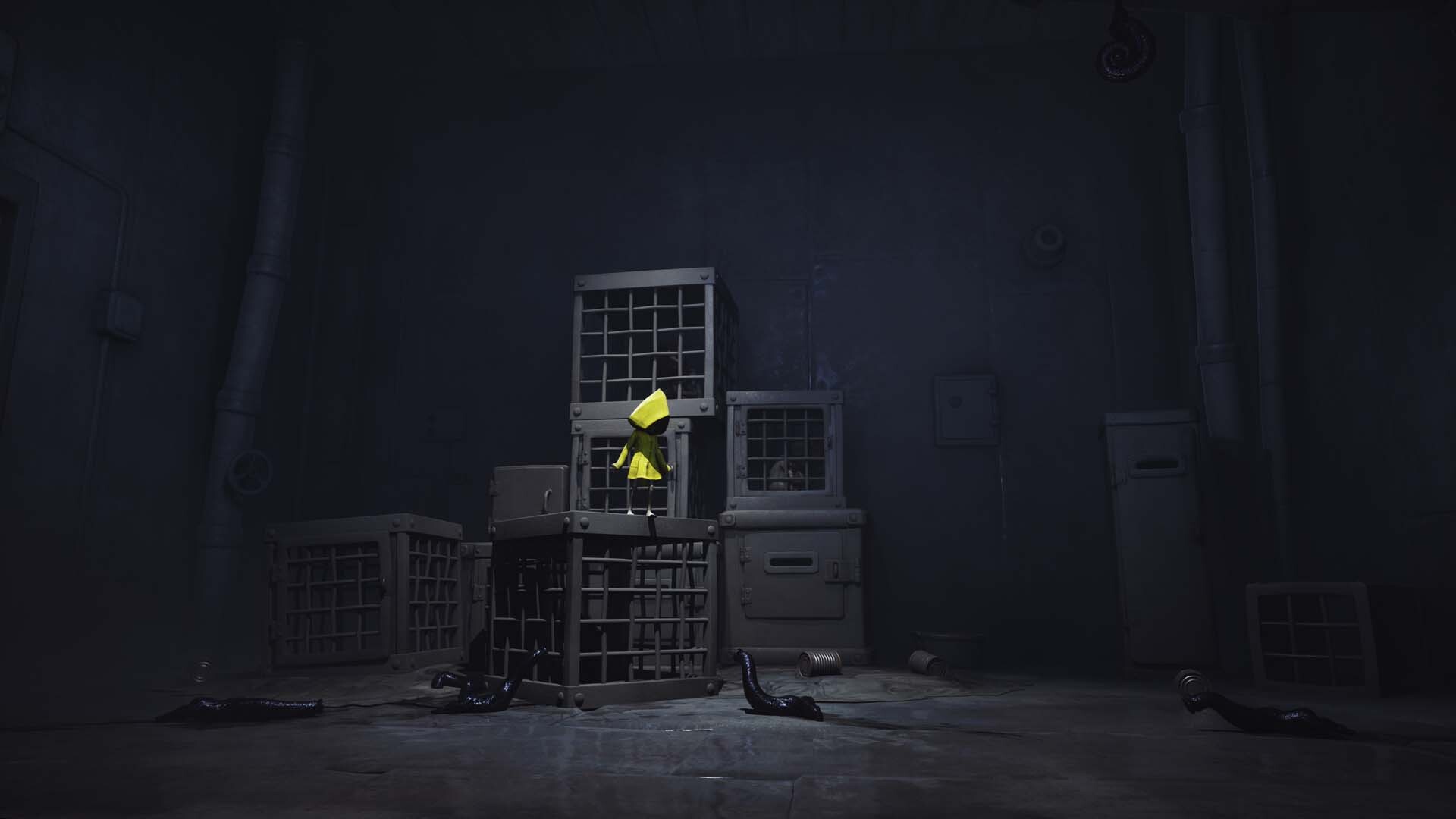
Movement and observation are the basic tools for making progress. The camera presents the action from a side-on angle, while Six can move through depth, climb, crouch, jump, grab, and pull or push objects. The difference between her size and the Maw’s furnishings shapes many obstacles: drawers, shelves, chairs and stacked containers become steps toward a ledge, switch, handle or opening. A door that is too high may be reached by moving nearby furniture; a passage may lie behind a vent or beneath machinery. These objects are not an inventory puzzle system so much as parts of the room to read and manipulate. Progress often comes from noticing what can be climbed, moved or used, then judging the distance and timing needed to cross it. The levels lead forward through connected chambers, but their depth and clutter can hide routes until Six approaches or changes her angle.
The Residents make those traversal problems dangerous. Six is not equipped to fight them, so encounters revolve around staying out of sight, limiting noise, and using the room to break line of sight. Low furniture, hanging objects and dark corners can conceal her, while a careless movement across a creaking surface can draw attention. Some rooms allow objects to be thrown as distractions, shifting a pursuer’s attention long enough to reach a hiding place or passage. The Janitor, a blind caretaker with unusually long arms, is especially tied to sound: his search makes noises and footfalls important clues about when to move. If a Resident spots Six, the scene can turn into a chase in which hiding gives way to running, jumping and finding a gap the larger creature cannot follow. These sequences make the player alternate between patience and quick movement, with failure typically returning Six to a nearby checkpoint.
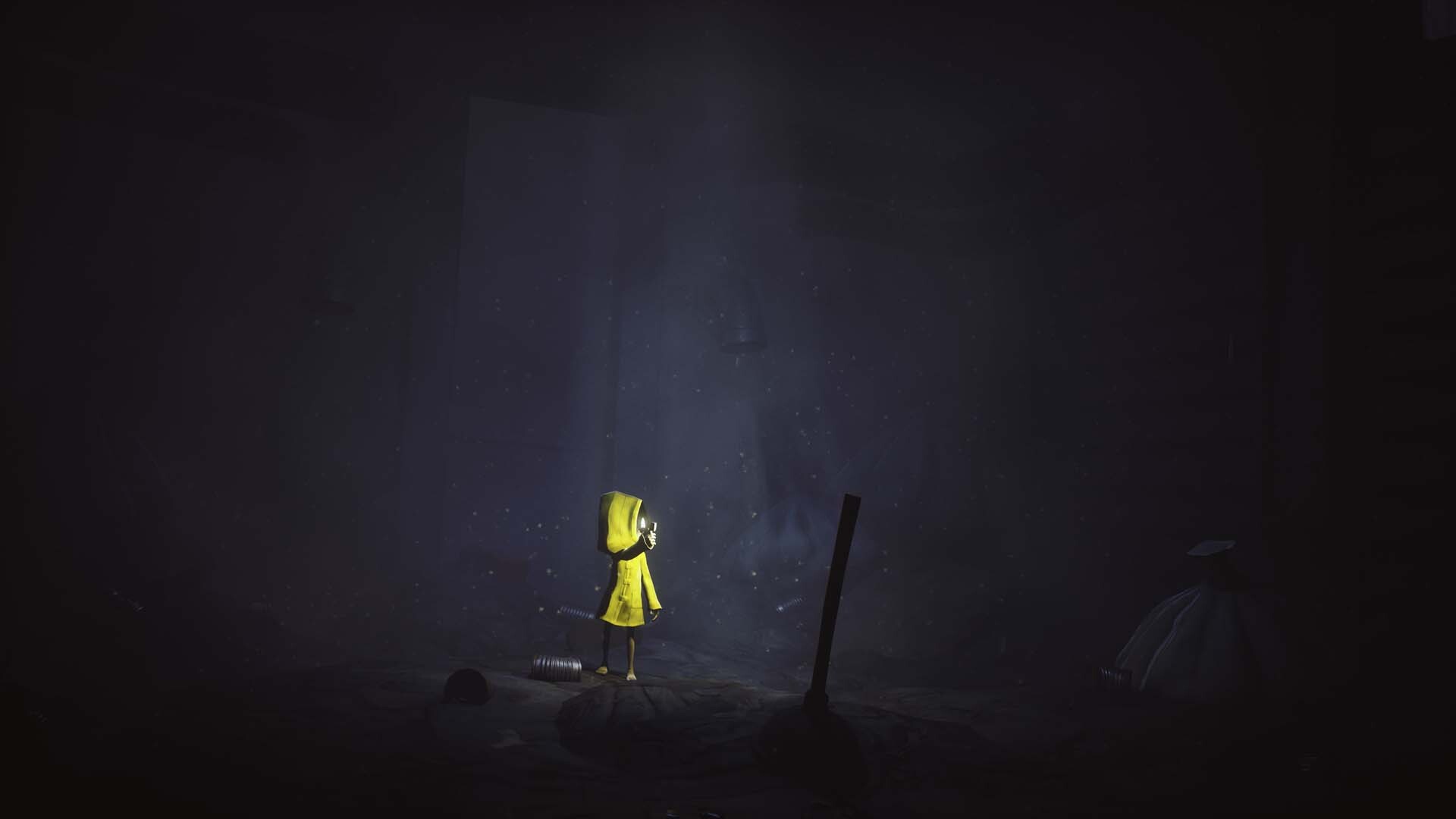
The spaces change their hazards and inhabitants as Six climbs through the Maw. Early rooms emphasize the vessel’s lower, industrial spaces and the Janitor’s search; later stretches include a kitchen worked by grotesque chefs and guest quarters where the scale of the visitors again makes Six vulnerable. The kitchen combines work surfaces, containers and machinery with the chefs’ movement, turning routine objects into cover and obstacles. A route through such rooms may involve climbing counters, ducking behind clutter, reaching a vent or finding a key to open a way onward. The guest areas shift the mood from service spaces to rooms prepared for the Maw’s occupants, but remain navigational spaces rather than safe breaks. Each area introduces a different visual arrangement and threat pattern, so the same basic actions—climb, hide, cross, pull, run—need to be reconsidered in context. The creatures are encountered as dangers to read and evade, not characters with explanatory dialogue.
Light and sound help make the environment readable while sustaining uncertainty. Six’s lighter creates a small pool of light in dark rooms and can be lit at certain points along the way, giving the player a closer view of nearby surfaces and objects. It does not turn the Maw into a fully visible space: corners, shafts and distant rooms remain obscured, and the limited circle of light makes the surroundings feel larger than the area Six can inspect at once. Environmental audio fills in what the image withholds. Floorboards creak, mechanisms shift and distant activity carries through the vessel; changes in sound can signal that a room is occupied or that movement has consequences. The game uses these cues with its close perspective and oversized architecture, so a sound may be both atmosphere and a practical warning. The result is a route where looking and listening are part of deciding when it is safe to proceed.
Hunger becomes a recurring part of Six’s journey. At points in the adventure, the game interrupts movement with an episode in which her need to eat becomes urgent, changing the immediate problem from finding a route to finding food. These moments are brief but significant to the way the Maw’s world is presented: food is abundant in some spaces, yet Six remains dependent on what she can reach while moving through a place designed for much larger bodies. Her hunger also connects the child’s vulnerable perspective to the vessel’s grotesque routines without spelling out a single interpretation. The main progression remains linear, moving through a sequence of themed sections toward the upper parts of the Maw. The player learns through repeated use of movement, hiding, object interaction and timing rather than through upgrades or a growing arsenal. There are optional details to notice in the rooms, but the central task is to keep Six moving upward and survive what each section places in her path.
- Developer
- Tarsier Studios
- Genre
- Horror adventure with puzzle-platforming and stealth encounters