
About Little Nightmares II
Mono wakes in a forest distorted by a distant television signal and meets Six, a girl in a yellow raincoat. Together they cross the wilderness and Pale City toward the Signal Tower, solving environmental puzzles, hiding from enormous Residents, escaping chases and using objects to survive when there is no route to run.
Little Nightmares II follows Mono, a boy who wakes alone in a forest scattered with burnt-out televisions. The signal of a distant tower distorts the world around him, and his route soon brings him to Six, a girl in a yellow raincoat. The two travel toward the Signal Tower, seeking the source of the transmission and a way to keep Six safe. Their surroundings move from woodland and abandoned buildings into the Pale City, where the broadcast reaches through television screens and enormous Residents threaten any child they notice. The burnt-out sets and the tower’s distant transmission make the threat visible before Mono has any explanation for it. Its opening establishes the scale of the danger through ordinary objects made strange, from wrecked televisions to traps built into a seemingly empty path.
Mono is the character the player controls, while Six accompanies him as a computer-guided partner. Their cooperation is part of navigation as well as the story. Mono can call Six over, watch for her cues and use nearby objects or furniture to create a way forward. The pair can work together to open hidden trapdoors, climb surfaces that are too large for either to scale alone, and cross dangerous spaces. They can also hold hands while moving through the world. These interactions make a room a shared problem: the player has to notice where Six is, what she can reach and whether Mono needs to bring her closer before trying a jump or an object interaction. Six remains observant and acts independently at moments, so reading her position matters alongside controlling Mono.
The adventure is built around a small set of physical actions used in changing arrangements. Mono runs, jumps and climbs, and he can pick up or pull objects that alter the route through a room. A box may provide extra height, a movable item may reveal a path, or a handle may need to be pulled before a door or mechanism can be used. The game asks players to inspect the space and infer how its objects fit together rather than relying on a large inventory or a list of instructions. Some obstacles are timing tests, particularly when a trap or pursuing enemy makes it unsafe to stop. Others slow the pace and ask the player to notice how a room’s furniture and equipment can be manipulated to open a route. These basic verbs stay consistent while each location changes the problem around them.
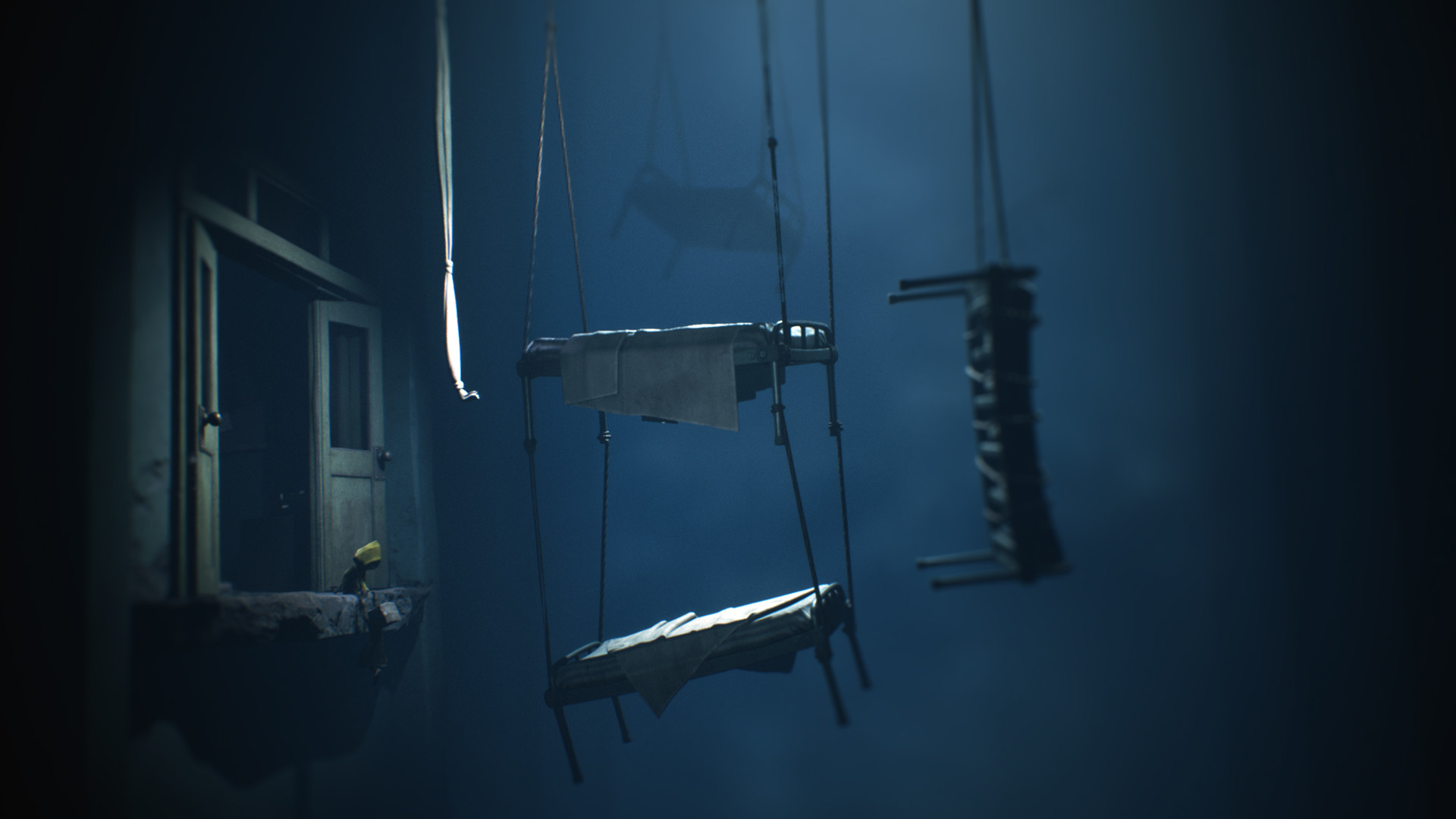
The environments provide distinct kinds of puzzle spaces as Mono and Six move from woodland and shacks toward the city. In the forest, traps and pitfalls turn a path into something to read carefully before crossing. Later rooms use interiors, doors, furniture and equipment as parts of their logic. A hospital sequence, for instance, uses an X-ray machine as more than scenery: the room’s medical apparatus and objects form a connected puzzle environment. The game rarely needs a new control scheme to make a challenge feel different; it can change the scale, visibility or timing of an interaction instead. Players may need to move an object quietly, carry it while watching for a threat, or position both children so one can help the other across. What the room used to be helps explain why its objects are arranged as they are.
Stealth is essential when the Residents are nearby. These adults are enormous beside the children, and catching their attention can end a section quickly. Mono and Six hide behind scenery, keep out of sight and move through gaps while a Resident looks elsewhere. The Hunter stalks the forest with a firearm, while the Teacher watches over the school and can reach into places that seem momentarily safe. Their behavior shapes the spaces around them: a chase may demand a fast run across obstacles, while another passage rewards waiting in cover and moving only when the line of sight opens. Residents are threats to evade rather than characters to confront on equal terms. Watching their position, identifying a hiding place and choosing when to leave it form a recurring loop between puzzle solving and survival.
There are moments when escape or hiding is not enough. Mono can lift objects such as an axe or sledgehammer and swing them to break an obstacle or fend off a smaller enemy. The weapons are heavy for him, so the player has to account for the time needed to raise and bring down an object. A missed swing leaves the child exposed, which makes these encounters depend on positioning and timing rather than on sustained attacks. Combat remains one tool within a puzzle-platform adventure: the player may need to find a usable object, get close enough to act and then continue moving before a larger threat can respond. This limited physical response contrasts with the stealth sequences, where the pair must avoid drawing attention at all. Mono’s ability to pick up and manipulate objects thus serves both traversal and danger management.
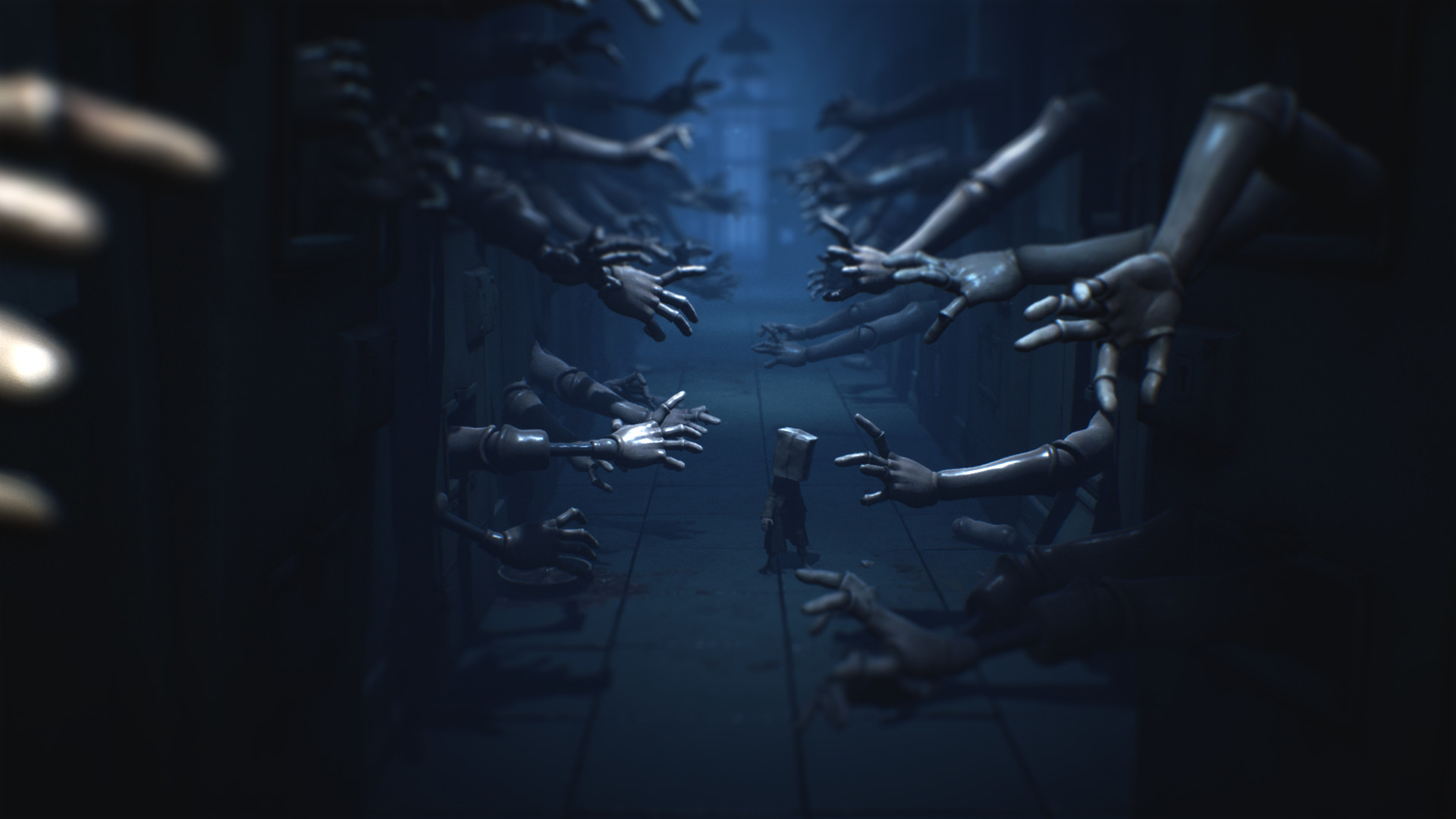
As the children reach the Pale City, television sets become part of the route as well as a sign of the Signal’s reach. Some old screens can be entered like portals, turning a row of dilapidated apartments into a spatial puzzle: Mono has to find the right television, use a remote to activate screens and pass between them to reach separated parts of the environment. The device makes the broadcast tangible through a physical interaction, while the surrounding apartments still require ordinary climbing and movement. Viewers gathered around their sets give the same technology a different role, showing how the residents respond to the transmission. This TV-focused section adds a new use for Mono’s object handling and connects the city’s layout to the signal that has been drawing him toward the tower.
- Developer
- Tarsier Studios
- Genre
- suspense-adventure, horror and puzzle