
About Little Misfortune
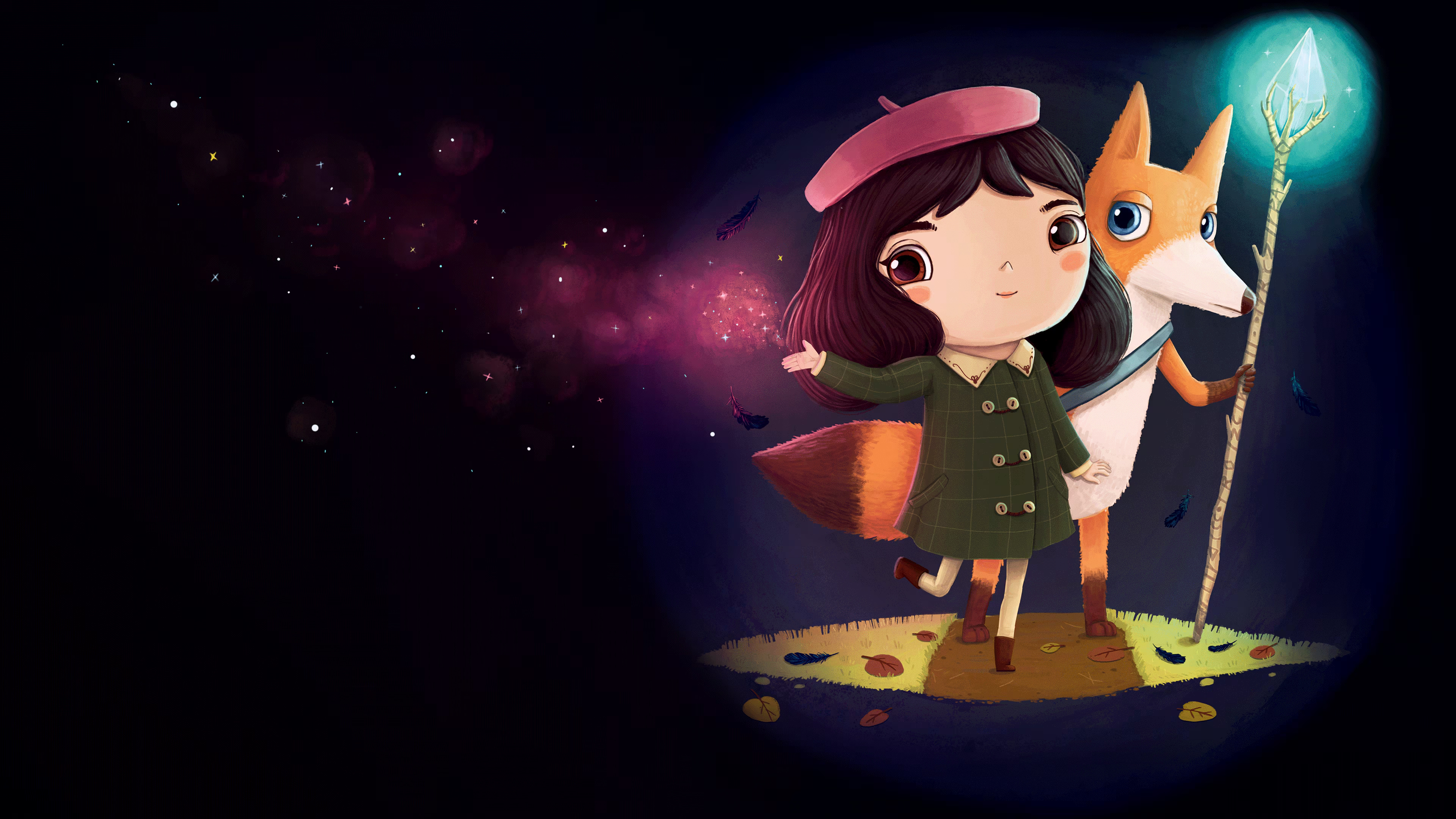
Eight-year-old Misfortune Ramirez Hernandez sets out to win Eternal Happiness for her mother after a mysterious voice invites her into a game. Little Misfortune follows their journey through a storybook town and woods, where small choices, strange animals and unsettling discoveries complicate the cheerful explanation she gives to what she sees.
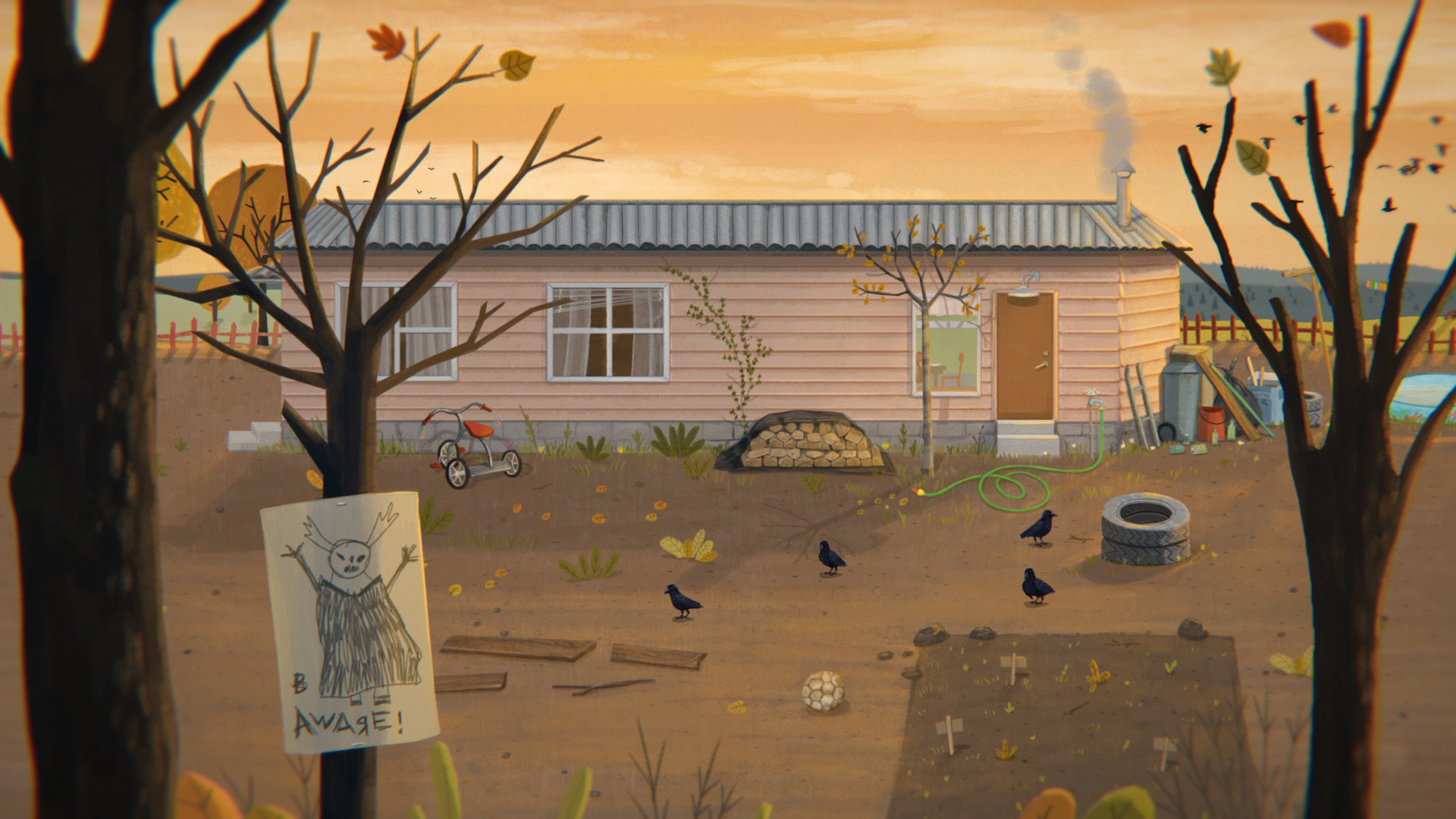
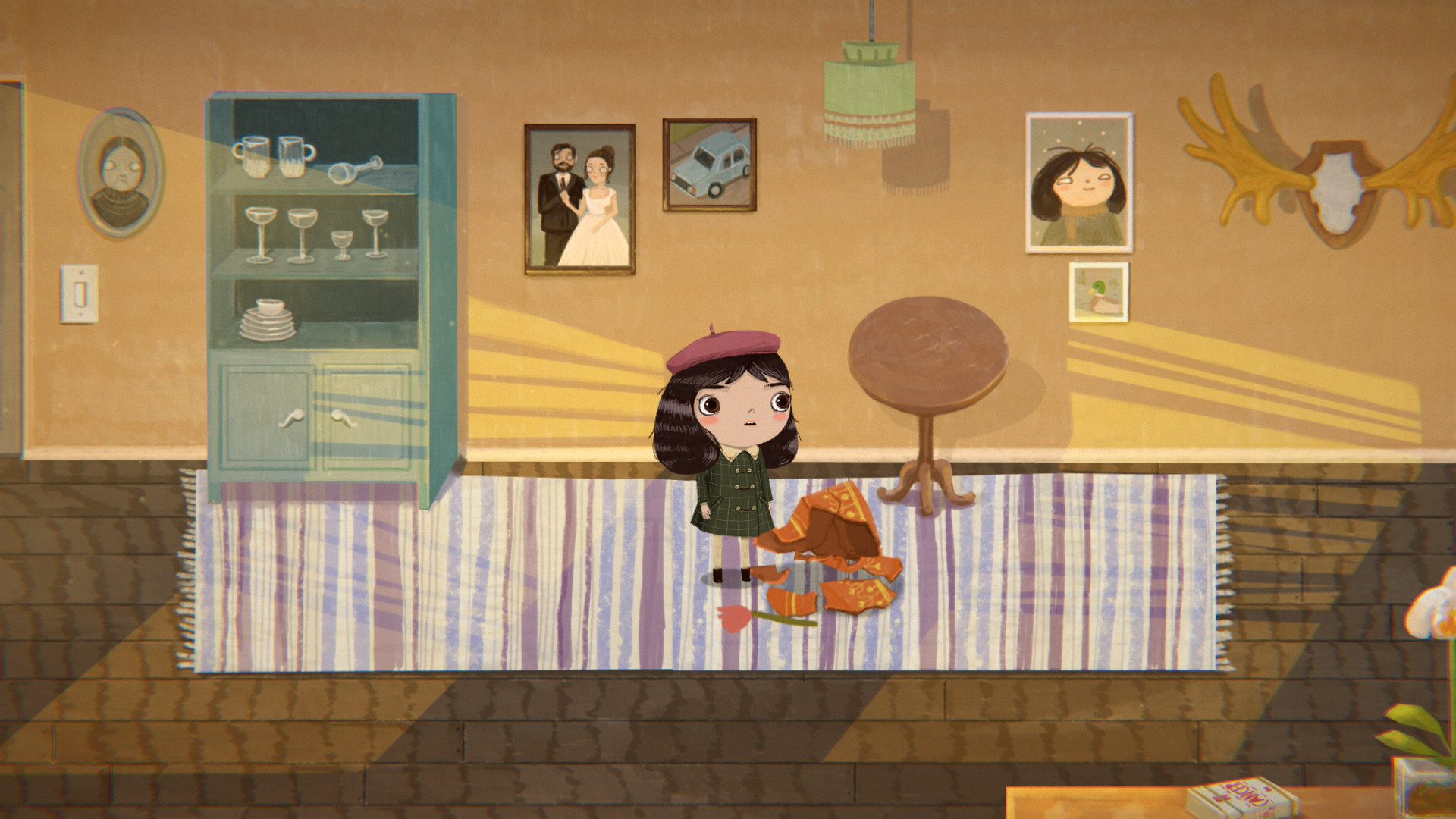
Misfortune Ramirez Hernandez begins with a wonderfully simple objective: find Eternal Happiness and bring it home to her mother. She is eight, imaginative, quick to speak her mind and willing to accept an extraordinary proposition from a voice only she can hear. Mr. Voice offers to guide her through a game with that prize at its end. The premise gives every ordinary place she visits a second meaning. Her house is a family home, but its details also suggest the strain she has learned to live around; the path beyond it is an outing, but one directed by someone whose motives she cannot inspect. Misfortune approaches the journey with the language and curiosity of a child, treating unfamiliar sights as opportunities for conversation, kindness or play. The game does not ask the player to forget the unease behind that perspective. Missing children, ominous creatures and adult troubles coexist with jokes and affectionate attention to animals. Following Misfortune means hearing her explanation of events while noticing that the world may be telling a harsher story. Her hope for her mother remains a clear thread through the strange places ahead, even as the promised reward becomes harder to take at face value.
Mr. Voice is more than a source of directions. He frames the journey as a sequence of decisions and responds to Misfortune as she tests the limits of his game. That creates an unusual relationship between the person guiding her and the child doing the walking: she can be trusting, mischievous or doubtful, but she is never merely an empty player avatar. Her comments supply context for household objects, people and places that might otherwise seem like decorative backgrounds. The larger mystery gathers around what the voice wants, why this particular child was chosen and what lies beyond the familiar edge of her neighbourhood. A fox appears along the route, and encounters with animals sit beside warnings that something more threatening is nearby. The game shares a fictional universe with Fran Bow, Killmonday's earlier adventure, yet Misfortune's search has its own central character and immediate purpose. Familiarity with that other game can add recognition to a detail, but the reason to follow this one is the tension between what Misfortune believes she has been offered and what the surrounding world allows the player to infer.
The route unfolds as an interactive story rather than a world to explore in any order. Players move Misfortune through authored scenes, inspect what is in front of her and choose how she responds when the story presents an option. Exploration matters because the setting does not communicate only through spoken exposition: a room, a sign, an animal or a small object can prompt another remark and sharpen the difference between her account and the visible evidence. Decisions occur within that forward-moving journey. They can change an immediate exchange or consequence without turning the game into a sprawling role-playing system with character classes and combat statistics. Conversations and interactions carry the work that fighting or resource management would carry in a different kind of adventure. The reward is a better understanding of Misfortune and the peculiar rules under which Mr. Voice asks her to act. This structure gives the player time to attend to small interruptions: a moment of hesitation, a new thing to touch, or a response that reveals how Misfortune makes sense of an uncomfortable situation. It also means a reader looking for a traditional inventory-heavy point-and-click puzzle game should expect a stronger emphasis on character, movement through scenes and choices.
A bottle of glitter is Misfortune's answer to places that seem unhappy. She can throw it onto selected objects and situations, trying to make a bleak scene brighter even when its underlying problem remains. The act is small, but it makes her outlook playable: rather than merely hearing her insist that something will be all right, the player can take part in the attempt to improve it. Other interactions are gentler. The game explicitly offers opportunities to pet an assortment of animals, including a dog, fish, wolf, cat and fox, and it takes Misfortune to a pet cemetery. Those details belong to the same tonal design. The promise of affection and ordinary childhood curiosity is repeatedly placed against signs of danger and loss. She may comment on an animal, commit a petty act or decide what to say when a troubling choice arrives. Each response tells us something about her, even if it does not provide a route around every dark event. The game is interested in consequences at this intimate scale: what Misfortune notices, what she does with a chance to be kind, and how a seemingly playful action can sit next to a more serious reality.
The woods extend the trip beyond the domestic opening and give the promised hunt for happiness the shape of a storybook expedition. Misfortune encounters places where a bright colour, an odd character or a familiar object can first appear inviting and then acquire a more disturbing association. That shift is central to the setting rather than a surprise reserved for its final scenes. The published description names missing children and a monster alongside petting animals and falling in love, so the mixture of sweetness and threat is part of the game's identity from the start. Misfortune's age matters to how these pieces fit together. She has enough initiative to leave home and ask questions, but not an adult's framework for reading every implication of a warning. Mr. Voice's explanations can therefore shape her interpretation even when the player has reasons to doubt him. The resulting mystery is not simply about finding a hidden villain. It asks what Misfortune understands about the rules she has accepted, what the people and creatures around her know, and whether Eternal Happiness is the kind of prize she imagines. The story keeps those questions in motion through encounters rather than pausing to deliver a separate encyclopedia of its world.
Killmonday built the game around hand-drawn, two-dimensional imagery, spoken performance and an original score, giving Misfortune's ordinary and uncanny surroundings a consistent visual language. The colours and shapes can look like illustrations for a children's story, while a character's words or an environmental detail push the meaning in another direction. Natalia Martinsson is credited with the original art and voices Misfortune; Isak Martinsson composed the music. The studio also worked with LillaSyster on animated cutscenes and voice recording. Those contributions matter because the game relies on the child protagonist speaking her reactions aloud as the scene changes around her. A spoken line can make an otherwise frightening image funny, then leave a pause in which its implications become apparent. Animation and music help connect the everyday house, the outdoor route and the stranger places the journey reaches without pretending that they are equally safe. The contrast is deliberate, but the writing does not require the player to adopt Misfortune's cheerful interpretation. It permits the image, performance and dialogue to tell slightly different versions of the same moment.
Little Misfortune first appeared on PC in 2019, with later console editions including PlayStation 4 and Nintendo Switch the following year. These are releases of the same base story rather than separate episodes that need to be played in sequence. The Steam listing also offers soundtrack and artbook products, but they are companion material rather than additional chapters of Misfortune's search. The connection to Fran Bow is similarly a shared world, not a requirement to complete another game before meeting Misfortune and Mr. Voice. That distinction helps set expectations for the scale of the adventure: it is a single, authored journey whose choices and optional interactions colour the experience, not a collection of endlessly repeatable cases. Its storybook appearance should not be mistaken for a promise of child-friendly subject matter. Platform content notices identify violence, blood, strong language, suggestive themes and drug references, and the game's own description makes its missing-children mystery plain. Knowing that range of material is useful before entering a world where an eight-year-old's delight, a voice offering happiness and the evidence around her can point in sharply different directions.
- Developer
- Killmonday Games AB
- Genre
- Dark fantasy interactive adventure