
About LIMBO
Uncertain of his sister’s fate, a boy enters a stark and dangerous world. LIMBO is a side-scrolling puzzle platformer in which jumping, moving objects, reading hazards, and learning from failure all help open the way forward. Its wordless journey reveals its rules through the environment.
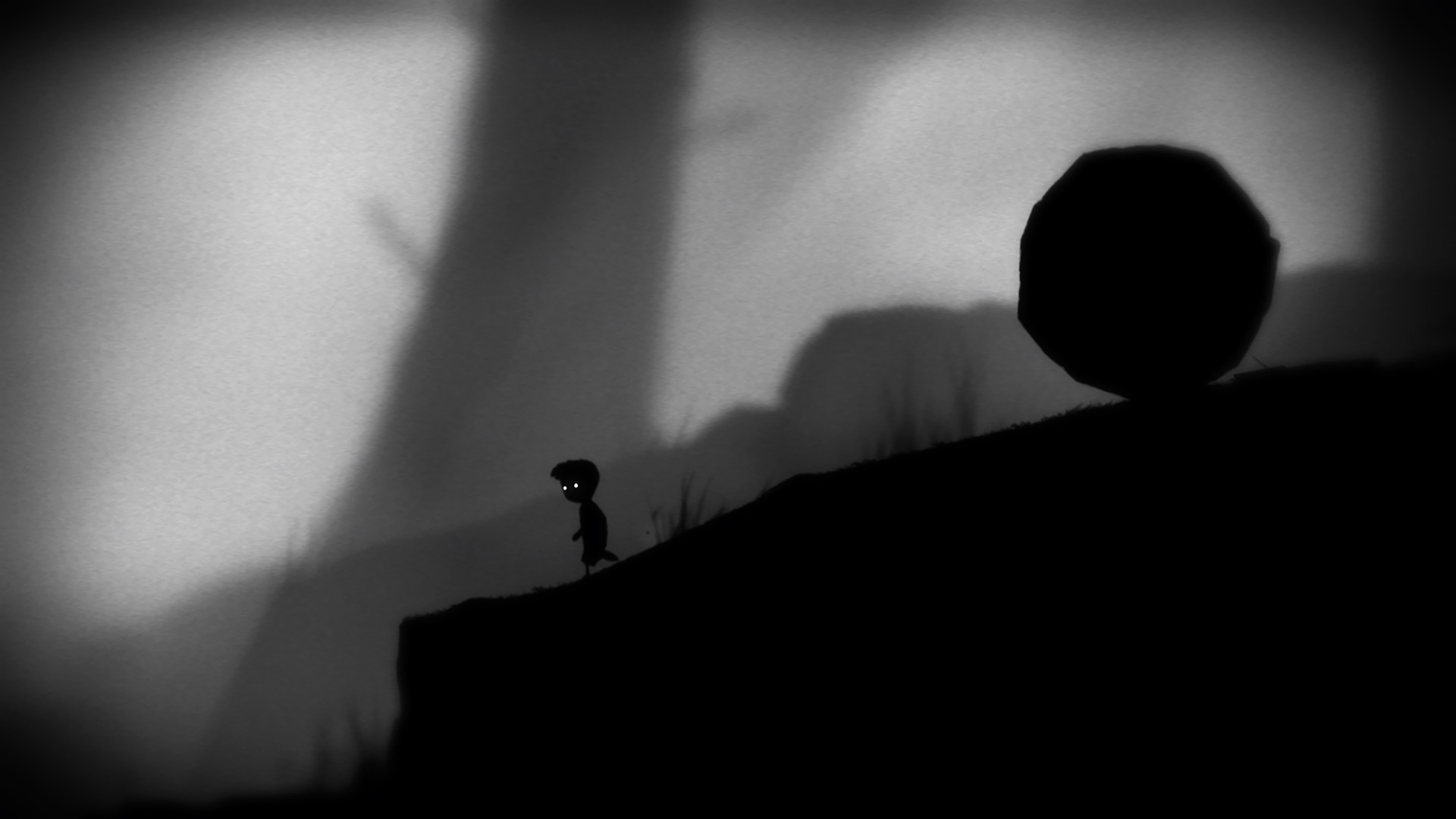
LIMBO begins with a boy waking in a shadowed woodland, uncertain of his sister’s fate. That simple premise sets the direction of the journey without supplying dialogue, named characters, or a map of the world. He has no explanation of where she might be or what this place is. Playdead’s monochrome presentation reduces the landscape to silhouettes, light, and layered depth. Trees and uneven ground give way to man-made spaces and machinery as the route continues. The boy remains the only constant figure; the player learns about the place through its hazards and the way objects respond. Rather than explain what LIMBO is, the game lets the journey establish its rules one screen at a time. The story’s central question stays open while the immediate task is concrete: move onward and survive what the landscape contains.
The game is a side-scrolling platform puzzle built around a small set of physical actions. The boy moves through the environment on foot, jumps over gaps, climbs, and interacts with objects that can alter the route. There is no inventory menu or dialogue tree to manage. A barrier is usually solved by understanding the space around it: where a jump can land, what can be moved, and how an object’s weight or position affects another object. The controls remain simple, but the situations ask the player to infer what the game’s physical rules allow. A jump is not only a way to cross a pit; it can be a step in a larger arrangement involving a rope, a ledge, or a movable hazard. The challenge is chiefly spatial and logical, with timing and careful movement helping execute the solution once it is understood.
Danger is part of how LIMBO teaches those rules. The dark image can make a threat hard to distinguish from harmless scenery, and some hazards become obvious only when the boy gets close enough to trigger them. A failed attempt shows what the object does; the player then returns nearby and can try another approach. There are no lives or score to preserve, and checkpoints are placed close to the point of failure so a solved stretch does not need to be replayed in full. This supports experimentation while keeping each mistake costly within the fiction. The boy’s deaths are shown in stark, graphic silhouettes, reinforcing that a trap is dangerous even when its mechanism is not yet clear. Learning involves observing the scene, testing a possibility, and using the result to revise the next attempt rather than relying on a tutorial overlay.
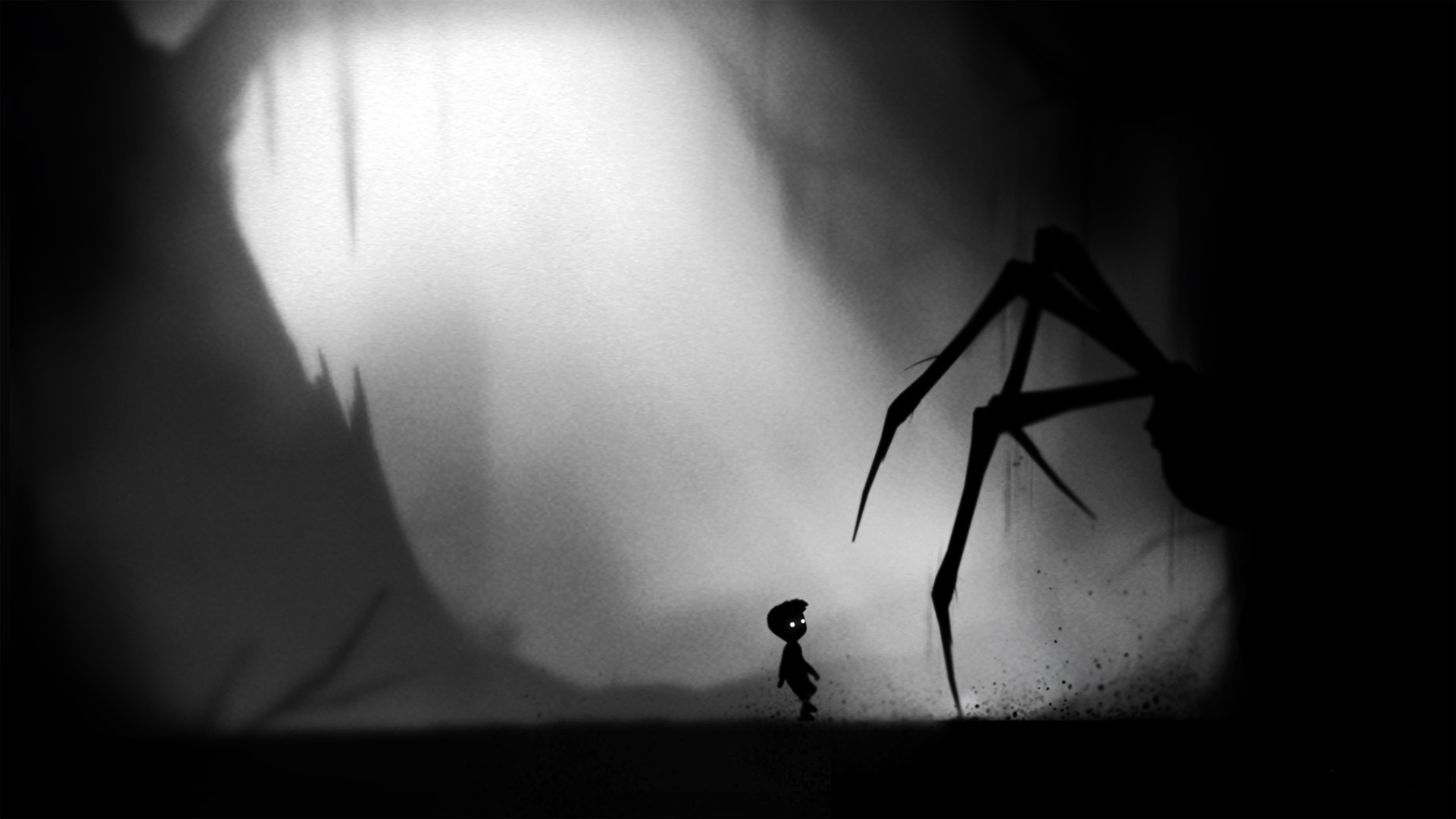
Bear traps demonstrate how one object can acquire several uses. At first, a pair blocks the route: a jump cannot clear both, so the player must discover that a trap can be moved and use that space to pass. Later, a weighted hanging branch and rope prevent the boy from reaching a higher ledge. A trap can clamp onto a hanging body and change the load on the branch, raising the rope enough to make the jump possible. The rule learned in the first encounter now applies to another object, and the trap becomes part of a physical chain rather than simply an obstacle. In another sequence, a giant spider attacks from beyond the boy’s reach. Its strikes shake a trap loose from a tree; the player can then lure the spider into it by timing movement around its attacks. The solution combines knowledge of the trap with observation of the creature’s behaviour.
These encounters show the game’s pattern of introducing an action and then changing its context. A danger may first need to be avoided, then repositioned, and later used to affect something else. The same objects do not simply return as interchangeable keys; their placement changes what the player can infer and what sequence of actions will work. Ropes, ledges, gaps, and moving hazards make the route a series of compact physical problems. The player has to notice whether a weight pulls something down, whether a movement will carry the boy beyond a safe edge, and whether an object can be shifted into a useful position. The game keeps execution relatively straightforward once the logic is clear. This distinction between figuring out a puzzle and carrying out its solution lets the challenge come from reading the scene, rather than from a long list of button combinations or increasingly demanding platforming precision.
Progress follows a single route through distinct environments, each presenting a new arrangement of threats and objects. Early woodland establishes the boy’s movement and the danger of concealed traps; later spaces bring more mechanical arrangements and require the player to reuse familiar interactions in different combinations. The game does not rely on a quest log, spoken instructions, or a narrated explanation to signal advancement. Reaching a new safe stretch and encountering a fresh obstacle are the main markers of progress, while nearby checkpoints protect the player from having to repeat too much after a death. The boy’s search for his sister supplies the narrative thread, but the game avoids spelling out every event or fixing one explanation for the strange world.
- Developer
- Playdead
- Genre
- Side-scrolling puzzle platformer