
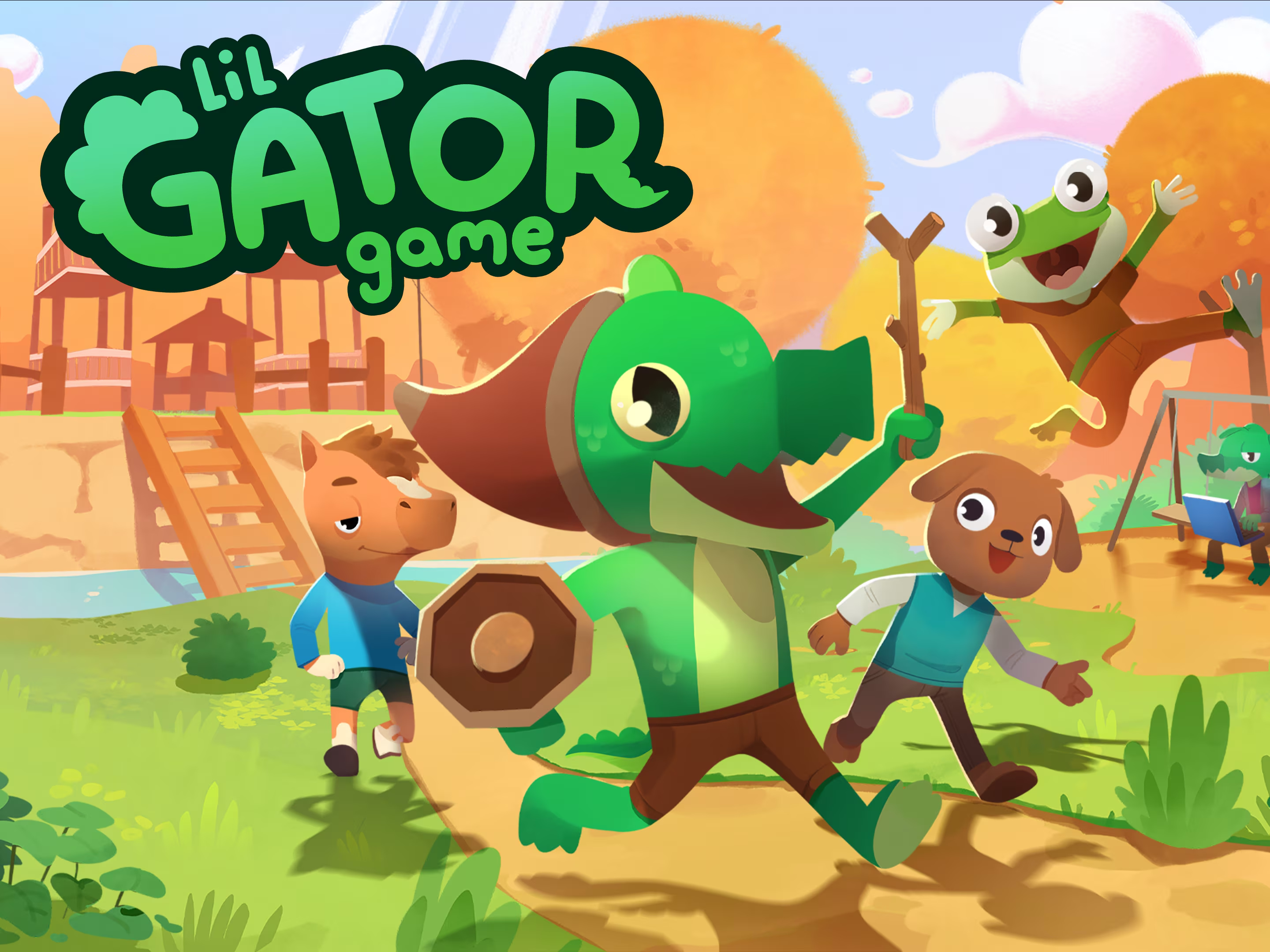
About Lil Gator Game
Lil Gator Game follows a young alligator building a make-believe adventure on an island playground in hopes of drawing their busy older sister into play. Explore hills, forests and shoreline, help other children with their quests, collect craft supplies, and use playful movement and cardboard props to turn the island into a shared game.
Lil Gator Game takes place on a large island that a young alligator treats as a playground. The gator wants to share an adventure with their older sister, who has become occupied with college work and is no longer available for the make-believe games they once played together. Rather than waiting, the gator sets out to create a more elaborate game across the island, inviting other children to take part. The central objective is therefore social and imaginative: find people who will join in, help them with what they need, and build enough of an adventure that the sister might be interested. Everyday places become fantasy settings because the children supply the roles, cardboard props and rules themselves. The contrast between the siblings is present in the shape of the goal: the gator can make plans immediately, while the sister’s time is limited by work she has to finish. The adventure answers that distance with a project the gator can control—make the island’s game inviting enough to share—rather than treating the sister’s schedule as an enemy to defeat. The emotional premise stays grounded in ordinary family life.
The island is arranged as a compact open world of distinct areas, including hills, forests, mountains, shoreline and named neighbourhoods such as the Creaklands. Each area has its own groups of children, local characters and small problems. Some children play as a theatre troupe, others gather around a prep-school identity, while the Creaklands group styles itself as the Cool Kids. Moving between these groups gives the adventure a sense of travelling through a child-sized world without leaving the park-like island. The player can spot a character or unusual landmark from a distance, approach it by climbing or gliding, and discover that it leads to a conversation, a quest or another playful encounter. Curiosity drives the route more than a rigid chain of stages. Because the play area is traversable rather than divided into isolated levels, a quest can prompt a detour that later becomes useful for another errand. Elevated routes, open slopes and coastlines make the island legible through landmarks, while the changing cast gives each pocket of space a local identity. The player can move toward a visible point of interest and let the next task emerge from the people there.
Helping the island’s inhabitants forms the main quest structure. Children may ask for help finding or carrying something, clearing cardboard foes, repairing or building an object, or completing a small challenge. These requests turn the island’s improvised game into a chain of personal introductions: solving one problem often brings the gator into contact with another person or gives a group a reason to participate. The tasks vary in scale and subject, so progress can involve exploration, a short platforming sequence, a bit of collection or a simple interaction with the environment. The game’s child perspective shapes these objectives; objects that might be ordinary supplies to an adult become treasures, equipment or essential pieces of a pretend quest. The player is not following a military campaign or rescuing a kingdom, but helping a community of children make their shared play possible. The requests also give the player reasons to use the island’s movement in context. Reaching a person may mean climbing to a high spot, crossing open ground or searching nearby terrain for the object they need. Other errands ask for direct action, such as dealing with a group of cardboard enemies. The small scale keeps each problem understandable while linking conversations to exploration and play.
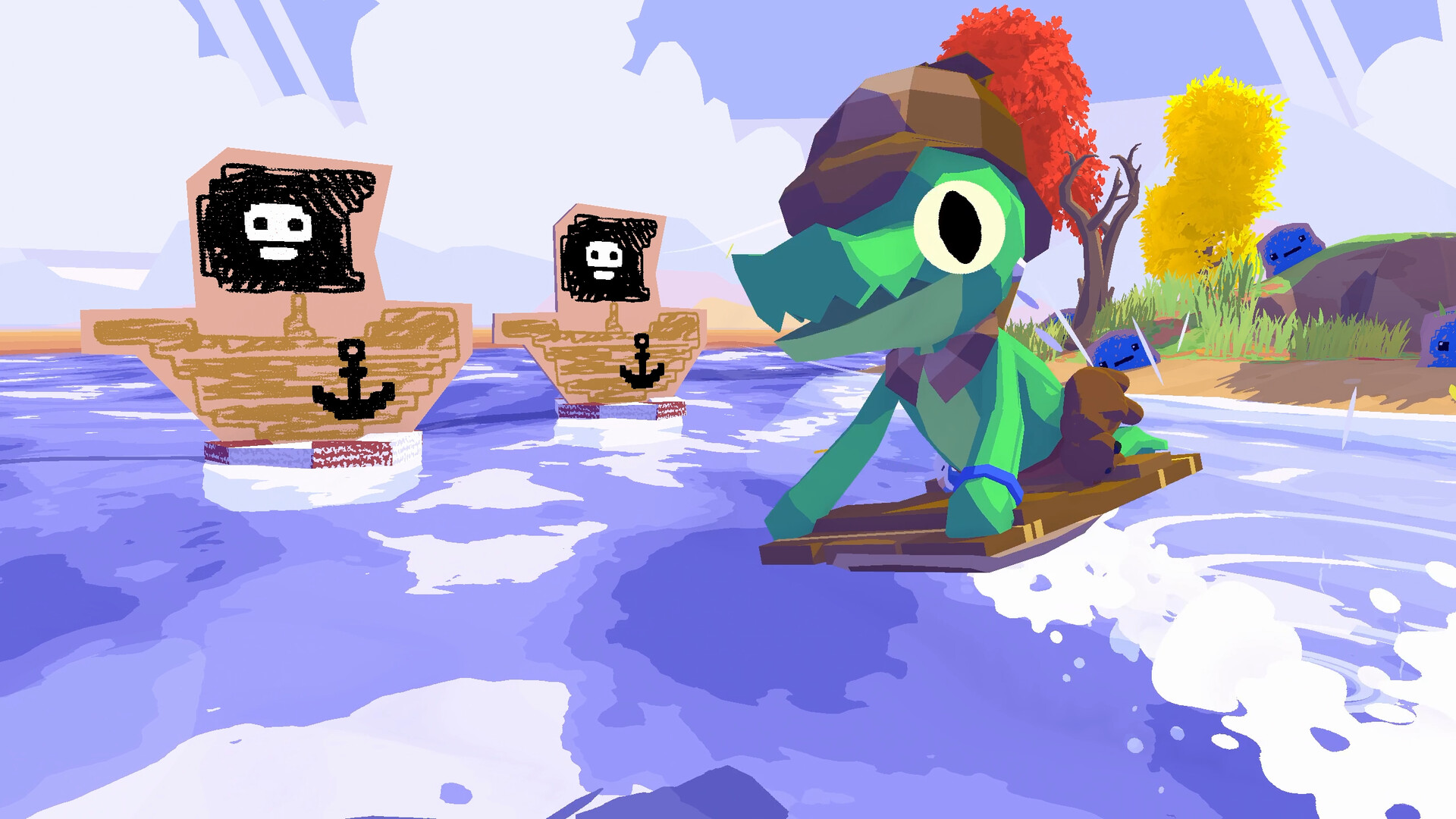
Movement connects those conversations and tasks. The gator can run, jump, climb, swim, glide and slide, using different routes across the island’s vertical terrain. Climbing opens steep faces and tall structures, while a jump and glide can carry the character over gaps or down from elevated ground. Water offers another way to move between landforms, and sliding turns slopes into routes rather than barriers. These abilities make looking upward and outward useful: a ridge may hide a new character, a ledge may offer a shortcut, and an island visible across the water may be reachable by a different approach. Traversal is intentionally playful and forgiving, with the movement itself part of the make-believe rather than a demanding test of precision. The world encourages improvisation—try a climb, leap from a height, or find a way around an obstacle—and then continue toward whichever friend or activity caught the player’s attention. The cardboard framing carries through the action: a successful hit is a prop being knocked apart, not a living opponent being harmed. That distinction supports the sister’s intended audience too, since the entire confrontation belongs to a shared pretend scenario. There is no health meter that forces the player to protect a combat build, and no requirement to master a complicated set of attack combinations to continue.
The game’s combat is staged as children’s pretend fighting. The enemies are cardboard cut-outs called baddies, and the gator uses toy-like swords and other props to bop them apart. This gives encounters a clear purpose without turning the island into a dangerous battlefield: a character may ask for help with nearby baddies, and clearing them helps that local quest move forward. There is no health bar holding the player back from reaching a goal. Fighting consequently works as one activity among several, alongside climbing, collecting, talking and building. It does not establish a separate character-build system or a high-stakes combat loop; the point is to act out the adventure the children are inventing and make room for the next conversation or discovery. Crafting makes the collected materials matter beyond simply filling an inventory. A new toy can alter the route the gator can take or provide a way to interact with a distant target, which encourages revisiting the terrain with fresh options. The supplies and rewards remain connected to the game’s handmade aesthetic: equipment looks like things children might assemble from available objects, then repurpose as heroic gear.
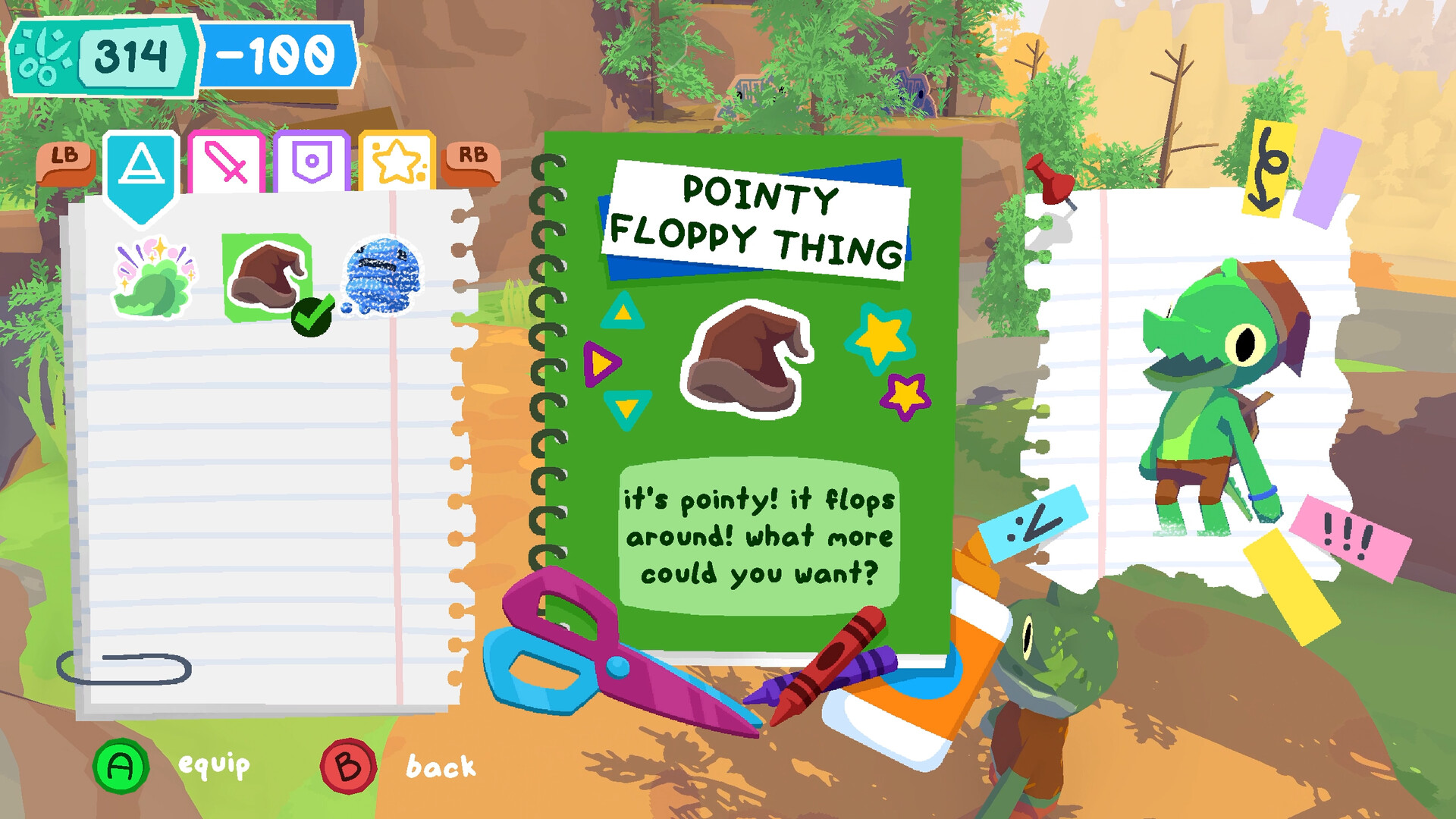
Collecting and crafting give exploration a practical reward. The island contains arts-and-crafts materials, including scraps and other things that can be gathered while moving between quests. Those supplies can be used to make equipment and playful accessories, while completing tasks can also provide confetti or a new item. The results include different hats, swords, shields and tools, and their effects can change how the gator travels or interacts with the world. A ragdoll teddy, for example, lets the character tumble from high ground toward the valleys; pebbles can be skimmed at distant cardboard targets. These objects are both costume-like expressions of the character and useful additions to the playground game. The loop is direct: explore to find materials and people, complete a request to earn a reward, then use new gear to approach another part of the island or play in a different way. Recruitment also feeds back into the central idea of a game made for company. The gator is not only collecting upgrades for personal strength; helping someone gives that child a place in the playground and a role in the larger adventure. The resulting progression is social as well as material: quests add friends, while collected supplies and crafted objects expand what the gator can do between those meetings.
Friends are the measure of how the playground grows. Meeting a character is not always enough to bring them into the larger game; some need a task completed first, so the player builds the group through acts of help rather than collecting anonymous tokens. As more children join, the playground feels increasingly populated by the people and activities encountered on the island. The gator’s older sister remains the intended audience for this expanding adventure, giving the quests a shared destination even when each one focuses on a different child. The tone comes from the gap between the gator’s energetic plans and the sister’s adult responsibilities, alongside the other children’s earnest, often silly concerns. Across a single-player adventure, exploring and solving small problems gradually transforms a private attempt to recapture an old routine into a game that more of the island can share. This structure leaves room to follow curiosity instead of treating every task as a mandatory obstacle. A player can focus on the next character, climb toward a landmark, gather materials along the way, or stop to try a newly crafted toy. The broader purpose of attracting the sister ties these separate activities together, while the children’s local quests make the island feel like a collection of small stories rather than one long list of errands.
- Developer
- MegaWobble
- Genre
- Single-player open-world movement-focused adventure