
About Like a Dragon: Ishin!
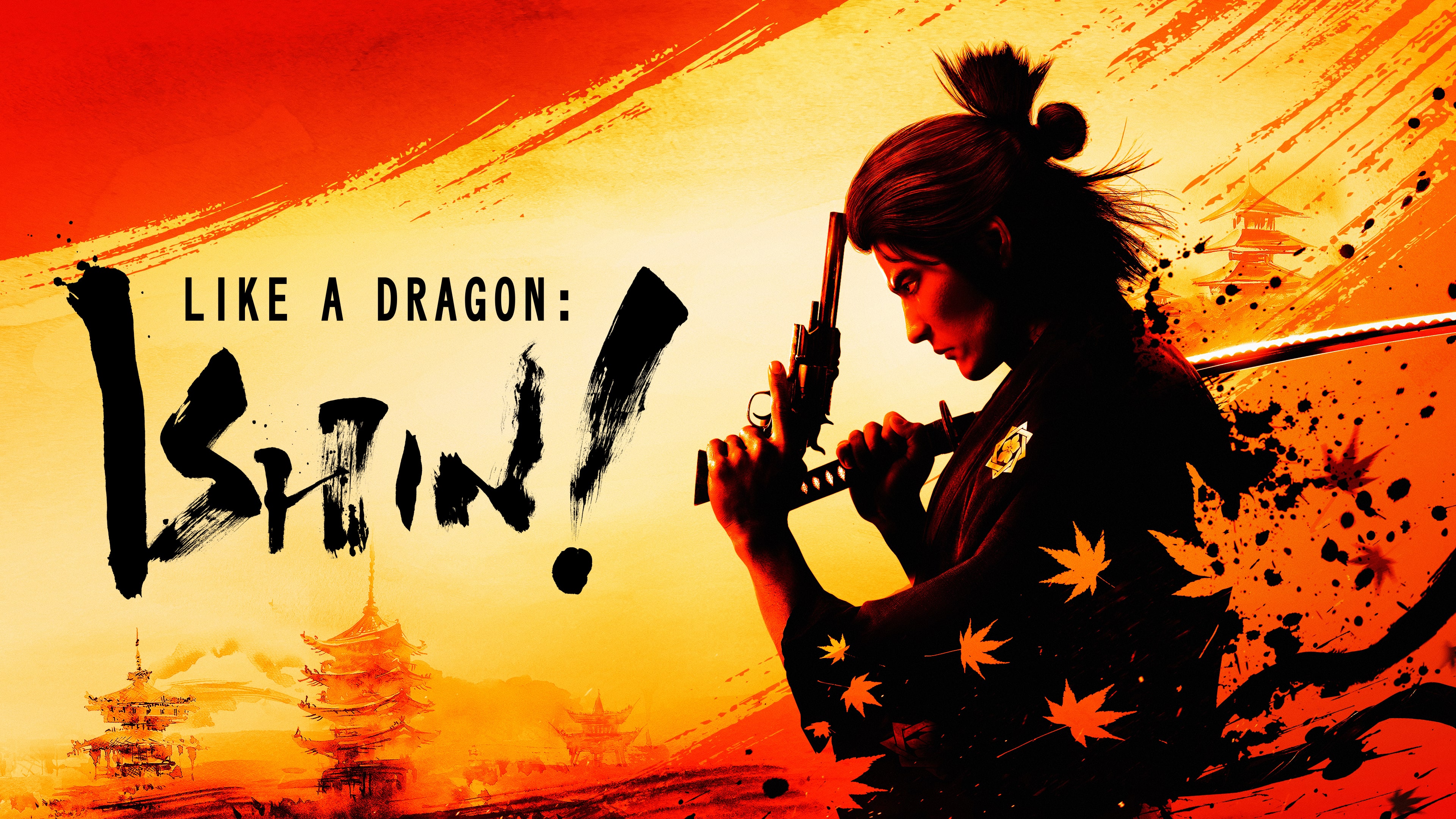
Like a Dragon: Ishin! places Sakamoto Ryoma in a fictionalized 1860s Japan, where a murder accusation sends him into hiding as Saito Hajime. His search leads into Kyo and the Shinsengumi. This 2023 remake pairs four switchable fighting styles with the series’ familiar cast, city diversions and politically charged historical drama.
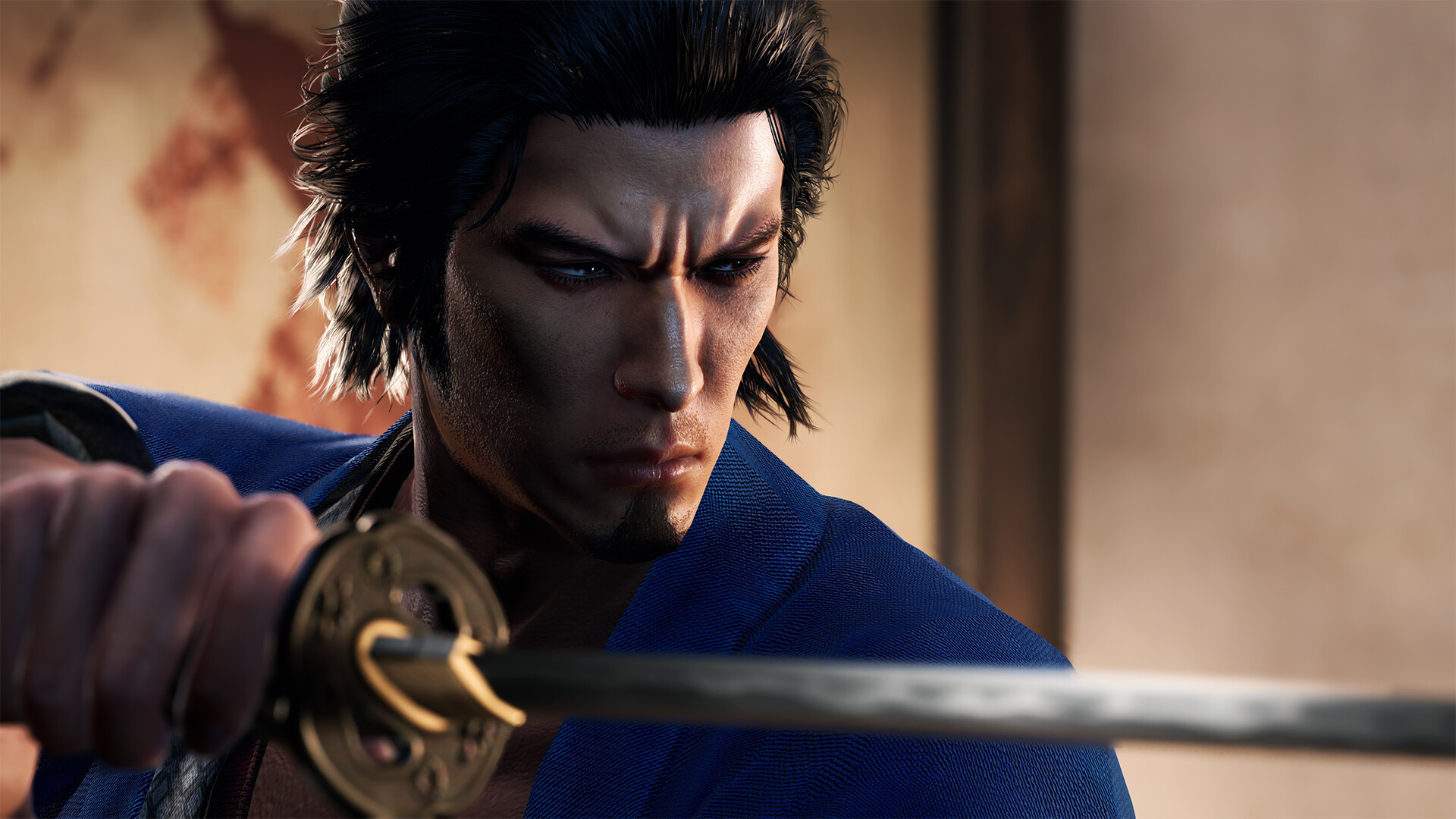
Sakamoto Ryoma begins as a low-ranking samurai from Tosa, where a rigid caste system divides ordinary residents from the powerful men above them. He has trained with a sword and becomes involved in a plan to reform his home domain, but the murder of his father destroys that future. Accused of the murder, Ryoma abandons his name and follows his only lead into the Shinsengumi, the feared armed group operating in Kyo. Under the identity Saito Hajime, he has to work among the very people he suspects may connect him to the killer. That gives the story two pressures at once: a personal investigation that requires secrecy, and a struggle over the country's political future in which the Shinsengumi and reformers have competing loyalties. The game uses the final years of Japan's samurai era as historical fiction rather than a straight reconstruction. Its Sakamoto Ryoma is based on a historical figure, while its alliances, confrontations and familiar series performers form a dramatized account. Kazuma Kiryu's likeness is cast as Ryoma; other recognizable Like a Dragon performers take roles on opposing sides of this older conflict. Knowing the modern series is therefore an added pleasure, not a requirement to understand Ryoma's search.
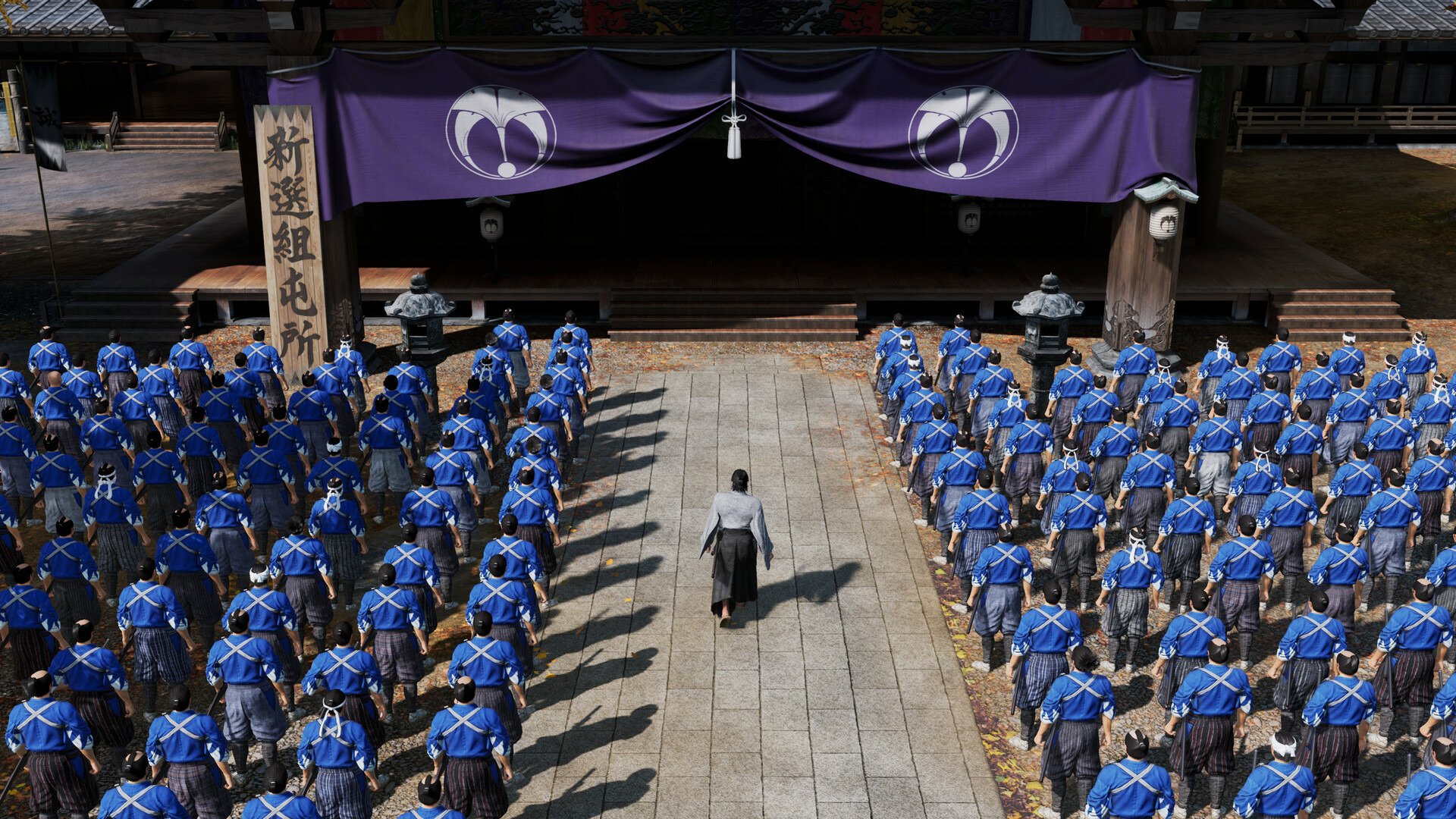
The move from Tosa to Kyo changes the scale and texture of the adventure. Tosa is a castle town where rank determines what different people can risk saying or doing, and Ryoma's initial place within that order helps explain why reform matters to him. Kyo is larger, crowded with visitors, commerce and political ambition. It divides into districts with distinct uses: Fushimi has inns and marketplaces, Rakunai is busy with dining and entertainment, and Rakugai holds a different mix of local places. Gion's night trade and the dangerous Mukurogai present sharply different faces of the same city. Moving between these neighborhoods is more than a way of reaching the next fight. The setting lets the investigation coexist with street encounters, conversations and diversions, so Ryoma's undercover life plays out among people who have their own routines and needs. Named figures such as Shinsengumi chief Kondo Isami, Ryoma's sworn brother Takechi Hanpeita, and Tosa magistrate Yoshida Toyo connect the political scale to individual relationships. Ryoma's relationship with those around him cannot simply be separated into friend and foe by the uniform they wear; the premise asks him to enter a dangerous institution before he knows which of its members he can trust.
Fighting is real-time action with four styles that change both Ryoma's reach and his response to pressure. Swordsman is built around the katana, including controlled cuts and counters that suit direct duels. Gunman gives him a revolver and special ammunition with effects such as blinding or poisoning, letting him threaten enemies before they close in. Wild Dancer combines blade and gun, trading the pure focus of either weapon for a more fluid way to attack and evade around a group. Brawler puts the weapons away and uses fists and objects close at hand. The styles are available as alternatives during a confrontation rather than being four separate campaigns; switching between them changes what kind of opening Ryoma can exploit. A crowd that is awkward to handle at sword range creates a different problem from a single armed opponent. Gunman and Wild Dancer also make the unusual mixture of firearms and swords part of the game's identity instead of a cosmetic historical detail. Heat Actions add the deliberately extravagant finishers associated with the studio, creating a striking contrast with the deadly seriousness of Ryoma's investigation. The combat therefore tells you something about the setting too: this is a world in transition, where older martial ideals share the streets with guns and political violence.
The remake adds a second layer to combat through Trooper Cards. In the earlier Japanese release, the associated soldier abilities were restricted to Battle Dungeons; in this version, they can also be used in ordinary fights. That distinction matters because a card is no longer only preparation for one optional mode. It can be part of Ryoma's regular answer to an encounter alongside his selected fighting style and weapon. Those abilities widen tactical choice, while the four styles continue to define his immediate attacks. It is useful to keep those systems separate: changing from a blade to a revolver alters his basic fighting method, whereas a Trooper Card adds another ability to call on. The 2023 release also revisits the older game's battles rather than simply translating them. Ryu Ga Gotoku Studio describes tighter combat and revised strategic options, and the worldwide version introduces the story with an updated cast and full localization. The result is a game whose historical premise and action systems were built for different audiences at different moments: the 2014 original was released only in Japan, while the remake opens this particular side of the series to players across its modern console and PC platforms.
Kyo is not solely an investigation route between dramatic scenes. New substories and minigames give the city room for smaller stories, recurring faces and activities with rules of their own. At the Utamaruya singing bar, for example, familiar series music returns in Bakumatsu-era arrangements alongside songs made for this release, including ‘Ichizu Samurai’. That detail captures the remake's broader approach to its identity: it is willing to treat a turbulent nineteenth-century setting seriously in one moment, then let the recognizable Like a Dragon appetite for performance and local eccentricity take over in another. Rather than a large empty landscape, the districts feature inns, shops, dining and nightlife as the places where characters and side pursuits can be found. Those activities can interrupt the forward pull of Ryoma's murder inquiry without changing what drives it. They also give the setting a social texture. The difference between a market street, an evening entertainment area and Mukurogai's threat makes Kyo feel like several connected communities rather than one historical backdrop. Following the main trail reveals the political stakes; spending time around town shows what ordinary life and distraction look like while those stakes keep rising.
This version was rebuilt in Unreal Engine 4, the studio's first project using that engine, with new textures and visual detail for its period streets and cinematic story scenes. Its recognizable actors serve a specific dramatic device: they are cast as different historical-fiction characters, not presented as their modern-series counterparts traveling into the past. Ryoma may look like Kiryu, but he belongs to this account of Tosa, Kyo and the Shinsengumi. Japanese-language performances and English subtitles preserve that casting for a worldwide audience. An optional in-game glossary also gives context for the historical people, places and events behind the fiction, while weapon and skill upgrades expand Ryoma’s options as the fights grow more demanding. The base adventure is available across PlayStation 4 and 5, Xbox One and Series consoles, and Windows PC. Digital Deluxe equipment and platform-specific weapon offers are additional products rather than prerequisites for following the murder investigation or using the four core fighting styles. The game carries a Mature 17+ ESRB rating for blood, violence, strong language, suggestive themes and alcohol use, which is relevant to its sharp shifts between political drama, street fighting and adult diversions. As a remake, it does more than preserve a previously Japan-only chapter: it changes where Trooper abilities fit into play, broadens access to the story, and brings its contrasting sword-and-gun combat and densely occupied city to a new release.
- Developer
- Ryu Ga Gotoku Studio
- Genre
- Historical action-adventure