
About Like a Dragon: Infinite Wealth
Ichiban Kasuga travels from Yokohama to Honolulu after learning that his mother may be alive in Hawaii, where his search brings him back into contact with Kazuma Kiryu. Their parallel journeys unfold across two cities in a party-based RPG built around job customization, position-aware turn-based battles, personal bonds, and substantial side activities.
Set in 2022, the story finds Ichiban Kasuga helping former yakuza members find work through Hello Work in Yokohama. A damaging online video upends that routine, and a meeting with Jo Sawashiro leads to news that Ichiban’s mother, Akane, is alive in Hawaii. He travels to Honolulu to find her, while Kazuma Kiryu arrives there on a separate assignment for the Daidoji Faction. Their meeting connects two generations of the series: Ichiban searches for Akane while Kiryu faces obligations and an illness that reshape his own journey. The story moves between Hawaii and Japan, following a conspiracy that draws people from both places into the same conflict. Its setup is personal and practical—find Akane, understand the forces surrounding her, and decide who can be trusted.
The party combines returning faces with people Ichiban meets in Hawaii. Eric Tomizawa, a taxi driver who knows the island and speaks Japanese, becomes an early ally; Chitose Fujinomiya joins after their paths cross there. Kiryu’s return also brings back familiar Yokohama companions: Nanba, Adachi, Saeko, Seonhee, Joongi Han, and Tianyou Zhao. Their relationships are part of the game’s structure as well as its plot, while local power groups give the Hawaiian story its own criminal landscape. The Barracudas, led by Dwight Méndez, and the Ganzhe, commanded by Wong Tou, are rival forces in Honolulu; the Palekana religious group is another major presence. In Yokohama, the Seiryu Clan remains central to the underworld upheaval. These factions make the overseas setting a lived-in community with competing interests, rather than a brief backdrop for a Japan-set story.
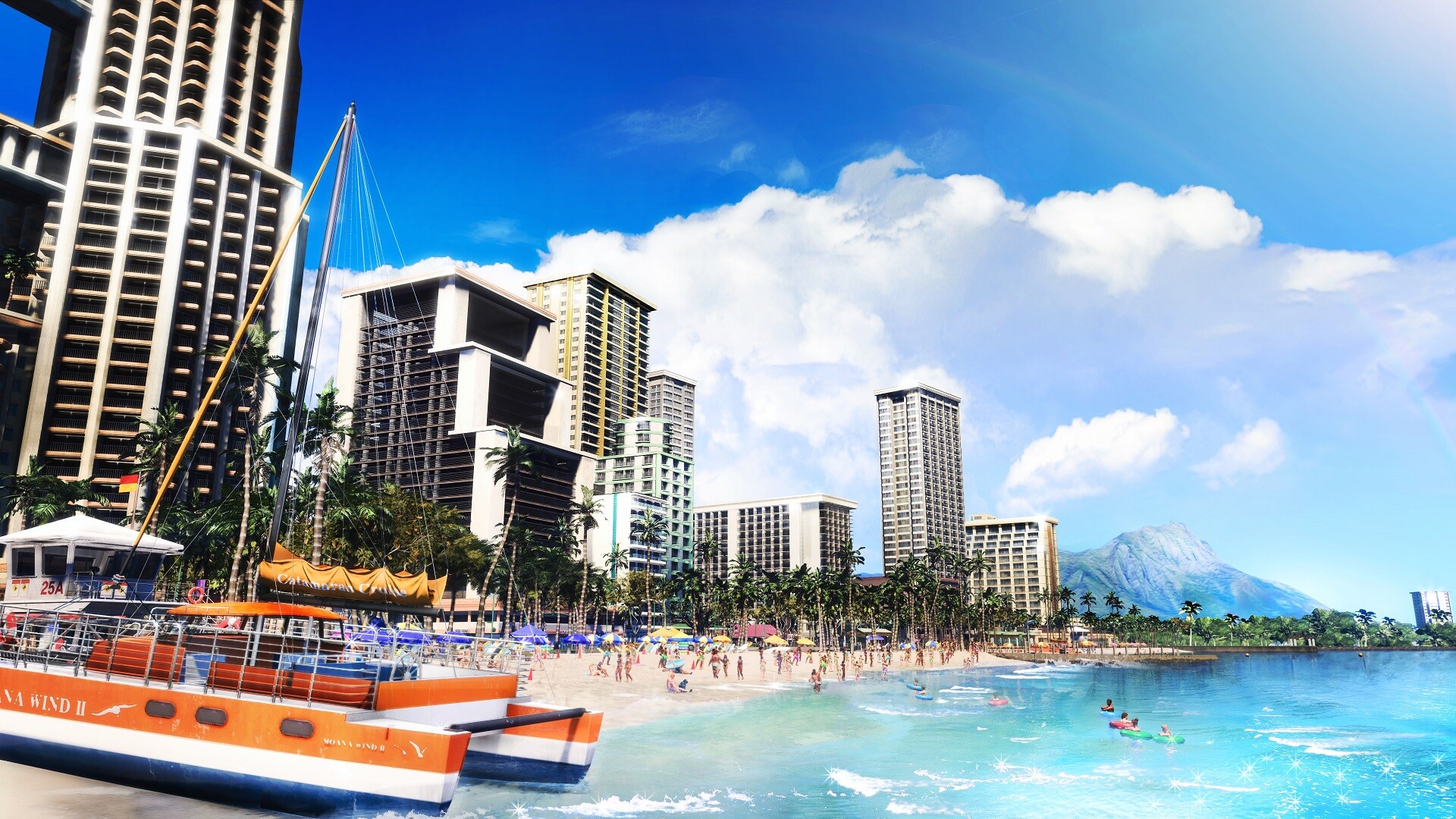
Honolulu is the largest new environment, with walkable districts that serve different everyday purposes. Waikīkī and Worldwide Market Village focus on shopping, Anaconda has an arcade and places to eat, Chinatown shifts between daytime markets and nighttime activity, and Little Japan reflects the local Japanese community. Aloha Beach lets Kasuga and companions swim together. Across the Pacific, Isezaki Ijincho returns as a familiar Yokohama hub, and Kamurocho also appears as the story moves between the two men’s histories. Streets hold enemies, shops, recovery items, equipment, and materials; taxis connect the larger districts. Encounters, substories, conversations, and minigames are placed throughout these spaces, so moving through town can advance both party relationships and character growth. Activities such as Crazy Delivery turn Honolulu streets into a stunt-based bicycle delivery route, while karaoke and arcade games offer diversions in both countries.
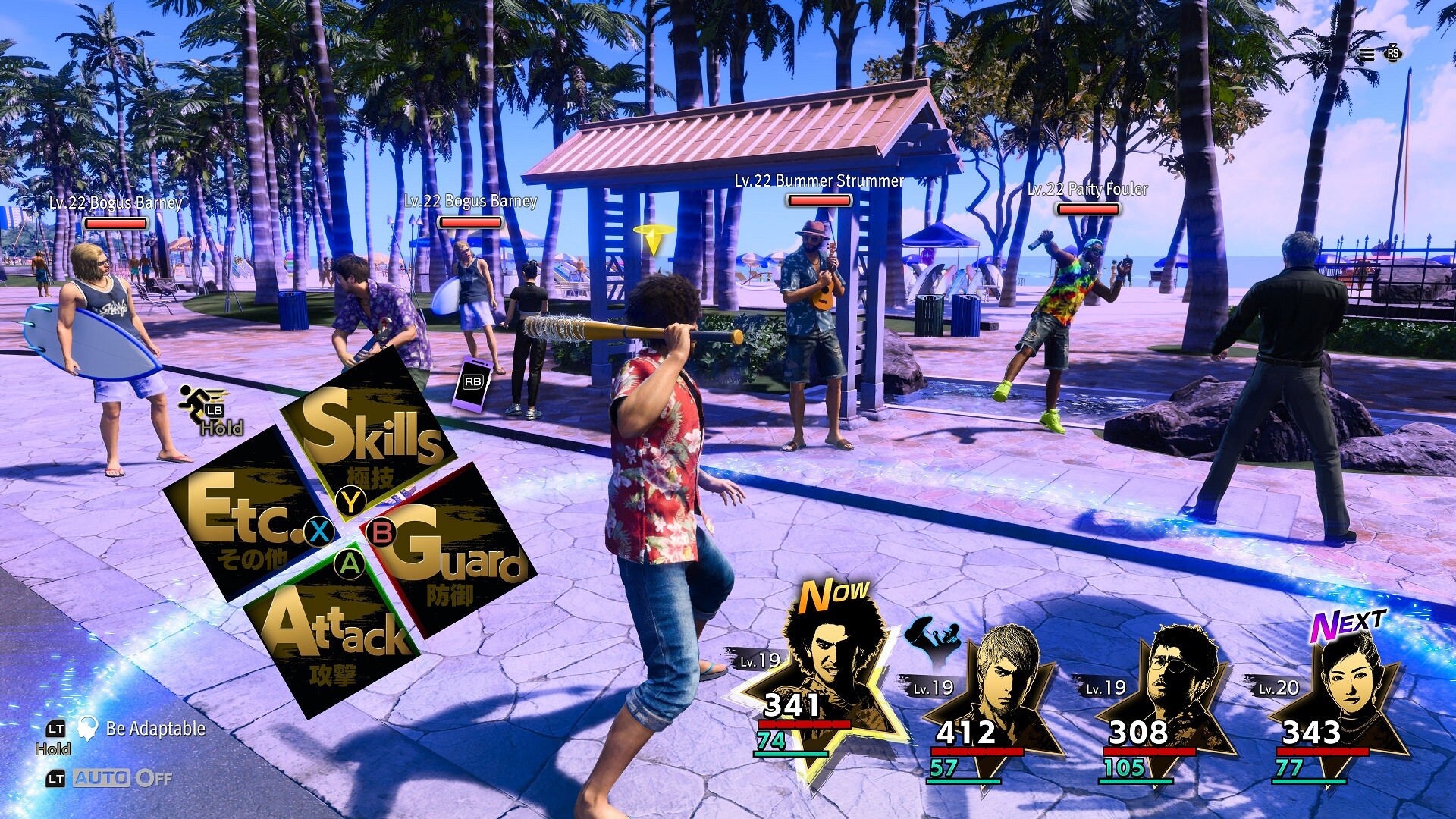
Combat remains turn-based, but the Live Command RPG system gives each active character a movement radius on their turn. Before choosing a command, the player can reposition to approach an opponent, move beside an ally for a combo, line up several targets for an area attack, or put a wall behind an enemy for added impact. Nearby signs, bicycles, and other objects can be picked up as weapons along an attack path. Timed inputs during special moves can add hits or redirect a strike, and a timed guard reduces damage from incoming attacks. Turn order depends on agility and preceding actions, so a character’s position and a foe left prone can change what the next party member can accomplish. Battles award experience, job experience, bond points, money, and items, tying tactical encounters to longer-term progression.
Jobs change each character’s fighting style, weapon access, and skill selection. Ichiban’s Hero role combines bat attacks with healing and party boosts; Tomizawa’s Cabbie uses a wrench and electrical or water techniques, while Chitose’s Heiress job uses dance-based speed and debuffs. Honolulu’s Alo-Happy Tours introduces new work styles through paid activities that also require Ichiban to meet personality thresholds. Job changes happen in Alo-Happy Rooms, and characters can carry selected skills learned in other jobs into a new role. Kiryu’s exclusive Dragon of Dojima job is built around his brawling, rapid, and heavy styles, plus a temporary Action Mode that lets him move and use Heat Actions. Bonds grow through shared battles, conversations, gifts, meals, karaoke, and Walk & Talks; higher bonds unlock stronger tag-team and combo options as well as personal scenes at the Survive and Revolve hangouts.
Sujimon are both a city activity and a battle roster. Kasuga can recruit some opponents after street fights or raids by offering a Suji Gift, and gacha machines provide another way to make allies. The Sujimon League becomes available as the story progresses; its separate battles use three creatures on the field and up to three in reserve. Each creature has one of five types—Frost, Blaze, Nature, Light, or Shadow—and exploiting an opposing type weakness builds momentum. Position matters too: straight-ahead attacks are stronger than diagonal strikes, and diagonal attacks may fail to reach distant targets. Sujimon Power lets the trainer issue attacks; those attacks build the trainer’s Morale Points, which enable special moves when enough have accumulated. Training, awakening, and evolving a roster improves its stats and can add skills, while victories raise trainer rank and progression against the league’s named challengers.
A much larger change of pace arrives at Dondoko Island, which opens from Honolulu after story progress and starts as a resort buried in rubbish. Kasuga uses a bat to clear garbage, trees, and rocks for materials, then spends those resources on crafted furnishings and buildings. Making furnishings raises Building Talent, which expands the catalog; placing decorations improves guest Satisfaction, while collecting local specialties raises Popularity. Clearing polluted areas costs Dokobucks and Building Talent but creates room for development, and higher cleanliness discounts those cleanup costs. As Resort Rank increases, shops stock more items and further island content opens. The player can build guest lodgings, choose visitors based on their budgets and requests, and satisfy them during three-day stays for payment. The island’s daily missions also award Dokobucks, giving this resort-building system its own resource loop beside the main story and combat.
- Developer
- Ryu Ga Gotoku Studio, a SEGA studio (official product page credits SEGA Corporation)
- Genre
- Role-playing game with turn-based party combat