

About Like a Dragon Gaiden: The Man Who Erased His Name
After faking his death to protect his loved ones, Kazuma Kiryu lives under the codename Joryu as an agent of the Daidoji Faction. An investigation draws him back into the criminal underworld, where he moves between Sotenbori and Yokohama, takes Akame’s jobs, and fights using either his forceful Yakuza style or gadget-driven Agent techniques.
Following the events of Yakuza 6, Kazuma Kiryu has faked his death to protect the people he loves and entered the Daidoji Faction under the codename Joryu. His new work demands anonymity from a man whose past as a Tojo Clan chairman makes anonymity difficult. A task involving illegal gold smuggling at Yokohama’s port turns dangerous when a mysterious group appears and seems to recognize him. The resulting story places Kiryu between the faction that now controls his life and the criminal world he tried to leave behind. The cast gives that conflict specific faces: Kihei Hanawa manages him within the Daidoji, Akame knows the workings of Sotenbori and becomes an important source of local work, while Kosei Shishido and Yuki Tsuruno are tied to the Watase Family and Homare Nishitani III leads the Kijin Clan, a subsidiary of the Omi Alliance. The setup keeps the central tension personal as well as political: Kiryu has changed his name, but the reputation and loyalties attached to his former identity continue to shape the people he meets and the choices he faces.
Sotenbori in Osaka is the main setting, with Isezaki Ijincho, a harbor city in Yokohama, providing another major location. Kiryu risks being recognized in Omi Alliance-controlled areas; in Ijincho, the Seiryu Clan becomes a target of his investigation. These are urban spaces organized around streets, businesses, local characters and criminal influence. Akame’s role connects roaming around Sotenbori with short adventures: as a jack-of-all-trades, she assigns Kiryu varied jobs outside the central plot, and those requests can lead to familiar faces or surprising encounters. Movement centers on traveling between city districts and points of activity. The streets also house diversions with their own rules. CourStar, a bar and cafe in Sotenbori, hosts Pocket Circuit. Pocket Circuit Fighter Ran supplies car bodies and parts, while Time Attack and Rival modes let Kiryu race for a fastest time or challenge opponents around town. The Boutique lets Kiryu customize his appearance with suits, shirts and other garments between investigations and fights. The result is a city adventure in which the same districts support investigation, side jobs, recreation and the abrupt encounters that bring the combat system into play between major events in Sotenbori.
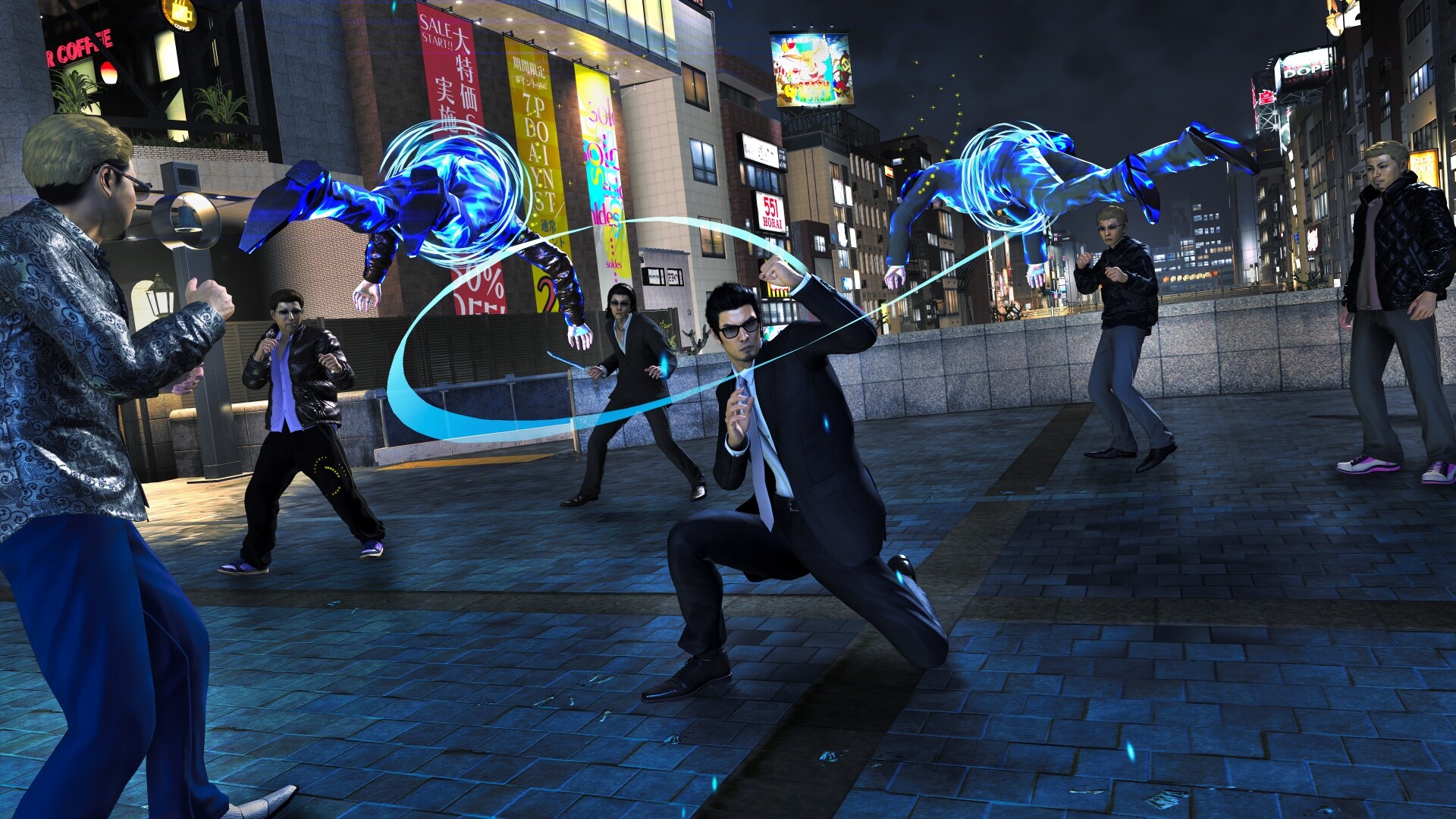
Kiryu travels between districts, venues and encounter sites in Sotenbori and Isezaki Ijincho, with city streets connecting shops, jobs and diversions. Ordinary movement keeps the focus on exploring the urban areas rather than navigating a separate traversal course. The clearest movement mechanic belongs to Agent Style: Serpent is a compact jet device concealed in Kiryu’s shoes that grants bursts of speed. It supports quick approaches and retreats, and a tackle at that speed can strike with great force. This makes mobility part of combat positioning instead of a separate navigation system. Agent Style builds on that positioning through gadgets. The Spider projects thin wires that can restrain enemies, pull them closer, throw them down, pick up nearby weapons or take weapons away from opponents. Firefly bombs can be thrown in a sequence and timed so their blasts chain together, rewarding attention to timing and placement. Bee drones autonomously fly in to disrupt enemies and follow Kiryu during his agent duties. Yakuza Style is the counterpoint: it relies on forceful punches and kicks and on turning objects in the environment into weapons. The two styles can be mixed during fights, so the player can choose whether to close in, control a target, create a disturbance, or overwhelm opponents with direct attacks. Street weapons also feed into Yakuza Style, letting Kiryu turn nearby objects into attacks instead of relying only on his own fists and kicks.
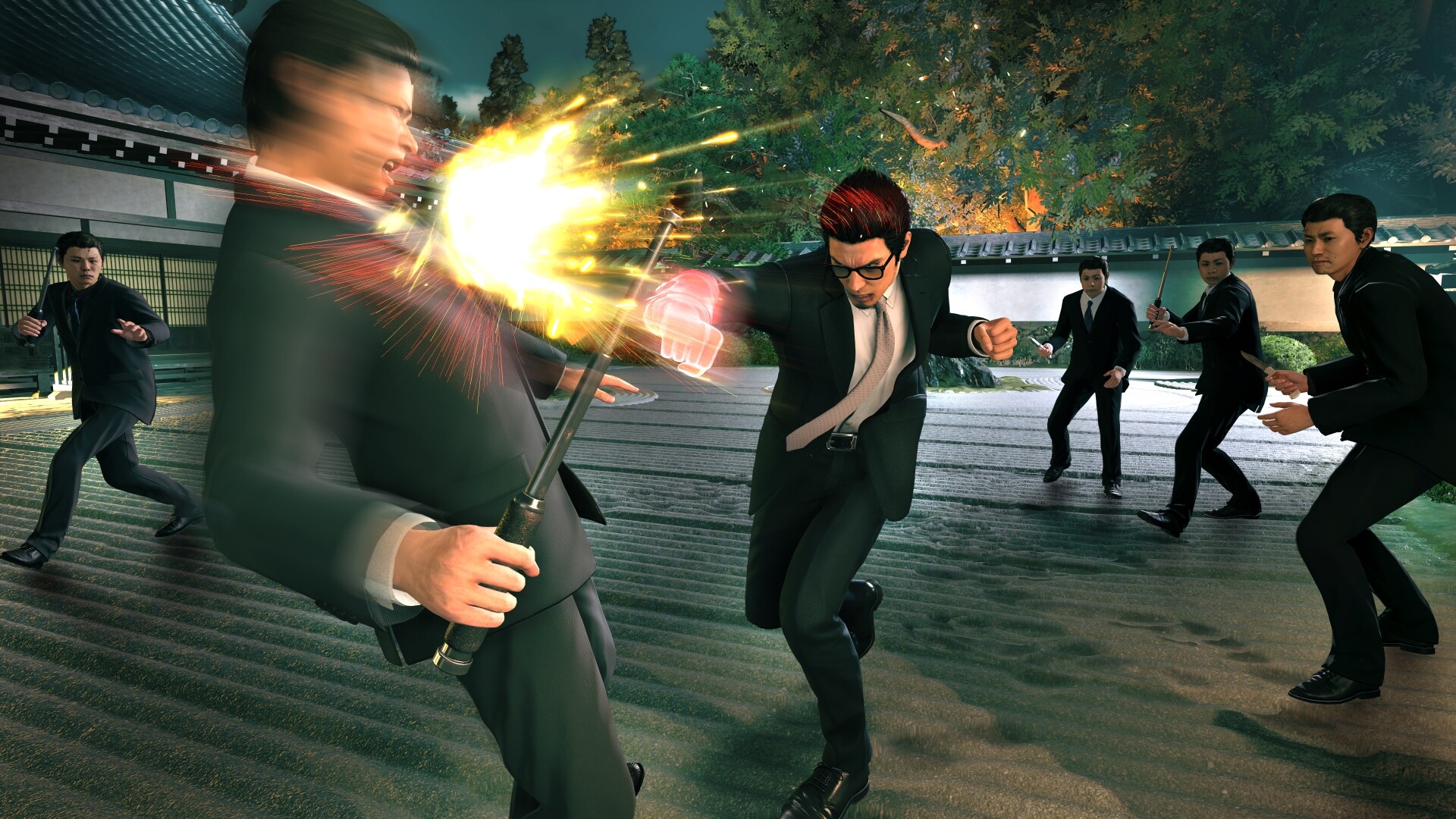
Character development uses money and named systems rather than a single undifferentiated experience track. The Daidoji provide Kiryu with a catalog of books that can teach new skills and abilities; books have different prices, and completing the catalog can require substantial spending. Some texts describe a technique, inspire Kiryu to develop a new one, or remind him of a move from his past. Gadgets have a separate improvement route through a weaponsmith. Spending money to raise their levels can increase uses, projectiles or effect duration, and some upgrades add further functions. In battle, Yakuza Style includes charged attacks that deal extra damage: quick combos can lead into charged finishing blows, while Resolute Counter lets Kiryu answer after an enemy attack connects, so its timing depends on letting the strike land before countering. Both styles also have their own Heat Actions. Once the Heat Gauge reaches its threshold, Extreme Heat Mode enhances the active style. In Yakuza mode Kiryu can chain attacks, automatically use nearby weapons and perform Heat Actions repeatedly; Agent mode boosts the gadgets, from additional Spider wires to a swarm attack by Bee drones. These systems connect preparation and moment-to-moment fighting: purchases expand options, upgrades tune tools, and the chosen style shapes how a full Heat Gauge is converted into pressure.
The Castle, a ship that serves as an adult theme park for a limited group of VIPs, gives the game a separate combat hub in the form of the Coliseum’s Hell Arena. Tournament and Hell Rumble pit a competitor against groups of opponents; Special Event Matches use randomly selected fights with unique rules; Hell Team Rumble is a team-versus-team event in which Kiryu gathers allies to face the arena’s demons. Team placement matters: resilient fighters can hold the front while support or ranged allies attack from behind, and each member’s individual traits shape the strategy. The Fighters’ Lounge lets Kiryu recruit allies and build stronger ties with current members, expanding the combinations available for Coliseum events. The presentation moves between a serious crime story and deliberately varied leisure activities, all within the same city framework. The base game is listed for PlayStation 5 and 4, Xbox Series X|S and Xbox One, Windows and Steam; the game is also available through Game Pass. The Legendary Fighter Pack is additional content, sold separately or included with Deluxe, and adds Goro Majima, Taiga Saejima and Daigo Dojima to Coliseum battles. It should be kept distinct from the base-game plot and roster.
Several diversions are designed as activities with their own progression and social context. The Cabaret Club takes a different approach: players choose among five individuals, build rapport over an evening, and may be invited to spend additional time together. Its hostesses are portrayed by live-action models, distinguishing the club from the game’s stylized street encounters. Karaoke adds the new song “Sayonara Silent Night,” whose lyrics reflect Kiryu’s difficulty telling the woman he loves his true feelings and echo his decision to live alone. He can also sing a duet with Akame. The updated Darts Live 3 machine includes Count-Up Cricket and novelty darts shaped like roses and forks. At the arcade, Fighting Vipers 2 and SEGA RACING CLASSIC 2 join other games, while the Master System includes titles such as Galaxy Force and Flicky. These stops give the city self-contained pursuits tied to its venues and residents, letting Kiryu step away from his assignment. The club’s evening structure makes conversation and rapport part of the activity, while karaoke and darts turn familiar entertainment into playable diversions. The arcade and Master System selections also place recognizable games inside Sotenbori’s nightlife rather than treating the district as scenery alone.
- Developer
- Ryu Ga Gotoku Studio; Sega Corporation listed as developer/distributor
- Genre
- Action-adventure