
About Left 4 Dead
Left 4 Dead is a cooperative first-person action horror shooter about four strangers crossing infected American cities and countryside in search of escape. Move between safe rooms, share scarce supplies, and protect teammates from common infected and specialized attackers. Its four original campaigns and competitive Versus mode put the same survival route in players’ hands.
An outbreak has emptied streets, homes and public spaces, leaving four survivors to move through a country in collapse. Bill, a veteran soldier; Louis, an office worker; Zoey, a student; and Francis, a biker have different temperaments, but the game gives them the same immediate need: stay alive and get to the next point of safety. They communicate through short exchanges as they travel, calling attention to ammunition, danger and teammates in trouble. The story is delivered mainly through those conversations and the spaces they cross, rather than long cutscenes or a detailed account of how the infection began. The world is recognizable but broken, with blocked roads, abandoned vehicles and improvised shelters marking the route.
The four original campaigns each frame the survivors’ escape as a horror movie. No Mercy begins among the ruined buildings of Fairfield and pushes toward the rooftop of Mercy Hospital. Death Toll moves through a wrecked turnpike and the small town of Riverside; Dead Air takes the group from Newburg’s business district toward an airport runway; Blood Harvest sends them through dark woodland and farmland toward an evacuation area. Each campaign is split into five large maps, with the earlier chapters ending at sealed safe rooms and the finale building toward a rescue or escape. A later Left 4 Dead add-on, The Sacrifice, is also listed with the game, while Left 4 Dead 2 is a separate sequel with its own survivors, campaigns and added content.
A campaign is played by one to four people, with computer-controlled allies filling empty survivor positions in solo play. The route is shared: players move through the same spaces, fight the same advancing horde and reach the same safe-room doors. A teammate who is caught by a Hunter or dragged away by a Smoker needs someone else to interrupt the attack. If a survivor is knocked down, another player can help them back up while covering the area. Safe rooms divide a long escape into manageable chapters, but reaching one with poor health or a depleted team can make the next section more difficult. The basic rhythm is therefore forward movement, sudden interruption, regrouping and another push toward shelter.
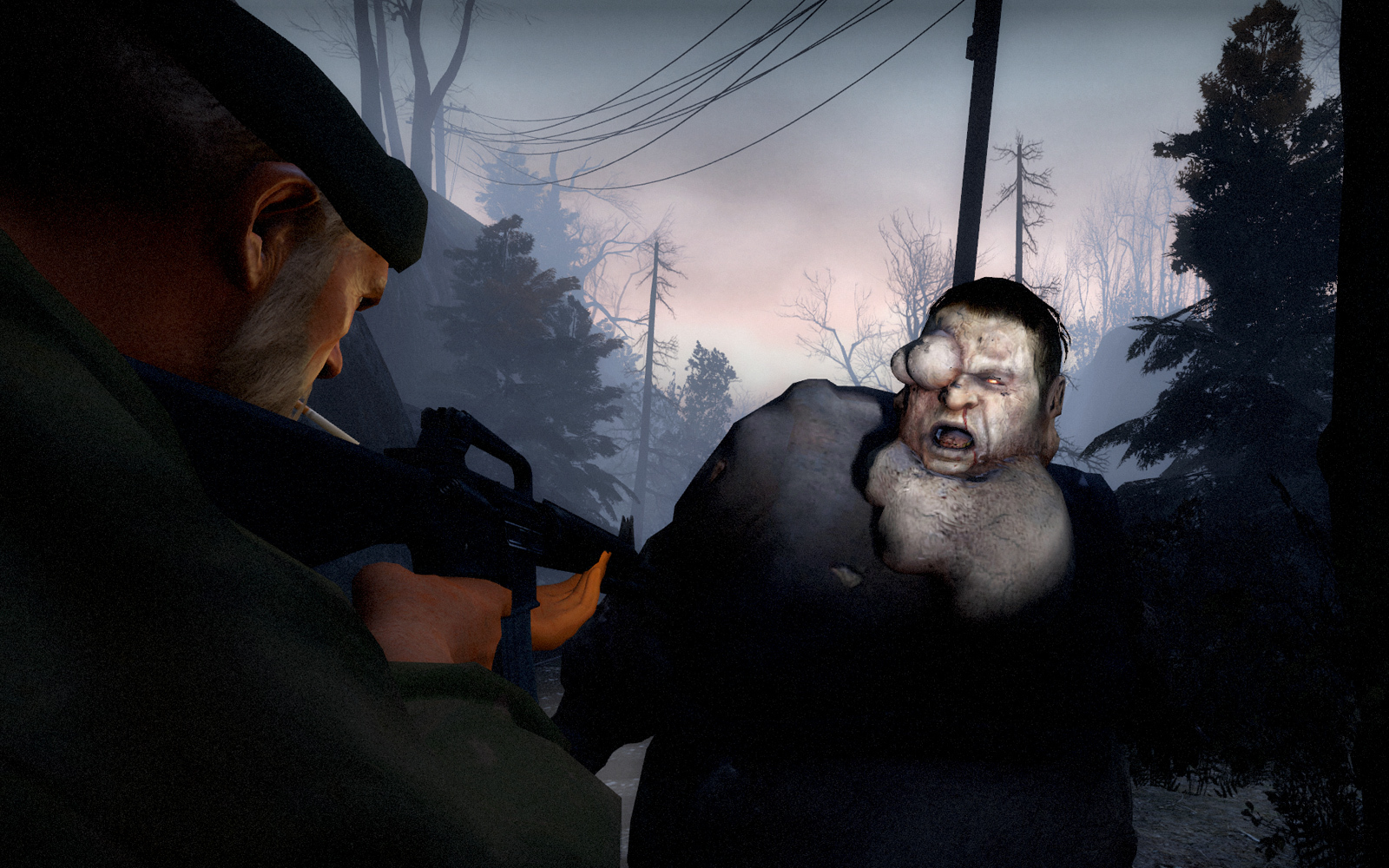
Most of the infected attack as a crowd, running toward noise and movement until they surround anyone who cannot keep distance. The specialized infected make a group respond in different ways. A Boomer’s bile obscures a survivor’s view and attracts a horde; a Smoker reaches from cover with its tongue and pulls someone away; a Hunter leaps onto a target and pins them. A Witch cries in a dark corner and can become dangerous if disturbed, while a Tank uses brute force to break up the group. In Campaign, computer-controlled threats create these interruptions. In Versus, human players can control special infected, so a coordinated ambush can combine different abilities while the survivor team tries to reach the next checkpoint.
Survivors carry a primary gun such as a shotgun, submachine gun or assault rifle, alongside pistols with unlimited ammunition. Ammunition piles, first-aid kits, pain pills, pipe bombs and Molotov cocktails are picked up along the route. The limited inventory makes supplies a team concern: a kit can be used to heal another survivor, pills provide a temporary boost, a pipe bomb deals explosive damage, and a Molotov can hold a section of ground with fire. Optional rooms may contain useful items, but leaving the main path costs time and exposes the group to further attacks. The game does not turn this into a character-stat build or a gear-upgrade tree; preparation is about what the team finds and how it uses those items before the next safe room.
The Director varies the placement and intensity of infected based on how the team is doing. It can create a quiet stretch that lets players advance, then raise the pressure with a horde or special attacker. Weapon, ammunition and health-item placements also change between runs, so a familiar corridor may still demand different choices. The broad objectives remain readable—cross an area, open a route, activate something needed for escape, or hold out until help arrives—while the order and force of encounters shift around them. This system ties the pace to the survivors’ condition: sprinting ahead can leave someone isolated, but stopping to search every side room can expose the team to another wave.
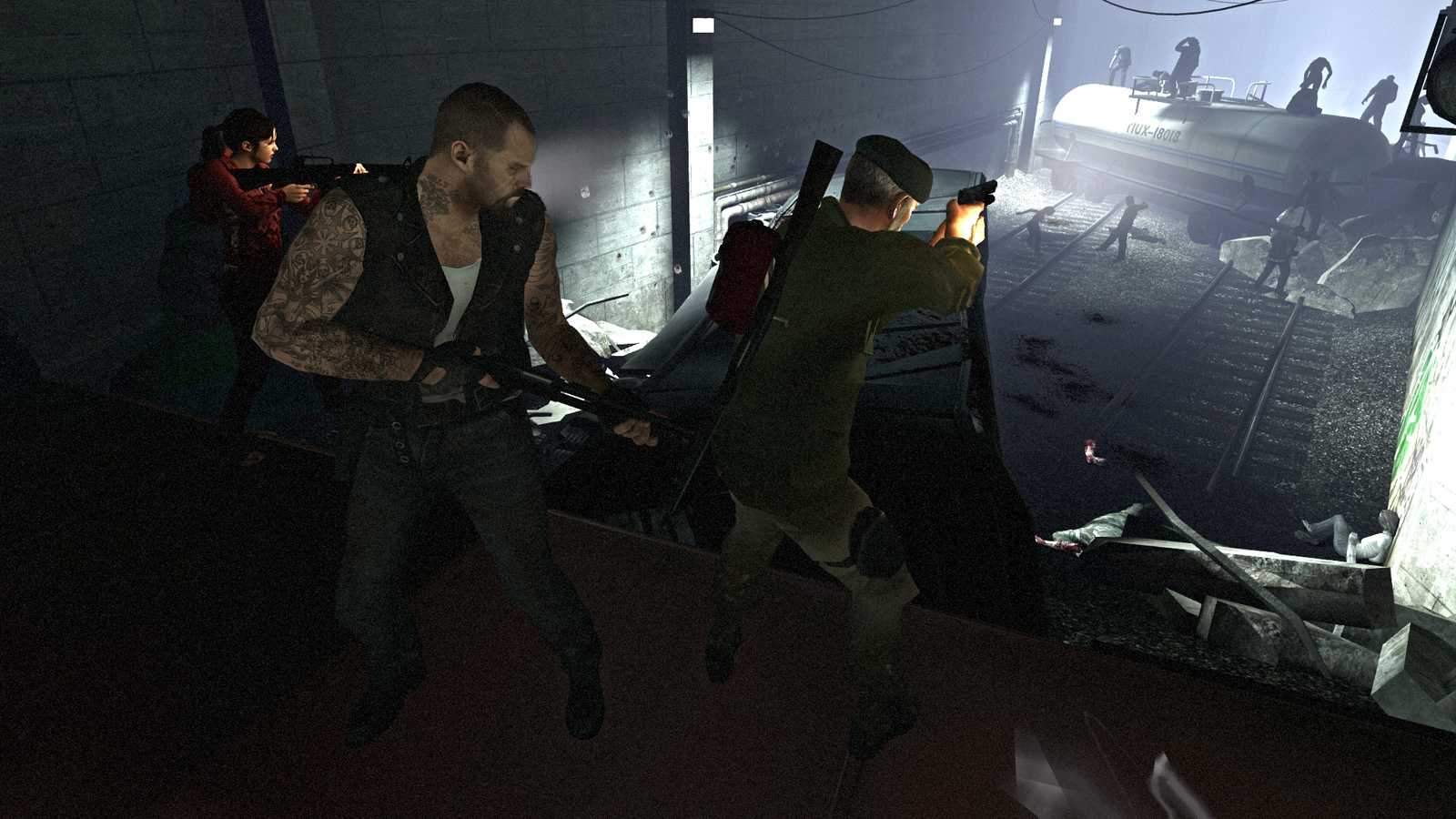
Left 4 Dead also has Survival, which asks the team to endure an infected assault in a contained area, and Versus, which turns campaign sections into an alternating contest between survivor and infected teams. In Versus, each side advances through or attacks the same route, and players switch roles between rounds. A survivor’s knowledge of corners and chokepoints can inform where an infected player attempts to strike; the other side must cover one another and keep moving. These modes use the same four characters, weapons and enemy abilities but change the goal from reaching safety against computer-controlled opponents to competing over survival and campaign progress. The first game’s four survivors and original campaign settings give each mode a common foundation.
- Developer
- Valve
- Genre
- Cooperative first-person action horror shooter