
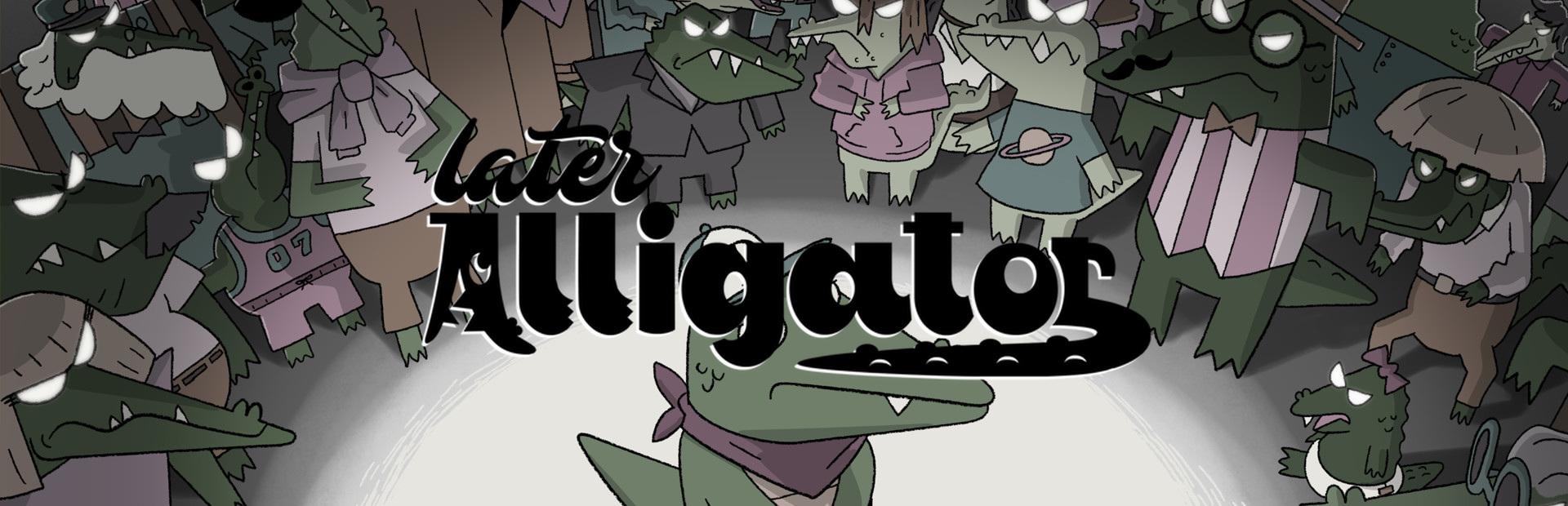
About Later Alligator
In Alligator New York City, a nervous alligator named Pat believes his family’s mysterious Event may put him in danger. You investigate by visiting the city’s residents, asking about Pat and the plans, and taking on their minigame challenges. Each meeting adds clues, portraits and comic detours to a hand-animated point-and-click mystery with multiple endings.
Later Alligator casts the player as an unnamed, besuited alligator asked to help Pat, a small and anxious reptile who is convinced that his relatives are plotting against him. The concern centres on a mysterious Event the family is preparing in Alligator New York City, and Pat wants someone to find out what it means before it happens. That setup turns a city visit into a comic investigation: travel between neighbourhoods, speak to members of Pat’s extended family and other residents, and see whether their answers clarify the plan. The game keeps the mystery in motion through a clock and scheduled returns to Pat, so the player’s choice of who to visit has a practical consequence as well as a narrative one. Pat seems mostly harmless and probably innocent, while his nervousness about the approaching Event drives the investigation. The premise plays with hard-boiled detective and crime-family conventions through an alligator cast and a family-friendly cartoon tone. Residents can be eccentric, guarded or involved in their own odd errands, and their connection to Pat gives the investigation its social structure. The investigation advances through conversation, exploration and tasks offered by residents rather than a combat system or deduction board.
Alligator New York City is explored through point-and-click movement across animated urban locations. The player clicks and drags the suited character around each screen, inspects places and objects, and uses a map or transit control to move between districts. A watch tracks the passage of in-game time, making travel and some character challenges part of a limited schedule. The city is filled with residents rather than being a set of empty clue rooms: more than 100 animated alligators fill the city, and the player can meet them and help solve their problems. The locations include public spaces and storefronts, with small details that reward looking around; some clickable objects trigger a brief animation or joke. The point-and-click interface keeps the player’s attention on the drawn scenes and their inhabitants. A notepad presents questions about who a person is, Pat, and the Event, giving conversations a repeated framework while individual characters supply different responses. The player can move from one screen to another, decide which person to approach, and return to Pat when the schedule calls for it. This structure makes navigation part of the investigation: a character’s location, the remaining time and the prospect of an unanswered question all affect where the player goes next. Objects can also trigger short visual gags when selected, so room-level browsing sometimes yields a reaction even when it does not advance the central question. The tram and map controls link these screens into a network of districts, and the route repeatedly returns to Pat for scheduled check-ins.
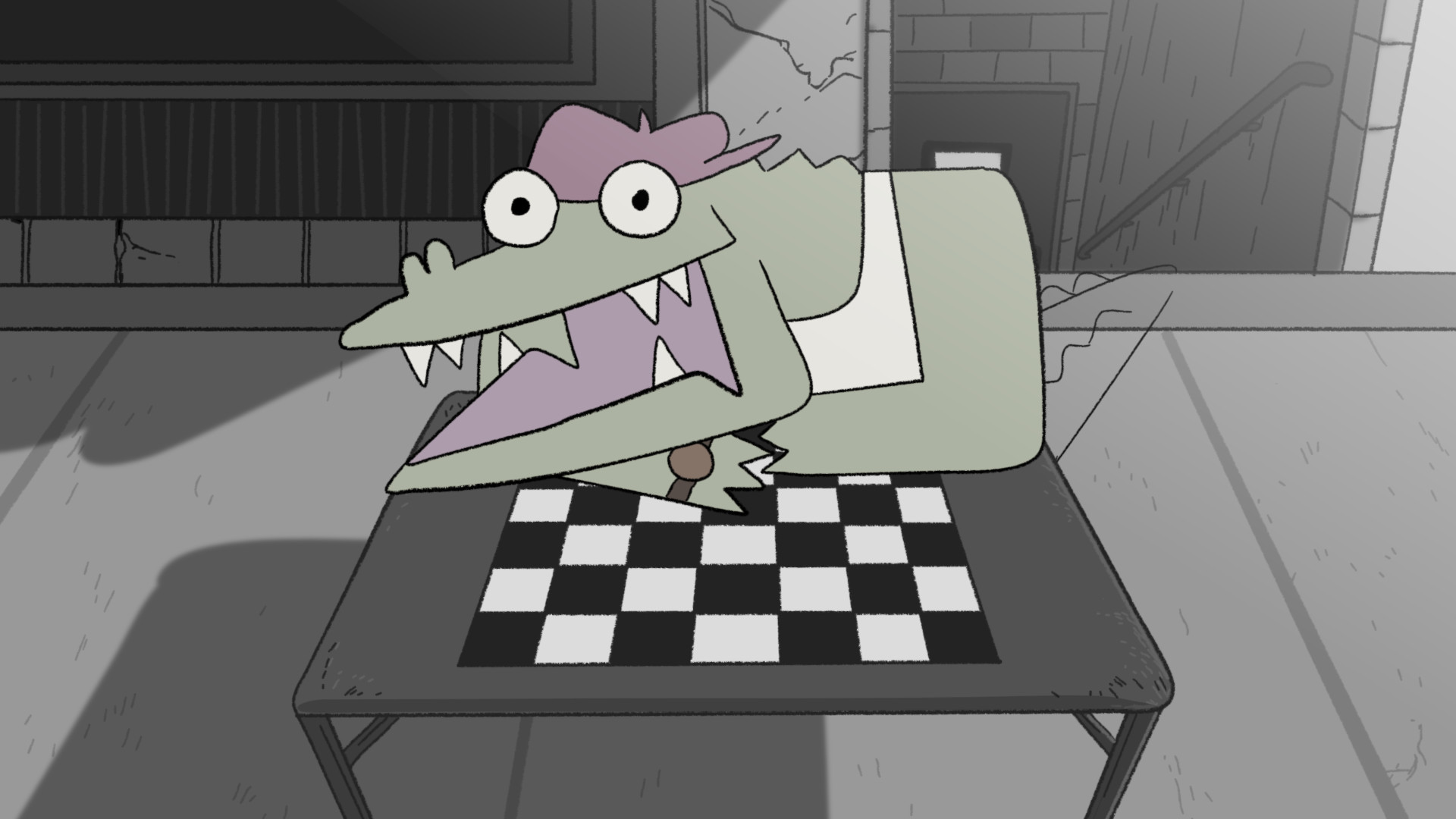
Most of the investigation’s interactive challenges arrive as minigames. Family members and other residents may ask for a favour or invite the player to take on a task before sharing what they know. The game includes a broad set of joke-filled challenges rather than one central puzzle format: examples include pinball, a claw machine, spot-the-difference, a sliding tile puzzle, a matching memory challenge and a playful Flappy Bird-style activity. Their different rules make each conversation a potential shift in activity, from looking carefully at an image to controlling a small game within the larger one. The challenges are integrated into the world as requests from the characters, and their result helps advance the conversation about Pat’s Event. About thirty minigames and challenges are tied to characters across the city. This large collection gives the investigation a changing activity at each stop and serves as the main vehicle for animated comedy. The player’s tasks centre on conversation, exploration and varied challenges.
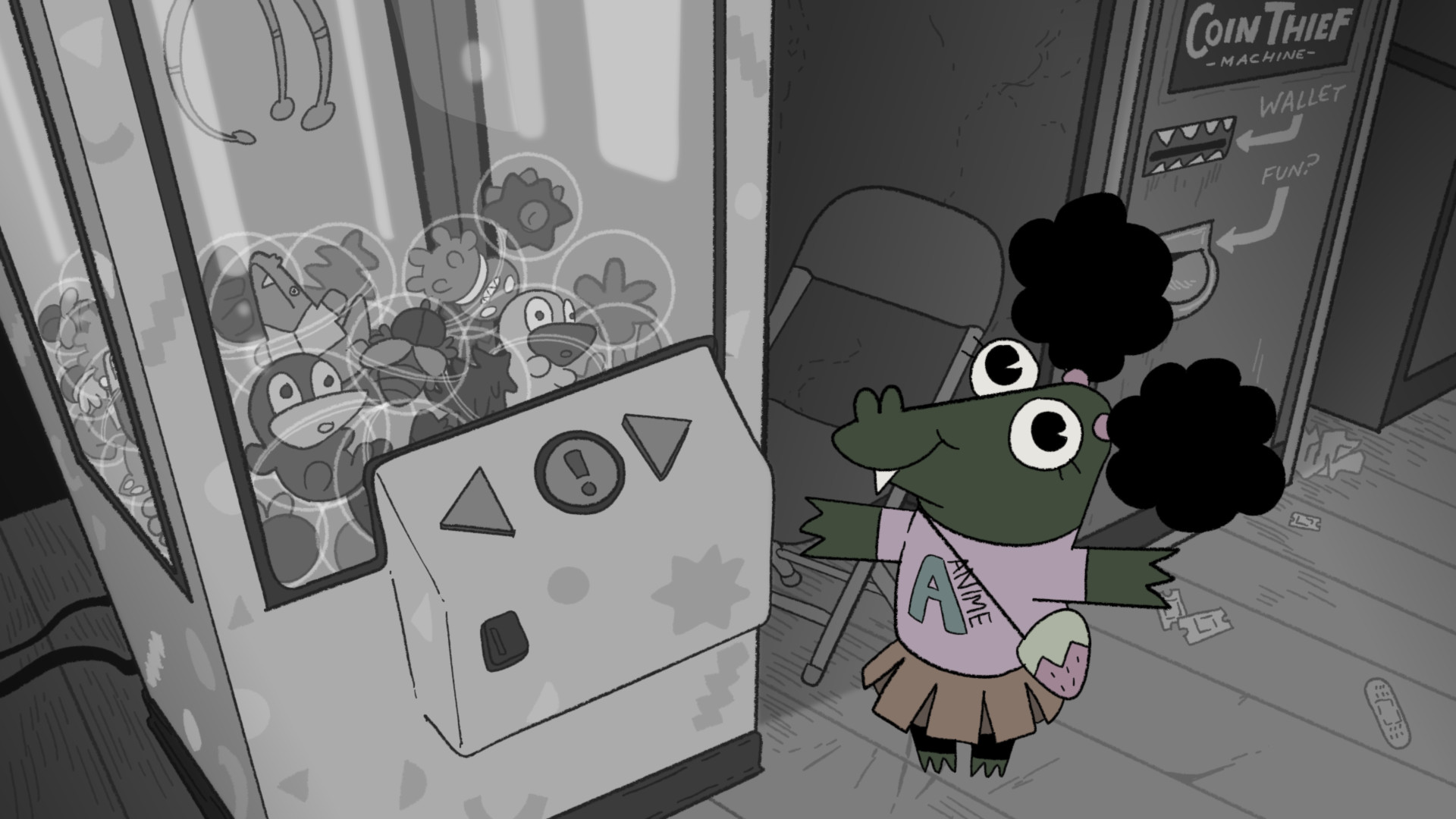
The clock makes the city route a form of light planning. A watch shows the time, and travel and conversations consume in-game time, while a failed minigame retry can cost fifteen minutes in the reviewed PC version. Pat also expects the player to check in at set times, so the player cannot simply exhaust every conversation and challenge before the Event in one continuous visit. Failed minigames can take additional time when retried, which creates a tradeoff between attempting a difficult task again and visiting another resident. This limited schedule shapes what can be learned during a run, while supporting the game’s multiple endings and replay structure. The game offers multiple endings and a secret surprise, supporting another visit to the city. A later visit can therefore reach people who were missed before and lead to a different result. Because the schedule restricts how much of the city can be covered at once, the player chooses which leads and requests to prioritise rather than treating the family as a checklist that must be completed in one pass. The same mystery, cast and minigame structure runs across the PC, Mac, Linux and Switch releases.
Progress is recorded through the people the player meets and the items found while exploring. Successful character challenges can award a portrait badge associated with that family member, which can be placed into a family tree, making the growing collection a visible record of the investigation. Lovely Maria is identified as the relative who helps place those badges in the tree; among the named residents are Joanie, a pinball player, Tin Lizzy, an aspiring social-media influencer, and Bobby Blue Eyes, a tough-looking gator with a softer side. Small hidden puzzle pieces are also tucked into city scenes; careful clicking and searching can reveal them, and the game features a secret surprise alongside its multiple endings. These collectibles offer another reason to revisit locations and inspect their details beyond the immediate conversation. The family tree gives the social cast a simple organizing structure: the investigation is about Pat’s relatives and acquaintances, not only about reaching a final answer to the Event. The city’s large population means the player encounters many individual characters, while the badges connect their portraits back to Pat’s family. Replaying then has a clear purpose: meet people missed during an earlier route, take on their challenges and add more of the cast to the record. Character encounters, minigames, portraits, hidden pieces and multiple endings form the game’s progression loop.
The visual presentation is built around hand-drawn, frame-by-frame animation. SmallBu Animation hand-draws each frame to create a fully animated cartoon, combining its art and animation with Pillow Fight’s game development. Characters move and gesture within their scenes, while the city’s deliberately odd details help establish a comic take on a hard-boiled mystery. 2 Mello’s soundtrack accompanies city exploration with smooth alligator jazz. The tone balances the goofy premise with occasional eerie corners, which allows a normal city errand or minigame to sit beside its stranger imagery without turning the whole experience into conventional horror. The interaction stays rooted in the cartoon: residents speak through written dialogue, respond with animations and lead the player into challenges staged as part of the world. The PC versions are single-player adventures on Windows, macOS and Linux; Nintendo Switch supports one player with TV, tabletop and handheld play modes. The game’s shared core is the urban mystery, the animated alligator cast and the sequence of conversations and minigames. Its clock, varied tasks and limited cast coverage per run make revisiting the city part of how the story and its other outcomes are discovered.
- Developer
- Pillow Fight with creative team SmallBü Animation; Steam lists both SmallBü and Pillow Fight.
- Genre
- Point-and-click adventure with minigames; official Steam genre is Indie.