
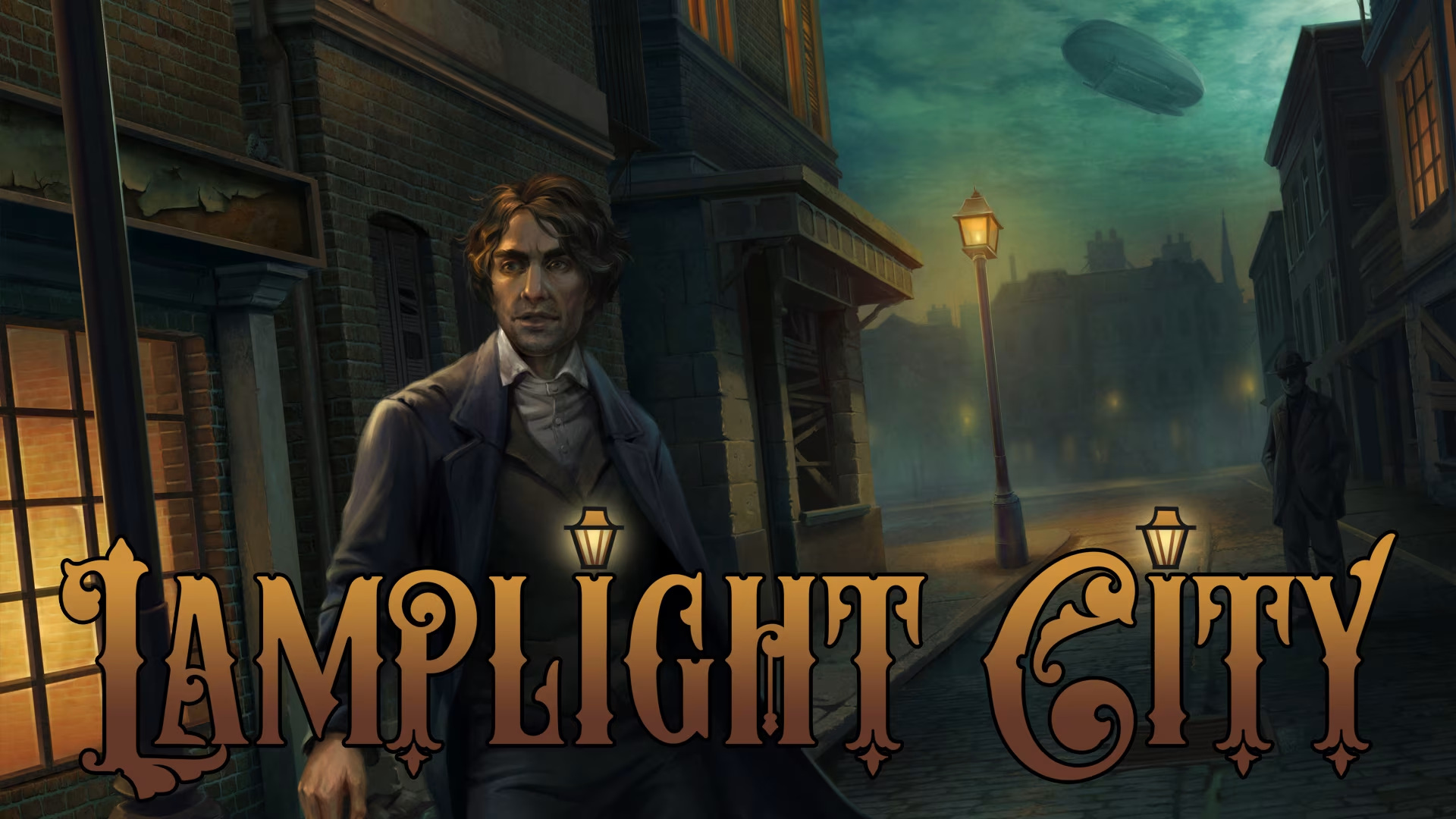
About Lamplight City
Private investigator Miles Fordham takes on five cases in New Bretagne, a port city shaped by class divisions and experimental steam technology. As he searches for justice for his clients and his former partner, dialogue and choices can open or close leads. This point-and-click adventure records clues in a casebook and lets a case remain unsolved without stopping the story.
Lamplight City follows private investigator Miles Fordham through New Bretagne, a port city in a fictional alternate nineteenth century. The city presents itself as a gateway to progress, with industrial development and experimental steam technology, but its promise of advancement rests alongside poverty, class division and crime. Miles was a police detective before the death of his partner, Bill, led him to leave the force. Bill’s voice continues to speak to him, shaping the personal pressure behind a series of client cases and Miles’s pursuit of the person responsible for his partner’s death. The Victorian and steampunk details belong to the social world of the investigation: people inhabit different boroughs, and their access to power and technology is uneven. The story moves between individual mysteries and the wider question of what kind of detective Miles will be. Rather than presenting him as an infallible solver, the game allows conversations and decisions to narrow or close leads. Miles’s work is shaped by that uncertainty: the next case will arrive even if the last one ends with an accusation he cannot prove.
The game is a dialogue-centred point-and-click adventure organized around five cases. Miles travels among locations on a city map, examines scenes and speaks with witnesses, clients and suspects. The interface uses a contextual cursor for available interactions and does not use a conventional inventory puzzle structure. Clues and documents are recorded in a casebook that the player can review, keeping relevant information close to the investigation. Dialogue topics and newly discovered evidence help open further avenues of inquiry. This makes careful attention to conversations and scene details central to play: the player decides what to ask, whom to trust and which leads deserve follow-up. The cases are not isolated episodes without consequence; decisions can affect how characters respond and what information remains available later. The player’s movement through New Bretagne is purposeful rather than free-form. A location map connects boroughs and interiors as the current case directs Miles toward people and evidence. Exploration means following the social geography of a mystery, while the casebook provides a working record of what has been learned. The central interaction is the detective’s exchange with the city and its inhabitants.
Lamplight City makes the possibility of investigative failure part of its case design. The player may alienate a source, miss a lead or make an accusation that proves wrong; the developer describes cases as having multiple possible solutions or, if all leads are closed, no solution at all. A case can be declared unsolvable, after which the story continues to the next assignment rather than leaving Miles in an impassable dead end. The player must weigh how to obtain information and how Miles behaves while doing so. Miles may follow the law or make his own rules, with those actions influencing people’s attitudes toward him. Decisions can also affect later events. The game does not reduce this to a visible morality meter or combat-style skill tree. Its progression is carried through case outcomes, relationships, available leads and the continuing narrative. The possibility of an imperfect result gives the casebook a practical role: recorded clues help the player form a view, but they do not guarantee a correct conclusion. This structure also means the story can reflect incomplete or mistaken work without stopping altogether.
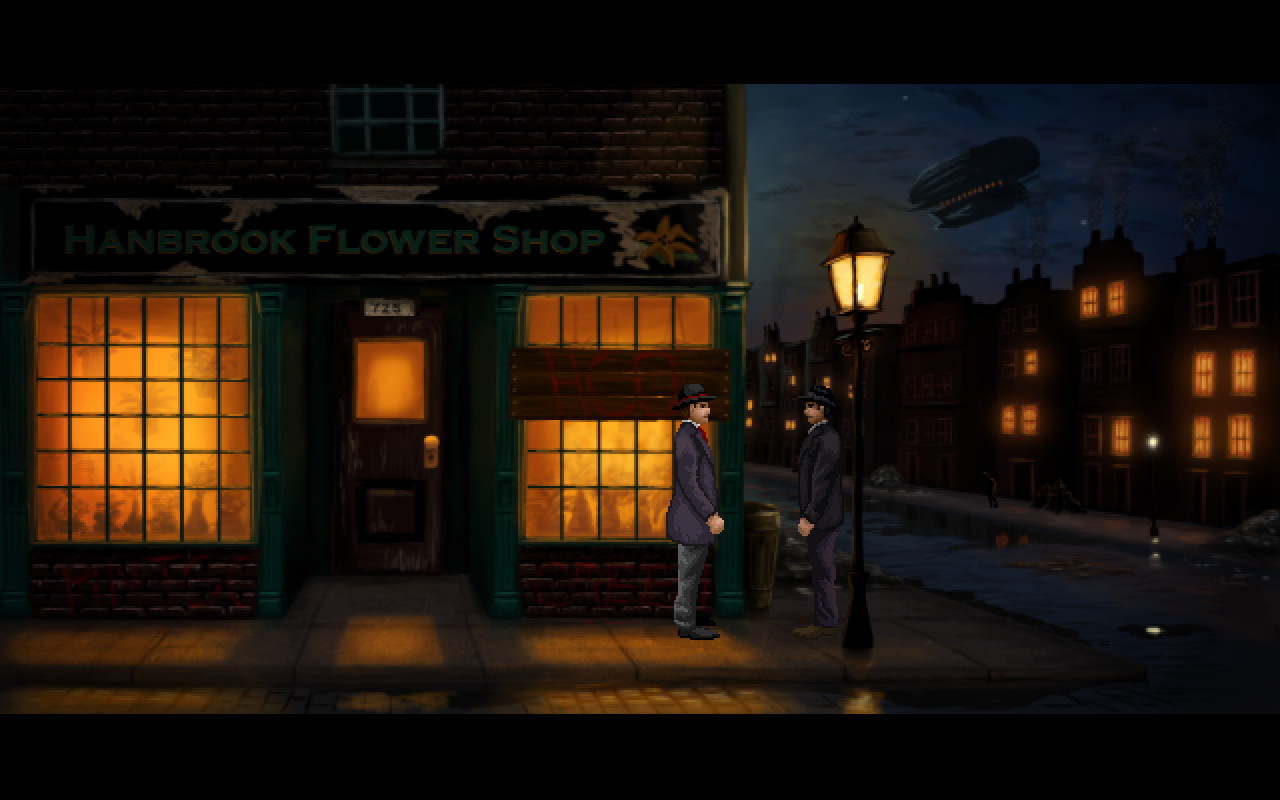
The city is explored through four boroughs, each part of a larger social setting. New Bretagne’s industrial future includes steam-powered invention and a new energy called aethericity, while its streets and households reflect differences between wealthy residents and working people. Investigative locations include public and private spaces, from commercial interiors to homes, institutions and less prosperous neighborhoods. The player uses the map to choose among available places, then searches the scene and talks with people found there. This movement does not involve platforming, driving or a separate navigation challenge; it links cases through dialogue and evidence. The single-click approach also avoids a traditional inventory screen. When an object or detail matters, the cursor and context-sensitive interaction determine what Miles can inspect or use. That streamlined interaction keeps focus on the current scene and its occupants. New Bretagne is more than a backdrop for five puzzles: differences in boroughs, resources and social position shape the conversations and circumstances that Miles encounters as he works through each client’s problem.
Conversation is the game’s main investigative instrument. Miles questions people about subjects made relevant by clues, asks for information in different ways and decides whether to maintain professional restraint or bend the rules. His former partner’s voice remains a continuing presence, giving exchanges a second perspective and bringing personal history into the casework. The game also includes a personal strand around Miles’s home life and relationships, which can respond to player choices. These elements sit alongside the five cases’ loop of visiting locations, examining details and questioning people. The absence of a conventional inventory does not mean objects have no role: contextual interactions allow Miles to inspect or use what the situation calls for, while the casebook stores clues and documents for review. Evidence may produce new dialogue topics or connect a person to a lead. The puzzles are primarily about gathering, sorting and interpreting information. The challenge lies in deciding what a clue means and how to act on it, not combining unrelated objects through trial and error. The casebook makes the detective’s accumulated knowledge visible, while the player remains responsible for drawing conclusions from it.
Lamplight City presents its alternate history through pixel-art scenes, character portraits and voiced dialogue. Its visual language pairs an urban nineteenth-century setting with steam-era inventions, giving boroughs distinct interiors and streets without turning the game into a technology-management simulation. Class divisions, crime and experiments with aethericity form part of the context Miles encounters in conversation and at investigation sites. Dialogue presentation emphasizes the people he interviews, while the casebook keeps clues and documents available for review. Steam lists professional voice acting for more than fifty characters and an original score by Mark Benis. The soundtrack is sold as a separate store item, distinct from the base game. The presentation supports a measured detective rhythm: a location can be searched, a person questioned, then the player can return to the map or casebook to consider what has changed. As cases accumulate, New Bretagne’s social and technological texture connects individual mysteries to a common setting. The story remains centered on Miles’s clients and the unresolved loss that shadows his work, rather than a broad action campaign. Pixel-art environments, portraits and speech keep attention on people and place.
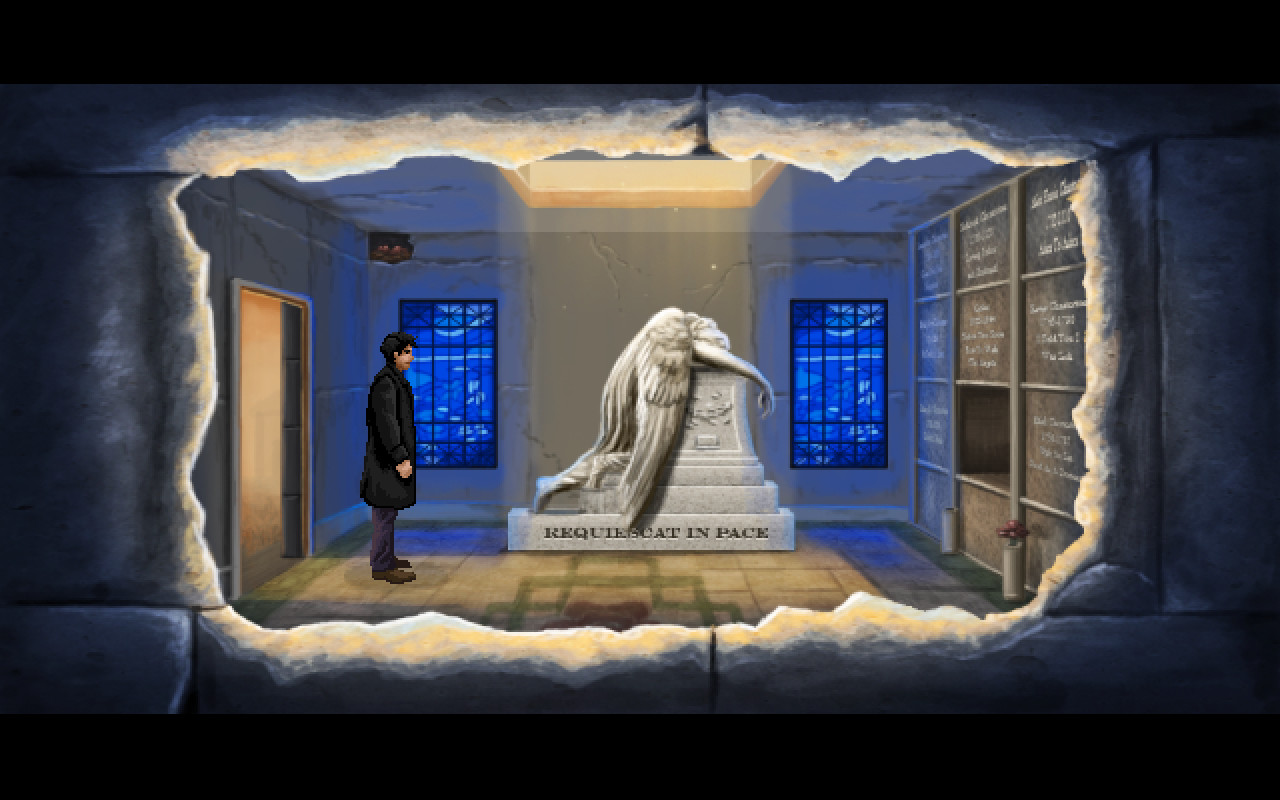
Miles cannot guarantee justice by finding every relevant object. He has to decide whom to believe and how far to press them, aware that a careless question can close a path for good. When a case becomes unsolvable, the narrative carries the consequences forward into the next assignment. That approach gives the five investigations room to be imperfect without erasing the detective’s responsibility for them. New Bretagne’s four boroughs reinforce the point: people with different resources and loyalties do not respond to the same methods in the same way, and Bill’s voice keeps Miles’s private grief near the surface of his professional work. The casebook helps him hold onto what he has found, but it cannot interpret evidence on its own. Lamplight City is available on PC and Nintendo Switch. Across its cases, the central question remains whether Miles can follow a lead to a defensible conclusion while living with the ones he cannot settle.
- Developer
- Grundislav Games
- Genre
- Point-and-click detective adventure