

About Lake
In 1986, software developer Meredith Weiss returns to Providence Oaks, Oregon, to cover her father’s mail route for two weeks. She drives the town’s postal truck, delivers letters and parcels, and meets residents whose conversations and invitations shape her days. Between shifts, she chooses how to spend her time and what kind of future to pursue.
Lake follows Meredith Weiss during a two-week break from her software career in the big city. She returns to Providence Oaks, the Oregon town where she grew up, while her father is away and takes over his work as the local mail carrier. The story is set in 1986, before mobile phones and the internet become part of everyday life. That period shapes how Meredith reconnects with people: letters and face-to-face conversations carry the town’s news, while television, home computers and video rentals provide glimpses of a wider culture. Her short stay is both a temporary job and a return to a place with a past she shares with its residents. She is not arriving as a stranger who must solve a town-wide crisis; the events grow from catching up, working through everyday obligations and deciding how much of her old life still fits. The central question develops through ordinary encounters and choices about work, friendship and romance. Meredith is deciding what she wants her life to look like when the temporary job ends, and the town’s residents give that decision personal stakes.
Each workday begins at the post office, where Meredith checks in with her colleague before taking her father’s truck out on its route. Deliveries are presented as a list of addresses around Providence Oaks, and the player chooses the order and pace for completing them. A map marks the stops, and the interface supplies the address information needed to find each destination. The routine alternates between driving through the countryside and approaching homes or businesses to hand over letters and parcels. Some stops lead to a conversation; others can remain brief exchanges focused on the delivery. The postal round is a simplified fictional mail route rather than a simulation of a carrier’s full real-world workload. Because there is no delivery timer to beat, the player can finish the listed work quickly or take time between stops to look around and talk. The postal round supplies a clear daily task without turning each address into a timed objective. Its repeated structure also makes the residents part of the route: familiar locations can lead to new conversation as the two weeks advance, while the player decides whether to complete the next stop or linger with a person encountered along the way.
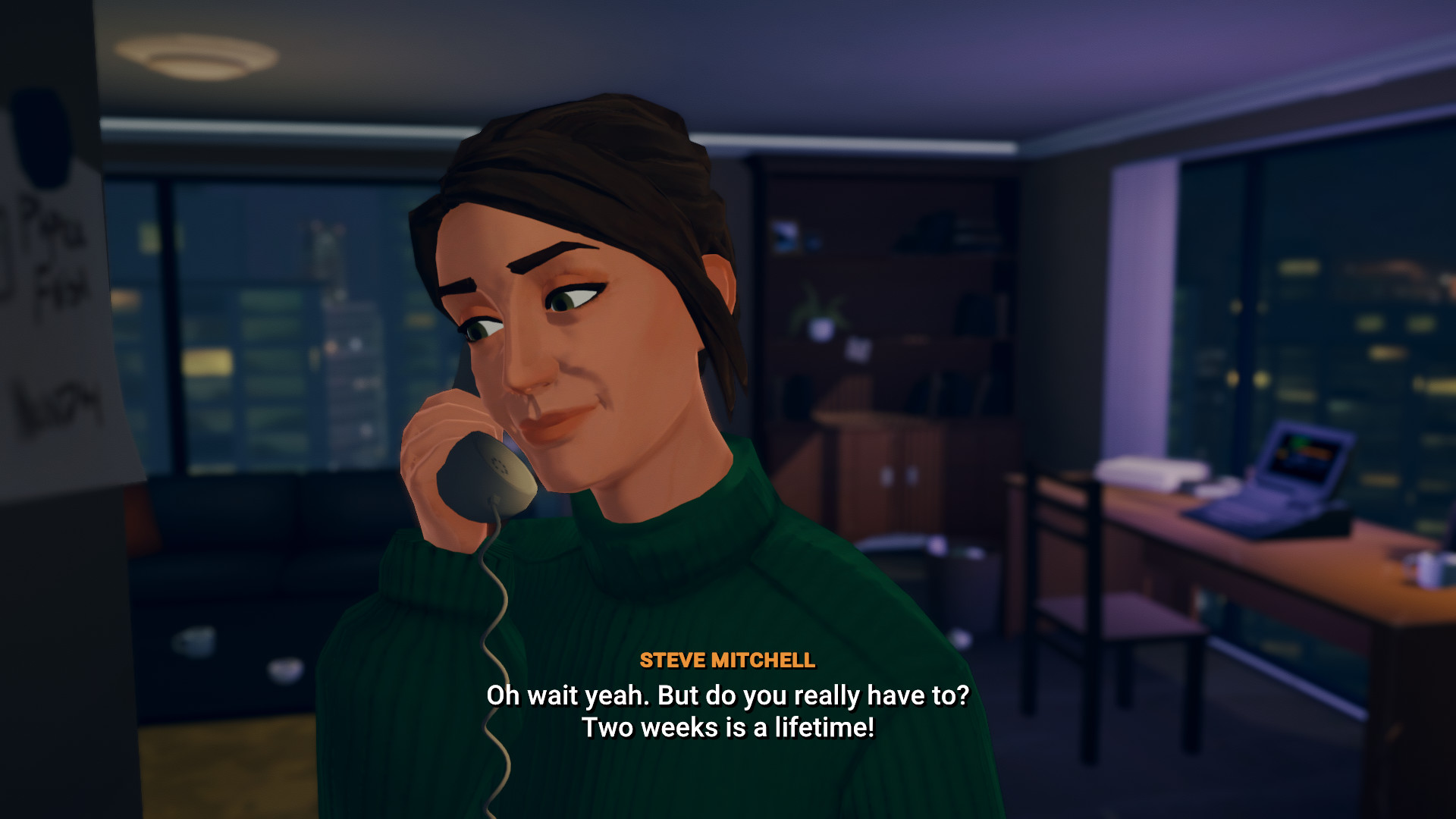
The residents are more than destinations on a route: conversations can grow into separate threads about their concerns and relationships with Meredith. The game lets the player decide who she talks to, whether she accepts requests for help, and whether she agrees to meet someone after work. These invitations are optional, so a delivery can introduce a person without committing Meredith to a larger role in that person’s life. If she declines a request or a social plan, the story still moves forward, but that resident can occupy a smaller part of it. This gives the player room to build a day around the postal work or to follow particular people beyond their deliveries. Some encounters can become friendships or romance, while others remain brief exchanges. The choices affect how much space an individual receives in the unfolding story and help shape Meredith’s connections over the fortnight. A small encounter can therefore fit into the workday while also opening a longer conversation later. The town’s narrative is assembled through this combination of repeated contact, optional follow-up and dialogue choices rather than through a single urgent mission.
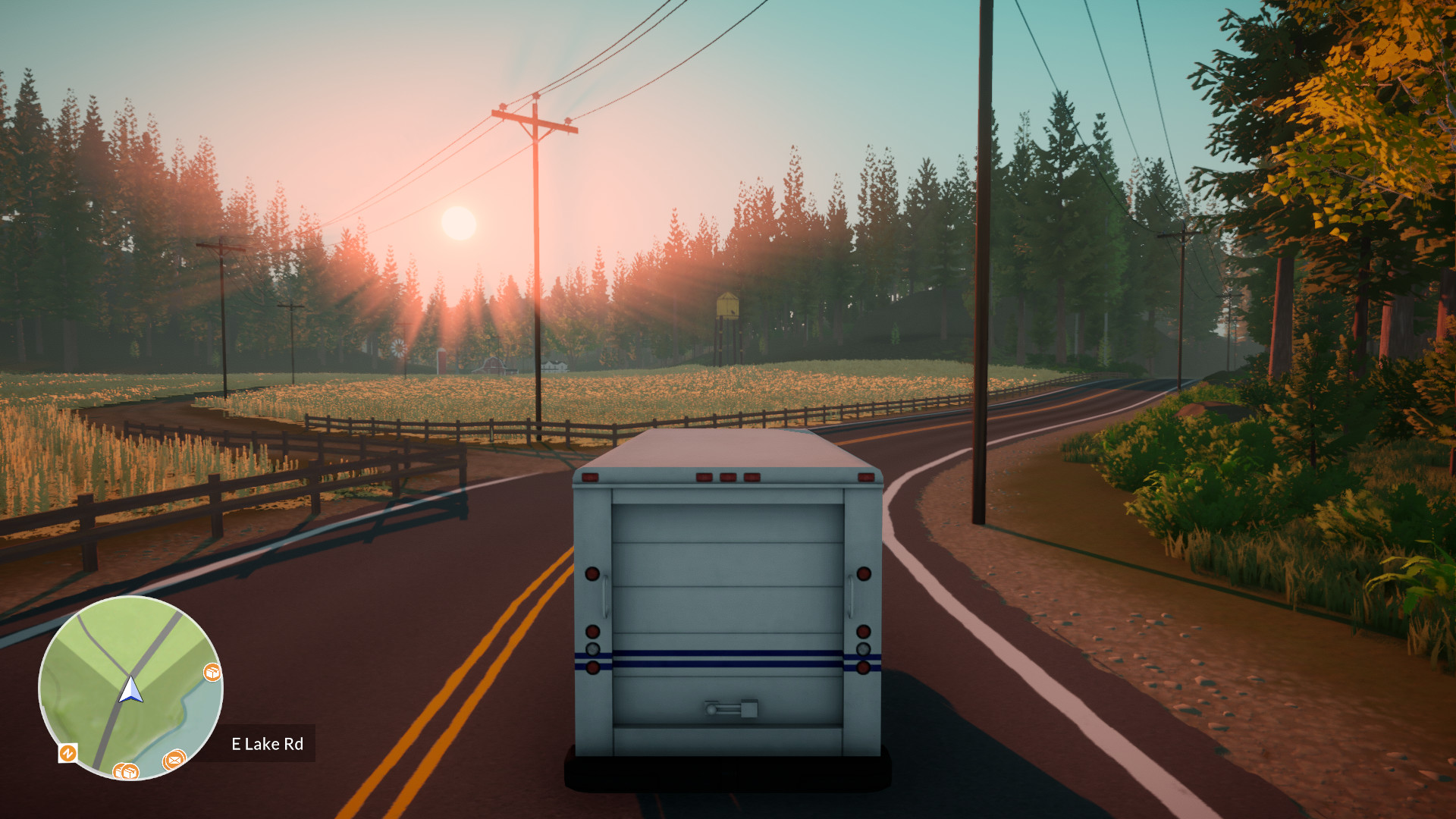
Driving is the main form of travel between deliveries. Meredith follows roads around the lake and through the town, with the postal truck linking the post office to homes, shops and other stops. The player controls the order and tempo of the route, and the game’s map and delivery list help identify where mail is due. Whitethorn Games also describes an auto-pilot option that can handle truck movement and map navigation after a destination is selected, letting the player focus on the passing landscape. This option fits the game’s emphasis on choosing where to go rather than mastering a vehicle simulation. At each destination, the postal routine gives way to walking up to a recipient or entering a conversation, so movement alternates between a quiet drive and direct social contact. On foot, Meredith can move around local locations and speak with people she encounters. There is no combat system: the primary actions are travelling, delivering, choosing dialogue and deciding how to spend the hours outside the shift. The calm pace is a mechanical part of the experience, not a challenge to optimize against a timer.
The end of a workday creates another kind of progression. The passage from morning deliveries into evening activities gives the two-week stay a rhythm, while choices made in earlier conversations determine which meetings and scenes become available. Meredith can accept a planned visit, help someone with a request, or choose a quieter activity at home, such as reading a book. The day-and-night structure makes time visible without adding a deadline to the route: finishing deliveries moves the story to the evening, where choices can create a new scene or let Meredith stay in. The player can make space for friends or neighbors, or spend an evening alone; these are small choices that gradually define her break from city life. Conversations about romance can become part of that personal story, and the relationships Meredith pursues affect the variations in her eventual outcome. Dialogues across multiple days gradually influence which futures remain open and how the conclusion reflects Meredith’s relationships and priorities. The central future choice is whether to return to her demanding city job or remain in the town where she grew up. The game has several distinct endings with variations shaped by choices along the way; those decisions begin to steer the outcome during ordinary conversations, while still leaving room to keep options open. Progress is therefore tracked through the calendar, accumulated conversations and relationships, not through combat upgrades, equipment or a score-based career ladder.
Providence Oaks is presented as a compact lakeside community whose streets, homes and businesses become familiar through repeated trips. The visual focus stays close to Meredith’s daily perspective: the truck carries her between rural roads and town streets, and conversations bring residents into view at their homes or workplaces. Radio, television, books and period technology help establish the mid-1980s setting; the absence of phones and internet changes how characters reach one another and keeps the story grounded in face-to-face contact. The game uses character modeling, animation, voice-over and environments to make the small community legible as Meredith returns to the same places across the fortnight. On PC, the publisher lists remappable controls, mouse-and-keyboard and gamepad support, adjustable camera controls, separate audio levels and no quick-time events. The auto-pilot and control options let players reduce the input needed for deliveries, while separate audio settings allow music, dialogue and effects to be adjusted independently. The publisher lists the main game for PC, Xbox One and Series X|S, PlayStation 4 and 5, and Nintendo Switch. Lake: Season’s Greetings is a separate prequel expansion about her father Thomas in Providence Oaks during the winter of 1985; it is not part of Meredith’s 1986 route. The two experiences share a town but follow different protagonists and periods, so Thomas’s holiday story does not belong to Meredith’s campaign.
- Developer
- Gamious
- Genre
- Graphic adventure