
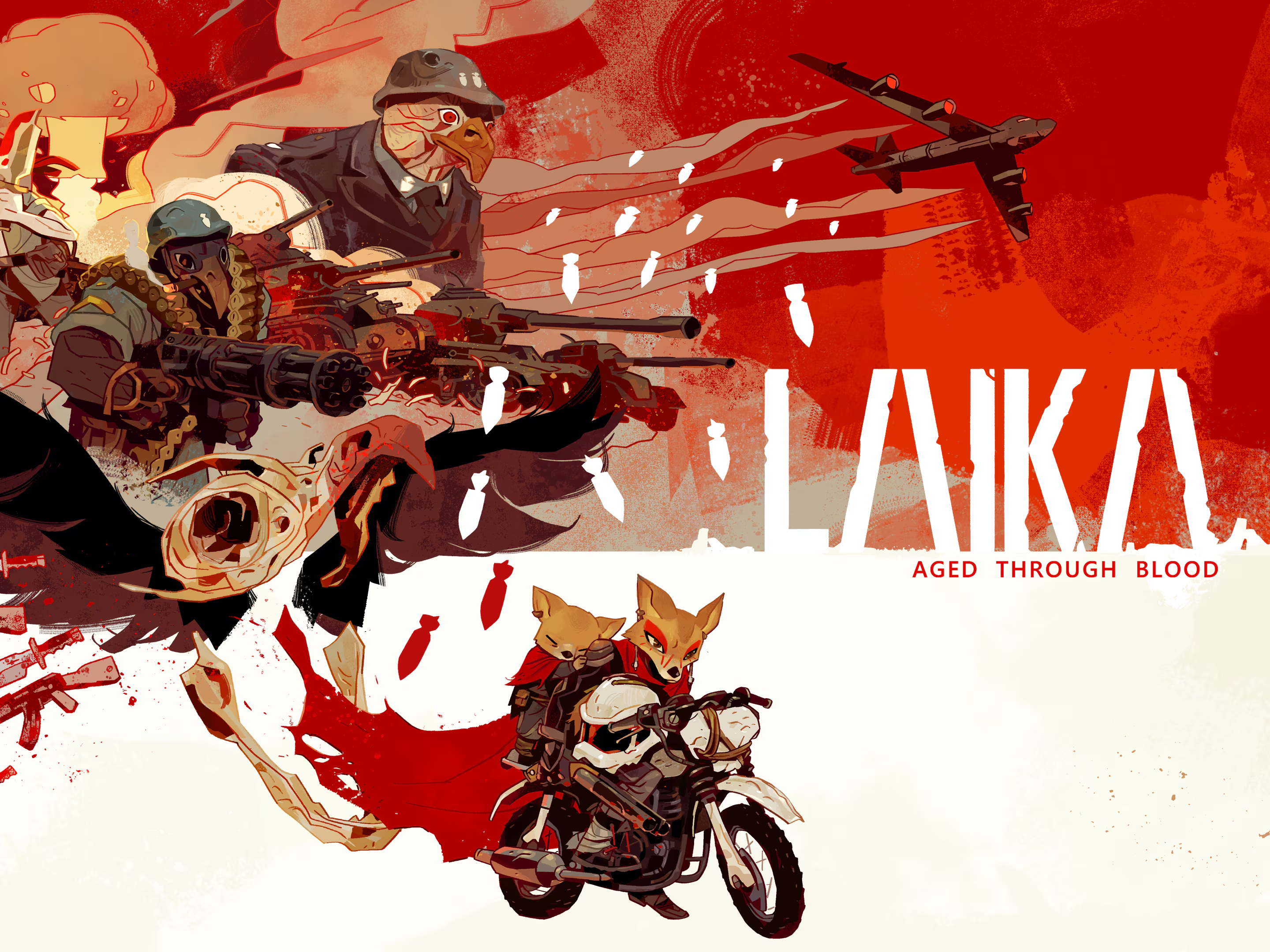
About Laika: Aged Through Blood
Laika: Aged Through Blood follows a coyote mother who rides into a post-apocalyptic western wasteland to defend her daughter and community from the occupying Birds. Motorcycle handling, airborne gunfights and a backflip reload are bound to Metroidvania exploration, equipment upgrades, missions and repeated attempts across a hand-painted world.
Laika: Aged Through Blood is an action-adventure set in a post-apocalyptic western world where animal communities struggle under the Birds’ military occupation. Laika, a coyote and a mother, is both a defender of her people and a person trying to keep her daughter Puppy safe. A sudden loss early in the story gives her journey a direction rooted in grief and retaliation, but the conflict reaches beyond one family: the Birds have claimed power over the land, and the coyotes around Laika live with the consequences. She rides out from home to answer immediate dangers and requests, then returns to people whose lives continue between missions. That back-and-forth keeps the personal story close to the wider struggle. Laika’s mother also shapes the family’s history and expectations, giving the game a generational thread about how survival, violence and care can be passed between women. The tone is severe, though domestic conversations and the effort to protect a community keep the narrative from reducing its characters to combatants alone.
The Birds are the main armed force Laika encounters on the roads and in guarded spaces, but they are presented as a political power rather than as a naturally hostile species. Their rule is built around claims of superiority and control, while the story also makes room for birds who do not fit neatly into the regime’s public face. This distinction matters to the world’s conflict: Laika faces soldiers and institutions, not simply wildlife, and the communities she meets have varied ways of responding to occupation. The game’s western imagery gives that struggle a frontier shape, with settlements, exposed routes and dangerous crossings connecting people who cannot remain isolated from the forces around them. Laika’s duties at home repeatedly meet the practical demands of the road. She is not on an abstract quest for territory; people ask for help, her daughter is waiting, and each departure carries the knowledge that her family’s future is affected by what she does. The story keeps those pressures present without requiring a detailed account of its later revelations to understand the stakes.
Exploration takes place across broad, connected landscapes rather than a sequence of sealed rooms. The wasteland includes stretches of open ground, ramps and slopes suited to a motorbike, as well as enclosed passages, hostile checkpoints and areas that require new ways of moving through the terrain. The map connects these spaces, and routes that initially seem unavailable can become reachable as Laika gains tools and abilities. That structure encourages returning through familiar country to test a newly opened path, look for a concealed entrance or follow a request away from the main route. Bird patrols make those trips active rather than safe travel between menus: a known stretch can still require careful riding and a response to gunfire. Settlements provide a different rhythm, with residents to speak to and tasks that add local concerns to the larger conflict. A map merchant can reveal more of the area in exchange for currency, helping turn a confusing web of roads into something easier to plan around. Exploration therefore joins navigation, mission work and combat in the same continuous journey.
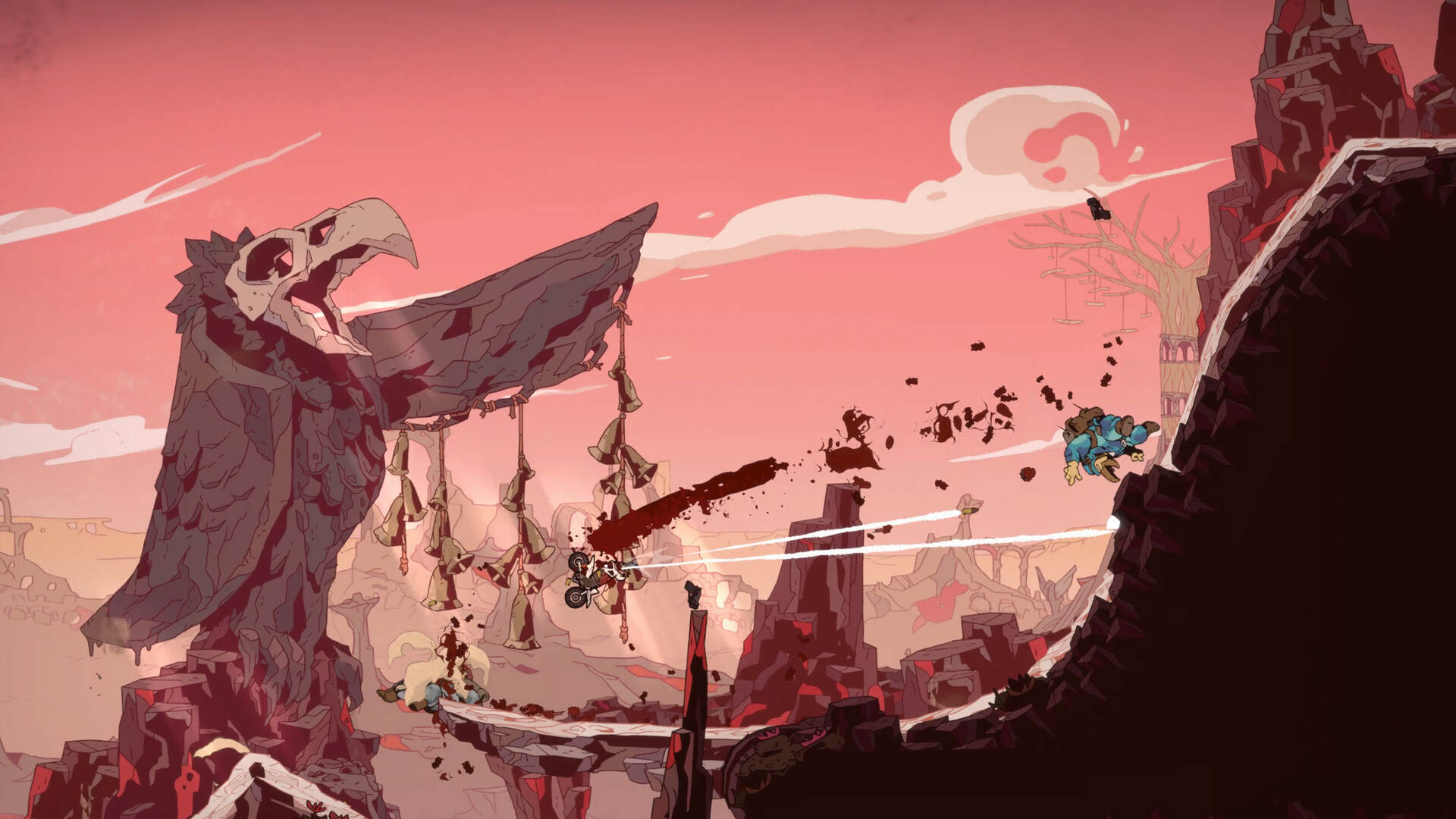
The motorbike is Laika’s primary means of movement, and handling it is part of the platforming. Acceleration builds speed for long rides and launches from the wasteland’s natural ramps; in the air, the player adjusts the bike’s angle to prepare for the landing or turn a jump into a flip. The machine can be balanced and redirected, so uneven ground and tight passages ask for control as well as forward momentum. Landing safely matters because a bad crash can end a run, and the same orientation that keeps Laika upright may put the underside of the bike between her and incoming shots. This makes the motorcycle a mobile shield as well as transport. It also means that the player is often managing several intentions at once: keep the bike moving, judge a landing, line up a weapon and leave room to turn or flip. The result is a traversal system that directly feeds into combat, rather than a vehicle section separated from the rest of the adventure. A clear stretch of road can quickly become a place to dodge, aim and recover control in mid-air.
Combat builds on that shared movement system. Laika begins with a handgun and can expand her arsenal with weapons such as a shotgun, crossbow and machine gun; shops and upgrades improve the equipment she brings into later encounters. Ammunition is limited during a fight, but reloading is performed through a complete backward flip of the motorbike. A forward flip restores the ability to deflect a projectile, while the bike’s lower frame can block shots when turned into their path. Bullet time gives a brief opportunity to aim while airborne or react to a volley. These actions ask the player to read enemy fire and the shape of the terrain together: a shot may remove an attacker, a flip can prepare the next burst, and the bike’s angle can guard Laika while she crosses a dangerous gap. Many encounters make a single mistake costly, so the challenge often comes from keeping those choices coordinated rather than from a large health bar. Boss confrontations provide a more sustained test of the same weapon and movement skills.
Progression gives repeated journeys a material purpose. Defeated enemies yield viscera, the currency used at shops, while routes and explorations also provide supplies for gear improvements. Laika can buy additional weapons, raise the capacity of her current gun, improve equipment and purchase other useful items. These choices change how she approaches a later crossing or encounter: carrying a different weapon changes the options available in a firefight, while a stronger setup makes limited ammunition go further. Map services and purchases for Puppy also connect the road to life back home, so the resources gathered in danger can support more than combat. Mission requests from residents form another layer of advancement, sending Laika into parts of the world she might not otherwise visit and bringing her back to the settlement with new context. Cooking is part of the community’s quieter routine, contrasting with the immediacy of the road. The game’s progress is thus a loop between leaving, learning the terrain, earning or collecting resources, investing in the next trip and returning to people whose needs give that trip meaning.
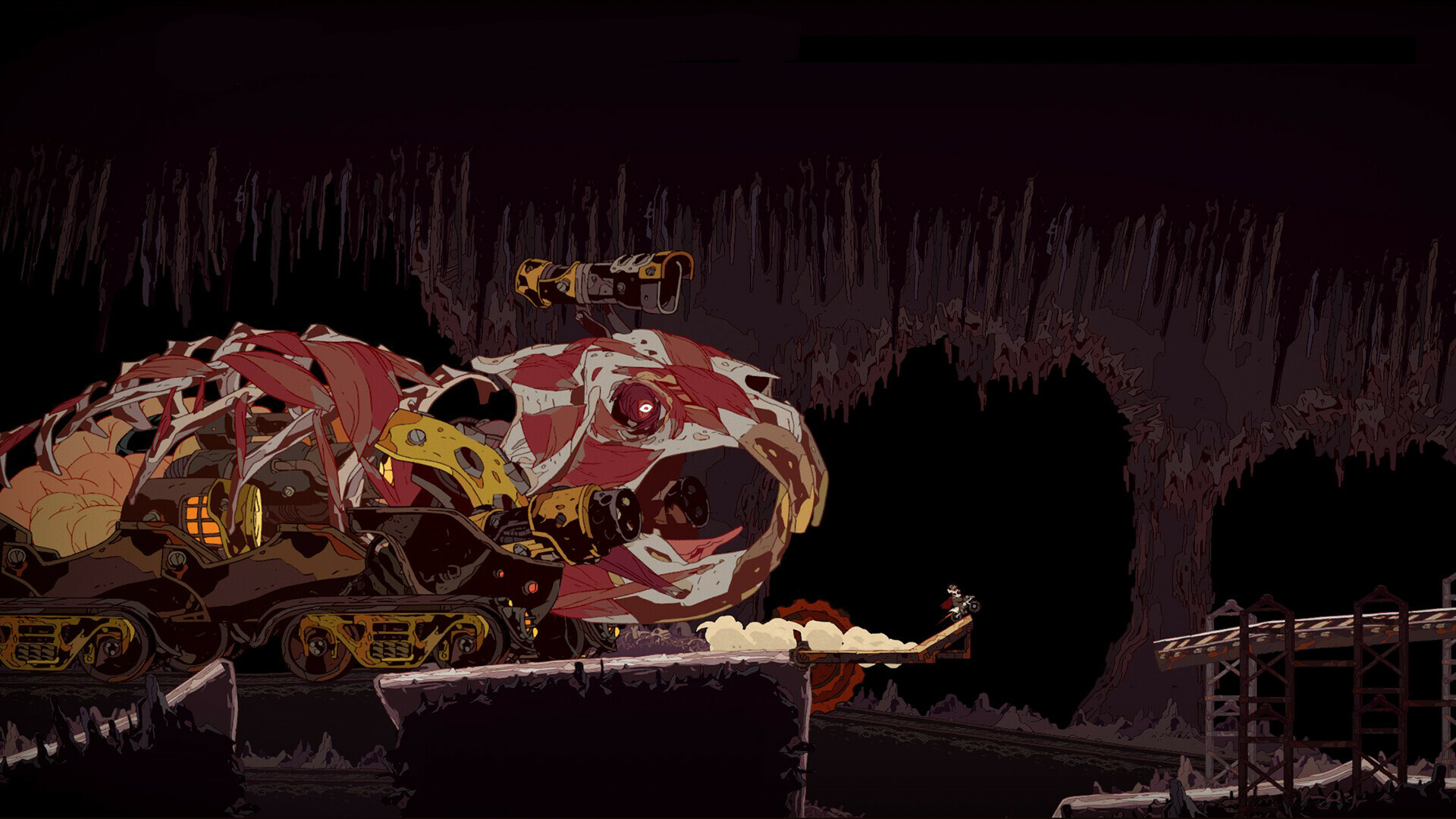
Failure is built into the pace of travel and fighting. A bullet or a damaging crash can kill Laika, after which she resumes from a nearby checkpoint and can try the section again without repeating a long journey from the beginning. Checkpoints are frequent, keeping most retries focused on the stretch that caused the failure. That structure supports learning the timing of a jump, the angle needed to block a shot or the moment to spend a flip on reloading. It does not make danger inconsequential: reaching an objective may still mean navigating the same patrols and hazards, and a string of attempts can demand patience. The route and the encounter are learned together, because the player must know the route and arrive with the bike under control and a useful weapon ready. The game turns repetition into a practical part of its motorbike action, while the personal importance of Laika’s mission keeps the stakes tied to her home and family.
The world’s hand-painted look sets its open roads against fortified structures, settlements and more enclosed spaces without losing the recognisable shape of Laika and her bike. Warm, dusty colours and expressive animal characters sit beside a story of occupation and loss; this contrast gives quiet scenes room to register after a dangerous ride. Music is another part of the setting’s identity: songs are associated with the people who inhabit the wasteland, and the soundtrack accompanies both travel and moments of rest. At home, conversations with Puppy and other residents break up the confrontations with the Birds and show what Laika is trying to preserve. Her journey moves between those intimate scenes and the exposed landscapes where she has to use speed, balance and gunfire to keep going. The complete game combines that family story with a connected exploration structure and a combat system built around the motorcycle, giving its western setting a distinct rhythm of departure, encounter and return.
- Developer
- Brainwash Gang
- Genre
- Action-adventure Metroidvania / motorvania