
About Killer Frequency
In 1987 Gallows Creek, radio host Forrest Nash becomes a lifeline for callers hunted by the Whistling Man. Search the station for clues, operate its switchboard and broadcast equipment, then decide what to tell each caller as their emergencies connect to the night’s murder mystery.
At midnight in 1987, Gallows Creek’s overnight radio programme turns into an emergency line. Former big-city DJ Forrest Nash is hosting The Scream with producer Peggy when the police chief is killed by the Whistling Man. The officers leave to seek help, and callers begin reaching the station for guidance. Forrest is not a detective with a case board or a fighter who can confront the killer. He has a phone, a microphone, a producer, and a room full of equipment and printed material. His job is to listen closely, work out what a caller needs, and find a way to explain it. The setup keeps the player near the people in danger while placing them physically elsewhere. A caller’s voice provides the immediate situation; the station contains details that may turn into a solution. This makes the radio format central to the structure rather than a framing device around a separate action game. The player handles a crisis through information, decisions, and timing, then returns to the broadcast routine as the night continues. The small-town setting, the late shift, and the threatening calls establish a slasher story with the studio as its main point of contact.
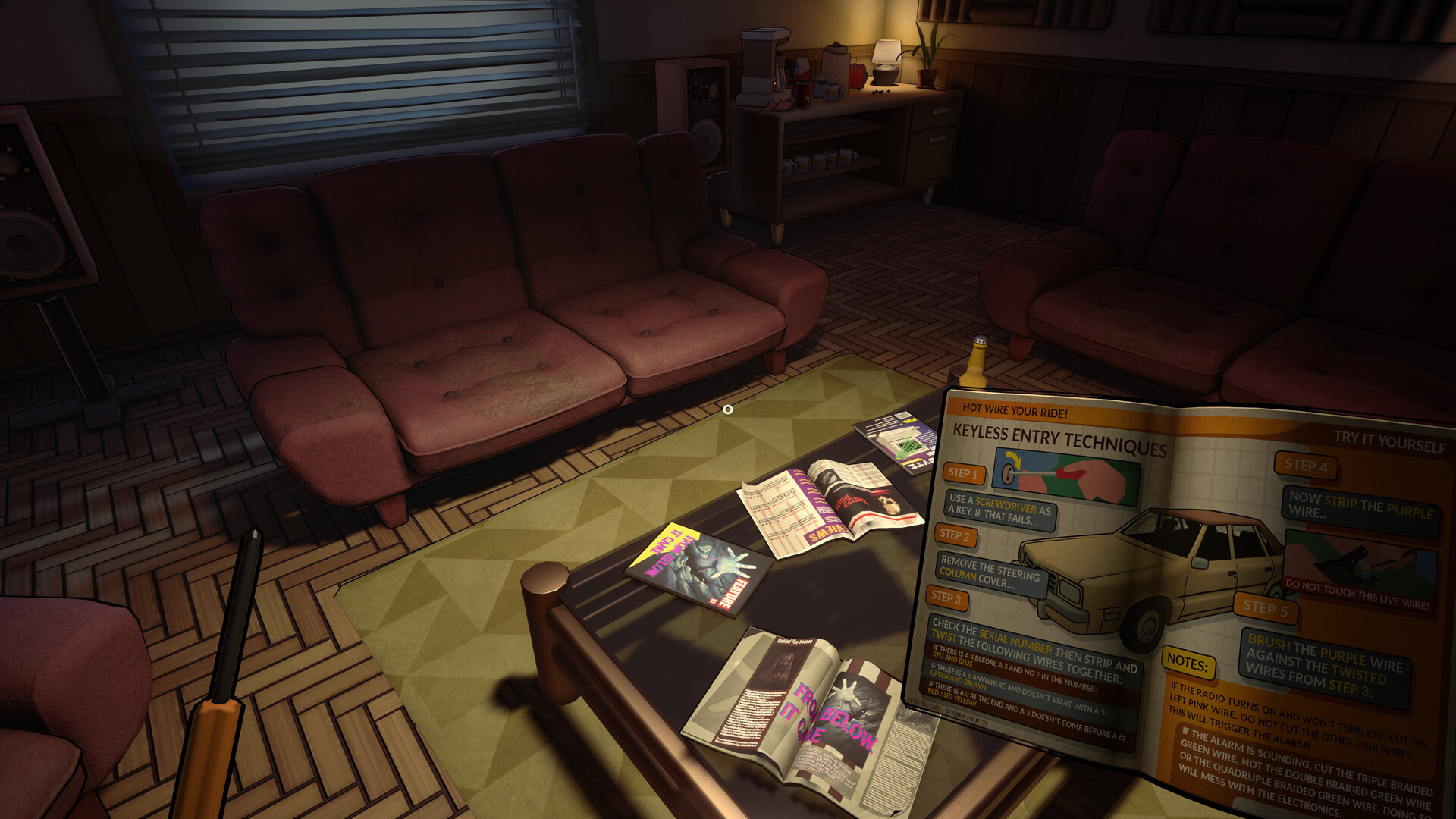
Calls are the game’s main narrative encounters. Each person describes a different danger, and branching dialogue lets Forrest ask questions or choose how to respond. Some exchanges put a timer on the options, so the player must decide while the caller is still waiting. The decision can affect that caller’s fate and contribute to which ending the story reaches. This pressure comes from incomplete information: a caller may know what is happening around them but lack a practical way out, while Forrest may have to search the station before he can give useful advice. One puzzle, for example, involves finding car hotwiring instructions in a magazine and relaying them by phone. The caller cannot see the page, so the player must connect the printed clue to the conversation. Other emergencies use the same broad pattern while asking for different information. The challenge is to listen for relevant details, locate what answers the problem, and communicate it before the situation changes. Dialogue choices also establish Forrest’s manner. He can sound considerate, dismissive, or self-interested, and those responses give the former radio personality a character arc alongside the practical task of helping people.
The station provides the physical side of those conversations. In first person, Forrest can leave the broadcast room and move through connected areas of the building, inspecting desks, shelves, papers, and objects. These excursions are focused searches, not a free-roaming investigation across Gallows Creek. They add a second source of information to what callers say: the player may find a set of instructions or a useful item, then return to the phone with something concrete to offer. The sequence asks the player to remember where a clue came from and why it applies, rather than simply selecting a highlighted answer from an inventory. Objects can be picked up and examined, and physical details make the station legible as a workplace with its own layout and history. Some objects serve a puzzle; others contribute to the period atmosphere. The important distinction is that exploration feeds the conversations. Forrest’s movement through the building does not become a combat route or a broad collection quest. It is a short search for knowledge, followed by a return to the caller who needs it. This structure also lets the player experience the contrast between the quiet rooms and the urgent voices coming through the telephone.
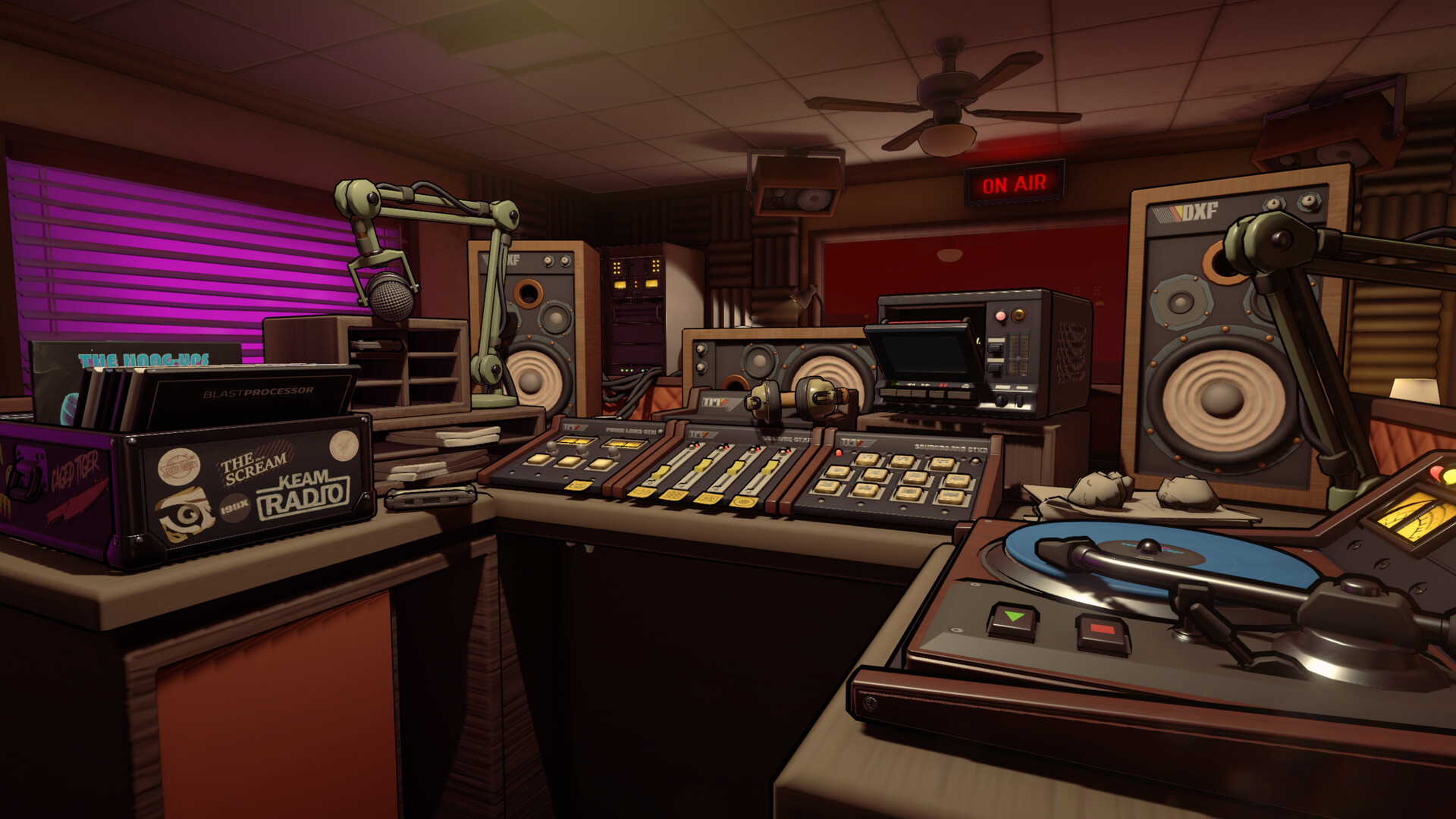
Running a radio show continues between emergencies. Forrest works with the station’s controls and switchboard, responds to incoming lines, and keeps the broadcast moving while Peggy helps manage the equipment and the unfolding shift. Records, cassette advertising, microphones, and other familiar studio objects can be handled, giving the setting a tactile role in the player’s routine. These interactions make the station feel like a functioning workplace rather than a dialogue menu surrounded by scenery. The ordinary tools of broadcasting become part of how the player passes time between calls and learns the room. The game’s objects use physics-based interaction, so an item can be picked up, moved, or operated instead of being represented only by a text prompt. This attention to physical detail remains in service of the story: the player is a host working at a desk, not an adventurer assembling equipment for a boss fight. Peggy’s presence provides another voice in the room and helps keep the radio-show context active as the calls accumulate. The studio’s routines also create a rhythm for the night: answer, investigate, return, and decide what to say next. The controls are small in scope, but they help make the player’s role specific to this setting.
The murder mystery grows out of the emergencies rather than replacing them. The Whistling Man gives the calls a shared threat, while each caller has a separate problem that must be understood on its own terms. The player receives fragments through conversations, the station, and the town’s background details, then gradually connects them to the larger events of the night. The game’s progression is narrative: new calls, discoveries, and the consequences of earlier decisions carry the story forward. Forrest does not gain combat skills or equipment levels, and there is no direct combat system. The player’s influence lies in deciding what to investigate and how to guide each person. Success and failure remain part of the route; the story can continue after a bad outcome, while the closing account of the night reflects the choices made along the way. Because callers are outside the studio, their safety is never reduced to a health bar visible on screen. The player has to interpret what they say and act through dialogue. The limited viewpoint supports the radio premise: the town is present through voices, clues, and broadcasts, while Forrest’s ability to help is constrained by distance and what he can learn.
Sound and period detail carry much of the presentation. The fully voiced cast gives the callers different voices and lets pauses, urgency, and uncertainty shape the exchanges. Forrest and Peggy remain regular presences, while records and cassette adverts place the player in a late-night broadcast routine. The soundtrack draws on 1980s-inspired rock and synth sounds, and the station’s magazines and equipment reinforce the year without requiring the player to leave the building for a tour of the town. Horror comes through the calls, the killer’s presence, and the imagination of what might be happening elsewhere; the player’s own work stays centered on listening and responding. The game’s mixture of a threatening slasher premise and radio-host banter gives the night a dark comic tone, with the exact balance carried by the performances and the situations. This profile covers the single-player Steam PC release, App ID 1903620, where Steam lists Team17 as developer and publisher and categorizes the game as Adventure, Indie, and Simulation. Team17 also lists console and Meta Quest versions, including a VR edition. The Deluxe Edition on Steam packages the base game with its original soundtrack. This description concerns the standalone PC game and does not assume that controls or interface are identical across other versions. The calls remain the clearest measure of progression because each one tests what Forrest has learned and how he chooses to use it.
- Developer
- Team17
- Genre
- Adventure, Indie, Simulation (Steam listing); first-person horror puzzle adventure