
About Kerbal Space Program
Kerbal Space Program puts you in charge of the Kerbals’ space programme, assembling rockets, spacecraft and vehicles from functional parts and flying them through a solar system governed by aerodynamic and orbital physics. Launch crews, run experiments, explore planets and moons, and build stations or surface bases as your missions extend farther from home.
The Kerbals are a small spacefaring people whose programme begins at the Kerbal Space Center on their home world, Kerbin. You direct the programme by designing vehicles, assigning crews and deciding where each mission should go. The tone is playful, but the central challenge comes from how the craft behaves: every assembled spacecraft must fly under the game’s aerodynamic and orbital physics, and a design that looks convincing on the launch pad can still fail to reach its destination. The solar system offers a sequence of increasingly distant goals, from establishing a working flight around Kerbin to visiting its moons and travelling to other planets. The game supplies no single scripted campaign that dictates this order; the player creates the programme’s shape through chosen flights, experiments and construction projects.
Vehicle design begins in the construction editor, where parts are joined into a craft whose mass, arrangement and functions affect its handling. A rocket needs a way to generate thrust, fuel to sustain it, a command part and, when the mission needs them, crew space, instruments or equipment for landing and surface work. Staging lets a vehicle discard spent sections and activate later engines or devices during flight, so the order of those events is part of the design. The same building approach supports spacecraft, launch vehicles and ground vehicles, letting a mission use specialised craft rather than one all-purpose machine. The goal is functional assembly: parts have different jobs and combinations produce different flight behaviour. Testing a design therefore connects engineering to piloting, because the launch reveals how its structure and setup work under motion.
A mission moves from construction to the launch pad, where the player controls the craft through ascent and flight. Reaching orbit is only one stage: a vessel must be placed on a suitable path, then redirected if it is to meet a moon, another planet or a chosen landing area. Kerbal Space Program gives the player direct control over the ship’s setup for complex flight manoeuvres, making the route as much a product of planning as of thrust. Crew survival is part of the expedition, so the craft must carry its Kerbals through launch, transit and return or provide a way for them to work outside it. Each flight can answer a practical question about vehicle design or extend the programme’s reach, and a successful orbit becomes a platform for later transfers, rendezvous and landings rather than an endpoint in itself.
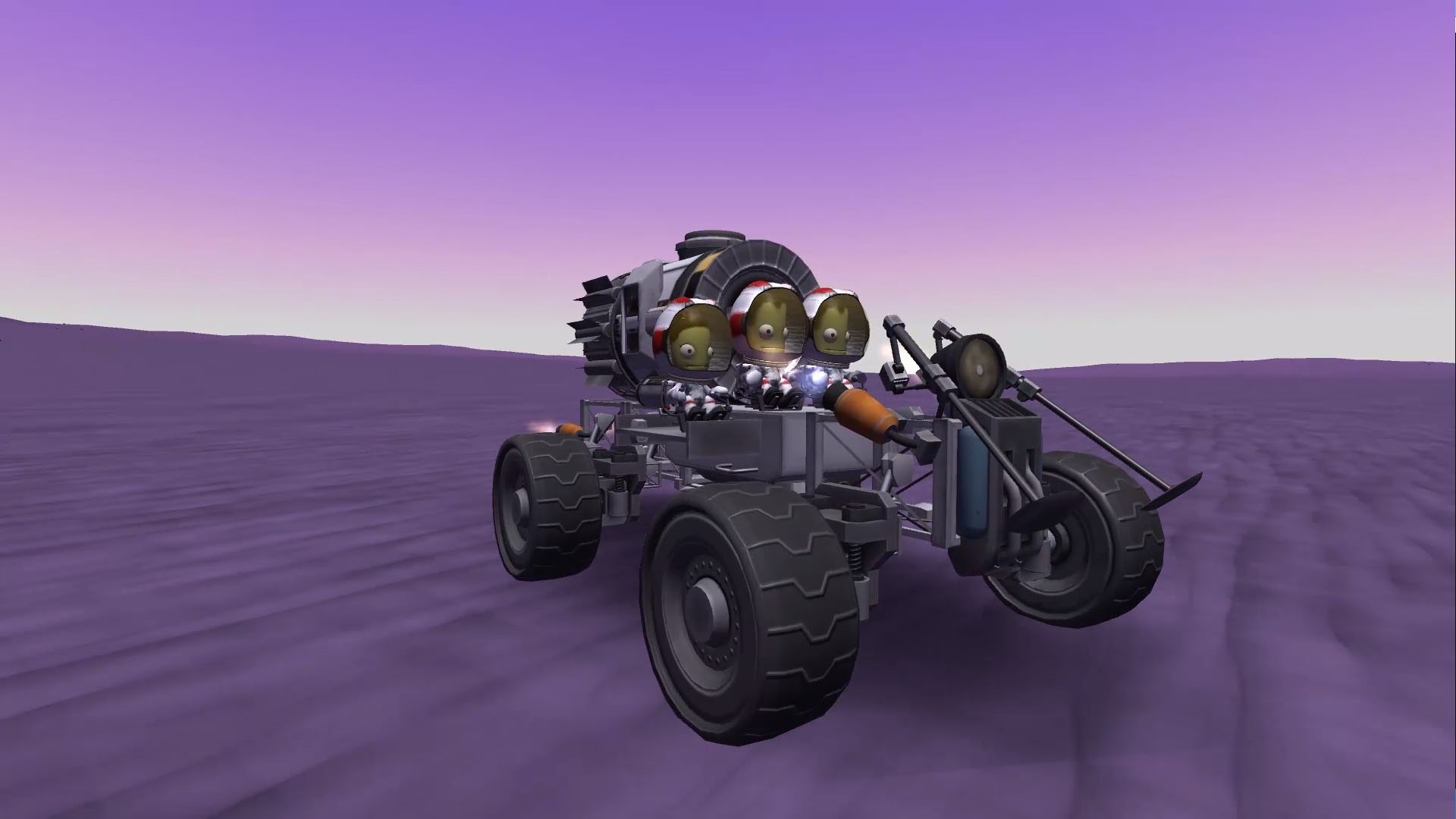
The destinations are bodies in the Kerbol system, with distinct moons, planets and terrain to explore. A crew can leave a vessel for extra-vehicular activity, while a landed vehicle or rover can operate on a surface. For longer expeditions, spacecraft can dock together, allowing separately launched craft to become a station, larger ship or surface base. These projects turn a single launch into a linked operation: vehicles have to reach the same place and connect, and the resulting structure can support work beyond one capsule’s capacity. Satellites provide another role in exploration by scanning terrain to locate biomes and anomalies. The game also allows communications networks between spacecraft and Kerbal Space Center, adding a programme-wide link to the distant craft. Together, crewed flight, surface operations, docking and remote observation give the solar system several different purposes beyond simply reaching a new orbit.
The three modes set different conditions for pursuing those goals. Sandbox opens all parts and technology from the beginning, so the player can concentrate on assembling and flying without a research unlock path. Science Mode uses space experiments to unlock new technology, tying exploration to the parts available for later craft. Career Mode adds management around that engineering loop: construction, strategy, funding and upgrades all become part of running the programme. The crew roster matters too, since Kerbals can be hired, trained and sent on missions. These modes use the same core activity of building and operating spacecraft, but frame its progression differently: unrestricted creation in Sandbox, research-led development in Science, or a broader programme to oversee in Career. Progress can therefore come from a new destination, a more capable design, accumulated experimental knowledge or an expanded space centre.
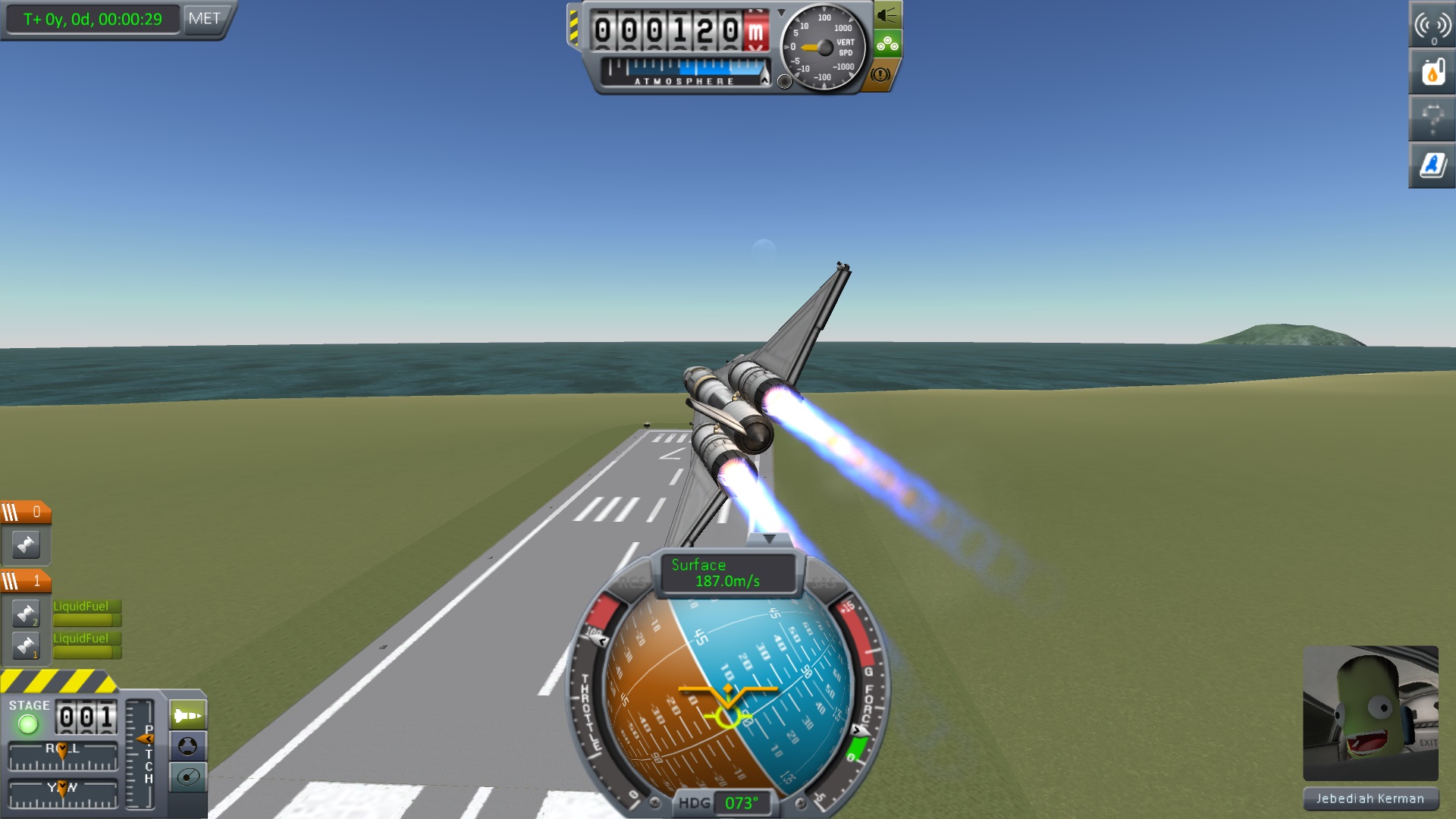
A separate navigation layer supports planned flight rather than construction. Maneuver Mode presents orbital information in both Flight and Map views and lets the player adjust maneuver nodes with greater precision, helping fine-tune interplanetary transfers. The player can review a planned trajectory and refine its node from either view, then use those plans to guide the mission as the craft moves through orbit. The altimeter can also switch between altitude above sea level and altitude above ground level, giving the flight display a different reference when a vessel is near a planet or moon. These tools make the route legible as a changing path around celestial bodies: the player can work with orbital information, edit a planned manoeuvre and keep track of height against the selected reference. They add a concrete flight-planning layer to the construction and exploration loop.
- Developer
- Squad
- Genre
- Simulation