
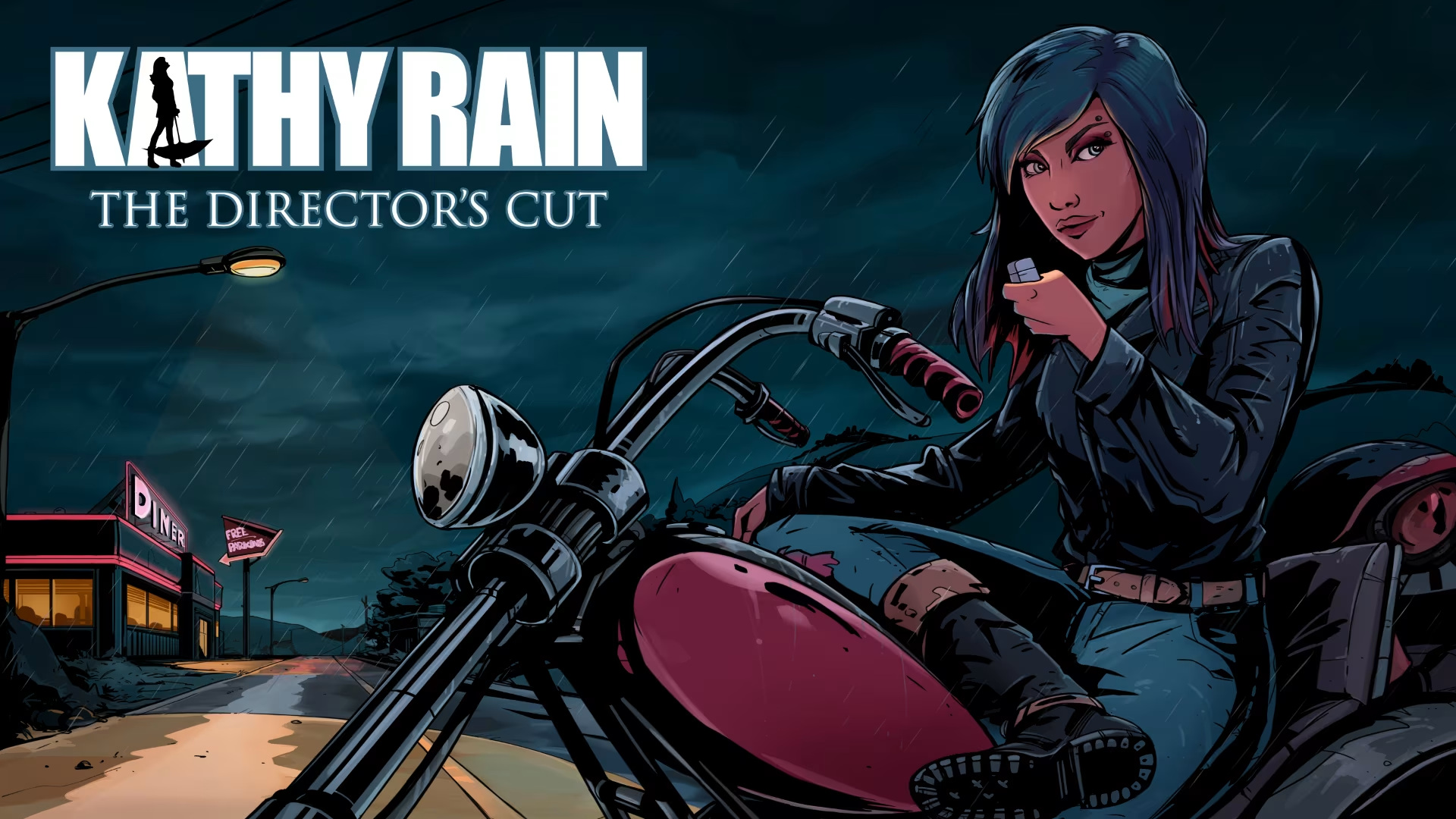
About Kathy Rain: Director's Cut
In 1990s Conwell Springs, journalism student Kathy Rain returns for her grandfather’s funeral and follows clues into a local mystery tied to his troubled past. She explores the town by motorcycle, questions its residents, records leads in a notebook and solves puzzles by connecting evidence. The Director’s Cut expands the 2016 adventure with added story, puzzles, areas and widescreen presentation.
Kathy Rain: Director's Cut follows a journalism student who returns to her rural hometown in the 1990s after her grandfather Joseph dies. The funeral brings Kathy back into contact with a family history she has been away from, but the case quickly extends beyond the circumstances of his death. Joseph had once returned from the woods in a profoundly changed state, and the traces he left behind point toward unresolved events in Conwell Springs. Kathy approaches those questions with the instincts of a reporter: she observes, asks direct questions, keeps notes and tests explanations against what people and places reveal. The story mixes a family mystery with unease spreading through the town, while Kathy’s own past becomes part of the investigation. Its scope remains local and personal even as the clues suggest something stranger. The Director’s Cut revisits the 2016 adventure, adding material to the narrative and puzzles while retaining the same central case and protagonist. Kathy’s return also gives the opening investigation a personal frame: she is not arriving as an outside authority, but as someone with unfinished ties to the place and its people.
Conwell Springs is explored as a cluster of distinct places connected by Kathy’s motorcycle and a location map. The town includes domestic and public spaces that offer different kinds of evidence: a conversation in one room may clarify an object found elsewhere, while a new lead can make a familiar location worth visiting again. The 1990s setting shapes how information travels. Kathy uses a phone book to find people or places, and period communication technology becomes part of the practical work of following up leads. Rather than presenting a broad landscape to roam freely, the game opens locations as the investigation develops. The map helps track those destinations, and returning to them is a core rhythm of the case. Environmental details contribute clues and atmosphere, but progress usually comes from linking what Kathy sees with what she has learned. The town’s calm surface and the unsettling reports emerging from its residents sit side by side, making ordinary civic spaces part of the mystery. This means the town map functions as a practical case aid, connecting otherwise separate conversations and keeping the changing footprint of the inquiry understandable as leads accumulate.
The adventure uses the familiar point-and-click loop of inspecting scenes, speaking with characters, collecting useful objects and applying them where they make sense. Kathy can question people about topics raised by the investigation, and her notebook gathers clues that can feed into later conversations. That creates a distinction between carrying an object and understanding a fact: some obstacles call for inventory use, while others require recalling a name, event or piece of evidence and asking the right person about it. The phone book gives the player another way to act on information by locating contacts or destinations. Items and interactions become relevant as the story proceeds, so the player’s attention is directed toward the current chain of leads. Movement between places is straightforward; the challenge lies in deciding what detail matters, which lead to follow and how separate clues fit together. Dialogue is therefore an investigative tool in its own right, and the notebook helps bridge a gap between a discovery and the next conversation where that discovery may matter.
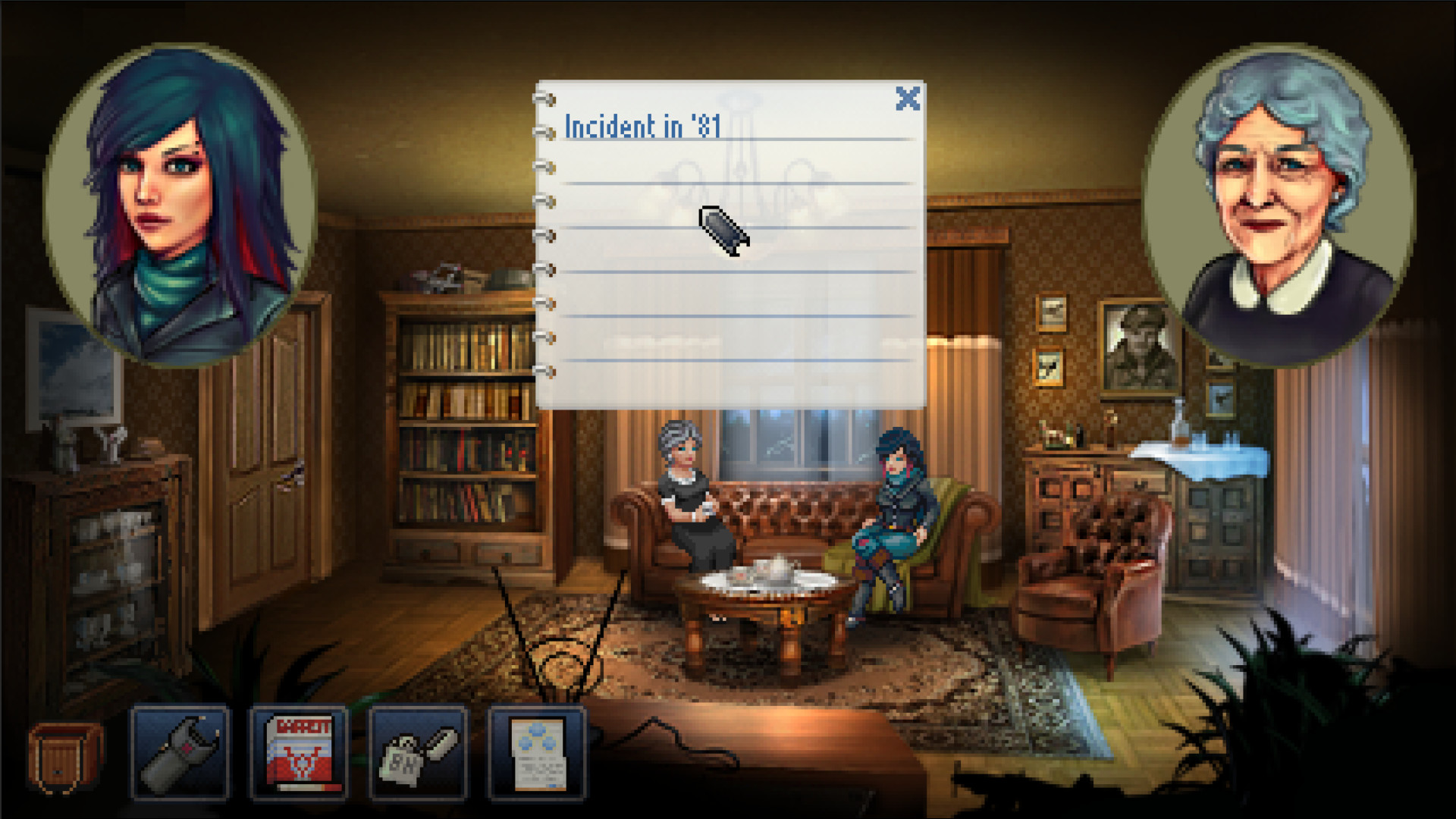
Puzzles combine conventional object use with deduction based on evidence gathered in the story. A locked container or inaccessible area may require a physical tool, but other obstacles ask the player to infer a code or solution from documents, conversations and contextual clues. In those moments, the answer is meant to emerge from the case rather than from trying every item on every hotspot. The notebook supports this investigative framing by preserving important facts that Kathy can bring into dialogue. There are also sequences that vary the usual pattern, including computer-related interactions and puzzles built around interpreting information. The Director’s Cut includes additional puzzles and some revised or extended gameplay passages, so a person who remembers the 2016 release should not assume that every familiar obstacle is unchanged. No combat or character-build system is part of the central loop. Progress comes through observation, conversation, item handling and reasoning, with the narrative providing the context needed to decide what to try next. The player’s task is to notice when a clue has become actionable and to distinguish a reasonable deduction from an arbitrary combination, keeping puzzle solving grounded in the mystery.
Story progression is organized around a sequence of leads. New discoveries direct Kathy toward other people, records and locations, gradually connecting her grandfather’s history with the town’s more recent troubles. Conversations can reveal a new subject to ask about or make an older clue newly significant. The notebook and evolving set of locations help keep those threads legible, while the player chooses where to investigate and which evidence to apply. Distressing and supernatural elements complicate the case, but the explanation behind Joseph’s condition and the later revelations are left for the game. Choices and new sections appear as part of the expanded Director’s Cut material; they are attached to the authored story rather than a broad branching role-playing system. The result is a detective structure in which returning to a place or revisiting a line of questioning can be as important as finding something new. This steady chain of follow-ups gives the narrative its pace: the player alternates between collecting information, considering its implications and acting on a lead that has become concrete.
The Director’s Cut is an edition update to the original game released in 2016, not a separate sequel. Its additions include an extended storyline with a longer ending, more than 700 additional lines recorded with the original cast, new areas and puzzles, and a remixed and expanded soundtrack. Steam also identifies streamlined controls, a single-click mouse interface and controller support. Visually, environments were enlarged for widescreen display without side bars, with extra character animation, lighting, shadows and weather effects. The earlier Steam version is presented at 320 by 240 pixels in a 4:3 frame, making the revised framing a notable part of the new edition. Five unlockable motorcycle designs add a cosmetic extra. The core remains a 2D, story-led point-and-click investigation centered on Kathy and Conwell Springs, but the Director’s Cut expands and refreshes that experience. These changes are specific to the 2021 edition described here and should not be attributed to the original release. The updated framing also lets locations occupy a broader horizontal composition, while the added effects alter their presentation without changing the fundamental point-and-click structure.
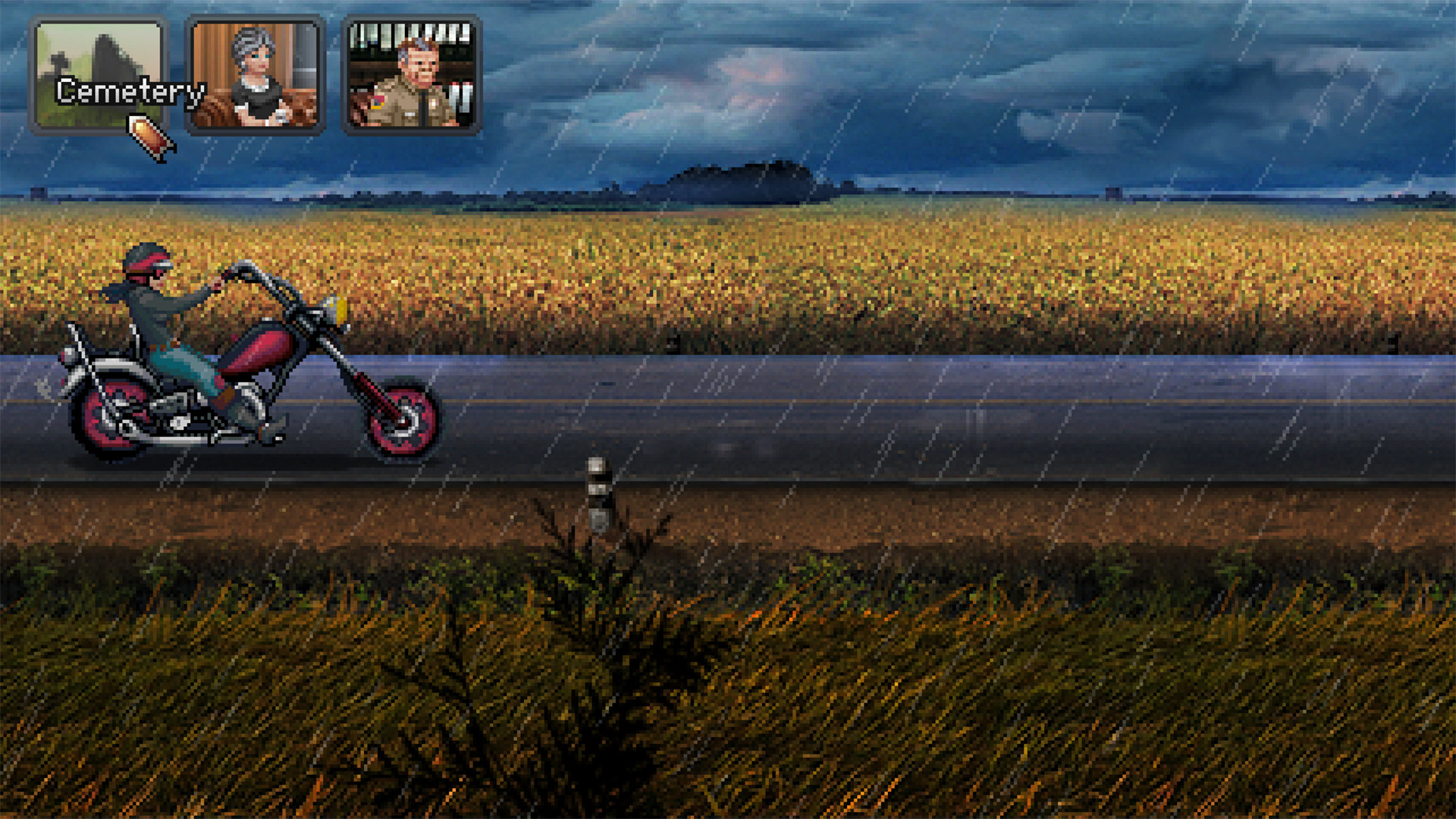
The presentation pairs crisp pixel art with voiced dialogue and music that supports the shifts between everyday town life and the case’s unsettling moments. The original release established the hand-drawn environments, English voice acting and soundtrack; the Director’s Cut builds on those elements with revised widescreen scenes, additional animation and newly recorded dialogue. The visual changes preserve the pixel-art approach while giving scenes more horizontal space and environmental detail. Audio is also part of the edition update, since the soundtrack is remixed and expanded rather than carried over unchanged. Kathy anchors the tone: her journalism background, motorcycle and blunt approach make her an active investigator, while the case brings her into contact with painful personal history. The game advances through authored scenes and puzzles, not action combat. Its setting, notebook-supported inquiry, location-based exploration and evidence-driven obstacles define a detective adventure whose 2021 Director’s Cut extends the original story and updates its presentation.
- Developer
- Clifftop Games
- Genre
- Point-and-click detective adventure