
About Katana ZERO
In Katana ZERO, a nameless assassin takes contracts in a neon-lit city still marked by a devastating war. Its side-scrolling missions turn each room into a lethal action puzzle: one hit kills, while a drug-enhanced ability to slow time helps Zero plan and execute a route. Between jobs, conversations gradually complicate his past and purpose.
Katana ZERO is a neo-noir action platformer set in a city whose bright signs and nightlife sit alongside poverty, violence and the aftermath of war. The player controls Zero, a quiet, katana-wielding assassin who receives targets from a shadowy organization. His routine also includes visits to a psychiatrist, where he discusses his assignments and takes a blue drug called Chronos. The story initially frames each job as a contract to complete, but details about the conflict that shaped Zero, his memories and the people around him gradually make that simple account harder to accept. The game keeps its central mysteries unfolding through scenes between missions rather than explaining the world in a single block of exposition.
A mission plays as a sequence of compact side-scrolling rooms. Zero must get through the space and eliminate the armed enemies in it before the route forward opens. Most opponents, like Zero, are killed by one clean hit, so crossing a room is a matter of timing, positioning and deciding who can act first. A gunman may cover an open lane while another enemy waits behind a door; a shielded guard can force Zero to change his angle, and a knife fighter can interrupt an attack. The game introduces different enemy behaviours and mixes them into later encounters, turning each room into a short problem that can be retried quickly after a mistake. A clear triggers a replay of the successful sequence, presented like surveillance footage.
Zero’s katana is both his main close-range weapon and a way to answer gunfire. A correctly timed slash can send a bullet back toward its shooter, while a dodge roll carries him through attacks and across a room. Chronos adds a limited period of slowed time, giving the player a moment to read a moving threat, adjust a jump or line up a deflection. The ability drains while active and recovers when released, so it works as a resource to apply at particularly dangerous moments rather than a permanent change of pace. The fiction describes Chronos as enabling precognition: a run through a room represents Zero anticipating a successful sequence, while failure returns him to its beginning to try another plan.
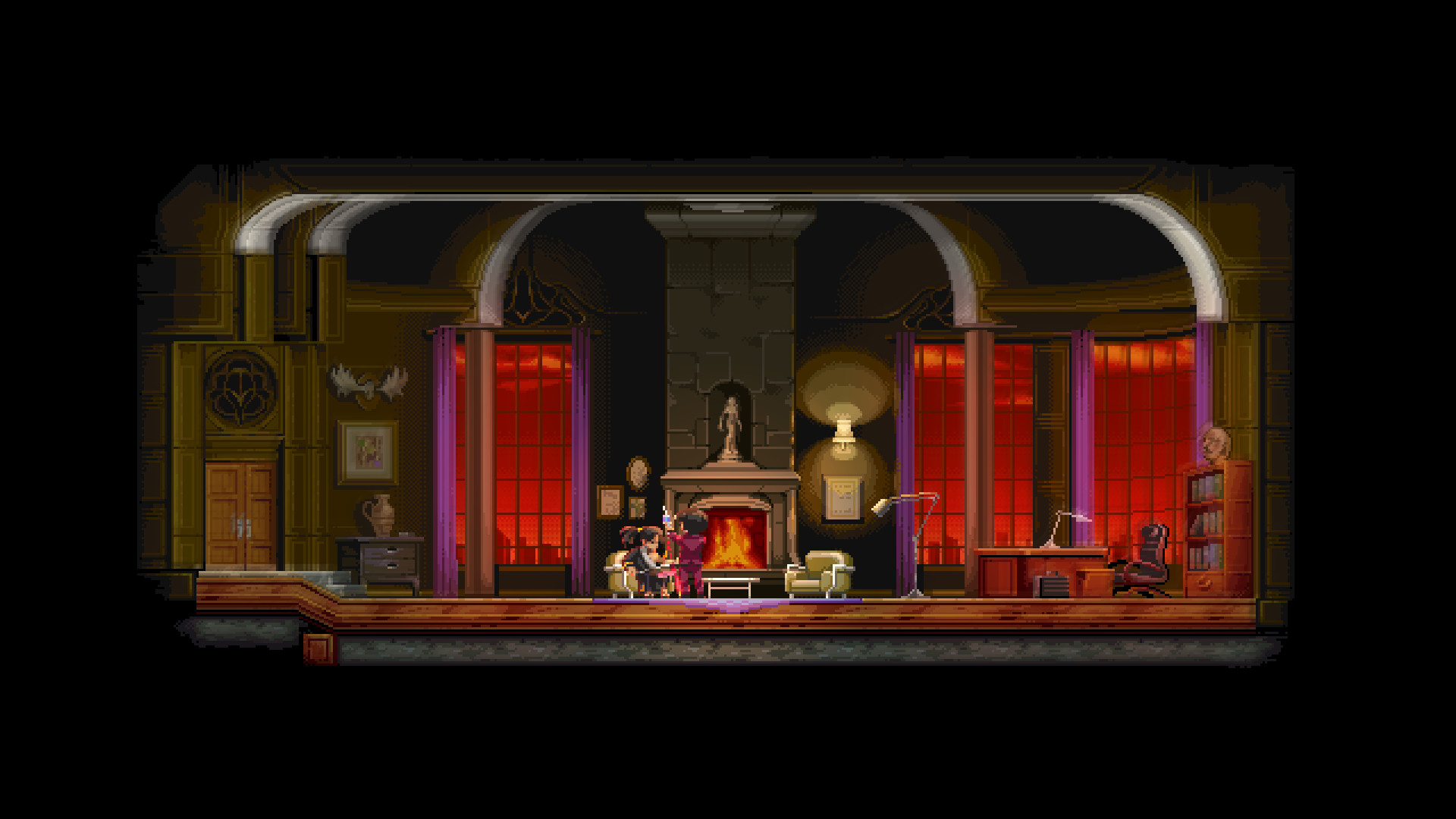
The rooms also reward using what is already in the scene. Zero can pick up and throw objects such as lamps, bottles or other stage-specific weapons, making a projectile useful when approaching an enemy directly would be unsafe. Traps, explosives and security systems can become weapons against the people who set them up; some levels place hazards that can be triggered or redirected as part of the route. Jumping, rolling, throwing and sword attacks can be combined, and the same room can admit different orders of attack. The controls remain focused on this compact toolset rather than adding a long sequence of new combat powers. Progression instead comes from recognizing how enemy types, objects and room layouts interact, then carrying that understanding into denser arrangements.
Outside the rooms, Zero’s assignments are framed by cinematic scenes and conversations. The psychiatrist’s sessions and the instructions surrounding each contract provide recurring points of contact with the story, while encounters with people in the city expose different responses to Zero’s presence. Dialogue is interactive: the player can choose replies and, at times, interrupt someone mid-sentence. These choices affect the tone of an exchange and can alter how particular people react or how a later small situation plays out. They do not turn the game into a broad branching role-playing structure; the action and the story keep moving along a central line while local conversations reflect the manner in which Zero behaves. The narrative uses those pauses to build character and atmosphere alongside the violent missions.
The game’s visual language combines detailed pixel animation with an '80s neon-noir look. Magenta, blue and green light spill across interiors, streets and workplaces, while the city’s darker spaces give the bright colour a harsher edge. Character sprites use expressive movement during both combat and quieter scenes. The image can warp and jitter like a worn video recording, and the successful-room replay reinforces that recorded-footage motif. Dialogue boxes also animate and shift the screen, so conversations have a visual rhythm of their own. Missions move through distinct settings, including a nightclub and a film studio, rather than relying on a single repeated backdrop. Those changes help the same side-view combat spaces feel connected to a larger city.
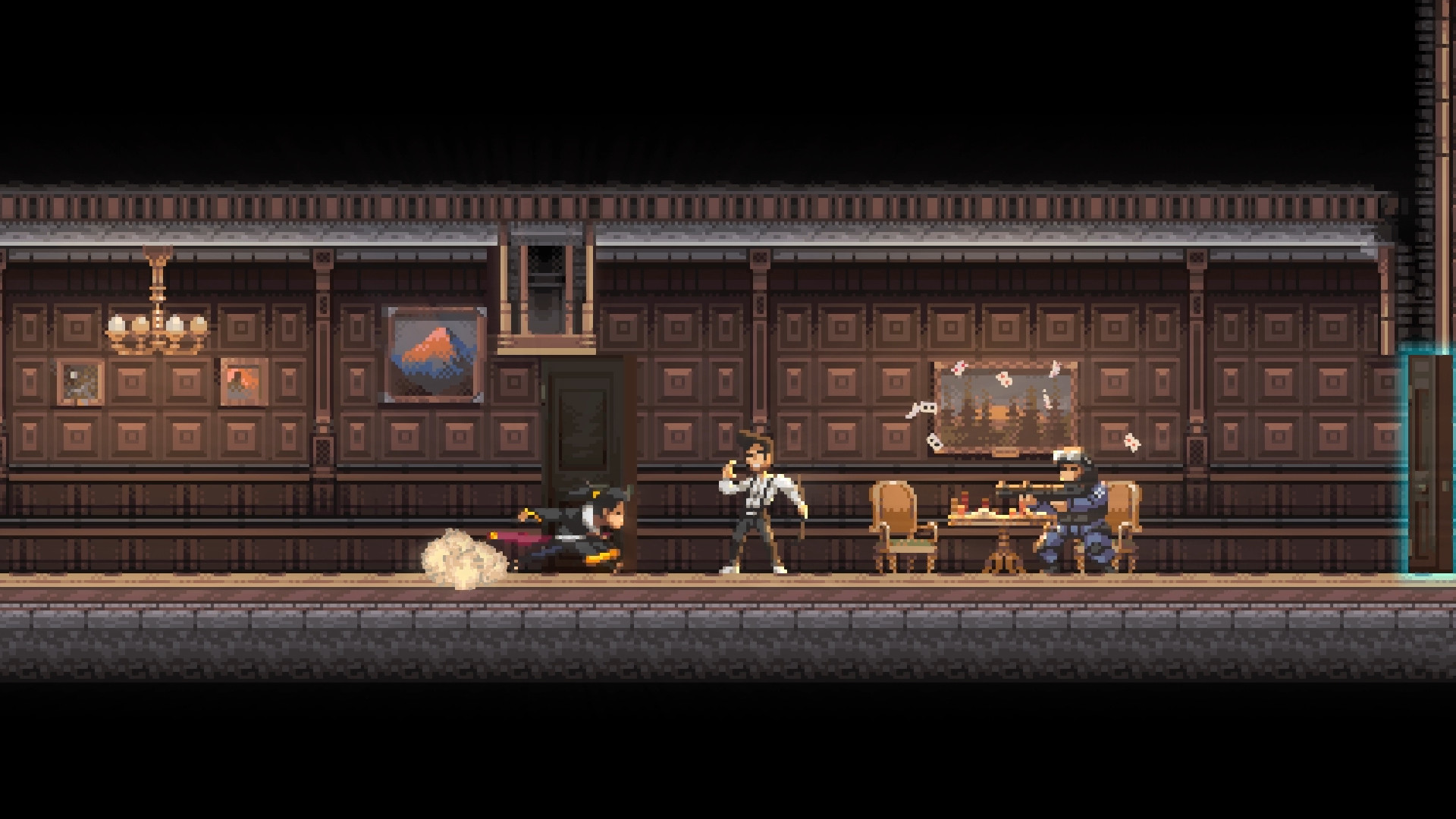
Music is part of that setting and pacing. Electronic and synthwave tracks accompany the fast combat, while quieter passages use different arrangements for scenes focused on character or unease. The contrast lets a mission’s forward motion give way to a conversation without abandoning the game’s strong audio identity. Zero is also repeatedly shown putting on headphones and selecting a cassette before a level, tying the music to the character as well as to the soundtrack. Across its acts, Katana ZERO alternates these composed action sequences with story scenes, using the contrast between quick, lethal rooms and slower exchanges to reveal more about the assassin, Chronos and the city’s war-scarred history.
- Developer
- Askiisoft
- Genre
- Neo-noir side-scrolling action platformer