
About It Takes Two
When a marital separation turns Cody and May into dolls, their daughter Rose’s world becomes a fantastical landscape they must cross together. This co-op action platform adventure pairs split-screen movement and puzzles with changing character abilities, short competitive minigames, and a journey through the house and garden.
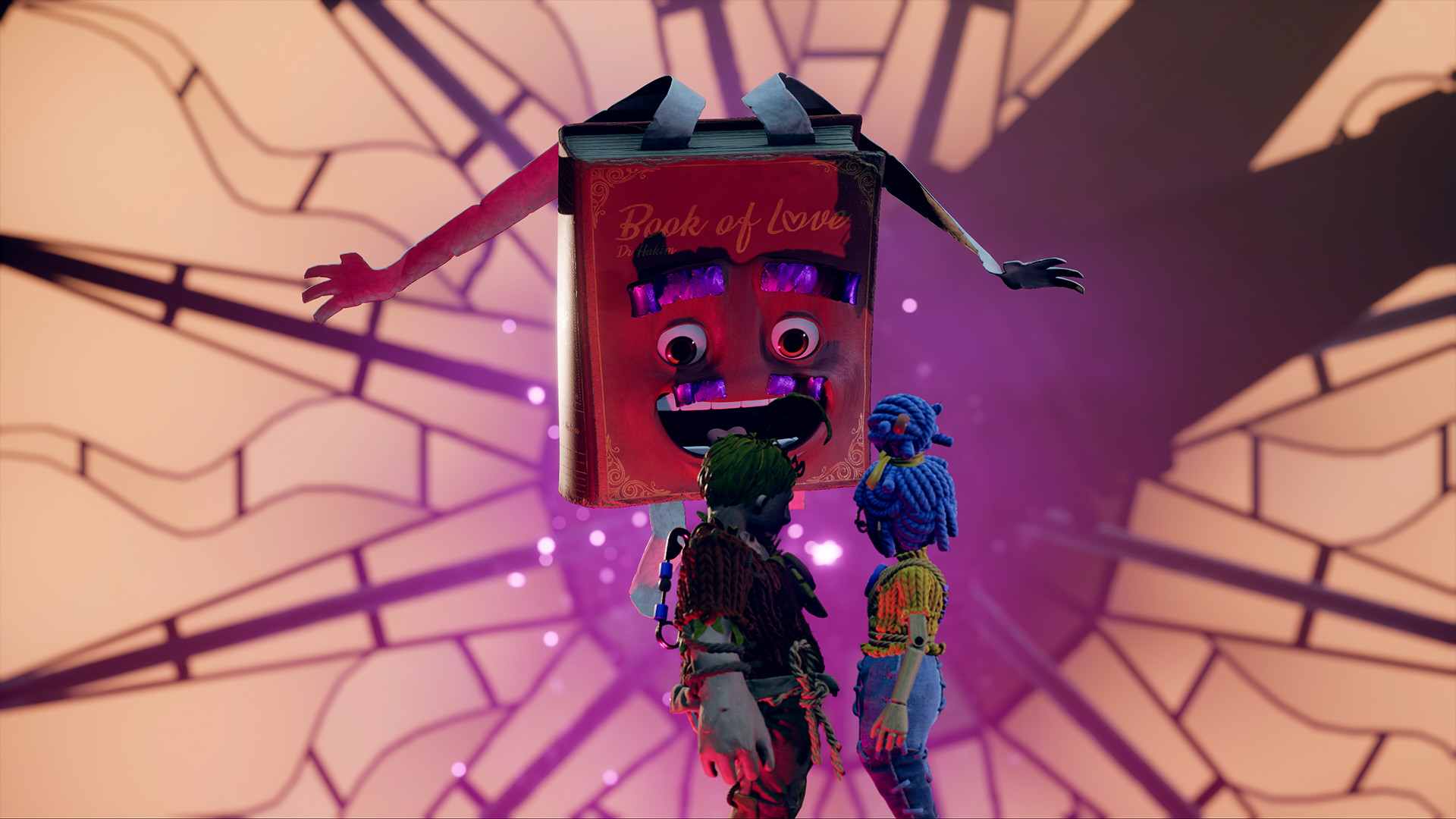
It Takes Two begins with Cody and May, a married couple who have decided to separate, telling their daughter Rose what is happening. Rose retreats with handmade dolls resembling her parents, and a magical transformation leaves Cody and May trapped in those small bodies. The ordinary home and garden become oversized environments, where household objects turn into hazards, routes and machinery. Dr. Hakim, an animated self-help book about love, appears as an intrusive guide, pushing the pair into challenges framed around their strained relationship. The premise gives the adventure a clear direction: Cody and May need to find their way through this altered world and return to Rose, while their disagreements and attempts to cooperate shape the story. The journey moves through recognisable domestic spaces that expand into imaginary worlds, including a frozen snow globe and a garden occupied by creatures far larger than the dolls.
The campaign is designed for two players throughout. Each person controls one character in split-screen, either together on one system or online, and both must move through the same sequence of spaces. It is an action platformer at its base: players run, jump, climb, dodge, use objects and coordinate movement across gaps or hazards. The split view lets each player see their own position while keeping the partner’s actions visible, so progress often depends on noticing what the other person can reach or activate. Many obstacles divide the task between the pair rather than asking both to perform the same action. A player might hold open a route, aim or manipulate a device while the other crosses, then switch roles at the next obstacle. Local couch co-op can be played offline; online play requires a second player. Friend’s Pass lets an owner invite one online partner who installs the free pass, so the partner can join the full co-op game without buying a second copy.
Abilities change as the story moves between chapters, and are tied to the environment rather than accumulated into a permanent character build. One early example comes in the shed: Cody uses a nail gun to pin objects in place, while May carries a hammer that can strike targets or swing from those nails. Cody can lodge nails in surfaces or enemies; May uses them as temporary anchor points to reach otherwise inaccessible places. Later, the garden gives the pair different plant-related tools. GameSpot describes sections where Cody can become moss, laying down a soft path that muffles May’s footsteps as they sneak past sleeping moles. That passage then shifts into a chase with changing camera angles, demonstrating how a mechanic can be introduced, revisited and recombined with movement challenges inside one chapter. The game continues to replace these temporary tools as the setting changes, so players learn the current pair and work out how their effects connect.
The puzzles usually make those paired tools part of a larger sequence. Players inspect the space, identify which character can affect each object, and coordinate the order of actions: one person may expose or hold a target while the other strikes, crosses or activates it. In the shed sequence, Cody’s nails can secure the toolbox’s wooden arm to a wall, creating an opening for May to swing over and hit the machine. The same division of abilities carries into encounters that put the tools under pressure, with both characters dodging attacks and timing their contributions. Other chapters change the kind of task altogether: official gameplay material describes Cody and May using magnetic powers to navigate a frozen snow globe, while Steam’s description highlights piloting a makeshift plane and moving through a toy-like fantasy setting. These are not equipment upgrades to keep forever; each chapter’s setting supplies its own connected abilities, and forward progress introduces the next set of interactions.
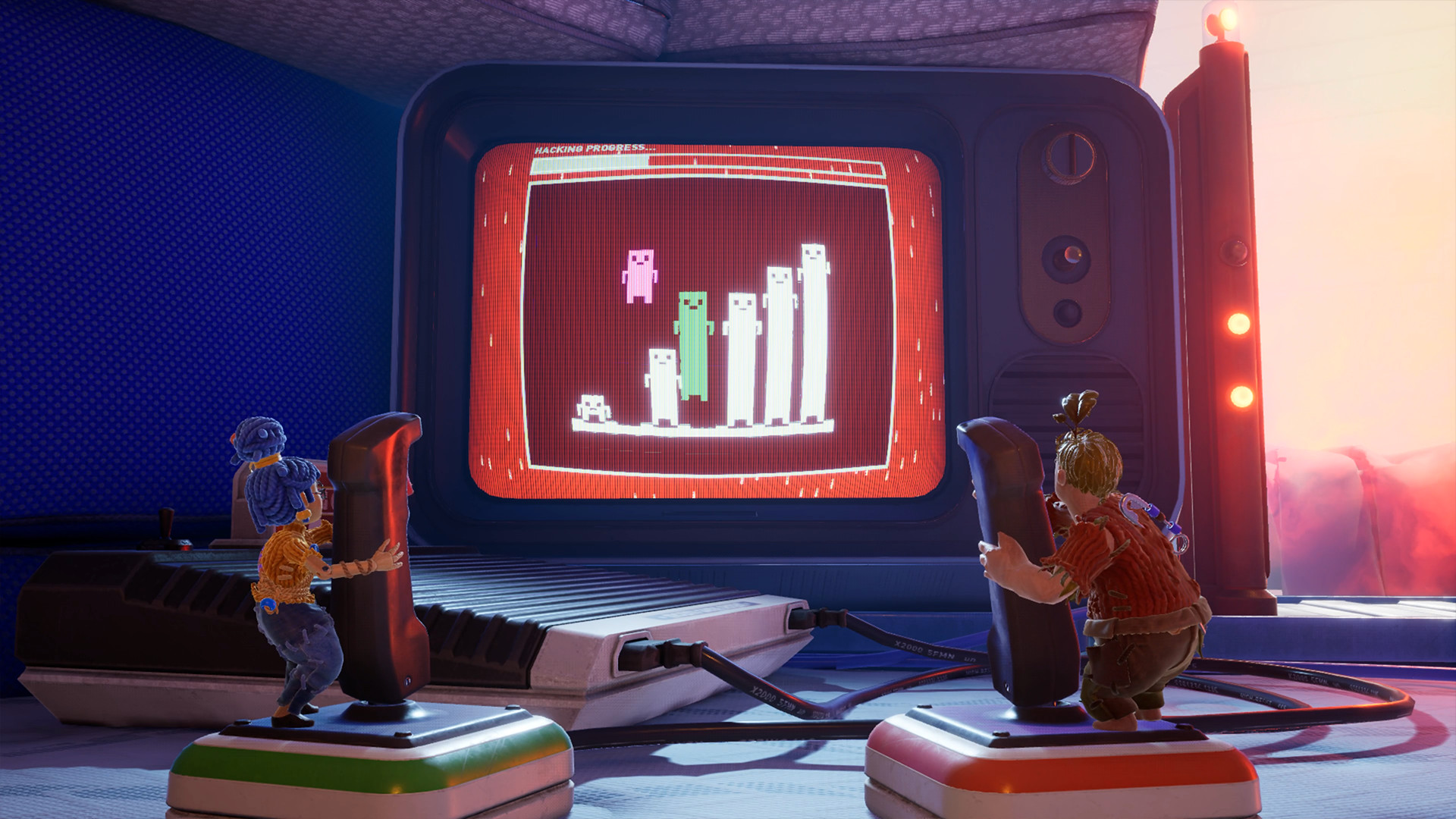
The route also alternates its main activity and presentation. Alongside platforming and cooperative puzzles, players encounter action sequences, vehicle-like segments, short chases and boss encounters built around the tools available in that area. The GameSpot account of the garden illustrates the variation: a quiet passage asks players to manage noise and foot placement near sleeping moles, then the escape turns into a fast run with the camera shifting between perspectives. Other scenes use giant versions of familiar things, such as the vacuum cleaner, toys or garden wildlife, to change scale and movement. Scattered minigames provide a separate kind of pause. These are optional head-to-head activities in which the two players compete directly rather than solve a shared obstacle; the score or winner belongs to that brief diversion and does not replace the cooperative campaign. The main route remains about reaching the next space together, while the minigames let players test themselves against each other along the way.
Completed chapters can be revisited through chapter select, which gives the pair a way to return to a favourite sequence or an optional diversion without restarting the entire story. In an online session the host’s progress determines the unlocked chapters and the host chooses where the partners begin. This replay structure matters because the abilities belong to particular chapters: revisiting the shed brings back the nails and hammer, while a later setting uses its own paired tools. Players are returning to a designed situation rather than carrying an accumulated build through every level. The separate views also continue to matter on a return visit; one player may notice an interaction or minigame the other missed while concentrating on the main route. The campaign’s chapter sequence provides the forward journey, but chapter select lets partners spend more time with a specific cooperative puzzle, encounter or competitive interruption after they have reached it.
- Developer
- Hazelight Studios
- Genre
- Co-op action-adventure platformer