
About INSIDE
A hunted boy crosses a silent, controlled landscape and enters the centre of a dark project. INSIDE is a side-on narrative platformer built around running, hiding, jumping and manipulating objects. Its puzzles connect machinery, automatons and environmental hazards as the journey moves from wilderness into a sprawling complex.
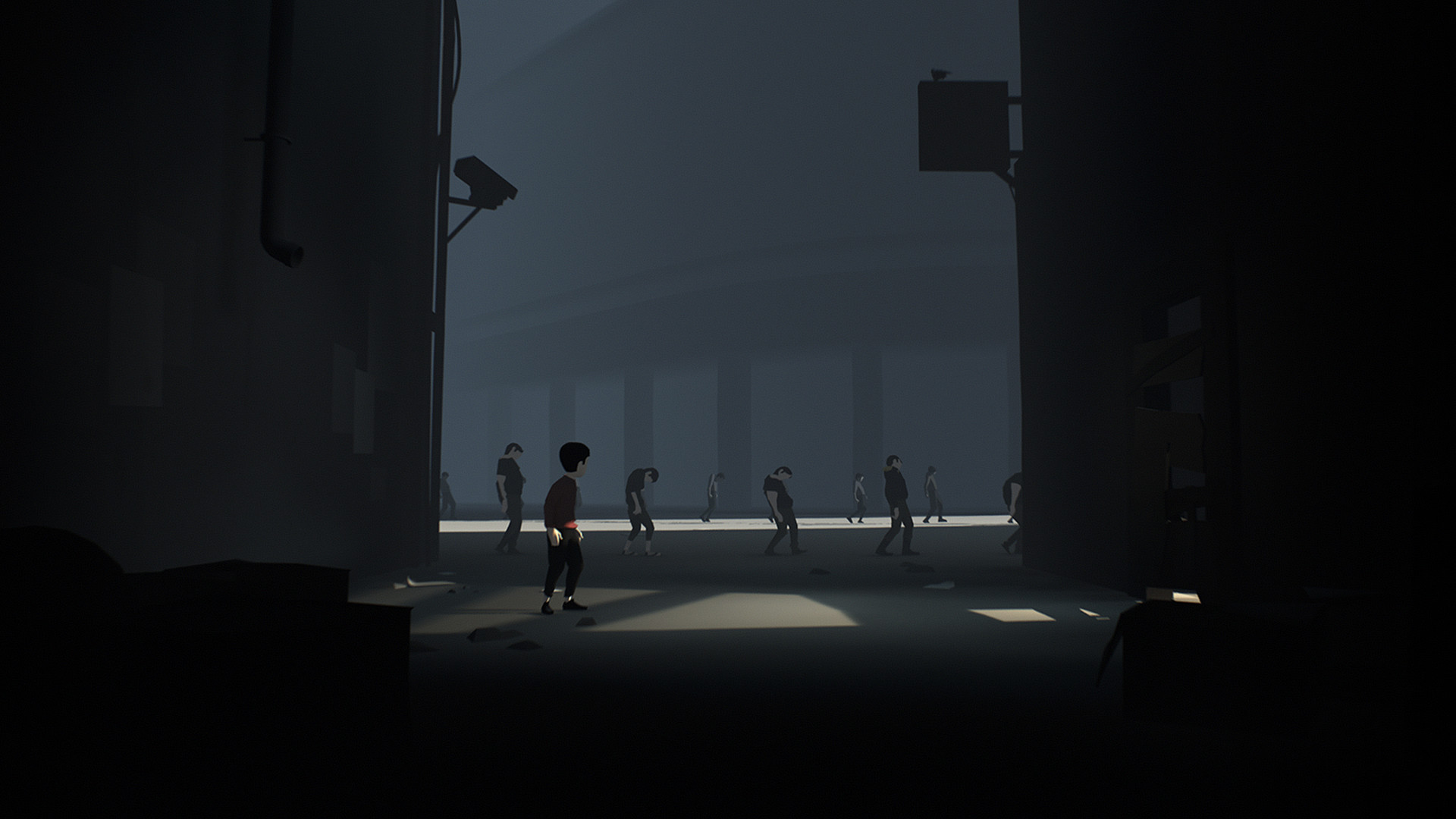
INSIDE follows a lone boy through a modern landscape where ordinary wilderness gives way to roads, industrial buildings and a vast controlled complex. He is hunted and alone, drawn toward the centre of a dark project. The game is a narrative platformer built around action and puzzles. The environment supplies most of the context. Distant structures, moving machinery, guarded work areas and groups of people suggest a society organised around surveillance and coercion, while the boy’s small figure moves through spaces built on a much larger scale. There is no spoken exposition explaining who he is or what the project does. Progress comes from crossing each environment and noticing how people, objects and architecture behave. The story remains deliberately elliptical, so the journey is defined by visible events and changing surroundings rather than dialogue or a named cast.
Movement stays direct: the boy runs, jumps, climbs and grabs objects, with the camera following his route across a side-on plane. That limited verb set is used for both platforming and problem solving. A ledge may require positioning a movable object as a step; a gap may call for a running jump or a carefully timed leap. The dangers vary with the space. In exposed areas, searchers and dogs can pursue him, making concealment and timing part of traversal. The player reads sightlines, waits for an opening, and moves between cover or through a route before pursuers close in. Failure can be sudden, so a sequence often asks for observation followed by a short, precise action. The game does not introduce a combat system; staying alive depends on movement, hiding, and finding a way forward through the environment.
Objects are part of the puzzle language. The boy can pull or push items, climb onto them, and use switches or levers to change the state of a room. Some problems are local and legible, such as moving a box to reach a high edge. Others build a chain of actions: open one door, move an object through the newly available space, operate another control, then use the changed arrangement to reach an exit. The timing matters when a door closes, a platform shifts, or a jump has to be made between moving hazards. These challenges depend on reading the room and testing how its pieces connect, rather than collecting a large inventory or selecting dialogue. Early puzzles establish interaction with simple objects; later ones combine familiar actions across longer sequences, asking the player to understand both spatial layout and the order in which mechanisms must be triggered.
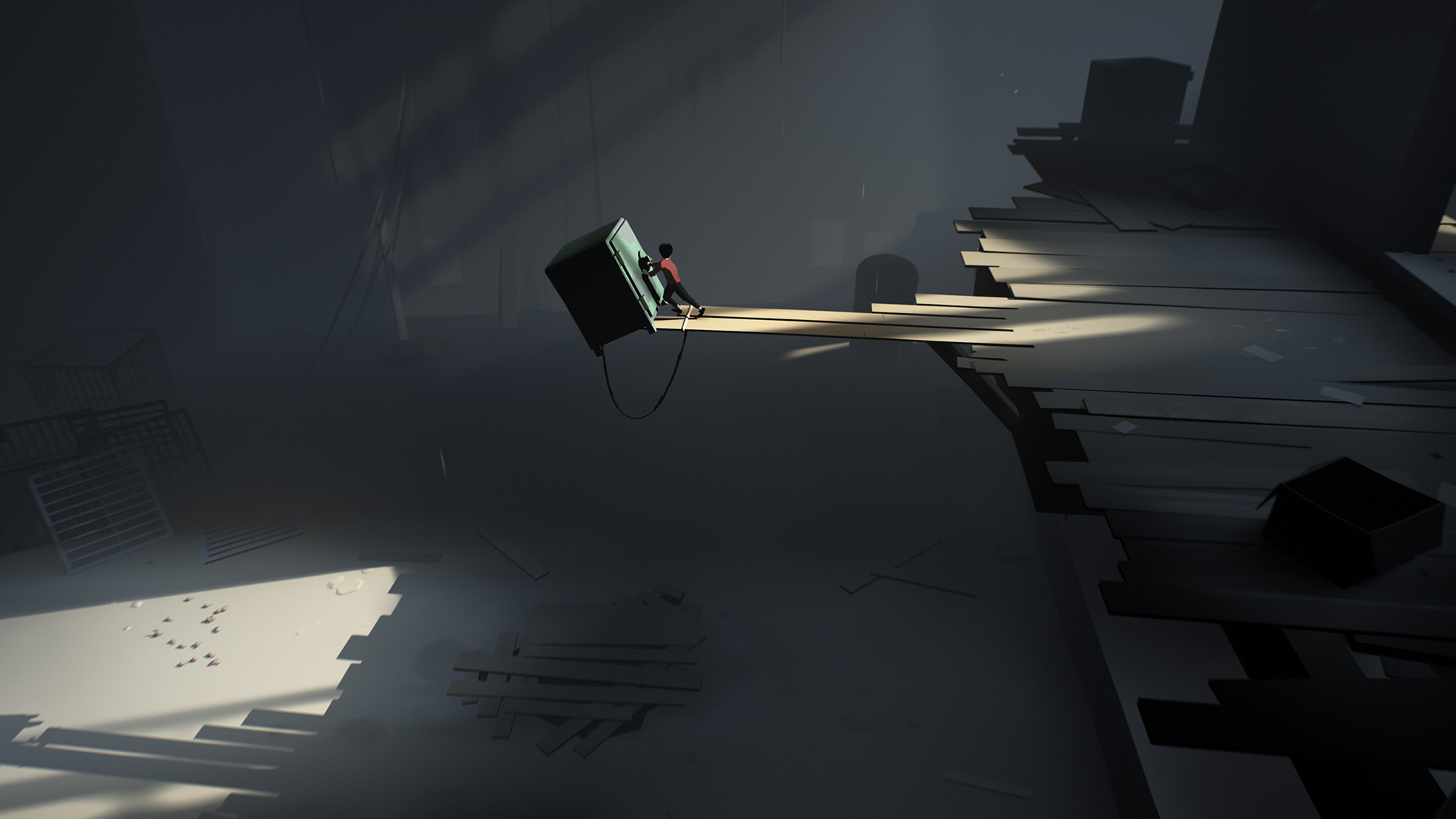
The controlled complex introduces devices that extend the boy’s reach. In particular, a helmet-like apparatus lets him direct groups of automatons, turning their movement into a tool for manipulating the environment. Puzzles can ask him to line up with the others, move in concert, and use their combined weight or actions to operate switches, lift objects, or shift a cart. This creates a distinct relationship between the boy and the people around him: they can be obstacles, victims, or part of a mechanism, depending on the immediate setup. The challenge is to recognise what the device controls, where the group must stand, and which control changes the room. As the game goes on, puzzles can link multiple doors and mechanisms, so the player has to plan a route for objects or a group rather than solve one isolated switch at a time.
Water changes the pace and the demands of traversal. The boy must move through submerged passages, surface for air where needed, and use the geometry of the underwater spaces to continue. A pursuing aquatic creature turns these sections into tense route-finding: the player watches its position, chooses when to move, and uses obstacles or openings to avoid being caught. The basic controls remain familiar, but momentum and the need to manage movement through water make the spaces feel different from a dry corridor. Other areas shift the challenge again through machinery, moving platforms, and rooms where sound or a visual cue reveals that a mechanism has changed. These transitions keep the route from relying on one repeated puzzle type. They also make the surrounding environment functional: doors, rails, pools, and machinery define how the player can move, hide, or redirect attention.
INSIDE advances as one continuous journey through connected environments, with the path generally pushing onward rather than opening into a broad map of optional missions. The player’s immediate goal is practical—reach the next safe foothold, cross a room, evade a search, or activate the mechanism blocking the route—while the larger purpose of the boy’s journey remains unclear. Wordless scenes and background activity provide fragments of context, and the puzzles often make the player participate in the world’s systems rather than merely observe them. The tone alternates between quiet stretches and abrupt danger, with environmental sound carrying much of the atmosphere. There are hidden areas and optional discoveries, but the central progression is the forward route and its increasingly connected obstacles. The game builds toward the heart of the project without naming its organisers or resolving every implication, leaving the player to interpret the setting through what the boy encounters.
- Developer
- Playdead
- Genre
- Side-on narrative platformer / puzzle platformer