
About Inscryption
Inscryption begins at a card table in Leshy’s isolated cabin, where you build a deck of woodland creatures and face a series of increasingly demanding matches. Between turns and battles, you can inspect the cabin, solve physical puzzles and uncover tools that affect future runs. The game combines deckbuilding, escape-room puzzles and psychological horror.
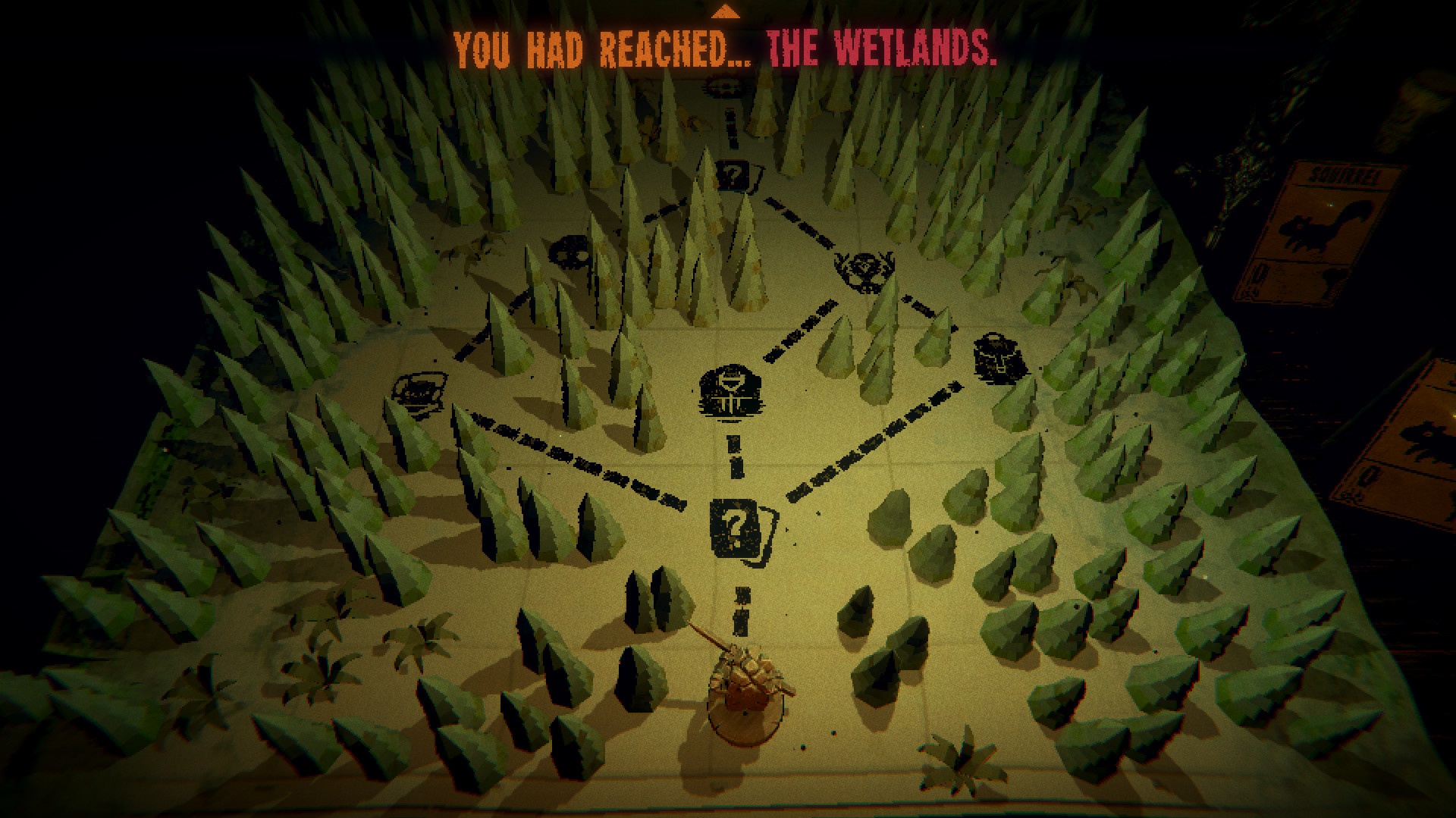
Inscryption starts with you seated across a card table from Leshy, a shadowy opponent in a dim cabin deep in the woods. He deals out a map of branching encounters, and you move a small game piece along its routes, choosing what kind of stop to face next. Some paths lead to another battle; others offer a card, a chance to alter one, or a strange figure with a trade to make. The cabin is also a place you can look around between matches. Objects, drawers and contraptions sit within reach, and their puzzles can reveal useful tools or open new possibilities in a run. That quiet first-person exploration surrounds the card game with a second set of questions, while the details of the larger story are best discovered in play.
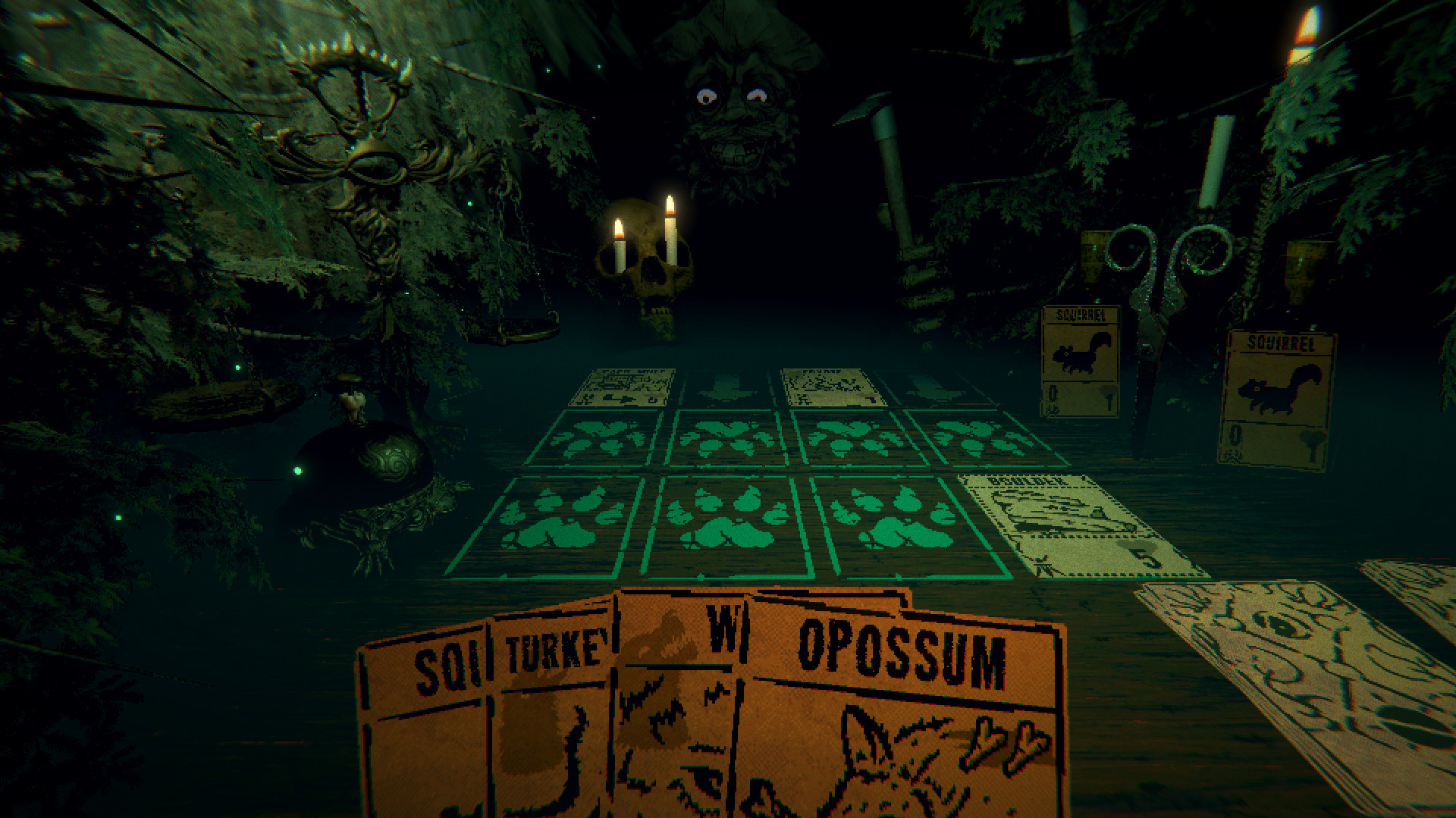
A match takes place on a compact board where you place creature cards into lanes opposite Leshy’s. At the end of each turn, creatures attack across their lane; damage adds up on a balance scale, and enough damage tips the match in your favor. Cards have attack and health values as well as sigils, symbols that give them special behaviors such as striking past a blocker or returning after they die. A sturdy creature can hold a lane, while a low-cost card with a useful sigil may be better for setting up a stronger play. Because the opposing cards and your own line-up change over successive turns, placement matters: a creature in the wrong lane can absorb an attack that would otherwise reach you, while an open lane can turn into a direct hit. The rulebook in the cabin gives explanations for sigils and items as you encounter them.
The opening deck uses Blood as its main cost. To play a more expensive creature, you sacrifice cards already on your side of the board; a Squirrel can provide a simple body to trade for a larger animal. That cost turns a weak card into part of a later play, so your choices depend on what is in hand and what you can afford to lose. Creatures that perish also provide Bones, which pay for cards with a Bone cost. Cards may have different stat lines and one or more sigils, so a sacrifice can clear a lane, generate Bones, or trigger a useful effect at the same time. You draw from your creature deck or the Squirrel pile, deciding whether to add a body to the board or search for a card that fits the current situation. Resource and draw choices give each turn its own small sequence of trade-offs.
The map’s stops shape how a deck changes before the next boss. Card drafts let you choose among new creatures, while campfires offer the chance to strengthen a card at a risk. Other encounters let you pass a sigil from one card to another, combine cards, or exchange an item. These choices can turn an ordinary creature into a more reliable part of a strategy, but adding every card you see can also make it harder to draw the one you need. Items provide limited-use help in a match, such as changing a difficult board state, and you can carry only a small selection between encounters. The map therefore asks you to weigh a potential upgrade against the route ahead: a risky campfire or a helpful item may be worth pursuing if your deck has a weak lane or a costly boss coming up.
Outside the table, the cabin’s puzzles are hands-on rather than menu selections. You can stand up, turn toward objects around the room and interact with things that do not look like cards or ordinary furniture. A locked cabinet, a clock and other mechanisms provide clues through what they show or how their parts move; solving them can yield items that become available during card battles. These discoveries connect exploration to deckbuilding, and some puzzle progress carries across failed card runs instead of disappearing with the match. A new attempt brings another route and deck, while an opened lock or solved mechanism can remain useful as you work toward what comes next. Leshy remains across the table, so you move between the pressure of playing and the slower work of examining the room. The two activities share a space but progress on different timescales: a battle tests the hand you have now, while a solved cabin puzzle can matter in a later run.
Cards are not the only thing you spend. In some matches, you can use a tool to sacrifice part of your own body and push the balance toward a win. It is a resource decision outside the deck: weigh a physical price against the risk of losing the round. This extends the sacrifice mechanic beyond creature cards and adds to the cabin’s uneasy atmosphere. The choice matters when ordinary attacks leave the scale close and an item could provide the last push.
After completing the main game, Kaycee’s Mod offers a separate way to return to Leshy’s Cabin. This free mini-expansion makes the cabin run endlessly replayable and lets you apply skull modifiers to raise the Challenge Level. Advancing those levels unlocks additional cards, challenges and developer logs tied to Kaycee Hobbes. The challenge rules increase pressure on the same kind of deckbuilding decisions: which cards to draft, which creature to improve, and how to prepare for the next fight with the resources and items available. Kaycee’s Mod is a distinct replay mode, not an extra chapter of the opening story. Its progression gives players who want more cabin matches a clear ladder of escalating restrictions, while the main game remains a broader single-player journey combining its opening card system with cabin exploration and puzzles.
- Developer
- Daniel Mullins Games
- Genre
- Single-player strategy/adventure; deckbuilding roguelike with escape-room puzzles and psychological horror