
About Indiana Jones and the Great Circle
Set in 1937 between Raiders of the Lost Ark and The Last Crusade, this first-person adventure sends Indiana Jones from Marshall College across the globe after a stolen artifact reveals a mystery tied to the Great Circle. Exploration, archaeology, stealth, combat and puzzles shape the single-player journey.
Indiana Jones and the Great Circle places its original adventure in 1937, between Raiders of the Lost Ark and The Last Crusade. A break-in at Marshall College brings Indy face to face with a mysterious colossal man and sends him after an artifact that seems unimportant until its theft points toward a much larger secret. Hostile forces are searching for an ancient power connected to the Great Circle, and Indy follows their trail as an archaeologist, investigator and adventurer. The game keeps this search at the center of its single-player story: the player travels with Indy, pieces together clues and tries to understand why scattered sites and a stolen object belong to the same mystery. Its first-person viewpoint makes exploration feel close to the objects and spaces Indy examines, while narrative scenes carry the larger pursuit forward.
The route reaches well beyond the college. The Vatican, Egypt and the sunken temples of Sukhothai are among the named destinations, with further journeys taking Indy through other parts of the world. These places provide more than scenery: each contributes rooms, landmarks and historical traces for the player to investigate. Some stretches follow a directed, story-led path, while open-area maps allow broader exploration around the current objective. That combination gives the adventure room for discovery without abandoning its forward momentum. A player may be following the main mystery through a sequence of dramatic events and then find time to look around, search for hidden details or examine a route before moving on. The varied settings keep the quest in motion and make the journey itself part of the appeal.
Investigation is built around looking carefully and making sense of what the environment offers. Notes, artifacts and visual clues can point toward a puzzle or explain why a location matters, while ancient riddles ask the player to connect information rather than simply defeat an opponent. Traps and concealed details give archaeological exploration practical consequences: an unfamiliar room can hold a clue, a hazard or a way onward. Puzzles sit alongside movement and action, so the player shifts between reading a place, working out its logic and continuing through it. The game presents these moments as part of Indy’s fieldwork, where curiosity and resourcefulness are useful tools. Its first-person camera keeps objects and mechanisms at the scale of direct inspection, reinforcing the sense of searching through a physical place rather than selecting answers from a distant overview.
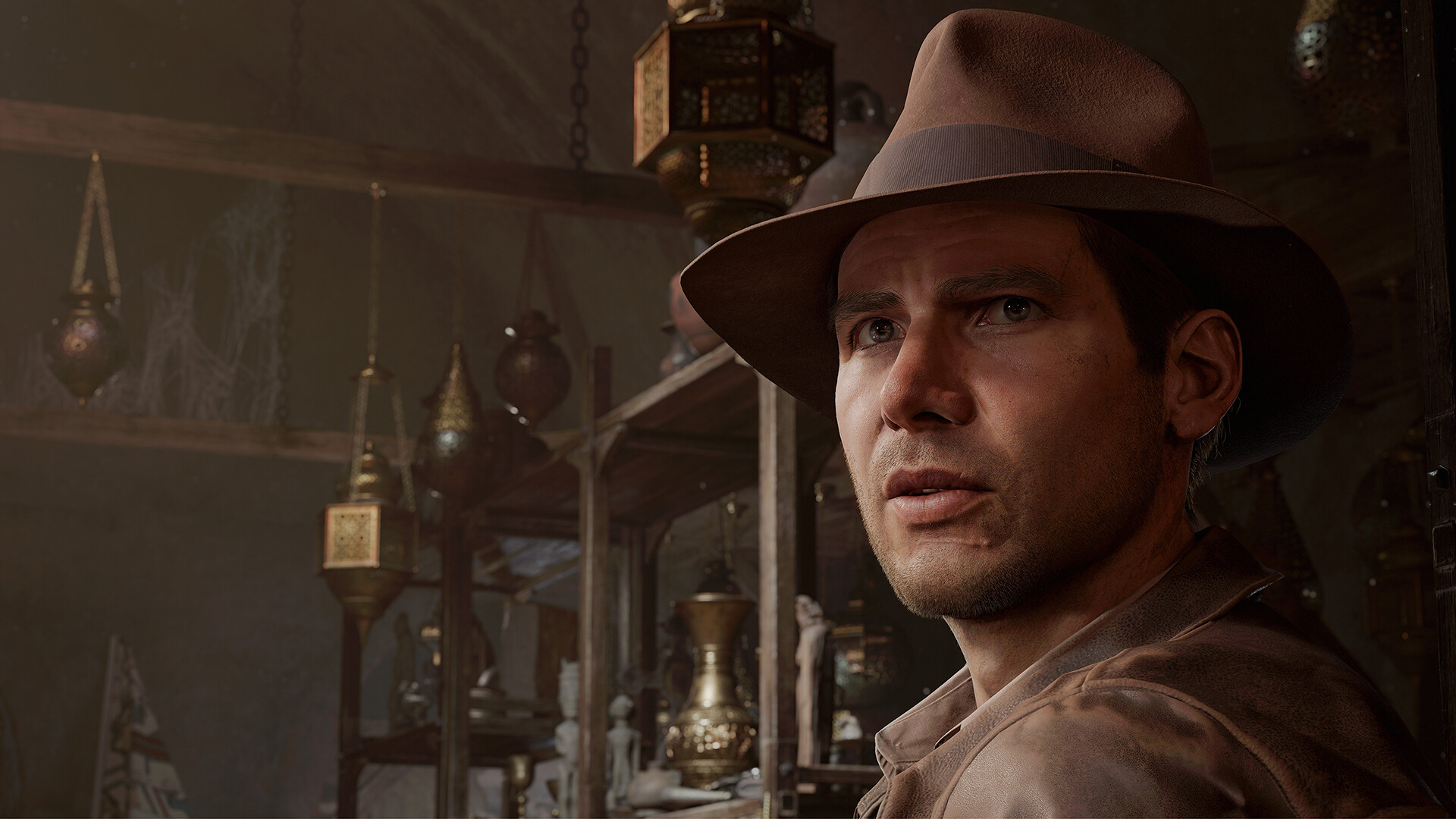
Indy’s whip serves several purposes across that journey. It can distract enemies, disarm them or be used in an attack, but it also helps him move through the environment. Swinging across gaps and climbing walls make it a traversal tool as well as part of his equipment for confrontations. The player can combine stealth infiltration, hand-to-hand fighting and gunplay when dealing with enemy forces. These options create different ways to approach danger: a guarded space can call for caution and timing, while another encounter may turn into a direct fight. The emphasis remains on adapting to each situation with the tools Indy carries. His whip is distinctive because it connects the physical action to exploration, letting the same piece of gear contribute to movement, problem solving and combat.
The adventure balances quiet searches with more forceful sequences. A player might pause to interpret a clue or navigate a trap, then find the pace change as enemies or a large set piece interrupts the investigation. Linear narrative sections keep major story beats in view, while open maps invite detours and closer inspection. That rhythm supports a character whose work requires both thought and improvisation. Discoveries are not separated from action: examining a room can reveal something that changes the route, and traversing a difficult space may expose another piece of the mystery. The shifts between these activities give the world a lived-in sense of scale, moving from enclosed interiors to broader locations and back into specific puzzles or encounters.
Characters and alliances add another layer to the investigation. Indy encounters new people as well as familiar enemies, and conversations or temporary partnerships can shape how he proceeds through a location. He relies on guile and wits as much as physical strength, making observation and judgment relevant even when the immediate threat is hostile. The story’s race against enemy forces provides urgency, but the player still has opportunities to take in surroundings and search for context. This balance keeps the character recognizable as an archaeologist who solves problems as well as an action hero. The adventure follows the mystery through its sites and obstacles while letting Indy’s curiosity, resourcefulness and trademark humor inform the tone of the journey.
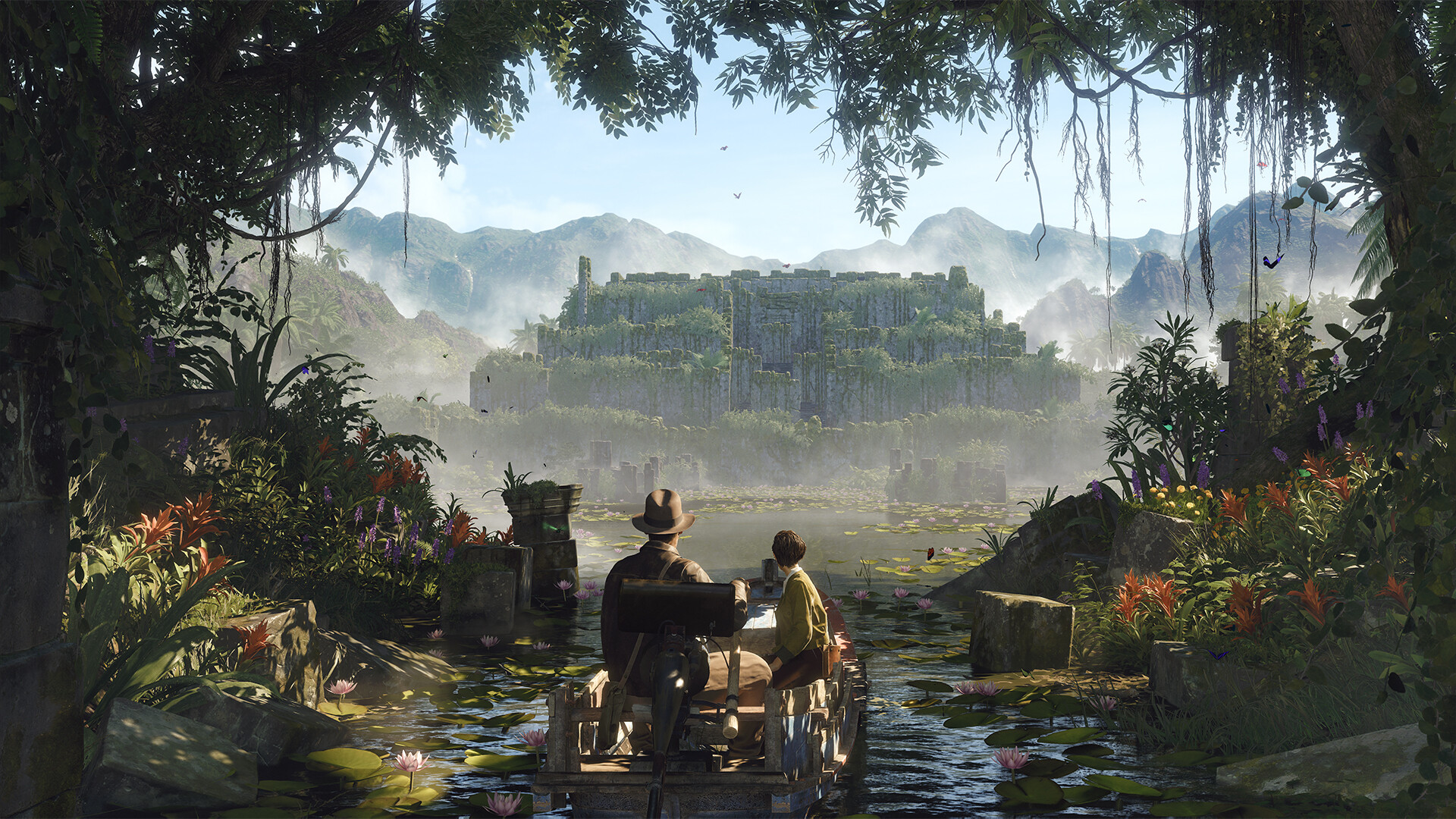
Indy’s journal gives the investigation a practical record. It tracks clues he finds and the hints he offers himself, while nearby notes can contain information needed to solve a puzzle. The camera also has a role beyond recording the trip: photographing certain objects or locations can earn Adventure Points, and using it at different zoom levels can prompt Indy to comment when the player needs help with a puzzle. Notes and clues scattered around the world can reveal Fieldwork quests, which are tracked in the journal. Adventure Books add another progression layer, letting players learn new skills or improve existing ones by spending Adventure Points. The game also allows separate adjustments to its Adventure and Action experiences, including puzzle difficulty and enemy behavior.
- Developer
- MachineGames
- Genre
- First-person single-player action-adventure with exploration and puzzles