
About In Stars And Time
In Stars and Time is a time-looping RPG about Siffrin and their friends, who set out to stop a king threatening Vaugarde. When disaster repeatedly resets their progress, Siffrin alone remembers. Explore the House of Change, learn from each attempt, solve puzzles, and fight using turn-based Rock, Paper, Scissors combat.
Siffrin is a traveler in Vaugarde, a country threatened by a king whose power can freeze it in time. Alongside Mirabelle, Isabeau, Odile and Bonnie, Siffrin joins a final effort to reach the House of Change and stop him. The party’s planned advance is interrupted when Siffrin dies and wakes again at the same point, with the others unaware that the day has repeated. The loop gives the adventure its central tension: the group is still trying to save the country, while Siffrin accumulates experiences no one else shares. What begins as a way to try again gradually changes how Siffrin sees familiar people, rooms and conversations.
The journey moves between Dormont, the settlement where the party prepares, and the House of Change, a multi-floor structure leading toward the King’s Room. Its rooms contain people to speak with, objects to inspect, doors and puzzles that obstruct progress, and enemies that turn exploration into encounters. The setting draws on a fantasy world shaped by the Change God and by the King’s threat to halt Vaugarde. The House is more than a line of battles: returning through its spaces lets Siffrin revisit conversations and examine details with knowledge from previous attempts. The route is structured around reaching deeper areas, but the loop makes the same geography function differently as the player learns what to look for and where a previous attempt went wrong.
Siffrin’s companions give the expedition its social centre and its distinct points of view. Mirabelle is a caring but nervous housemaiden blessed by the Change God; Isabeau is an energetic fighter who cares deeply for his friends; Odile is a mature researcher from Ka Bue; and Bonnie is the young member of the group who helps with food. Their roles and personalities appear through party conversations, interactions around Dormont and the House, and their participation in combat. Siffrin can revisit people and objects, and the changing context of repeated days gives familiar exchanges new weight. The group’s bond is part of the objective: they travel together toward the same danger, even though only Siffrin carries the knowledge of each reset.
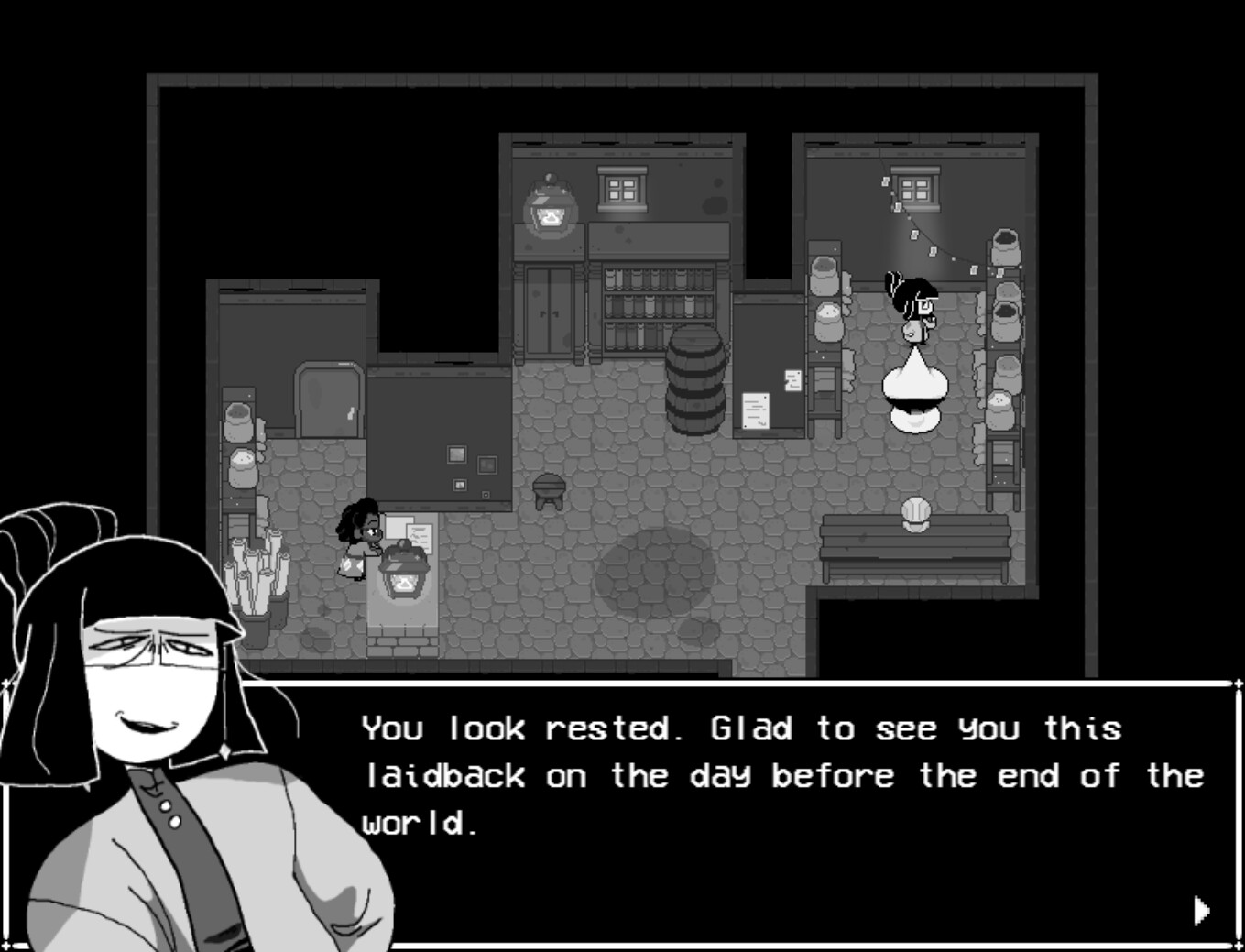
A loop is useful because it turns failure and repetition into information. Siffrin can return to an earlier point, retry a dangerous section, and approach a conversation or obstacle with a new understanding of what happened. New perspectives can open solutions to puzzles and lead to better choices in dialogue. As exploration advances, the player also gains the ability to choose where to return within the House, moving among Dormont, its floors and the King’s Room. Memories collected from fights are used when moving farther forward in time, while returning to an earlier point does not spend them. This creates a practical decision around how to revisit a route: the player can save time by jumping to a known point, while preserving the ability to move backward freely.
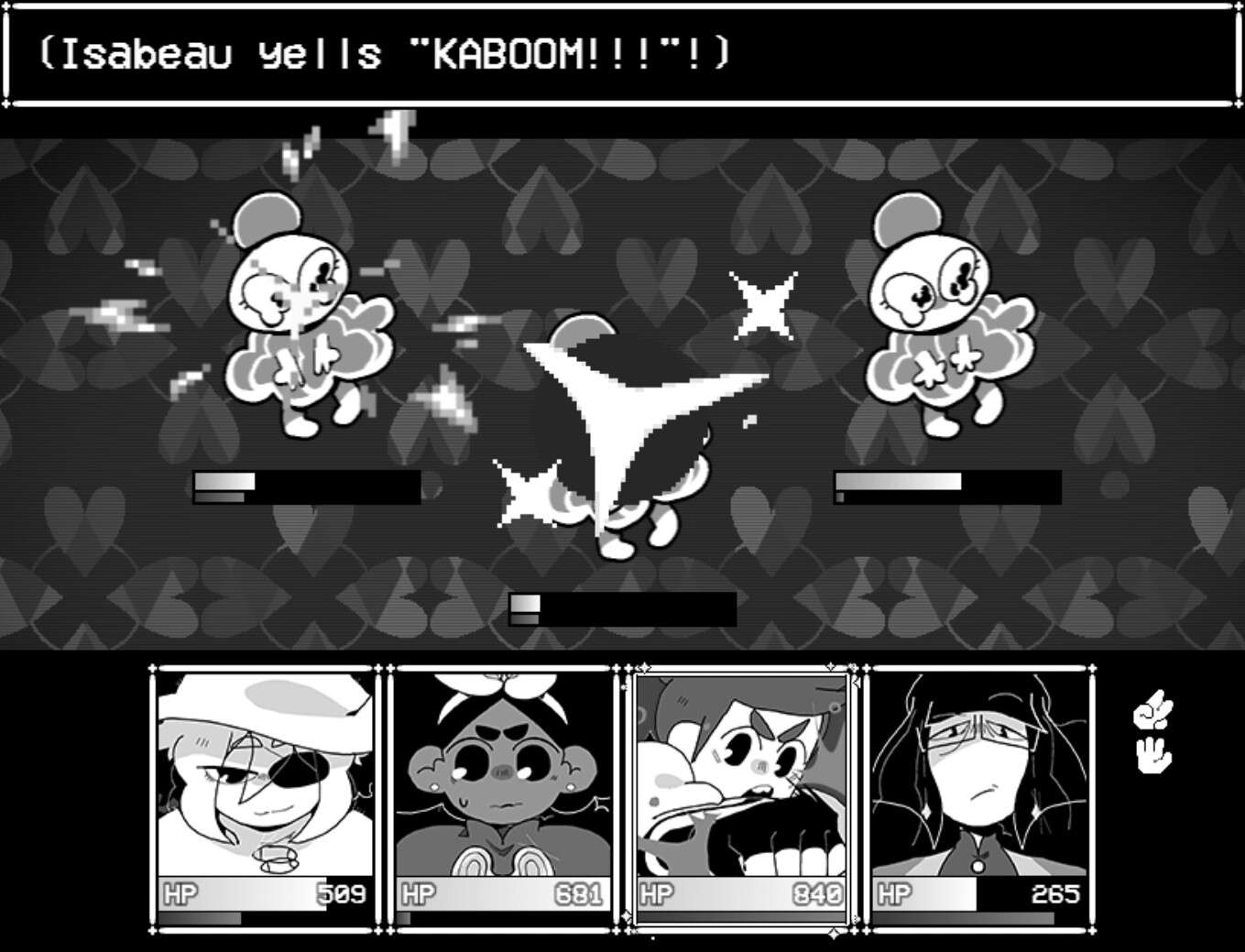
Combat is turn-based, but its Rock, Paper and Scissors theme shapes both attacks and character skills. Each combatant has a type, so selecting an attack that has the advantage over an enemy matters. The three styles also have different emphases: Rock focuses on physical damage and defence, Scissors on sword attacks and offence, and Paper on magic and mental strength. Attack gauges fill over time until a character or enemy can act, and skills enter a cooldown after use. Choosing a move therefore involves reading the opponent, deciding whether to exploit a type advantage, and considering when a skill will become available again. Status effects and support skills add further concerns, including the possibility of a party member being knocked out or unable to act.
Party attacks also build toward a Jackpot. Each Rock, Paper or Scissors attack contributes its symbol to the group’s points; repeating one attack type for a five-action combo triggers a shared Jackpot Attack that deals heavy damage and heals the party. That reward encourages planning across several turns instead of treating every action as a separate strike. Between fights, the player can equip memories of friends as armour and pray to the Change God to improve the team’s capabilities on a new loop. These systems connect the emotional and mechanical sides of the premise: Siffrin’s recollections become equipment, while repeated attempts give the group another chance to prepare. Battles remain part of the exploration loop, providing both a tactical test and memories useful for navigating time.
The player’s rhythm alternates among exploring rooms, talking with the party and other characters, testing routes through puzzles, and managing turn-based fights. When an approach fails, Siffrin can loop back and use what they learned to make a different choice or reach a known point more directly. When it succeeds, new floors and encounters move the expedition closer to the King. This structure keeps the stakes visible without making every reset a simple rewind: the country’s danger persists, but Siffrin’s knowledge and decisions change. The journey’s focus stays on the companions, their shared attempt to protect Vaugarde, and the accumulating cost of carrying a repeating day alone.
- Developer
- insertdisc5 (Adrienne Bazir)
- Genre
- Time-looping turn-based RPG adventure