
About Immortals Fenyx Rising
Immortals Fenyx Rising sends Fenyx across the Golden Isle to free the Greek gods from Typhon’s curse. Exploration, climbing and gliding connect myth-themed regions, while puzzles and Vaults of Tartaros challenge movement and problem-solving. Sword, axe, bow and Godly Powers shape combat and a resource-based path of upgrades.
Immortals Fenyx Rising follows Fenyx on a quest to save the Greek gods and the Golden Isle from Typhon, a Titan who has escaped his imprisonment. The story is framed by Prometheus recounting the adventure to Zeus, giving the narration a comic back-and-forth around Fenyx’s encounters with familiar figures from Greek mythology. After the opening, Fenyx works to restore the gods’ essences so they can help oppose Typhon. The order of those god-focused storylines is flexible, and optional discoveries around the island add context drawn from myths and local events. The premise stays focused on the rescue, while the island’s varied challenges let the campaign move between narrative objectives, combat and self-contained puzzles.
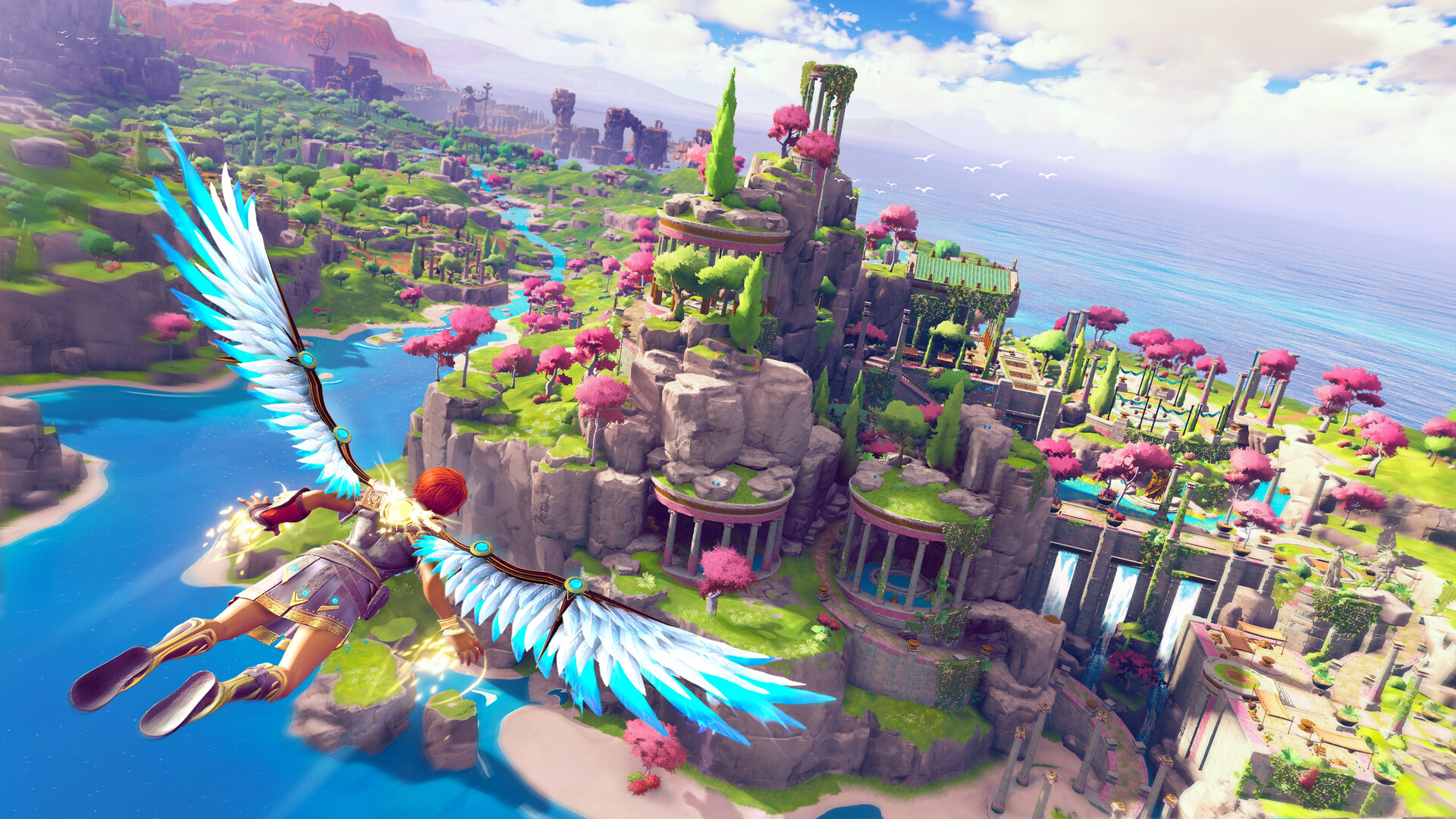
The Golden Isle is divided into lands shaped around different Olympian gods. Aphrodite’s Valley of Eternal Spring has green meadows, while Hephaistos’ Forgelands use rocky industrial terrain; other regions continue the mythic theme through their own landscapes, creatures and challenges. Gorgons, harpies, minotaurs and larger monsters occupy routes between objectives, so exploring means weighing the reward of a detour against the hazards and terrain in the way. The world contains caves, treasure, environmental puzzles and timed navigation courses as well as story locations. These activities feed into Fenyx’s progression, making the island more than a backdrop between quests. The changing scenery also gives each area a different mix of traversal demands and encounters. A cave can hide treasure away from the main route, while a timed course turns the same landscape into a navigation test. Their rewards can support the upgrades that make later traversal and fights more manageable.
Movement is built around running, climbing, swimming and gliding with the Wings of Daidalos. These actions draw on stamina, which means a steep climb or long glide needs some planning rather than being unlimited travel. The wings let Fenyx cross gaps and descend from high ground, while climbing opens routes up cliffs and structures. Timed navigation challenges combine these abilities by asking Fenyx to reach a goal before the clock runs out. Stamina also matters in combat, so spending it on movement or powers has a cost beyond the current jump. Vaults and environmental puzzles use this same movement vocabulary in more controlled spaces, where ledges, hazards and platforms turn navigation into a sequence of small decisions.
Vaults of Tartaros are trap-filled spaces that range from compact puzzle or combat challenges to longer, multi-stage dungeons. Some are tied to the gods’ storylines and the recovery of their divine essences; others offer side activities or stamina progression. Their obstacles reuse Fenyx’s available tools in new combinations, asking players to move objects, navigate platforms, or apply powers to mechanisms and hazards. A few Vaults are designed around a god’s quest and bring several puzzles together, while optional chests inside some Vaults may demand abilities that are not needed for the main route. That creates a reason to return after unlocking more skills. Zeus’s Lightning found in completed Vaults increases Fenyx’s stamina, while some rewards advance the larger god quests, so these dungeons connect problem-solving to both character growth and story progress. The larger god-linked Vaults combine multiple stages and puzzles around a regional mechanic and an ingredient found only within that dungeon. The Vault tied to Aphrodite, for example, uses corrupted seeds, poison and fire, then asks the player to combine ideas learned earlier in the overworld and other challenges.
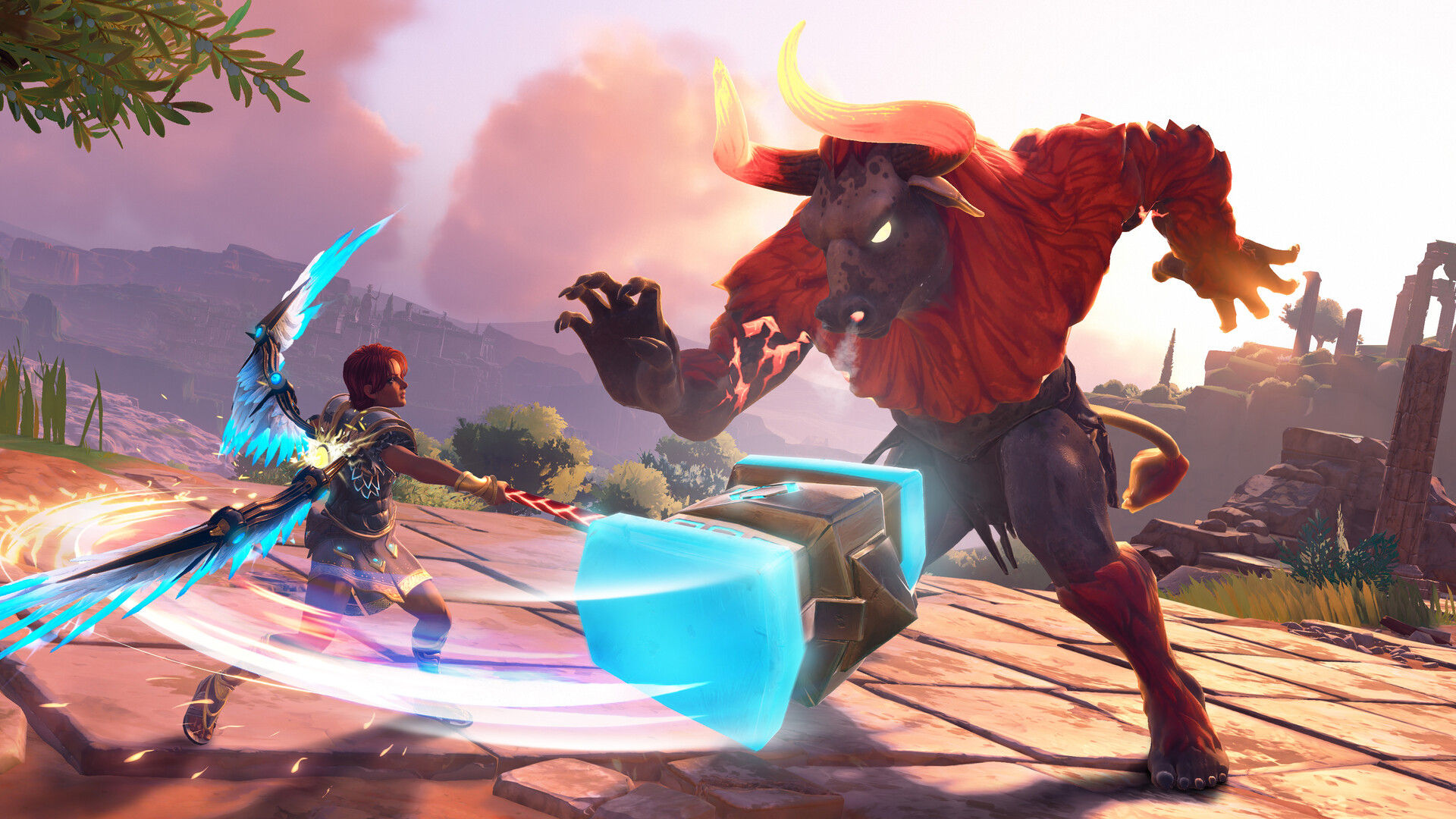
Fenyx’s combat mixes quick sword attacks, heavier axe strikes and aimed bow shots with dodges, parries and aerial movement. Different weapons support different roles: sword combos help maintain pressure, while the axe can build stun against enemies. The bow reaches distant targets, and Apollo’s Arrows can be steered after release. Godly Powers add distinct actions to this foundation. Herakles’ Strength pulls objects that can be thrown, Ares’s Wrath launches smaller enemies, Athena’s Dash carries Fenyx forward through foes, and Hephaistos’s Hammer strikes with a large impact; Phosphor also attacks or provides other utility as its powers are unlocked. These abilities spend stamina, which links combat decisions to the same resource used for climbing and gliding. Switching between attacks, movement and powers helps answer enemy patterns and groups without reducing combat to a single weapon.
Character growth is driven by resources and chosen upgrades instead of a conventional experience-level track. Coins of Charon come from world puzzles and can be spent at the River Styx Cistern in the Hall of the Gods to unlock or improve Skills and Godly Powers. Zeus’s Lightning from Vaults expands the stamina bar, helping with long climbs, glides and power use. The same skill tree contains practical movement options alongside combat techniques, so investment can change how Fenyx reaches a platform as well as how she handles an enemy. Missions and fights also provide materials used to improve stats and abilities. The result is a loop in which exploring, solving a puzzle or defeating a creature can feed back into a more capable Fenyx, and upgraded abilities in turn open new approaches to the island’s challenges.
- Developer
- Ubisoft Quebec
- Genre
- Open-world action adventure inspired by Greek mythology