
About Immortality
IMMORTALITY follows the career of actress Marissa Marcel through footage from three unreleased films made decades apart. Players browse scenes, interviews and production material, searching for connections with a match-cut system that jumps between visually linked moments and lets the archive be explored in a self-directed order.
IMMORTALITY is built around the vanished career of Marissa Marcel, an actress whose work survives in footage from three films that were never released. The archive spans different periods of filmmaking, from the late 1960s through the end of the twentieth century, and includes material beyond finished scenes. The player enters this collection without a conventional character moving through a physical level. Instead, the central activity is watching, pausing and navigating between filmed moments, gradually forming a picture of Marcel and the people who worked alongside her. The framing question concerns what happened to her, but the game lets the player approach that question through a large body of performances and production records rather than through a sequence of explanatory cutscenes.
The three fictional productions give the archive distinct settings and dramatic premises. Ambrosio is an adaptation of Matthew Lewis's Gothic novel The Monk, with Marissa cast as Matilda by director Alan Fischer. Minsky is a New York-set thriller directed by John Durick, centered on the death of an artist and a muse suspected of involvement. Two of Everything brings Marissa back after a long absence for a thriller about a pop star and her body double. These films are presented as separate works with their own casts, characters and visual language. Their scenes are not arranged as three complete movies to watch from beginning to end; they are fragments in a wider collection that also contains the circumstances around their production.
The archive interface allows the player to start with available footage and move through it by looking closely at what appears on screen. Clicking a person, object or other visual element initiates a match cut to another moment associated with that image. A face may lead to another scene featuring the same performer, while an object can connect shots that otherwise belong to different films or settings. The transition is an investigative action: rather than choosing a chapter from a list, the player follows a visual detail and sees where the game places it. The connection can cross years and productions, making the archive feel less like a linear filmography and more like a network assembled through attention.
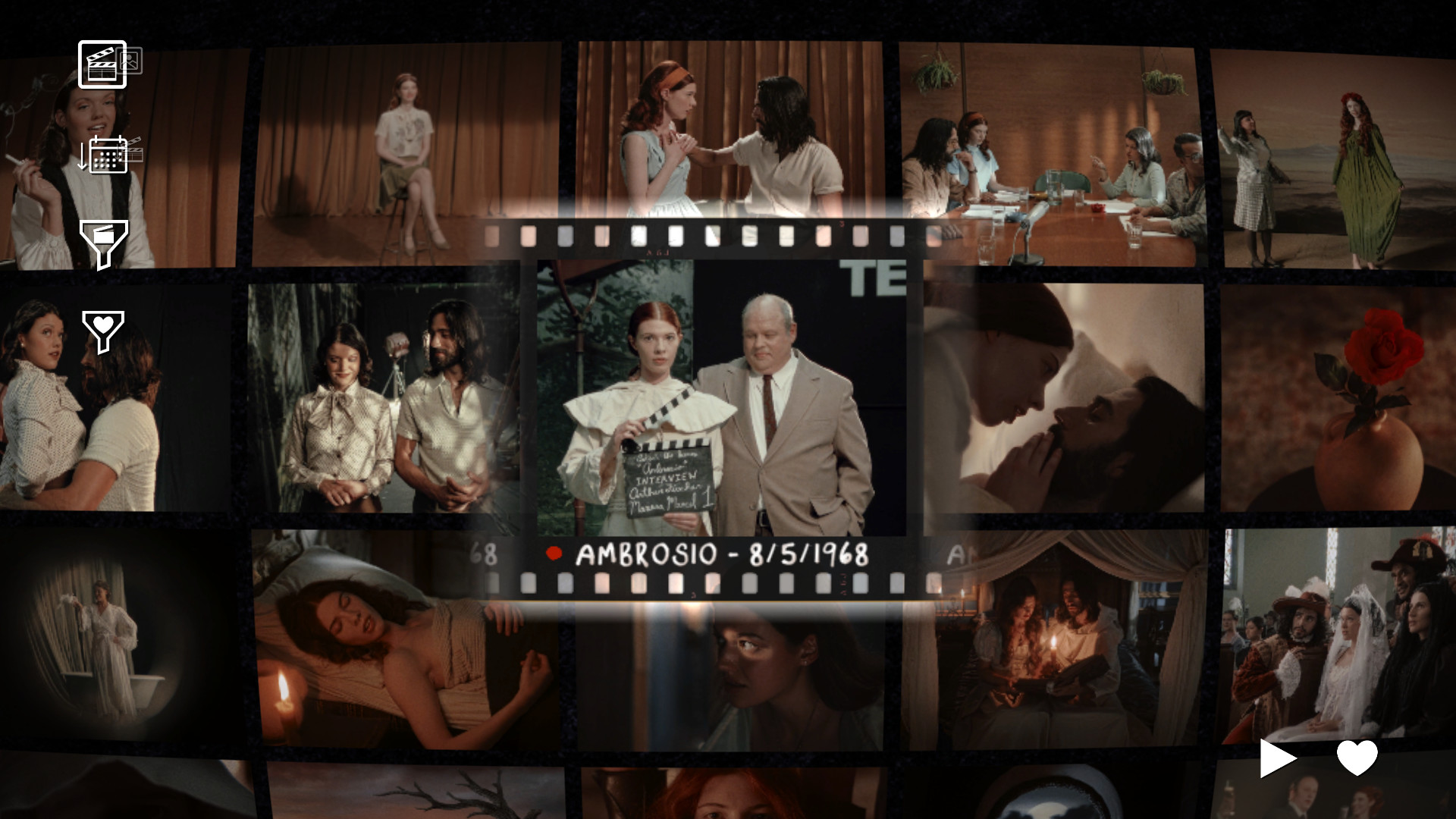
Once a clip is open, playback controls let the player pause and move through the footage rather than simply accepting its original edit. Rewinding and scanning make it possible to inspect a gesture, a prop, a glance or a change in the arrangement of a scene. The player can also leave a clip through another match cut, so watching is continually linked to navigation. This creates a rhythm of viewing and searching: notice a detail, jump to a related image, then decide whether to keep following that association or return to examine the earlier footage. The system provides freedom to make those choices while the transitions themselves can produce unexpected pairings, reflecting the visual logic of film editing.
Finished scenes are only one part of the material. Rehearsals, auditions, table reads, interviews and other behind-the-scenes recordings expand the view from fictional roles to the work and relationships surrounding them. These recordings can change how a performance reads without serving as a simple explanation of it; an actor speaking outside a scene occupies a different context from the character on screen. The player can move between performed material and production footage through the same visual browsing approach. This makes the labor of filmmaking part of the investigation, including the changing practices and styles associated with the periods in which the three movies were made.
The archive's chronology is deliberately fragmented, so the player has to build personal order from scenes encountered through visual links. Remembering who appeared in a clip, which production it belonged to and what was happening around a moment helps make later connections legible. The match-cut system supplies a path onward, but it does not turn the footage into a checklist of mandatory clues or a conventional puzzle with a single visible board. A player may spend time following performers, recurring objects, sets or cinematic gestures, then revisit a scene when a later connection casts it differently. The ongoing task is interpretive: compare pieces of evidence and notice the differences between what a film portrays and what its surrounding footage records.
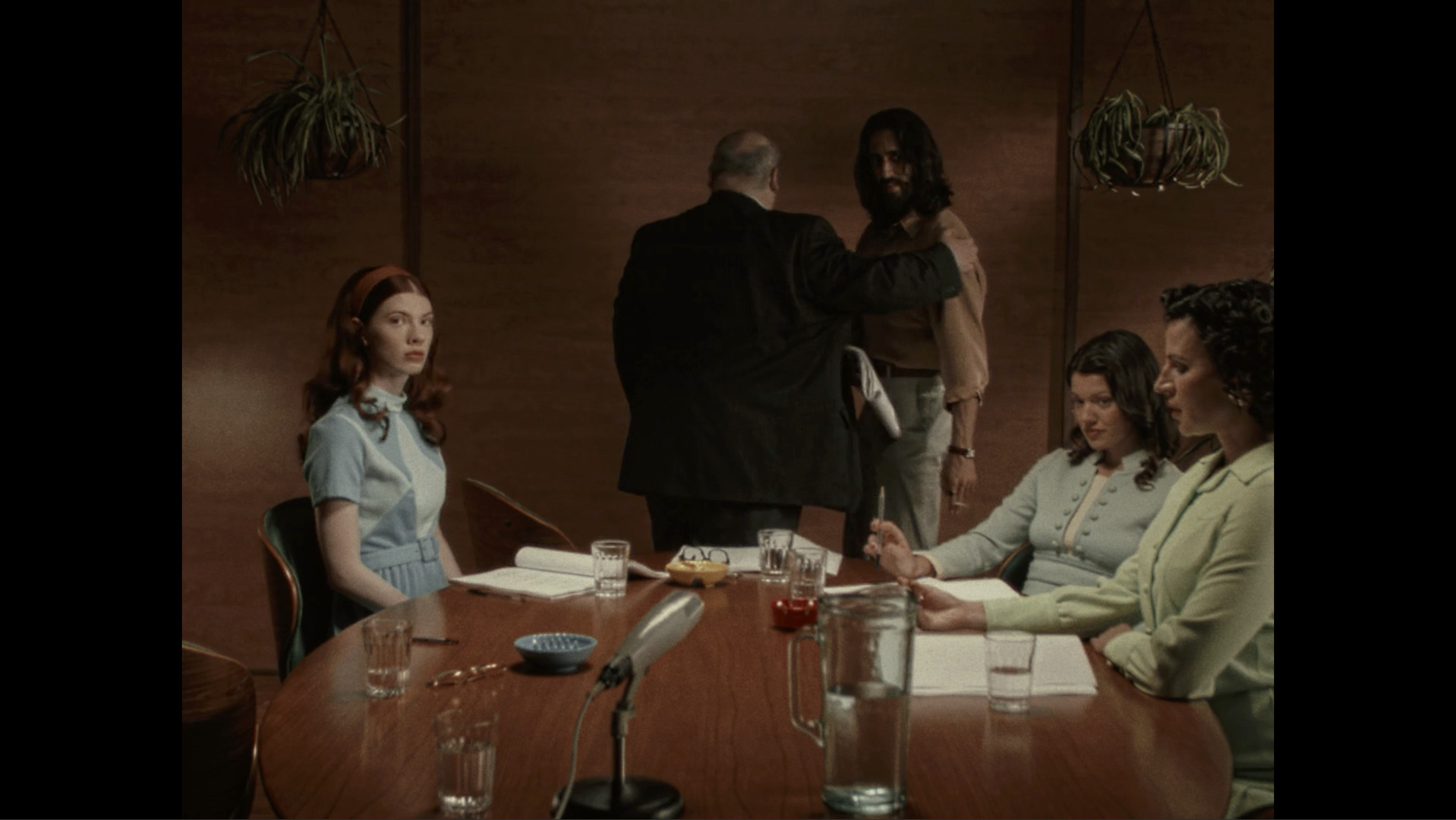
Across the three productions, IMMORTALITY also traces changing screen conventions, from the Gothic adaptation in Ambrosio to the later thrillers and their different treatments of performance and identity. Sets, costumes, framing and acting styles distinguish the eras, while the archive interface places their images into direct contact. The result is an investigation conducted through editing as much as through plot: the player chooses what to watch closely and which image should lead to the next. The material ranges across fictional films and the work around them, keeping Marissa's career at the center while leaving room for the player to assemble their own sequence of discoveries from the surviving recordings.
- Developer
- Sam Barlow and Half Mermaid
- Genre
- Interactive live-action mystery and adventure