
About Ikai
Set in feudal-era Japan, Ikai follows Naoko, a shrine maiden left to care for a remote sanctuary as spirits and yokai intrude. Explore the shrine and surrounding areas, solve environmental puzzles, and draw protective talismans while avoiding supernatural threats that she cannot defeat through ordinary combat.
Ikai is a first-person psychological horror game set in feudal-era Japan and inspired by Japanese folklore. Its central character is Naoko, a shrine maiden responsible for a remote sanctuary while the shrine’s head priest is away. Rumours of dangerous spirits reach the surrounding community, and the sanctuary that once seemed separate from the trouble becomes an unsafe place in its own right. The story follows Naoko as she encounters supernatural beings and tries to understand what has happened to the sacred grounds. The setting draws on folklore and the fears associated with it, while the game presents its own narrative and encounters. Exploration is the means of seeing that story unfold, with the player moving through the shrine and connected spaces from Naoko’s perspective.
The first-person view makes the sanctuary’s rooms, passages and outdoor areas the immediate focus. The player explores rather than commanding a group or fighting from a distance, and interaction is designed around deliberate, careful movement. The game emphasizes a vulnerable main character who cannot simply attack the creatures she encounters. This shapes how exploration works: looking around and understanding the space matter because a direct confrontation is not an ordinary solution. A path through the shrine can include details to inspect, objects to use and puzzles to solve, while the possibility of a supernatural threat makes each pause feel consequential. The result is a horror adventure in which the player advances by reading the environment and deciding how to proceed, not by clearing rooms of enemies.
One distinctive mechanic is drawing protective talismans. The player traces the marks carefully to seal strange sounds and events occurring nearby. This turns a ritual action into a hands-on interaction: attention and precision matter while the surrounding world remains unsettling. The talisman mechanic connects the shrine maiden’s role to the practical task of dealing with supernatural disturbances. It also gives the player a response that fits the setting without making Naoko a conventional fighter. The act of drawing can require focus, so the player must attend to what is happening and complete the gesture rather than relying on an attack button. In this way, a familiar horror situation—something unnatural nearby—becomes a problem solved through a specific action grounded in the game’s folkloric and shrine setting.
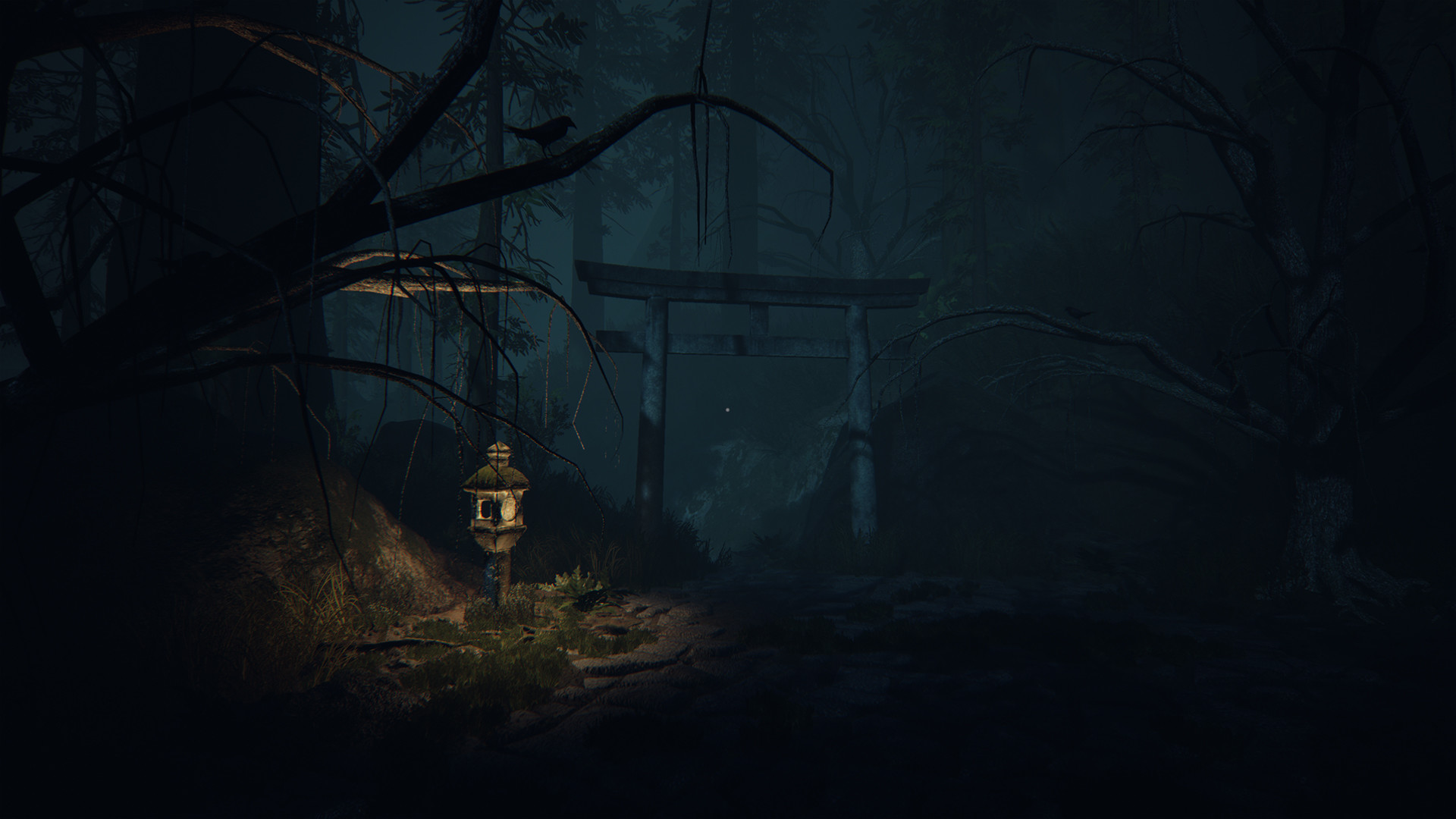
Puzzles provide another way to make progress through the shrine and its surroundings. They ask the player to notice how spaces and objects relate, then work out what action will open a route or resolve an obstacle. Because the protagonist is vulnerable, puzzle-solving sits alongside caution rather than replacing it. The player may need to investigate an area while remaining aware of threats that can appear or approach. This combination gives exploration a deliberate pace: inspect, interpret, interact and move when it is safe. The puzzles are part of the environment rather than detached challenges that take the player away from the story. Their place within the shrine helps maintain the sense that the player is navigating one connected location whose ordinary details have become entangled with supernatural events.
Stealth and running are the main ways to respond when hostile spirits are present. The game encourages staying quiet and avoiding attention where possible, with escape available when a threat becomes immediate. That design follows from Naoko’s lack of conventional offensive power. Instead of treating every encounter as an invitation to fight, the player has to decide whether to remain still, move carefully or flee. The difference between avoiding a threat and confronting it is meaningful because the creature’s presence can change how a space is traversed. A familiar path may become risky, and a puzzle or objective may need to be approached while the player monitors danger. This supports the game’s emphasis on helplessness and tension: the player can act, but those actions focus on survival and progress rather than domination.
The story connects the isolated shrine to a wider disturbance in the surrounding area. Naoko is responsible for the sanctuary while the priest is away, and reports of spirits and demons begin to feel immediate rather than distant. Her exploration brings her into contact with the consequences of that change. The folklore inspiration informs the creatures and rituals encountered along the way, while the plot remains Ikai’s own fictional story. Talismans provide Naoko with a way to respond to nearby disturbances through a familiar ritual action, and the larger plot follows her attempt to understand what has taken hold of the shrine and survive it.
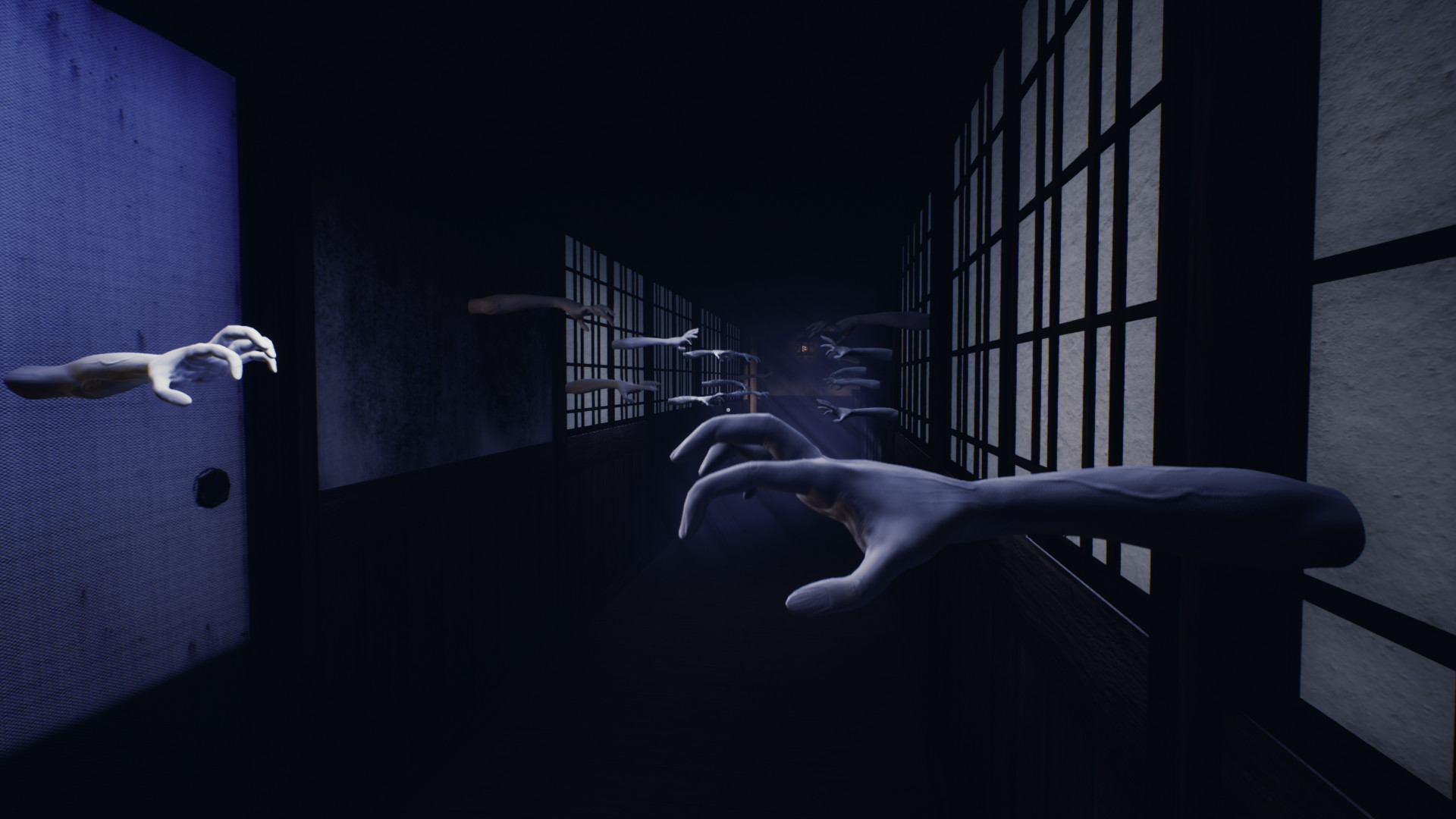
The opening movement from shrine duties to the nearby river gives the setting a clear progression. Naoko begins with familiar work, including sweeping and tending the sanctuary, before leaving its grounds and entering the forest. That change expands the story from enclosed rooms to a landscape where the shrine’s sense of protection no longer applies. The route toward the river becomes a threshold between routine and the supernatural events that follow. Rather than introducing the horror in an unrelated location, the game lets the player move outward from a sacred place that feels known into surroundings that make the rumours of spirits harder to dismiss. This contrast gives the early journey a grounded rhythm: ordinary tasks, a short trip beyond the sanctuary and growing uncertainty about what waits outside.
- Developer
- Endflame
- Genre
- First-person psychological horror adventure