
About Icewind Dale: Enhanced Edition
In Icewind Dale, a custom-built adventuring party travels from the isolated fishing village of Easthaven into the Spine of the World, where a growing danger threatens the northern settlements. Explore frozen passes, settlements and ruins, solve local problems, and fight through encounters using a party shaped by your choices. The Enhanced Edition includes both expansions.
Icewind Dale begins in Easthaven, a small settlement on the frozen northern edge of Faerûn. From there, the party travels north through Kuldahar Pass and the valleys around the Spine of the World, where worsening conditions and dangerous creatures point toward a threat beneath the carved glaciers and mountainsides. The region is not an empty backdrop: villages depend on fishing and trade, while the North contains ancient ruins and isolated communities. The adventure leads the party through these settlements and harsh landscapes to investigate what is disrupting the land and confront the forces behind it. Its story is told through conversations, area descriptions, encounters and the people met along the road. Rather than following one prewritten hero’s biography, the campaign gives the player a party to create and carry through the crisis.
Character creation is the first strategic decision. The player builds a company of up to six characters, choosing each one’s race, class, alignment, abilities, portrait, name and weapon proficiencies; imported or premade characters are also supported. Humans, elves, half-elves, dwarves, gnomes, halflings and half-orcs have different class eligibility and can affect some dialogue. Class determines the party member’s role and advancement: fighters specialize in weapons, thieves distribute points among skills such as finding traps and opening locks, and spellcasters build a changing selection of magic. Non-human characters can combine classes, sharing advancement between them. The result is a group designed around complementary jobs rather than a single protagonist with a fixed supporting cast. A party with a thief can address locks and traps directly, while classes with healing, protective or offensive magic add options that a purely martial group lacks.
The party’s composition continues to matter as characters gain experience. Kills and completed adventures award experience, and gaining levels improves a character’s hit points, combat ability and class features; spellcasting classes also gain access to additional magic. Weapon proficiency choices shape performance with particular weapons, and martial classes can invest further in chosen proficiencies for improved attacks and damage. Thieves allocate skill points as they advance, developing different combinations of lockpicking, trap work, stealth and related abilities. A character’s race and class also determine which multiclass combinations are available, so an early choice affects how the character can develop later. Equipment adds another layer: armor, shields, weapons, potions, scrolls and other magic items can alter survivability or give a character new options. The inventory is personal to each adventurer, and carrying capacity depends on Strength, so distributing useful supplies across the group becomes part of preparation.
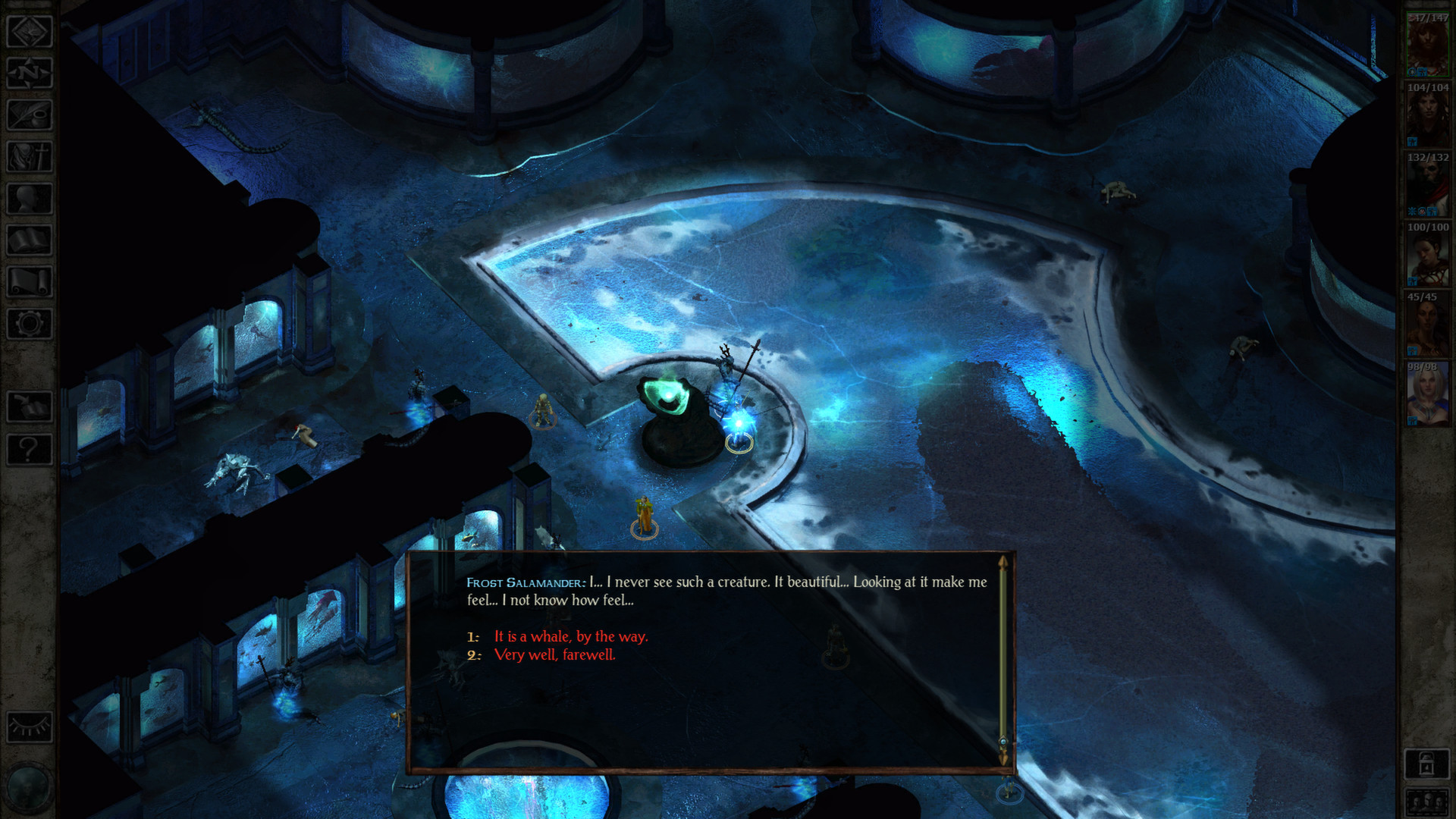
Exploration uses connected isometric areas with visibility limited by the party’s position. Moving around a building or through a narrow pass can reveal what was hidden beyond the current sight line, while selecting several characters lets the player direct the group and arrange formations. Conversation is a practical part of reaching objectives: the guide warns that indiscriminate killing can remove people who hold information or can help the company. A chosen party member can initiate dialogue, and the party leader handles conversations that begin without player initiation. The group can bargain, trade rumors, threaten or ask questions, with different responses affecting what the player learns. Finding a way forward therefore involves reading the environment and speaking to residents as well as fighting. Nearby loot can be inspected through the Enhanced Edition’s Quickloot bar, while character-specific controls provide direct access to weapons, spells and actions such as a thief’s trap-finding mode.
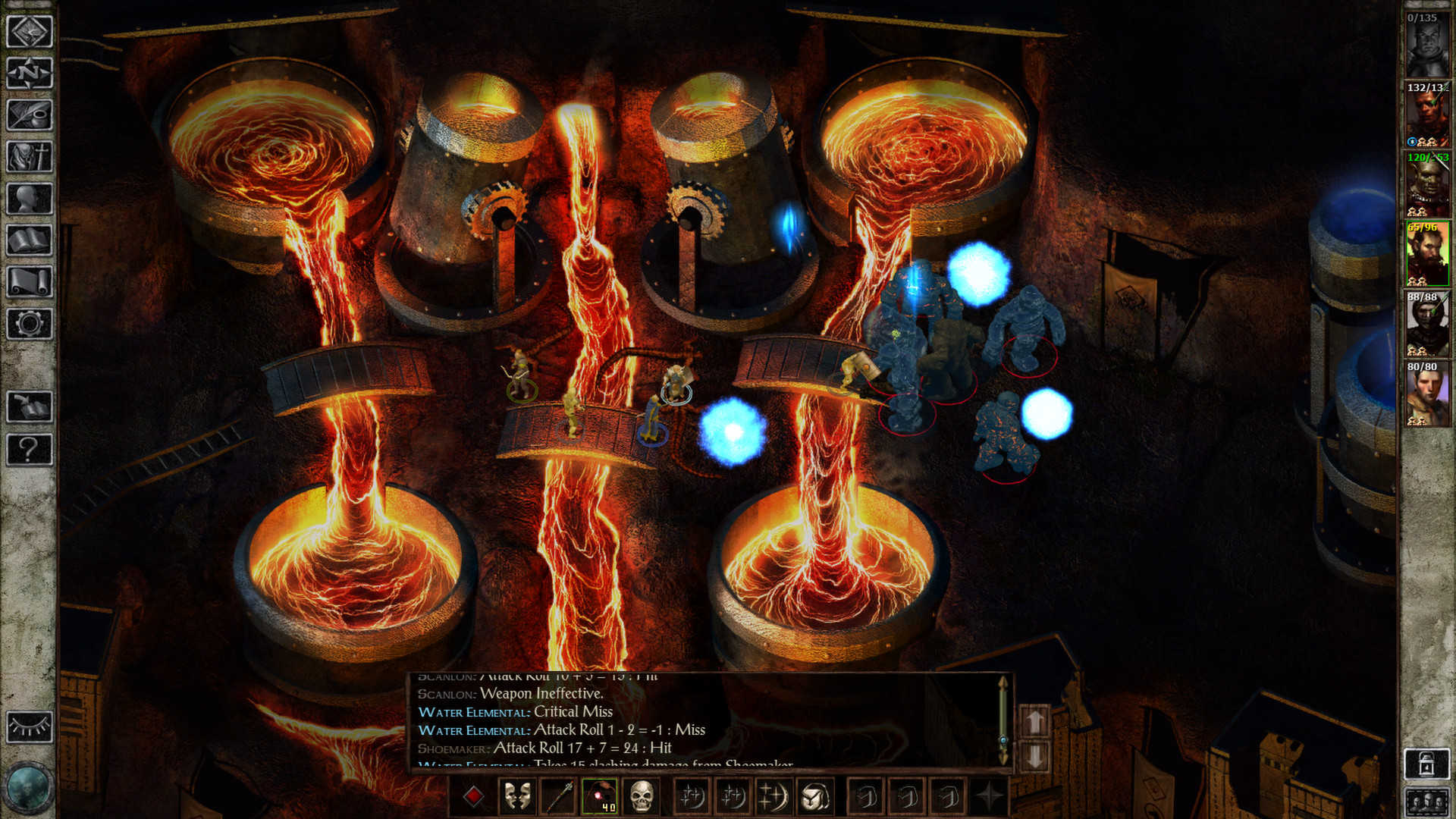
Combat runs in real time using the second-edition Advanced Dungeons & Dragons rules, but the player can pause at any point, assign actions to party members and then resume. This allows several characters to receive orders before the fight continues, and configurable auto-pause options can interrupt action when selected events occur. Attacks, armor, weapon skills, spells and saving throws interact beneath the interface; the game resolves the dice rolls while the player chooses targets, positions the party and selects abilities. A spell can damage a group, disable a dangerous enemy or protect an ally, but the party cannot treat magic as unlimited. Wizards and priests choose which spells to memorize, and resting restores spells as well as some health. Resting may be interrupted by nearby enemies, and camping in the wilderness heals less than renting a room. Choosing when to recover is therefore part of managing risk across a series of encounters.
The Enhanced Edition gathers the original Icewind Dale campaign with Heart of Winter and Trials of the Luremaster, two distinct expansions. Heart of Winter can be selected as a standalone adventure from the menu or reached from the main storyline by speaking with Hjollder in Kuldahar. Beamdog describes Trials of the Luremaster as included content, and the edition restores quest material cut from the original game alongside new spells, items, kits, interface features, bug fixes and improvements. The PC version supports cooperative multiplayer, allowing friends to join the adventure; that mode’s availability differs on some console releases, so this description concerns the Steam edition. The central activity remains party-led exploration and tactical combat in the northern Realms, but the included expansion campaigns offer additional journeys for characters built and developed through the game’s rules.
- Developer
- Beamdog
- Genre
- Adventure, RPG