
About Hyper Light Drifter
A sick wanderer crosses a ruined, vividly colored world in search of a way to quiet an illness. Hyper Light Drifter combines fast sword combat, limited-use firearms, evasive dashes and open-ended exploration, while its mostly wordless scenes leave the past and the Drifter’s purpose for players to piece together.
Hyper Light Drifter follows a solitary, red-cloaked traveler known simply as the Drifter. The character arrives in a world marked by collapsed structures, buried machinery and traces of a violent history, carrying a persistent illness that interrupts the journey. The Drifters are collectors of forgotten knowledge, lost technology and broken histories; this traveler pushes farther into the lands of Buried Time while seeking relief from the disease. The Drifter moves between a central settlement and surrounding regions, encountering other inhabitants and remnants of earlier lives. The action-adventure role-playing structure gives this search a clear practical shape: cross dangerous territory, uncover routes and objects, and return with the means to reach deeper into the world.
The game communicates its setting through animation, architecture and color rather than conventional dialogue. Characters make sounds or use small illustrated speech bubbles, while murals, monoliths and brief visual sequences offer suggestive fragments instead of a fully translated history. Each region develops its own palette and silhouette, from cold mountain structures and saturated crystal growths to watery vegetation and the dry, orange tones of the southern landscape. Quiet stretches between encounters give these details room to register, then the next arena changes the pace with hazards and enemies. Players interpret the story from repeated visual clues; the illness and the world’s past remain central mysteries rather than being explained in a running stream of dialogue.
Combat is built around three linked actions: sword strikes, firearm shots and the Drifter’s quick dash. The sword is the dependable close-range tool, while dashing helps cross gaps, pass through attacks and reposition before an enemy can surround the player. Its timing matters: stopping in a crowded space can leave the Drifter exposed, so movement is part of offense as well as defense. Guns provide reach and different attack shapes, but ammunition is limited. Sword hits help refill firearm energy, encouraging a rhythm of closing in, striking, spending a shot when distance or enemy placement calls for it, then moving again. Enemies telegraph attacks through their movement, and groups often combine melee pressure, projectiles and environmental traps. Rooms can change as enemies fall, removing cover or opening new lines of fire, so the safest route across an arena may shift during the fight.
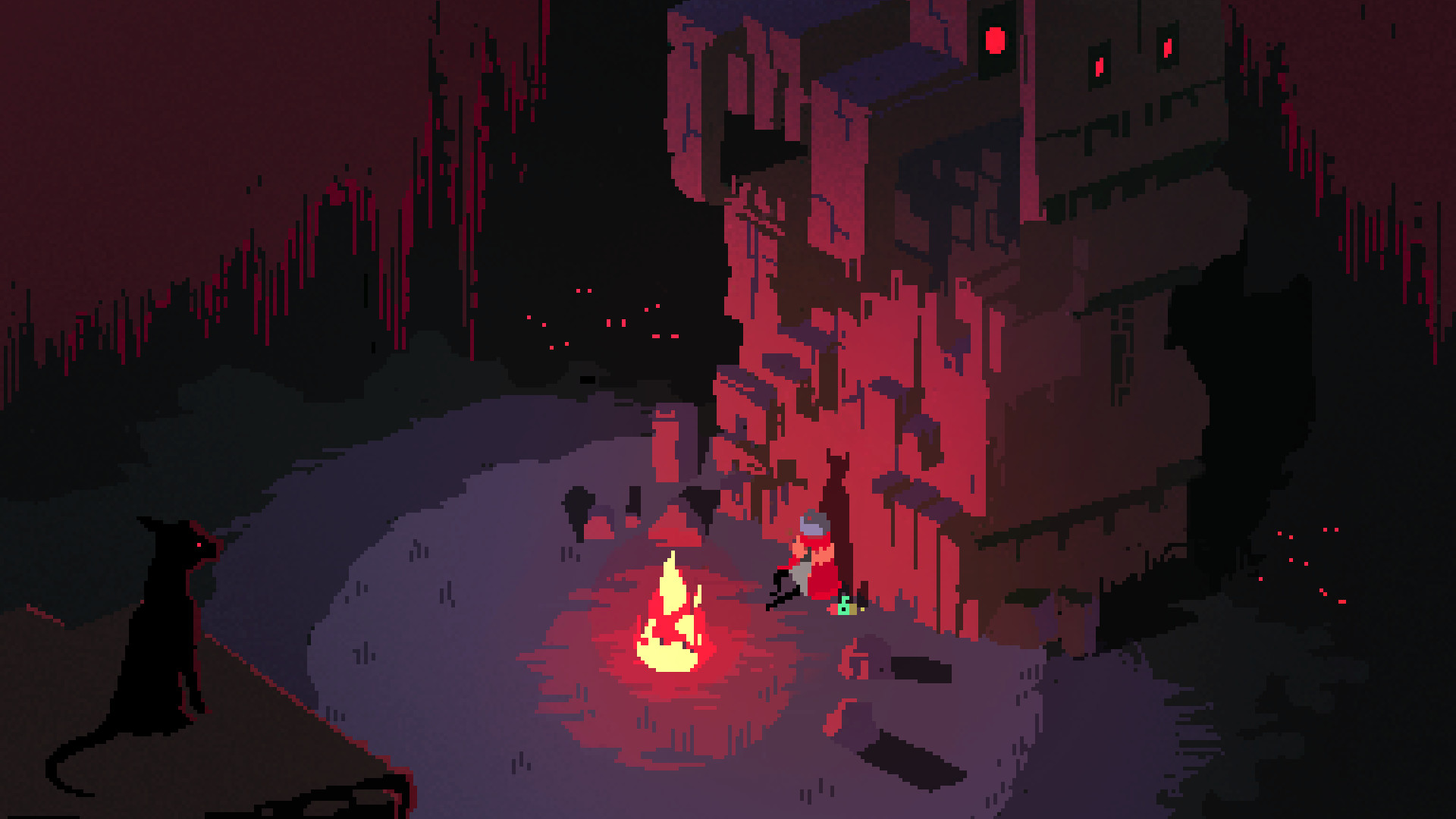
The central settlement turns exploration into new options. Scattered gearbits function as currency: collecting four forms a unit that can be spent at local stations on weapon ammunition capacity, sword techniques, dash skills, equipment or additional health-pack capacity. Sword techniques include a charged area strike, a dash-linked attack and the ability to deflect many incoming projectiles; dash skills can extend chained movement or protect against some shots. Firearms have distinct roles: the pistol offers a straightforward shot, a shotgun spreads damage at close range, and weapons such as the rifle or explosive launcher affect enemies differently. The gun’s shared energy economy keeps each shot consequential. Upgrades can change how the player handles a crowded room or reaches a ledge, while the underlying loop still asks for careful spacing, observation and timing.
From the hub, paths lead outward toward four primary regions in the cardinal directions: the northern mountains, western Crystal Forest, eastern Lake and southern Barren Hills. Their spaces mix overland paths with underground chambers, lifts, switches, locked doors and hidden platforms. The layout is open enough that the player can choose among much of the northern, eastern and western exploration, while the southern route is part of the later progression. Each region contains its own groups of enemies, secrets and module fragments, and its main route eventually leads toward a boss encounter. The map and environmental signs provide orientation without turning the journey into a tightly marked checklist. A ledge barely visible beyond a gap, a suspicious wall, or a switch reachable only by a shot can reward looking closely. Movement upgrades also give reasons to revisit earlier paths, since a newly learned dash technique can make a previously inaccessible platform reachable.
Modules provide the other major progression thread. They are found throughout the regions, often in side paths or challenging rooms, and collected modules contribute to opening sealed doors and advancing toward each area’s larger objective. Module-gated doors reveal deeper areas and optional rewards, while the main routes lead toward regional bosses. The larger sequence points toward four regional pillars and the central endgame area, so exploration and combat steadily connect back to a readable goal even when the route between landmarks is not spelled out. Keys, health packs, monoliths and equipment provide additional reasons to search, but they serve different purposes: keys open particular locks, health packs replenish a limited reserve, and monoliths add fragments to the world’s visual record. There is no conventional experience-level ladder; lasting growth comes from buying techniques and equipment, learning enemy patterns and improving the player’s own command of movement.
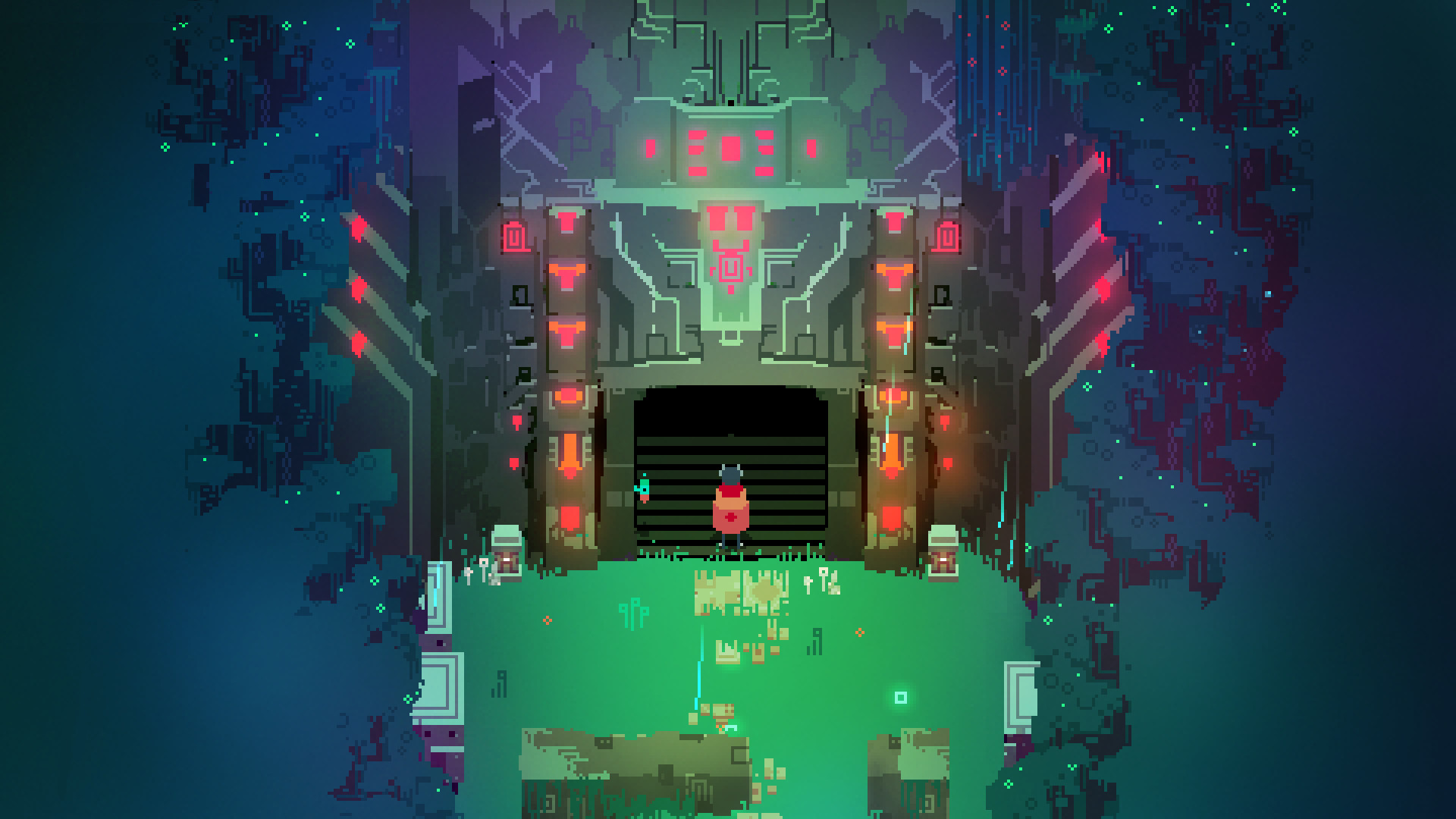
Boss fights test the same systems under greater pressure. Large enemies use recognizable attack sequences, but safe positioning matters as much as dodging: moving away from one strike can place the Drifter badly for the next, while a well-timed dash can create a brief opening for sword damage or a carefully chosen shot. Some encounters combine a boss with other enemies or hazards, compressing the room’s available routes and forcing the player to reassess priorities. Healing supplies remain limited, and the short pause needed to use one can itself be risky during an active attack pattern. Defeating the main threats and activating the four regional pillars opens the way toward the central final area. The journey then brings its combat, visual clues and accumulated upgrades together without requiring every optional secret to be found.
- Developer
- Heart Machine
- Genre
- Action adventure RPG