
About HROT
HROT is a single-player retro first-person shooter set in an alternate Czechoslovakia after an unexplained disaster in 1986. From a shelter beneath Prague's metro, a civil-defence volunteer fights strange intruders through Soviet-era streets, underground stations, countryside and military sites, using firearms and improvised weapons across three connected episodes.
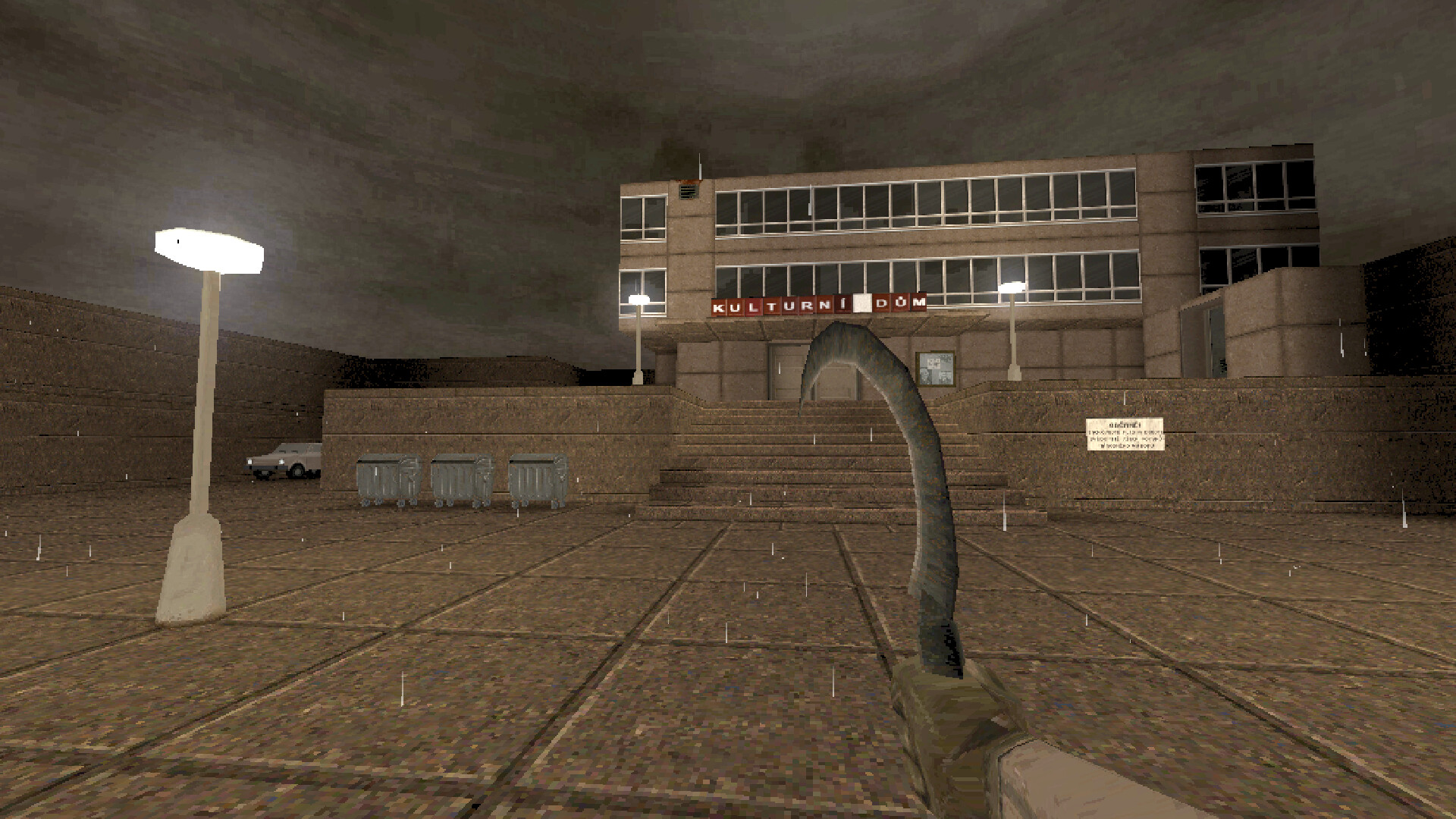
HROT begins in a civil-defence shelter beneath a Prague Metro station, in a small socialist country identified as Czechoslovakia after an unspecified disaster in 1986. The protagonist is a holder of a military readiness badge, expected to defend the homeland when strange intruders appear. The game leaves the catastrophe unexplained and builds its story through the places and threats encountered rather than a lengthy opening briefing. Soviet-era public spaces, official emblems, concrete architecture and familiar civic infrastructure provide the frame for events that become increasingly surreal. The setting draws on a recognisable historical period while presenting an alternate, hostile version of it, where routine public buildings and underground passages become routes through a violent emergency.
The campaign is arranged as three episodes, each made of discrete handcrafted levels. Kiss Me Gustav opens with stark urban and institutional spaces; The Degustation moves through rural and historic settings as well as industrial locations; Gastroscopy takes the world further into strange territory. Across them, the route can pass through metro stations, tenement blocks, churches, castles, fortifications, farms, sewers, mines and other sites inspired by places around Prague. Levels are not simply straight corridors from entrance to exit. Doors, switches, keys and hidden passages make the player examine the space, while secret areas reward looking beyond the obvious route. Episode names and locations give the journey a chapter structure, with each level presenting a new environment and combat arrangement.
Movement and shooting follow the fast, direct conventions of 1990s first-person shooters. The player moves through a level, searches for a way forward and responds to enemies with the weapon best suited to distance and situation. Encounters reward maintaining momentum, moving around incoming attacks and choosing when to spend ammunition. Opponents vary in the pressure they create, so a crowd in a tight passage asks for a different response than a target seen across an open space. The game uses a custom engine written in Pascal to reproduce period-style rendering: low-resolution textures remain unfiltered and polygon edges visibly jitter. That visual treatment supports the setting's rough, compressed look, while the level layouts and combat remain readable as spaces to navigate and fight through.
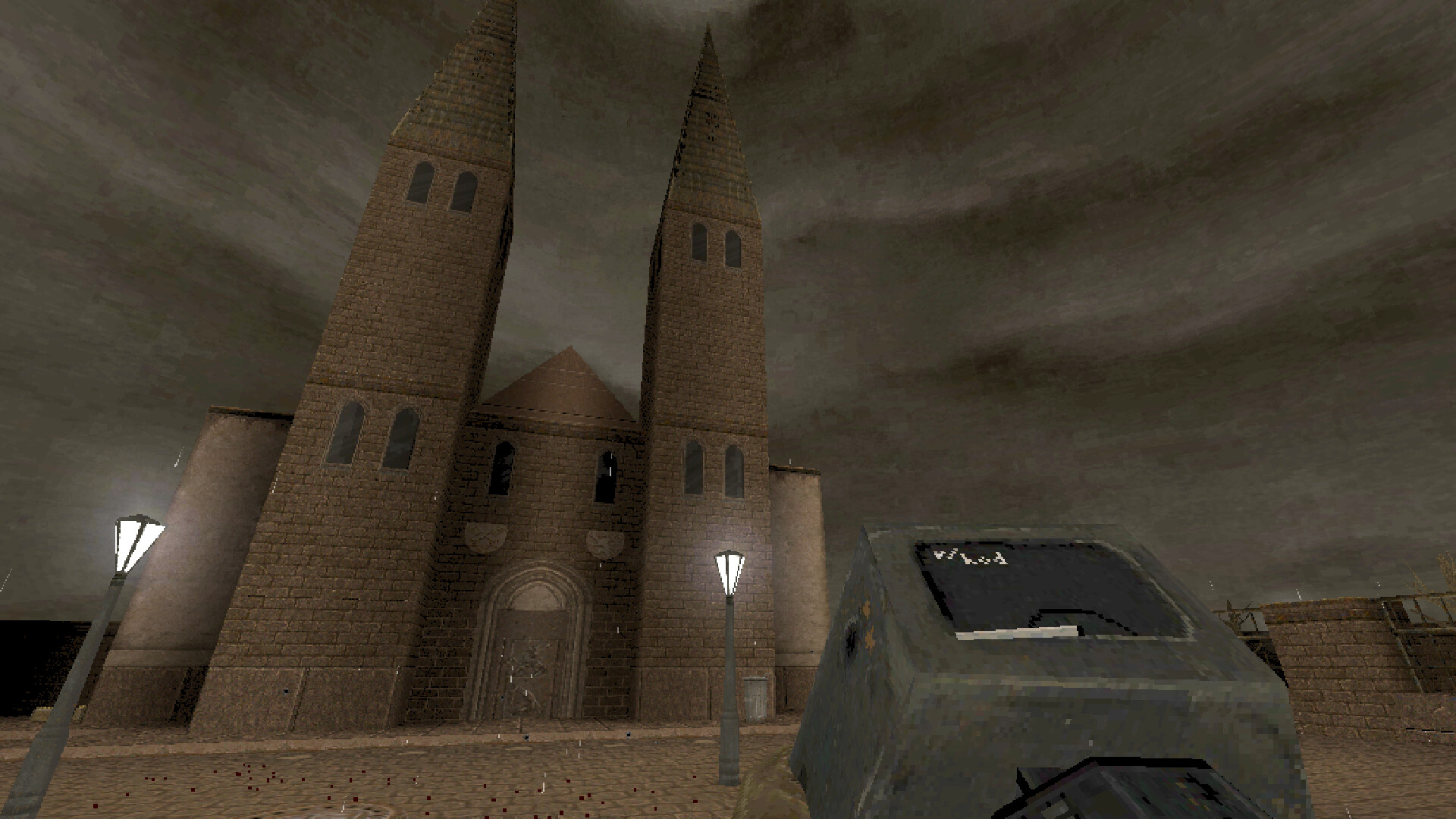
The starting vz. 52 pistol provides a basic answer to early threats, and the arsenal expands with weapons found as the campaign advances. The shotgun handles close encounters; the vz. 13 submachine gun provides sustained fire; a crossbow offers a quieter, more deliberate projectile; and a rocket launcher, styled as a Hussite hand cannon, delivers explosive force. More unusual experimental weapons appear later, including Soviet battery-powered devices. Ammunition is picked up in levels, so weapon choice involves both the threat in front of the player and the supplies available. When ammunition runs low, a hammer and sickle can serve as a melee weapon. The campaign thus moves between conventional firearms, explosive attacks and close-range improvisation without replacing its basic emphasis on aiming and movement.
Exploration is tied closely to combat because ammunition, health and access routes sit within the levels themselves. Keys open locked sections, switches alter the environment, and supplies can be placed off the direct route or behind secrets. Some doors and passages require the player to notice an environmental clue or search a side area, while traps and sudden enemy appearances can turn a familiar space into a fight. The game includes destructible light bulbs and other small interactive details alongside its combat objects. These elements make each area more than a backdrop: a room's layout affects where an encounter happens, what can be collected before it, and which route connects it to the next part of the level. Progress comes from reaching the exit and continuing the episode, not from building a character through a separate skill tree.
The tone balances the shelter setting's oppressive atmosphere with deliberately odd details. Historical and socialist-era references appear in posters, objects and architecture, while events introduce masked horses, grotesque intruders and comic physical interactions. The contrast shapes the experience without turning the campaign into a conventional historical simulation: this is a fictional disaster story where recognisable Czechoslovak imagery sits beside monsters and impossible situations. Environmental jokes can be encountered while moving through levels, and the visual style keeps their presentation within the same coarse, low-resolution world as the firefights. The story's larger cause remains unspecified, leaving the player to advance through the episodes and piece together the mood and stakes from each successive place and encounter.
The middle episode shows how far a level can move from the opening metro without abandoning the shooter's navigation puzzles. Kašperk Castle sends the player over battlements and into flooded cellars; Dobrošov Fortress compresses the route inside a military bunker; Granny's Valley turns a country farm into a search for keys. These places are grounded in Czech locations but rearranged for the game's fictional disaster. Switches can conceal a trap, a wall can fall away to release enemies, and a route may suddenly lead somewhere unexpected. The third episode pushes the setting further into surreal territory. Across those changes, the player still has to read each room, gather enough ammunition to survive its threats and find the way through.
- Developer
- Spytihněv
- Genre
- Single-player retro first-person shooter