
About Hollowbody
Mica enters a walled-off British city to find her missing partner, Sasha, but her hover crashes inside the exclusion zone. Hollowbody turns the search into a compact survival-horror story of deserted streets, environmental puzzles and scarce supplies, with escape becoming as urgent as the original rescue.
Hollowbody begins with an absence. Sasha has gone into a sealed city looking for answers, and twelve days have passed without her return. Mica, an unlicensed black-market shipper and Sasha's partner, finds a way across the border through Tax and a security contact willing to sell clearance. The arrangement grants only a short window to enter, locate Sasha and leave. Mica's hover fails during the crossing and crashes among the city's ruined homes. The rescue now has a second problem: she is stranded on the wrong side of the walls. That opening gives the game a personal reason to enter a place most people avoid. Mica has not come to catalogue its mysteries from a safe distance; the person she wants to find is somewhere inside, and her own way out has disappeared.
The exclusion zone is a near-future British city abandoned after a collapse, its urban spaces enclosed by towering walls. Its streets and buildings are the setting for a story told through movement as much as dialogue. A crashed shipper must get her bearings in a place where ordinary routes have broken down, find what is still usable and work out how one area leads to another. The developer describes a strong emphasis on world building, and the premise gives the environment a clear role: the city is both a physical obstacle and the place Sasha believed held answers. The reason for the collapse and what Mica will discover are mysteries to uncover within the story, rather than facts to settle in an overview. That restraint matters because the deserted surroundings are part of how the game creates questions for the player to carry forward.
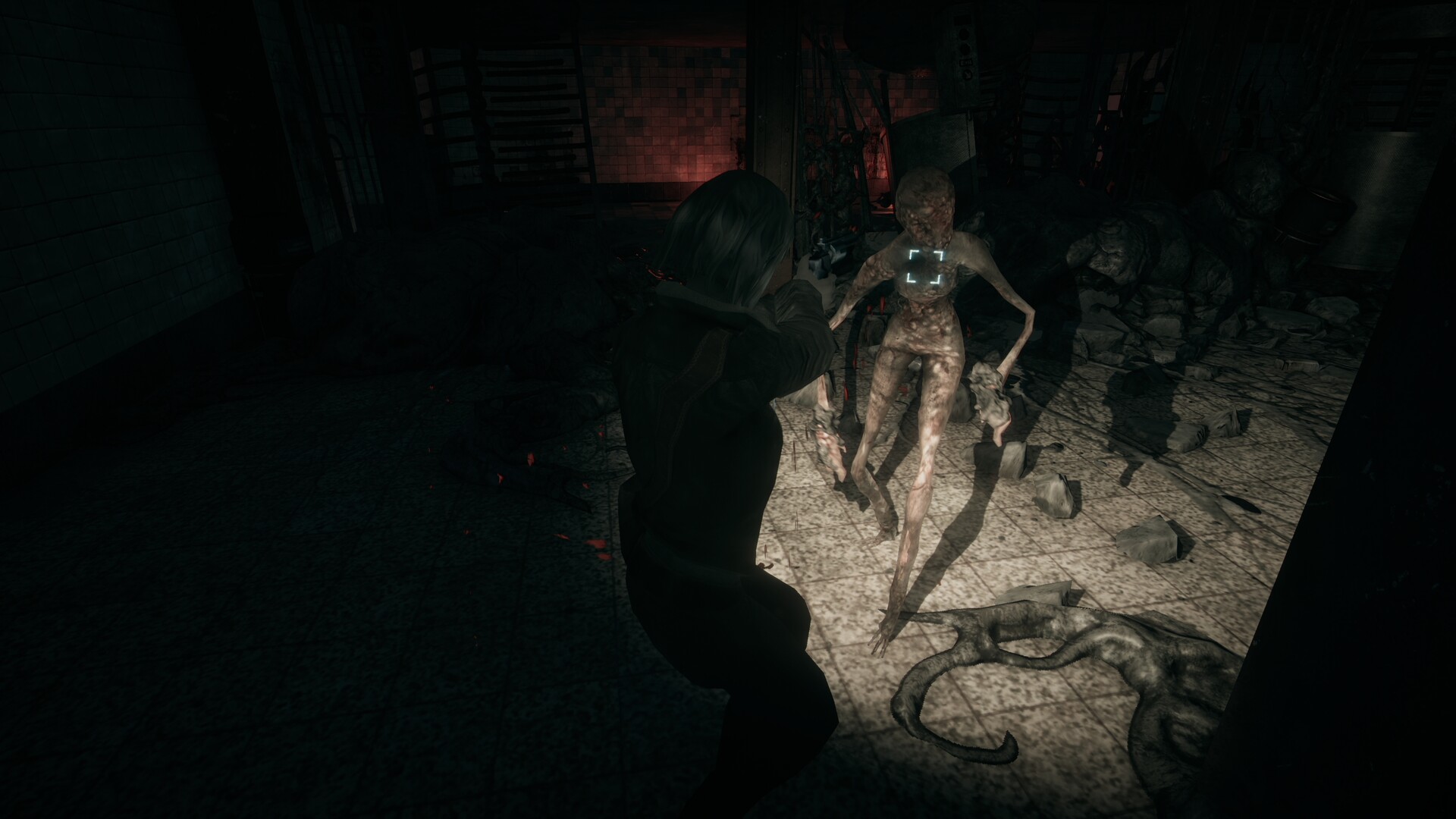
Its basic rhythm is survival horror rather than a continuous run of fights. Mica searches environments, solves logic and environmental puzzles, manages a limited supply of resources and uses combat when danger blocks a route. A locked passage, an object whose purpose is not immediately clear or an item that might be needed later can make exploration as demanding as an enemy encounter. The game places narrative and investigation at the centre of that loop, so decisions about where to search and what to spend are connected to the effort to keep moving. Scarcity gives each discovery practical weight: a useful item may open a route or help Mica endure a confrontation, while carrying less than she needs can make the next stretch more uncertain. The precise solutions and locations are left for the game to reveal.
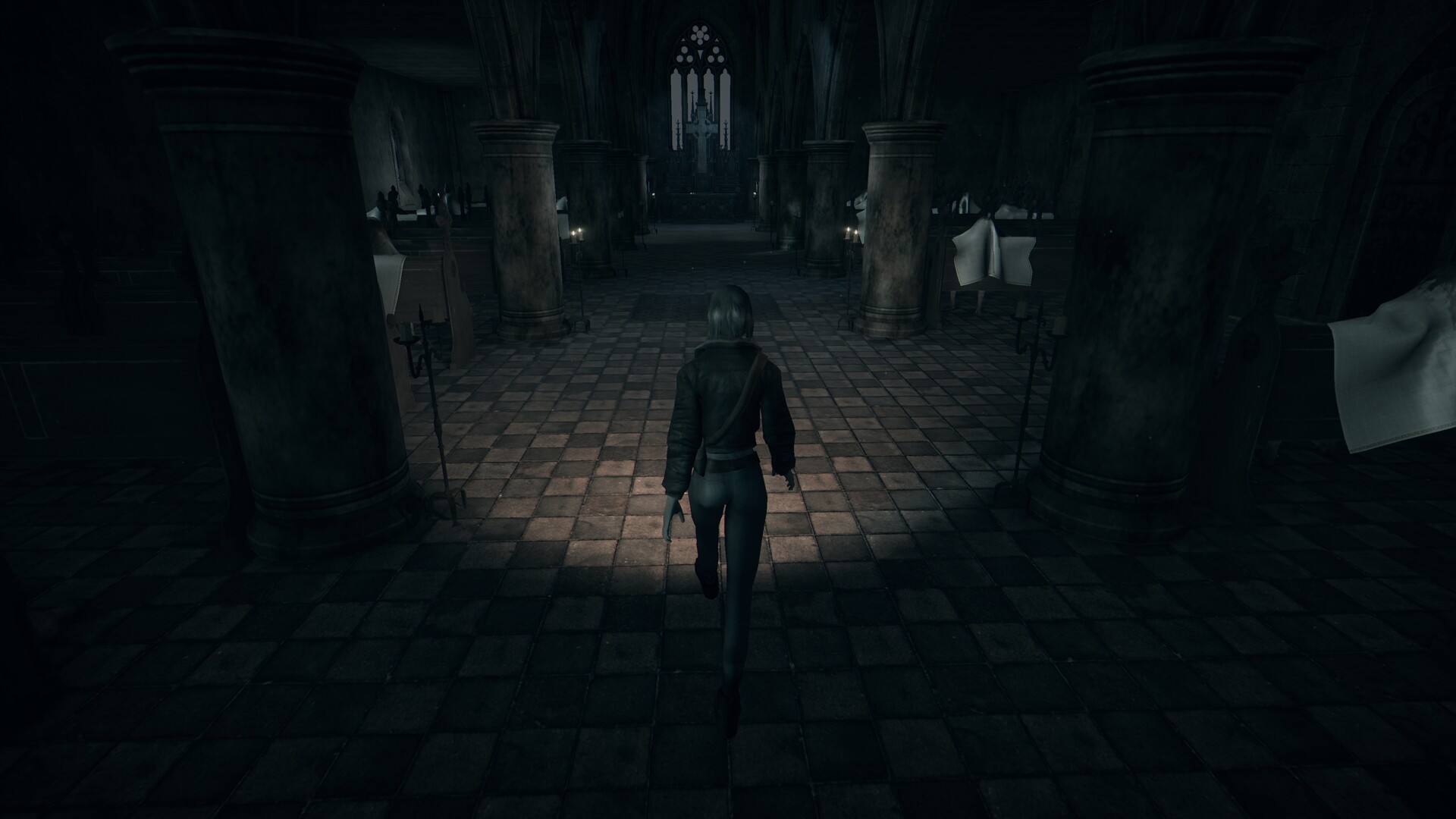
Hollowbody uses a cinematic combination of fixed and moving camera angles to frame that journey. The original Classic presentation draws on the visual language of early survival-horror games, with composed views that can show a corridor or room differently as Mica moves through it. A later developer update added an optional Modern third-person camera, which can be selected at the start and changed in the options menu. These choices alter how players see the same space, but neither removes the underlying need to read the environment and plan a route through it. The perspective is a meaningful part of the game's identity: the camera can establish how much of a scene is visible at once, while the act of navigating across that scene keeps Mica's vulnerability close to the player. The developer also lists full voice acting, giving the unfolding search a spoken dimension alongside environmental detail.
The tension is managed through more than hostile encounters. Carefully placed save points break the trip into stretches in which getting safely to the next opportunity to record progress matters. Puzzles require attention to the surroundings, while resource management asks players to judge what they can afford to use now. Limited combat sits inside that broader structure instead of replacing it with constant action. For people more interested in exploring the city and following the story than in fighting, the game includes difficulty options intended to make that route more approachable. Post-game unlocks are also part of the package, although the nature of those rewards is better discovered after the first journey. The combination describes a short, focused game whose systems support the same central predicament: Mica needs information, supplies and a viable path out, and none is guaranteed by merely reaching the next room.
What separates the setting from a generic haunted location is the collision between its near-future technology and its long decay. Mica arrives in a hover with a navigation system and a carefully arranged border crossing, then finds herself walking through streets left behind by the collapse. The walls that first made the trip risky become the obstacle she must eventually pass again. Sasha's disappearance gives every new part of the city a possible personal meaning, even when a particular space is mostly concerned with a puzzle or the immediate problem of survival. Hollowbody's tech-noir premise holds those two scales together: the intimate search for one missing person and the larger question of what happened inside the exclusion zone. The overview can explain the setup and the tools Mica has for surviving it, but the answers she finds there belong to the journey itself.
- Developer
- Headware Games
- Genre
- Tech-noir survival horror