

About Hogwarts Legacy
Set in the 1800s, Hogwarts Legacy follows a newly arrived fifth-year student whose unusual connection to ancient magic draws them into a dangerous conflict. School life, spell training and relationships unfold alongside a goblin rebellion, with exploration extending from Hogwarts into Hogsmeade, the Forbidden Forest and the surrounding countryside.
Hogwarts Legacy is a single-player action role-playing game set in the Wizarding World during the 1800s. The player creates a witch or wizard who arrives at Hogwarts as a fifth-year student and holds a rare ability connected to ancient magic. That gift becomes important to a hidden truth threatening the wider magical world. Alongside learning how to live and study at Hogwarts, the protagonist is pulled toward a growing goblin rebellion led by Ranrok. The story’s central tension comes from balancing an emerging identity as a student with a conflict that reaches far beyond the castle.
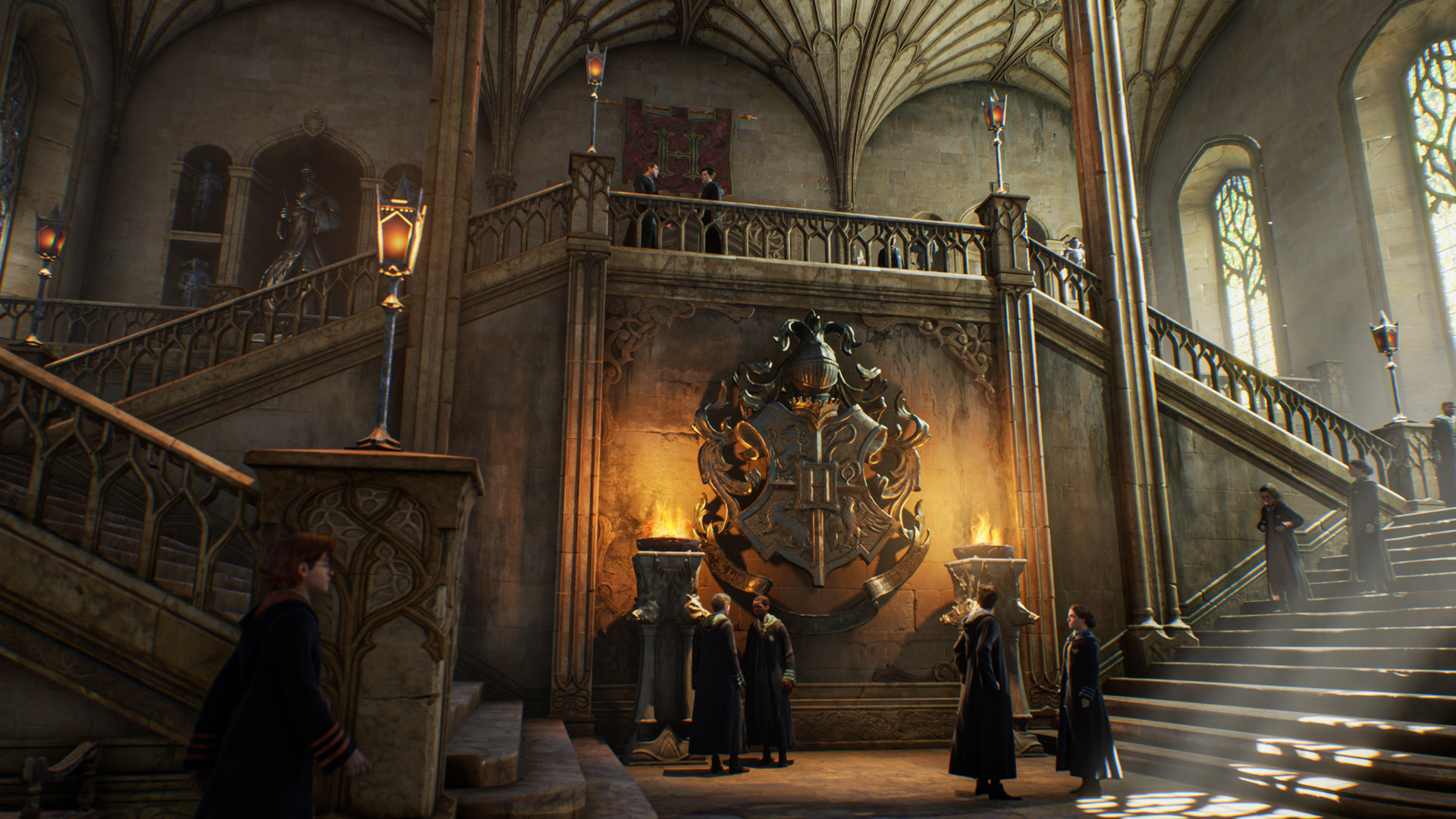
Hogwarts is the main home base and a place to explore between quests. Classes introduce spells and practical skills, while its halls, towers, dungeons and secret passages contain puzzles and discoveries. Hogsmeade and the countryside broaden the journey beyond school grounds; the Forbidden Forest and surrounding countryside are also explorable. The player travels on foot, learns broom flight for longer journeys and can later ride some magical beasts. Moving between these places connects lessons and character quests to encounters with hostile witches and wizards, goblins and dangerous creatures.
Progression is organized around classes, assignments and quests that unlock new abilities. Charms, Defence Against the Dark Arts, Herbology and Potions each introduce part of the player’s growing toolkit: casting spells, defending against attacks, cultivating plants and preparing useful brews. Completing challenges around the world earns experience and supports character development. Talents, upgrades and skills provide additional progression, while magical gear can be improved to strengthen offensive or defensive capability. This structure means exploration, combat and class work feed back into the player’s practical options rather than remaining separate activities.
Wand combat combines a quick basic cast with defensive timing and a collection of learned spells. The player can block with Protego, evade danger and use spell attacks to damage, disarm, levitate or reposition opponents. Spells are assigned to sets, so switching the prepared loadout is part of managing a growing repertoire. Different spells work better against particular enemy shields, and chaining control effects with damage can create openings before an opponent recovers. Talents can enhance spells or improve other aspects of combat, while Ancient Magic provides a further attack resource associated with the protagonist’s distinctive ability.
The plot’s conflict is not limited to Ranrok. Dark wizards and goblins are among the threats facing the student, alongside magical creatures affected by a corrupting force. Some Hogwarts students become companions whose relationships develop through their personal quests; these connections give the protagonist allies outside lessons and allow other viewpoints to enter the journey. Choices in conversations and quests express what kind of witch or wizard the player wants to become, though the game does not use a formal morality meter. The campaign therefore combines a central mystery with smaller character-led storylines.
The Room of Requirement becomes a practical space for tailoring the player’s routine. It can be customized and expanded as abilities grow, and provides facilities for potion brewing and plant cultivation. Magical beasts can be cared for in dedicated habitats, creating another use for exploration and creature encounters. These activities support preparation for the road: potions provide consumable assistance, plants can be used in combat, and gear can be handled or improved. The room works as a personal workshop between expeditions, where resources gathered beyond the castle can be turned into tools for the next challenge. Facilities in the room let the student prepare several different kinds of support before leaving, bringing plant cultivation, potion brewing and creature care into the same place.

Exploration is supported by a steady loop of quests, discoveries and equipment. A task may ask the student to help someone in Hogsmeade, investigate a ruin or clear a dangerous area; completing it can provide experience, gear or a new thread to follow. Puzzles use learned spells in the environment, asking the player to move objects, reveal hidden details or interact with mechanisms. Flying offers a different way to cover open distances, while broom challenges test control in motion. Each activity adds to the student’s developing capabilities and may uncover new places, contacts or complications tied to the larger story.
As the year progresses, the character’s spell collection and talent choices help define a combat style. One player may favor combinations that keep enemies suspended or displaced, while another can invest in direct damage, stealth or improvements to potions and plants. Since the spell sets hold only a portion of the learned magic at once, players can arrange several prepared combinations and swap between them as needs change. The result is a routine of selecting the right tools before a confrontation, responding to enemy attacks, then returning to classes, companions or exploration with a broader range of options. Challenges and assignments can also direct attention back toward specific abilities, making a newly learned spell useful in both encounters and environmental puzzles. A preferred setup can continue to change as further spells and talents become available.
The base game is the whole campaign, and the content around it is one paid pack and a handful of free extras rather than a wall of expansions. Here is what the current purchase covers.
What you are buying
The base game is the complete open-world campaign, and it includes the Haunted Hogsmeade Shop Quest: an additional dungeon, a Shopkeeper's Cosmetic Set and an in-game Hogsmeade shop. The quest began as a PlayStation extra and was opened up to every platform after launch, so it is part of the game now rather than a reason to pick a console.
The paid add-on is the Dark Arts Pack, which contains the Thestral Mount, the Dark Arts Cosmetic Set and the Dark Arts Battle Arena. The Digital Deluxe Edition bundles the base game with those extras and adds the Dark Arts Garrison Hat on top, which the standalone pack does not include, so compare the two if you want the arena and the cosmetic set in one purchase. There is also a free Astronomer's Hat.
The free items added since launch are The Glasses That Lived, the Azkaban Prisoner Uniform and Coat, the Onyx Hippogriff Mount, two Dark Wizard Brooms and a Felix Felicis potion recipe. One of those is a recipe rather than an outfit, so the set is extras rather than a single cosmetic bundle. There are no microtransactions: the Dark Arts Pack is the only in-game purchase, and standard-edition owners buy it separately.
The Haunted Hogsmeade Shop Quest
The quest adds a Hogsmeade shop with a dungeon beneath it. It is a side story with a location attached rather than an opening act, and it is included with the base game rather than sold separately, so there is nothing to buy and nothing to miss by following the main story first.
How a duel actually works
Combat is built out of spells, and mixing and matching dozens of them is how you define a combat style on the way to becoming a duelist. The school systems feed it: Charms and Defence Against the Dark Arts are where spells are taught, Herbology and Potions are where the plants and brews come from, and the talents and skills you earn sit on top of the spells you can cast. Gear follows the same track, because it can be upgraded and specialised to push the build towards attack or defence.
Progression is not only the main quest. Challenges across the world award experience and levels, and a talent reset was added after launch, so a build you have outgrown can be re-spent rather than rebuilt from a new save.
Becoming the wizard you want to be
You choose your house at the start of the game, and linking a Harry Potter Fan Club account imports your own sorting and wand, which also unlocks a Beaked Skull Mask and house-coloured Fan-Atic Robes. The house is a starting choice: the story follows a journey through the 1800s in which you decide what you stand for, and the game has no morality system grading those decisions for you.
The Room of Requirement is where a lot of the side of the game you have invested in comes together. It provides space for potion brewing, growing plants and caring for rescued beasts. Companions matter as well: some students become friends who can travel with you and expand your abilities.
Platforms, mods and the versions
The game is on PlayStation 5, PlayStation 4, PlayStation 4 Pro, Xbox Series X|S, Xbox One, Nintendo Switch and PC, with a version also available on Nintendo Switch 2. It is a single-player game: there is no online play and no co-op.
Photo Mode and Talent Resets arrived after launch, and Photo Mode unlocks once you have the field guide in hand. Talent Resets let you re-spend talent points instead of starting a new character.
On PC there is also the Creator Kit, the official modding toolset, and mods can be discovered and installed directly in the game. It has kept receiving updates since launch, including a localisation editor, support for spell and spell-talent videos and minigames, custom loot in containers and the mod upload workflow.
Should you play it
Yes, if you want a long single-player adventure in the wizarding world with a large optional layer underneath it. The castle and the grounds carry the experience, and the spells, plants, potions and beasts give you something to shape between story beats.
Go in knowing the shape of the story. It is a main quest you follow rather than a life sim, the choices you make are not graded, Quidditch is not playable even though brooms and broom races are, and the collectible layer is big enough to ignore or to lose yourself in.
Go deeper with V4mp
- Developer
- Avalanche Software
- Genre
- Action
Explore Hogwarts Legacy further
Explore the wiki for detailed reference pages on the game's world, systems, items and locations.