
About Hoa
Hoa returns to an unfamiliar shore and travels through a hand-painted natural world connected to her past. Running, jumping and learning techniques such as double jump and Smash help her cross routes built from flowers, insects, creatures and movable objects, while conversations and butterflies mark progress toward home.
Hoa is a small fairy whose journey begins when her leaf boat reaches an unfamiliar shore. She steps onto land and moves through a natural world of flowers, trees, caves and creatures, gradually learning that the place she has reached is connected to her own past. The story withholds much of that history at first. Hoa is mostly silent, and the people she meets reveal the setting in brief conversations and events rather than through a long exposition sequence. The journey’s broad direction is to return to where it all began, but the immediate activity is to explore each landscape, make contact with its inhabitants and find a route onward. The game is a side-scrolling puzzle-platform adventure built around running, jumping, moving through spaces and noticing how living things fit into them. Its hand-painted environments and animated details place the platforming within a world that feels organic, while the fairy’s small scale makes leaves, flowers, insects and other creatures part of the usable landscape. As Hoa continues, new movement techniques make additional paths reachable. Progress is therefore presented through changes in the routes and interactions available to her, alongside pieces of a story about the character and the home she is returning to.
The opening journey introduces Hoa at the edge of a forest, where friendly snails can offer direction and the player is encouraged to look at the forms around them as potential routes. Across the adventure, the scenery changes through distinct natural environments, including forested areas, an underground region and expansive waterside spaces. The transitions are not just backdrops: each new region introduces different shapes, inhabitants and platform arrangements for Hoa to cross. The world is divided into stages, with progression carrying the player from one environment to the next. Within a stage, the route is formed by ledges and natural platforms, but the way forward may involve exploring a little, speaking with a creature or working out how an ability interacts with the space. The scale of the protagonist makes small elements feel like substantial architecture. Flowers can serve as platforms or springy points, insects may carry Hoa, and some plants or animals behave in ways that affect how she moves. This keeps traversal connected to the world around her. Rather than treating nature as scenery behind a standard platform course, Hoa uses environmental details as part of the level’s physical layout and as clues to what the player can do next.
Movement starts with simple running and jumping, then expands as Hoa learns additional techniques. The first challenge is to read distances, ledges and safe landing points; later spaces ask the player to combine movement options to reach higher routes or manipulate objects. A double jump extends the distance and height of a leap, while the Smash technique lets Hoa strike downward onto objects or surfaces. She also learns to push blocks, creating a way to reposition environmental pieces and alter routes. These abilities appear gradually, giving the player new ways to approach familiar platforming shapes. They are not a large combat skill tree or a set of weapons. Their purpose is traversal and puzzle-solving: a leap can reach a raised ledge, a downward strike can trigger or break something in the environment, and moving a block can create a step or change the arrangement of a space. The stages rely on ordinary movement as much as on named skills, so a player must still judge where to jump, when to wait and which route can be crossed with the abilities currently available. The gradual addition of techniques supplies the main mechanical progression without introducing numerical character statistics or equipment management.
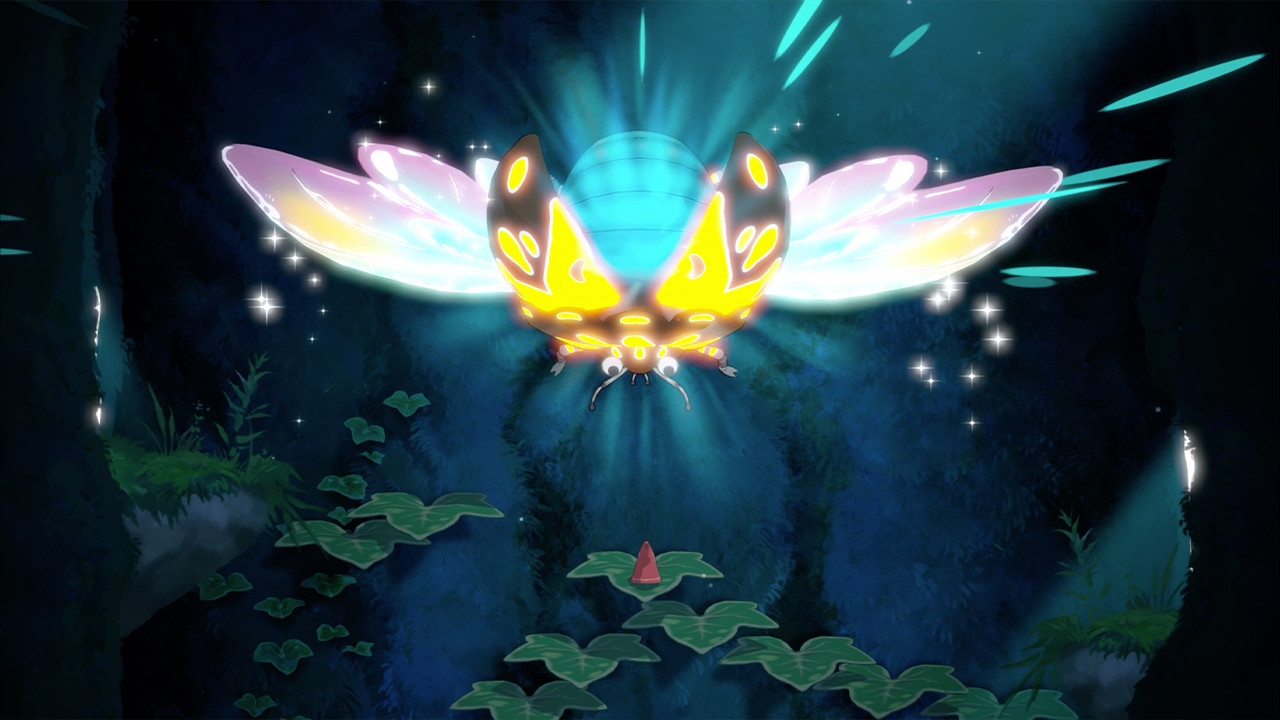
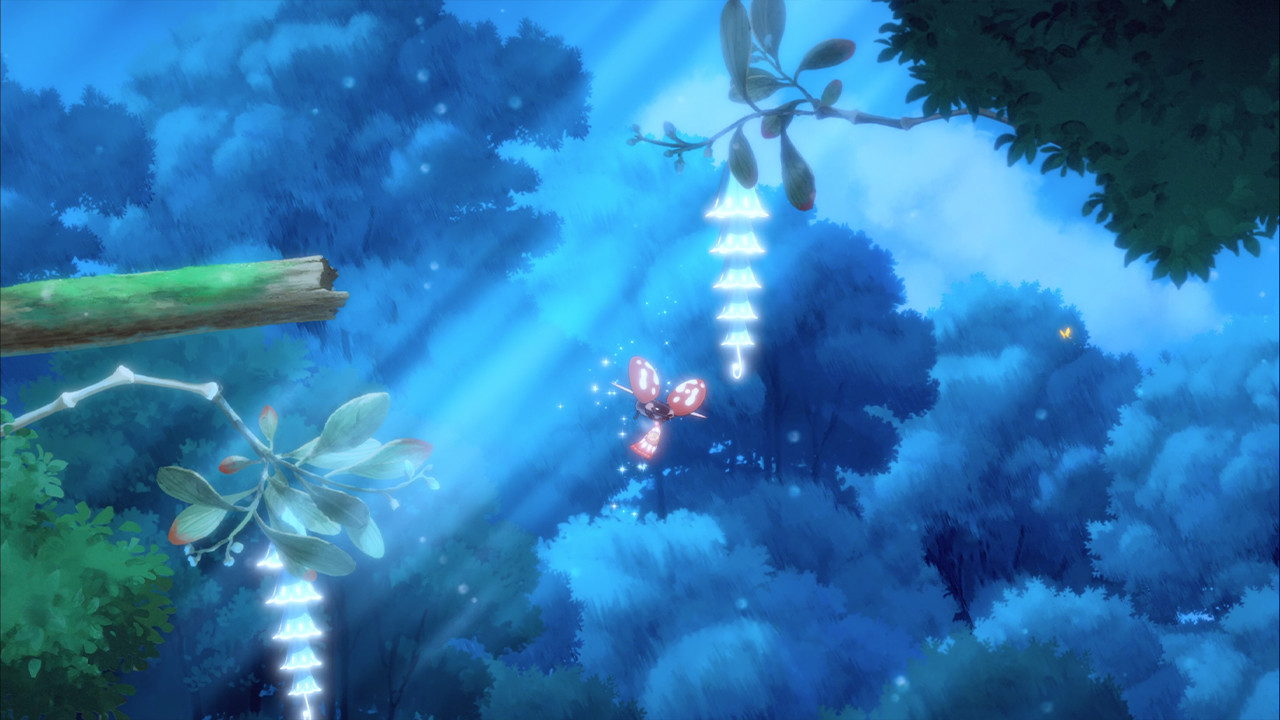
Living creatures are woven into both navigation and the small interactions that give a region its identity. Snails can point Hoa toward the route or serve as moving platforms, while grubs and other small beings can help bridge gaps or provide height. The player may need to observe how a creature moves before using it as part of a jump. Flowers, bugs and jellyfish also appear among the surfaces that support traversal, and bell-shaped flowers can swing or chime when struck. This variety means the platforming is not limited to static ledges: a route can depend on timing a moving creature, using a plant’s motion or recognizing which animated element can be interacted with. Creatures also contribute short exchanges that gradually suggest Hoa’s relationship to this place. Some offer hints or stories, while others are part of the visual and mechanical language of a stage. The world’s inhabitants are not primarily hostile targets. Most encounters are framed around curiosity, assistance or observation, and the player’s contact with them is usually a way to understand the path rather than to start a fight. That emphasis keeps exploration and interaction within the same gentle movement-focused rhythm.
The puzzles use space, timing and the learned abilities to shape a route. A player might need to reach a flower platform, wait for an insect to move into position, cross an obstacle, or use a new technique to reveal the next passage. Some challenges ask for careful platforming, while others make an environmental pattern easier to understand through a creature or object’s behavior. Butterflies are collected as Hoa travels, and stages use them in progression; they can be connected to the next path or to learning techniques. This provides a concrete link between exploring a region and gaining the means to move forward. The game also includes unusual one-off sequences that change how the screen or route behaves, so not every problem is simply a longer jump. Its level rhythm generally leaves room to test a path and try again after a missed leap, rather than building around precision combat or a resource system. A pursuing spring robot appears as a mechanical hazard, but Hoa has no damage-dealing abilities or conventional combat loop. Even that encounter is presented as a movement or set-piece problem. The focus stays on finding a route through the space, understanding its timing and using the small set of techniques Hoa has learned.
Presentation carries much of the story through visible changes in the environment. Hand-painted backgrounds sit behind animated objects and creatures that Hoa can interact with, giving each area a layered appearance and making the spaces feel active. The game’s composition encourages the player to pause and inspect a scene: a platform may be shaped like a leaf or a flower, while a moving creature can be both part of the landscape and a practical aid. Music shifts with the regions and supports the sense of travelling through different environments. The soundtrack was composed and recorded for the game, and the score is closely associated with the journey’s quiet pacing. This presentation is not separate from play, because the player needs to recognize which visual details are solid, moving or usable. The contrast between natural forms and mechanical objects also appears in the way obstacles behave, including the spring robot. Hoa does not present an elaborate interface of maps, statistics or inventories; most information is communicated through the scene, short dialogue and the abilities available to the character. A player’s understanding of the world grows through what she encounters and how each new stage changes the surrounding shapes, sounds and movement opportunities.
The level-selection menu allows players to return to a stage without replaying every earlier region. That option is useful in an adventure built from distinct environments rather than a single continuous map: a forest, a waterside route and a mechanical space each bring a different arrangement of platforms and creatures. Replaying a stage offers another chance to inspect those arrangements or find a detail passed over on the first visit. It does not replace the journey’s basic movement and puzzle rules. The stages still ask Hoa to use the techniques she has learned, read the behaviour of the local creatures and find a path through their surroundings. The menu simply gives the player a direct way back to each place.
- Developer
- Skrollcat Studio
- Genre
- Puzzle-platform adventure