
About Hitman: Blood Money
Agent 47 takes contracts for the International Contract Agency while a rival organisation closes in on the people around him. Missions place the player inside public venues and guarded compounds, where disguises, surveillance, weapons, and environmental hazards shape each route. Results carry forward through notoriety, earnings, and equipment choices.
Hitman: Blood Money follows Agent 47, a genetically engineered assassin working for the International Contract Agency, through a sequence of paid assignments. Diana Burnwood remains his handler, transmitting targets and mission information while a rival organisation, the Franchise, puts pressure on the ICA. The campaign uses a framing account in which former FBI director Alexander Leland Cayne recounts events to journalist Rick Henderson. That structure connects the contracts to a wider conflict without making every assignment a simple step in one uninterrupted pursuit: each job begins with its own objectives, site, and people moving through it. The story gradually gives the player more context about why 47's work has drawn attention, while the practical task in each level remains to reach the required targets or retrieve specified material and leave the area.
Assignments move through varied locations, including a vineyard, a suburban wedding, a hotel, a Mardi Gras parade, and a casino. Each site brings its own civilian routines, restricted rooms, security staff, and ways to cross the space. A mission briefing identifies the targets and known information before deployment, and the map gives a navigational view of rooms, guards, and objectives. Some contracts focus on eliminating named people; others also require an object or involve preventing an event from taking place. Target schedules and interactions can create openings, so the player can watch the environment before committing to a route. The game presents missions in a fixed campaign order, but their individual spaces support different approaches and can be replayed to improve the result or earn more money.
Disguises provide access to places where 47's suit would attract attention. He can take clothing from an unconscious or dead person, then move through areas associated with that role while keeping his actions plausible. A worker's uniform, for example, can make tools from that occupation seem ordinary to nearby people. The outfit is only part of staying inconspicuous: guards can notice suspicious behaviour, and a weapon carried openly can undermine the cover. 47 can holster firearms, use concealed equipment, and move through crowds while observing who watches which entrances. Doors, key cards, locks, windows, ledges, and climbing routes offer alternate ways into secured sections. Looking through a door's keyhole or consulting the map can reveal a safer route before entering a room.
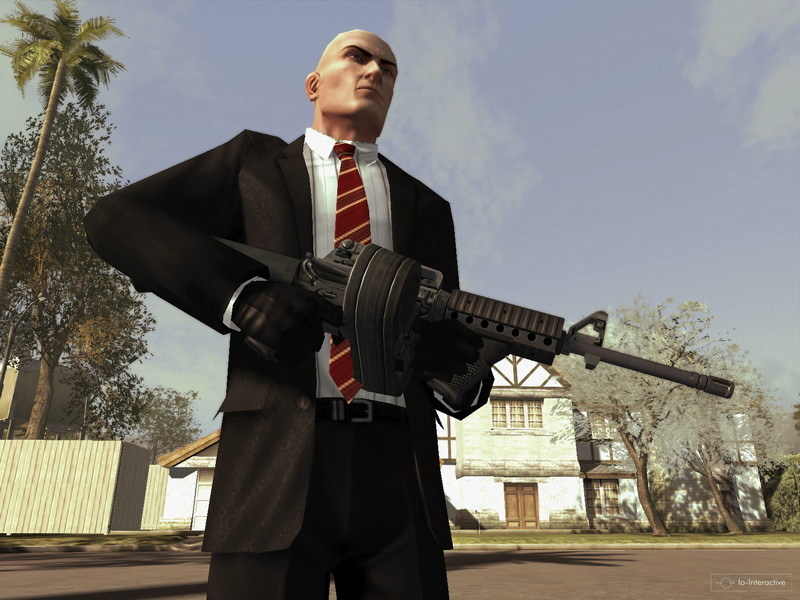
The equipment choices range from the fiber wire and syringes to handguns, rifles, explosives, and small objects used to create distractions. A sedative syringe can incapacitate someone without killing them; poison can be injected directly or placed in food or drink, allowing a target to be reached without a visible confrontation. A thrown item such as a coin can draw a guard away from a post. If a situation becomes physical, 47 can disarm an opponent, use a human shield, or escape by climbing and taking cover. Environmental kills are another route: explosive devices can be attached to fixtures so a falling object appears to be an accident. The same setting can therefore support a quiet poisoning, a concealed weapon, a staged mishap, or a direct fight, with each choice changing the amount of attention left behind.
Keeping a contract contained matters after the target is gone. Witnesses, surveillance footage, exposed weapons, and bodies can connect 47 to the scene or draw security toward him. He can drag unconscious or dead people into freezers, wardrobes, closets, and other containers, and remove camera tapes from a security room. The mission result accounts for casualties and publicity, so harming civilians or law enforcement creates costs as well as immediate danger. If someone spots him, changing into a disguise may help him leave, but the evidence already recorded can still affect what follows. The player can also inspect camera coverage in the briefing and plan around a control room, or improvise by finding its tapes after an incident. These cleanup decisions give the exit route its own demands after the assassination itself.
Between assignments, the newspaper reports on the previous job and reflects how much attention it attracted. Notoriety is a continuing measure: witnesses, recorded images, and conspicuous violence can make 47 more recognisable during later contracts. The player can spend earnings on bribes or cleaning services to limit that exposure, or keep the money for practical preparation. Mission pay also supports weapons and equipment upgrades, along with additional information and agency pickups for future work. Optional intelligence can reveal a target's likely location or routine, point out restricted areas, or identify access requirements. This creates a campaign-level resource choice: pay to reduce the risk inherited from a messy job, buy knowledge for an upcoming site, or improve tools carried forward into later assignments.
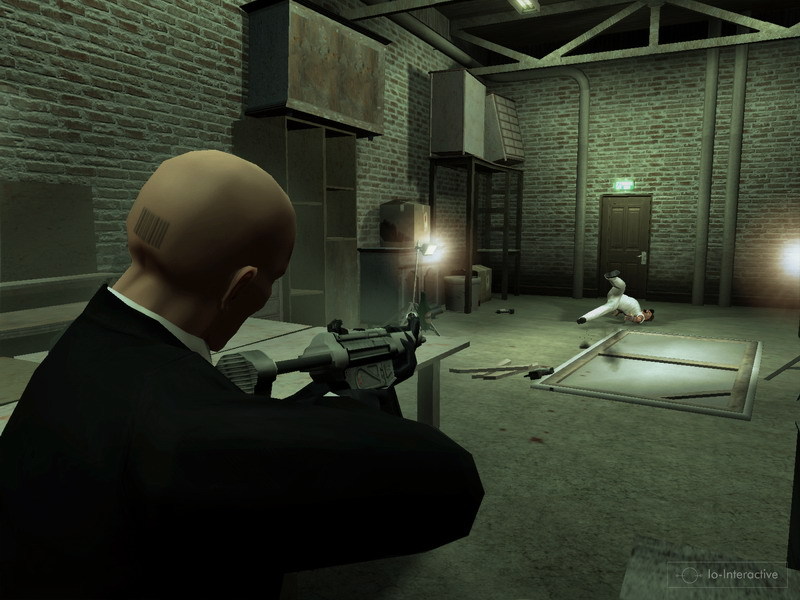
A profile tracks the career's funds, equipment choices, and progress, and the safehouse provides a place to review the arsenal and practise with available weapons. Upgrades alter particular firearms or equipment, such as adding a suppressor or improving a lock pick, while purchases and carried gear affect what 47 can bring to an assignment. The difficulty setting also changes the pressure of a mission; higher levels restrict how often the player can save during a job. Contracts reward both preparation and adjustment: briefings supply initial intelligence, but observation on site can expose a better timing window or entry point. The campaign's distinctive progression comes from carrying the consequences of one job into the next through money, notoriety, and equipment, alongside the growing conflict between the ICA and the Franchise.
- Developer
- IO Interactive
- Genre
- stealth action