
About Hi-Fi RUSH
In Hi-Fi RUSH, wannabe rock star Chai joins forces with a growing team of rebels after an experimental procedure at Vandelay Technologies leaves a music player embedded in his chest. Fight through the corporation’s facilities in rhythm-synced battles, using combos, timed defenses and partner abilities while exploring a colourful world that moves to the soundtrack.
Chai arrives at Vandelay Technologies hoping to receive a replacement arm through the company’s Armstrong Project. The procedure takes an unexpected turn when a music player is pulled into the operation and becomes lodged in his chest. Now the world seems to move with the music: machinery bobs on the beat, scenery pulses in time, and Chai’s new metal arm can unfold into a guitar-like weapon. Vandelay treats the incident as a security problem and sends its robotic forces after him. Chai, meanwhile, sees an opportunity to turn the mess into the beginning of his rock-star story, even as he learns that the corporation’s enhancement program has consequences for the people caught inside it.
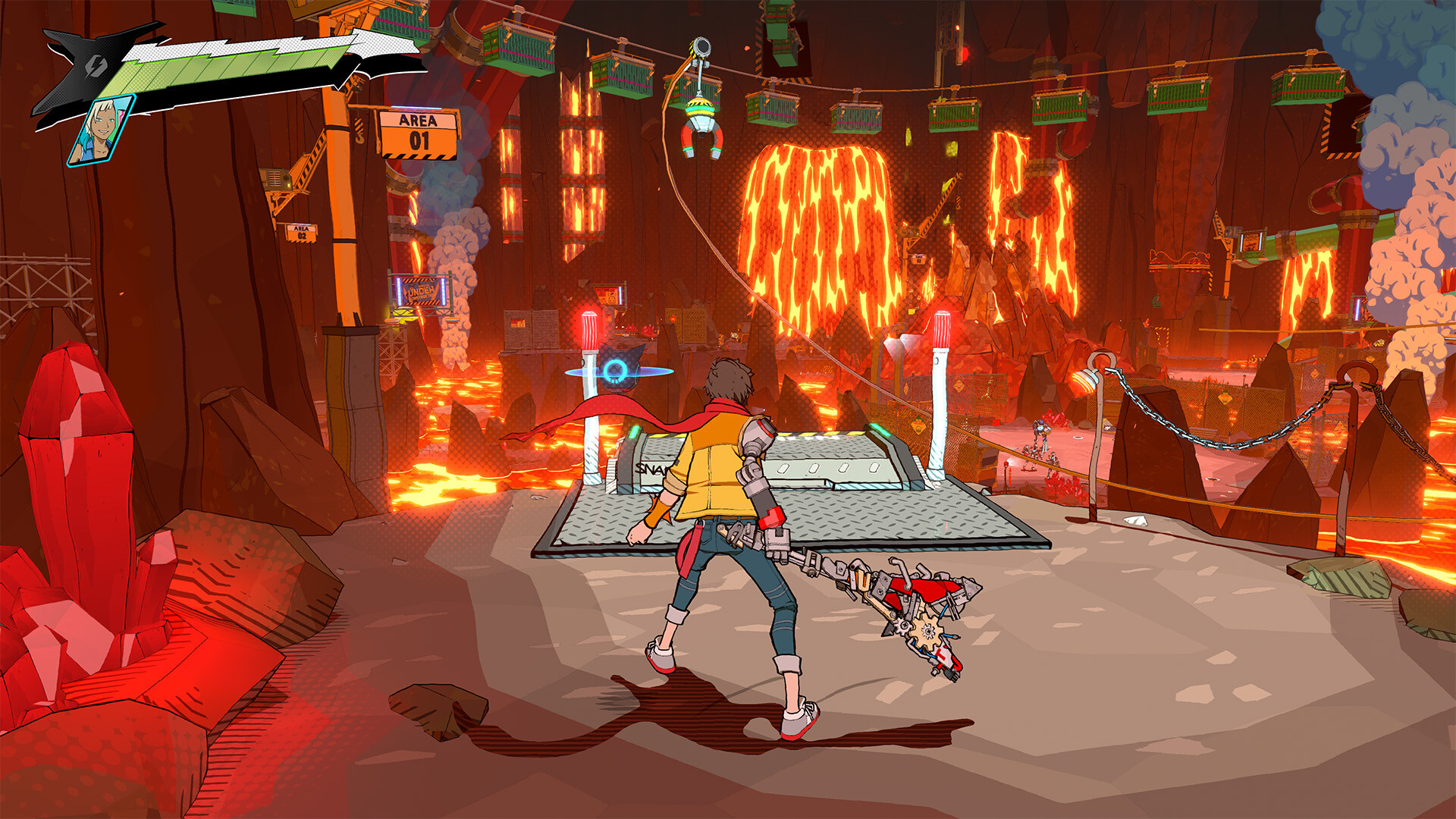
Vandelay’s campus gives the adventure its route and visual language. Chai moves through bright production floors, research spaces, executive offices and outdoor industrial areas, each built around the company’s push to sell robotic enhancements. Stages combine forward movement with side paths, small arenas, platforming and occasional puzzles; environmental objects often sway to the soundtrack, making the beat visible as well as audible. Between missions, the Hideout acts as a home base where Chai can talk with the team, visit the shop and use a training area. The setting’s cheerful colours and polished corporate branding sit alongside conveyor belts, security systems and robots that make Vandelay’s carefully managed image feel less welcoming the farther Chai goes.
Combat is a character-action system with a steady musical pulse underneath it. Chai can chain light and heavy attacks into different combos, jump into aerial strings, dash between targets and use his magnet arm to pull himself toward enemies. The inputs do not have to land on the beat for attacks to work, but timing them with the track improves their damage and adds impact to the final Beat Hit in many strings. A visual beat indicator and the steady movements of the world help show the timing. Dodges and parries provide ways to respond to incoming attacks, while the soundtrack and enemy cues help signal when an opponent is about to strike. Encounters grade performance as they unfold, rewarding varied, well-timed play.
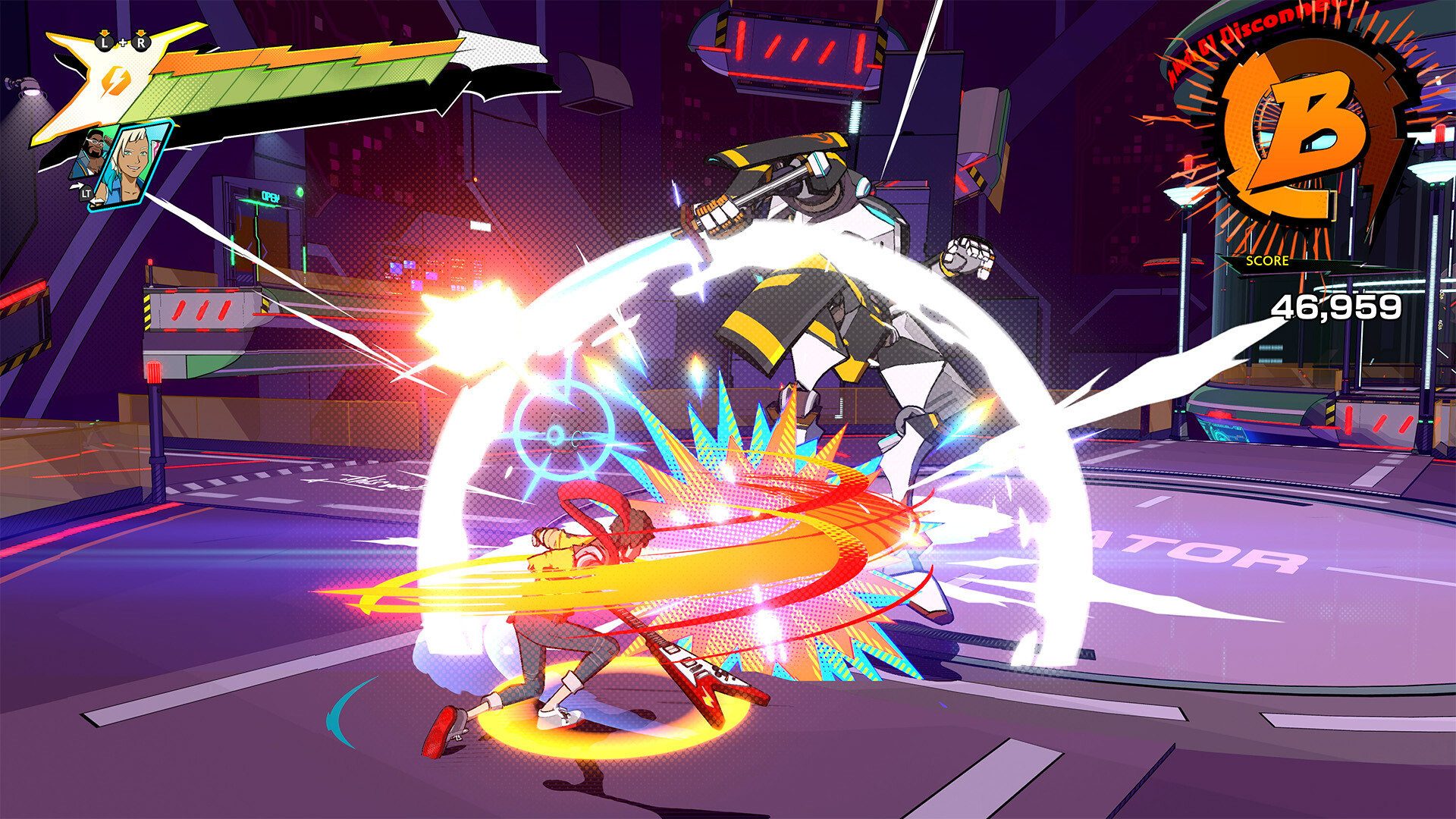
The team’s support abilities add tactical options and become part of both fighting and moving through Vandelay. Peppermint attacks from range and can deal with blue shields; Macaron closes in with a heavy strike that breaks Z-Shields. Later, Korsica joins the group, using gusts from her staff to douse fires and power generators, as well as disrupting some enemies. These abilities also change which routes Chai can open: a blue barrier, a Z-Shielded obstruction or a flame-blocked path each calls for a different teammate. Chai calls a partner in briefly, then waits for that ability to cool down before using it again, so choosing when to spend a support attack matters. In combat, partners can interrupt enemy defenses, help build a combo or create an opening for Chai to continue his own string. Their specialised actions make the growing roster useful for reaching new routes as well as handling tougher opponents.
Progression lets players shape Chai’s toolkit over the course of the campaign. Gears gathered in combat and while exploring can be spent at the Hideout shop on additional moves and upgrades; chips provide equipable effects that can be selected and improved as more capacity becomes available. Chai’s Reverb meter fills through play and powers Special Attacks, giving a choice between saving charge for a larger strike or spending it on an ability with a more particular use. Permanent improvements to health and the meter are also hidden along the stages. New partners and techniques arrive as the story advances, so later encounters ask the player to combine more options than the early fights do. The loop alternates between learning new tools, putting them to work in a stage and returning to the Hideout to adjust the setup.
A typical stretch of play moves between traversal, short exploration breaks and combat set pieces. Chai jumps gaps, runs along rails, uses his magnet to cross open spaces and looks for side areas that hold Gears or upgrade items. Some routes call for the right partner action, while other obstacles are cleared by timing a jump or striking a target on the beat. The campaign is divided into numbered stages with their own environments, enemies and boss encounters; a boss usually asks the player to recognise attack patterns and use the available combat tools in a more focused sequence. Once the story is complete, stage replay and additional challenge modes extend the combat loop, including Rhythm Tower and the later Arcade Challenge modes. Accessibility options provide another way into the rhythm systems: Auto-Action Mode can trigger attacks, dodges, parries and partner actions when the player continues pressing attack in time.
- Developer
- Tango Gameworks
- Genre
- Single-player rhythm-action / character-action game with platforming