
About Senua’s Saga: Hellblade II
Senua enters Viking-era Iceland as a captive of Northmen slavers, intent on confronting the raids and enslavement of her people. Her survival journey combines close third-person exploration, perception-based puzzles, sword encounters and a search for answers about the giants threatening local communities.
Senua’s Saga: Hellblade II continues Senua's story after the events of Hellblade: Senua's Sacrifice, moving the journey from the first game's descent toward Helheim to Viking-era Iceland. Senua allows herself to be captured by Northmen slavers so she can confront the people carrying out raids and enslavements. The voyage turns into a struggle to survive and to understand the people and forces she meets. Its setting includes stormy coasts, ruined settlements, caves and volcanic landscapes, while the threat of giants gives the journey a mythic frame. The story follows a directed route rather than an open-world map of unrelated tasks.
Senua remains a Celtic warrior who experiences psychosis, and the player sees and hears the world from close to her perspective. Her inner voices accompany movement, danger and conversation, sometimes responding to threats or drawing attention to what she notices. This continues the first game's approach but places Senua among living companions whose accounts and decisions also shape the journey. Early on, the enslaver Thórgestr becomes part of the expedition; later Senua travels with people such as Fargrímr and Ástríðr. The voices and companions offer different interpretations, so a scene may involve both external danger and uncertainty about how it should be understood.
Movement between encounters is an important part of the experience. Senua follows coastal and inland routes, climbs ledges, squeezes through gaps, crosses unstable ground and explores short branches before the main path resumes. There is no large skill tree or equipment-building loop to manage. Instead, the campaign alternates traversal, story scenes, environmental puzzles and fights. Small detours reward attention with hidden faces or carved lore markers, while the primary route carries the story through Iceland's landscapes. The close camera and directional sound keep the player's attention near Senua, making the path's terrain and the voices around her central to navigating each section.
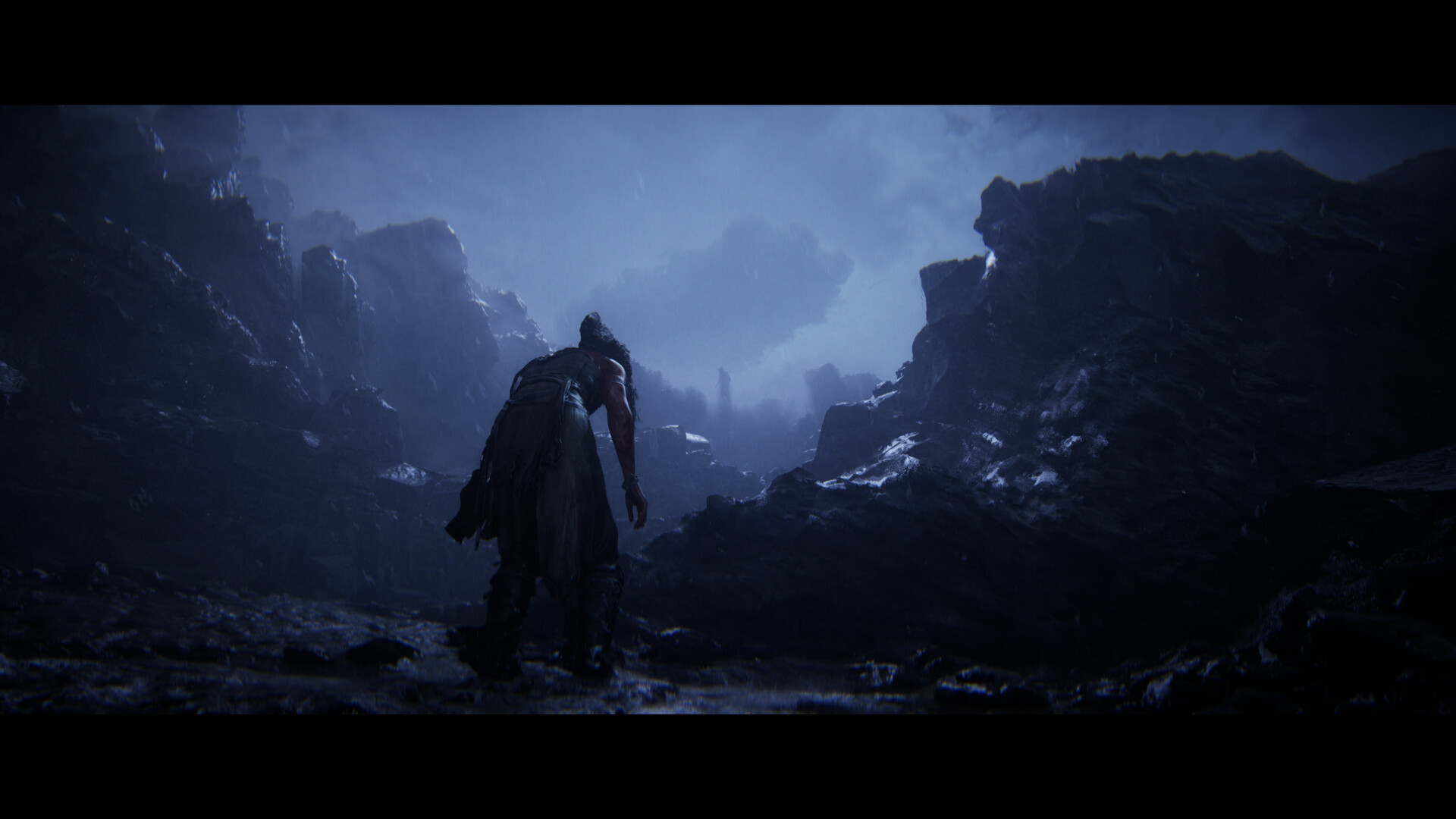
Focus continues as the key way to read parts of the environment. During puzzles, shifting perspective can reveal a hidden rune, expose a route or change how an area is arranged. In the Hiddenfolk sequence, the player manipulates the view of the underground spaces and works through a series of tests involving objects and paths that become visible through Focus. These passages make the idea concrete: progress comes from noticing what is concealed and using perception to reach the next platform or chamber. Elsewhere, rune-shaped forms are found by lining up elements of the landscape from a useful vantage point, echoing the first game while using new settings and puzzle arrangements.
Combat stages Senua against human and mythic opponents in brief, close-range encounters. She uses her sword, evades, blocks and parries, with timing determining whether she can interrupt an attack and answer with a counter. Battles are presented as dangerous confrontations along the journey, including encounters with draugar and other threats, rather than as repeated arena clearing for experience points. Focus also matters in combat, giving Senua a short opening to respond when the pressure rises. The action's camera, choreography and sound keep each fight tied to an immediate threat in front of her, while the voices can react to what is happening around the frame.
The story gives the giants a role in the crisis affecting Iceland's communities. Senua's route brings her into contact with local survivors and their accounts of the violence and hardship surrounding them, and the threat is interpreted through the game's blend of human suffering and myth. The Hiddenfolk are presented as mysterious beings connected to the underground world; seeking them becomes part of Senua's attempt to understand what can be done about the giants. This remains the game's fictional vision of Iceland and its myths, not a claim about historical belief. The narrative uses named places and people to keep the journey grounded as its scale shifts between individual lives and enormous forces.
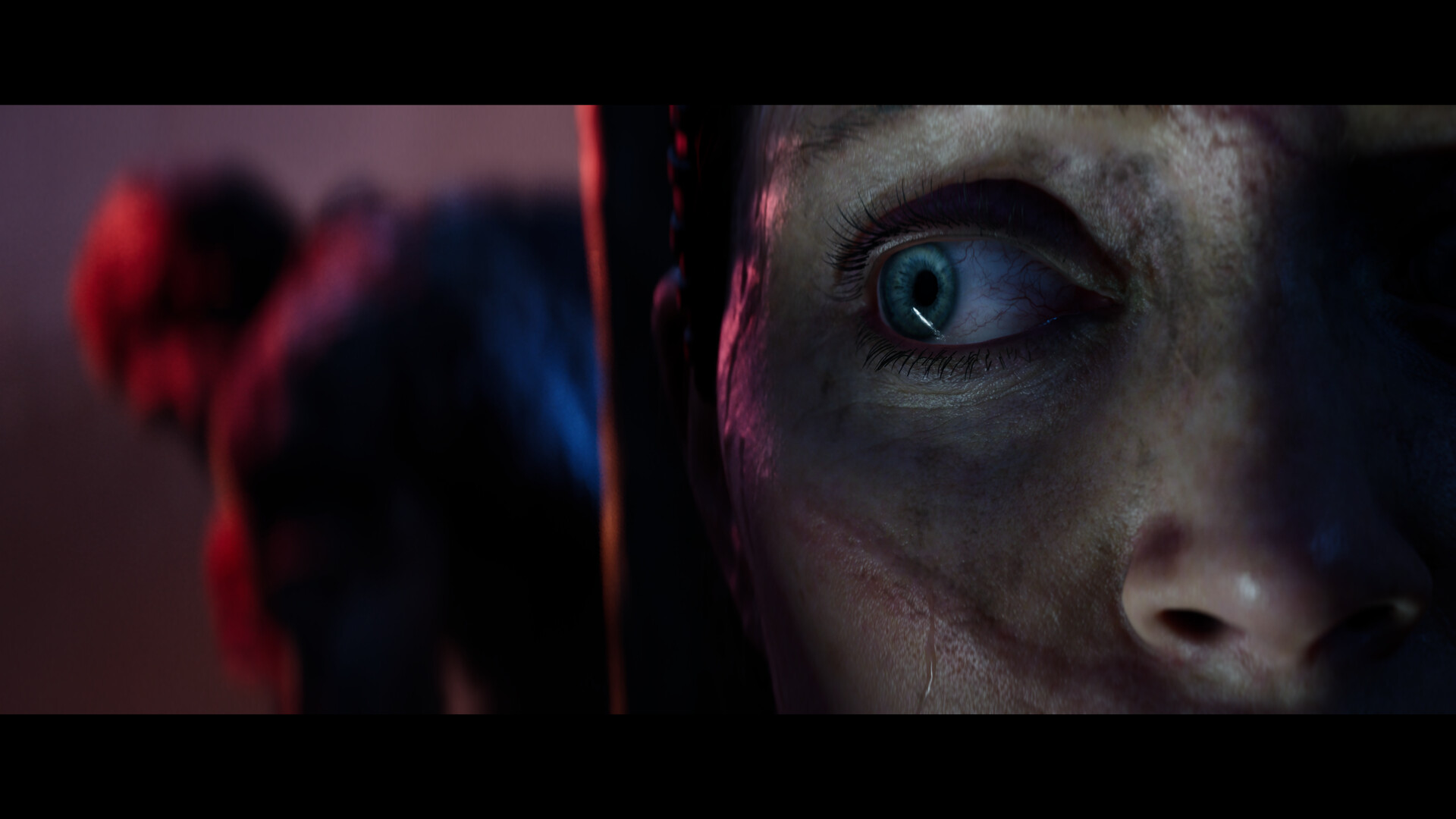
Optional exploration centers on two recurring discoveries. Lorestangir are carved totems that can be activated with Focus; each plays a fragment of Druth narrating a verse about Grettir the Strong. Finding all of them unlocks additional narration and the complete verse in the game's extras. Hidden Faces are concealed features in the landscape that reveal a tree and a short story when Senua focuses on them. These discoveries sit beside the main path, adding spoken lore and glimpses of the world's stories without changing the campaign into a checklist of combat upgrades. Chapter selection after the story gives players a way to revisit sections and find missed collectibles.
The 2025 Enhanced update adds optional ways to experience the same Icelandic journey. Ninja Theory's update announcement lists an optional Dark Rot Challenge in which the rot grows after each failure and reaching Senua's head ends the run and loses progress; it is a separate high-stakes mode, not the default story structure. The update also adds developer commentary, improved photo-mode tools and performance options, including 60 frames per second on Xbox Series X but not Series S. On PC it adds a Very High graphics preset. These additions sit alongside the core sequence of exploration, perception puzzles, narrative scenes and sword encounters that defines Senua's expedition.
- Developer
- Ninja Theory
- Genre
- Single-player action-adventure