
About Hell is Us
In Hell is Us, UN peacekeeper Rémi returns to the war-torn country of Hadea to search for his missing parents as a supernatural Calamity fills the region with hostile creatures. Explore without conventional map markers, investigate through environmental clues and conversations, and face the Hollow Walkers with melee weapons and a tactical drone.
Hell is Us is a third-person action-adventure set in Hadea, a country fractured by civil conflict and affected by a mysterious Calamity. Its central character, Rémi, is a UN peacekeeper who returns to the country where he was born to look for his missing parents. That personal search unfolds in a landscape where human violence and supernatural danger exist together. The hostile creatures known as Hollow Walkers are part of the crisis, but the story also turns toward family, the consequences of conflict and the people trying to live through it. The premise gives exploration a double purpose: Rémi is searching for a personal answer while moving through a country whose wider history and present condition must be pieced together from what he encounters.
The game makes observation the main aid to navigation. Its design removes a conventional world map and objective markers that would automatically direct players to every point of interest. Instead, conversations, documents, signs in the environment and geographical descriptions help establish where to go. A basic compass can help with cardinal directions supplied by characters, but it does not replace a marked route. This changes how objectives are approached: instructions provide information to interpret, not simply a waypoint to follow. Returning to earlier places can also matter when new knowledge or tools alter what a clue means. The region asks players to build their own understanding of routes and context as they explore.
Investigation threads discoveries together. People can supply descriptions, directions or details about local events, while documents and inscriptions add another layer of evidence. Some challenges allow more than one path toward a solution, with progress depending on proactively exploring and interacting with the world. Clues are connected to the places where they are found: a structure, a landmark or an object may communicate information that a quest marker would otherwise reduce to a destination. The game includes secrets and side quests as well as the search that drives Rémi’s return. Understanding a lead may require comparing what people say with what the surrounding environment shows, then deciding which location or interaction deserves attention next.
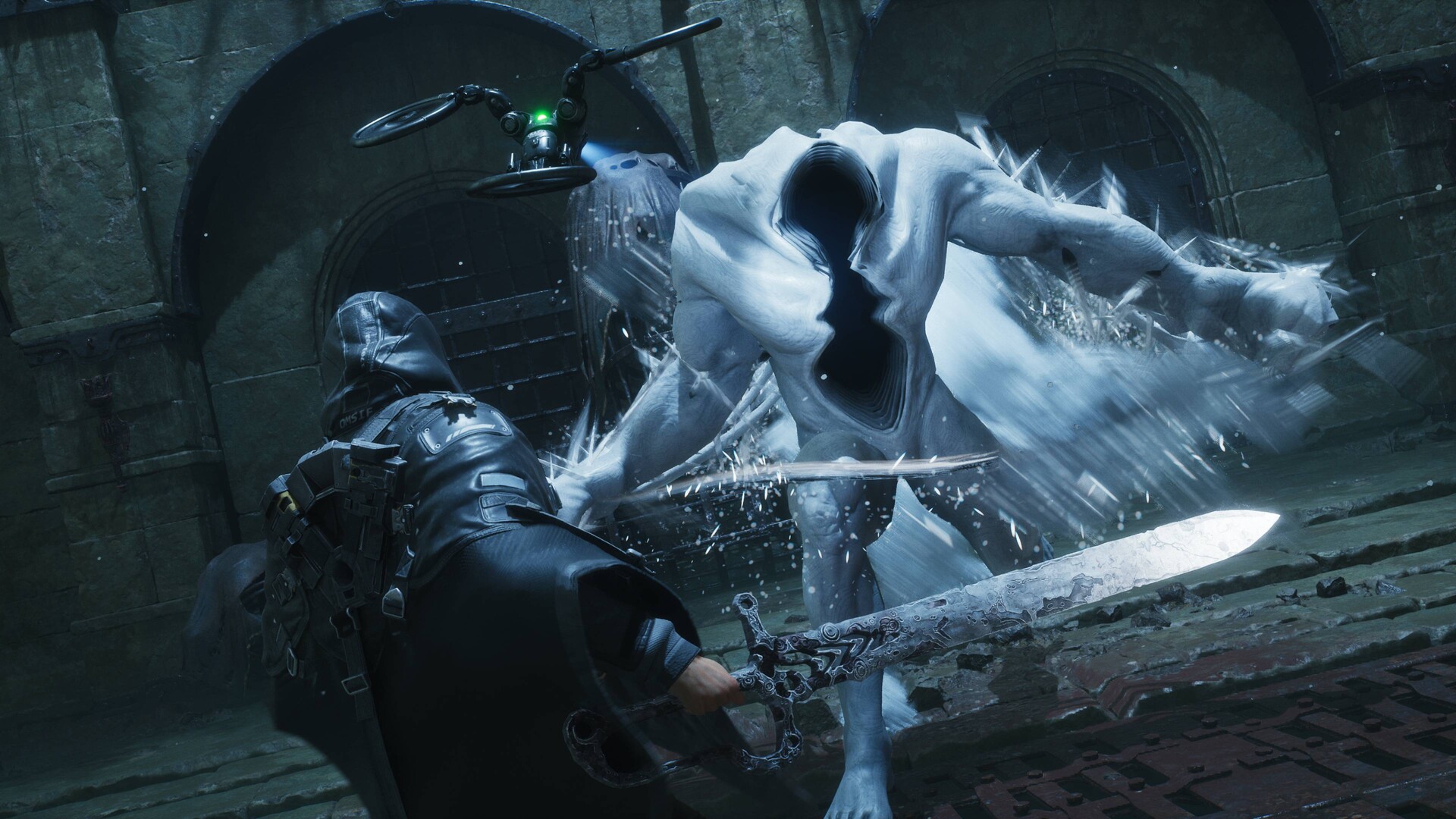
When danger interrupts exploration, Hell is Us shifts into close-range combat. Rémi uses melee weapons including swords, polearms and axes, each with distinct attack patterns. Blocking, parrying and watching enemy attacks matter, with an opponent’s depleted balance creating an opening. Combat is built around reading a nearby threat and choosing when to defend or attack, rather than relying on ranged weaponry as the central tool. A healing pulse can restore health when a ring forms around Rémi after striking an enemy; healing kits are more limited. These systems connect offence, defence and recovery within an encounter. Different weapons and upgrades can change how a confrontation is handled, while hostile creatures make combat a recurring part of travelling through Hadea.
Rémi’s drone is a companion with a practical role in both exploration and battle. It can provide light in dark areas, and unlockable modules add tactical functions such as distracting enemies, attacking groups or interrupting an assault. These abilities can create space for Rémi to reposition or act. Its utility grows through progression, so it is more than a decorative presence following the main character. Specialised items such as prisms also feature in some environmental challenges. The drone’s capabilities and the tools collected in the world form part of the relationship between exploration and combat: finding and understanding resources can expand the options available when an area becomes dangerous or when a route requires interaction.
Progression includes weapons, equipment, glyphs and resources that can be used to shape combat. A blacksmith upgrades weapons and equipment, and weapon improvements involve choosing among Limbic Spheres associated with Rage, Terror, Ecstasy and Sorrow. Glyphs can provide different effects, including life drain, ranged attacks or attracting enemies. These choices let equipment support different tactical approaches without changing the game’s focus on melee encounters. Limbic Shards serve as a crafting resource, while Forging Books unlock additional upgrade tiers. Side activities and investigation can therefore feed into character readiness: exploration may yield tools, information or materials that affect later encounters, and returning to established characters can provide a way to turn finds into improvements.
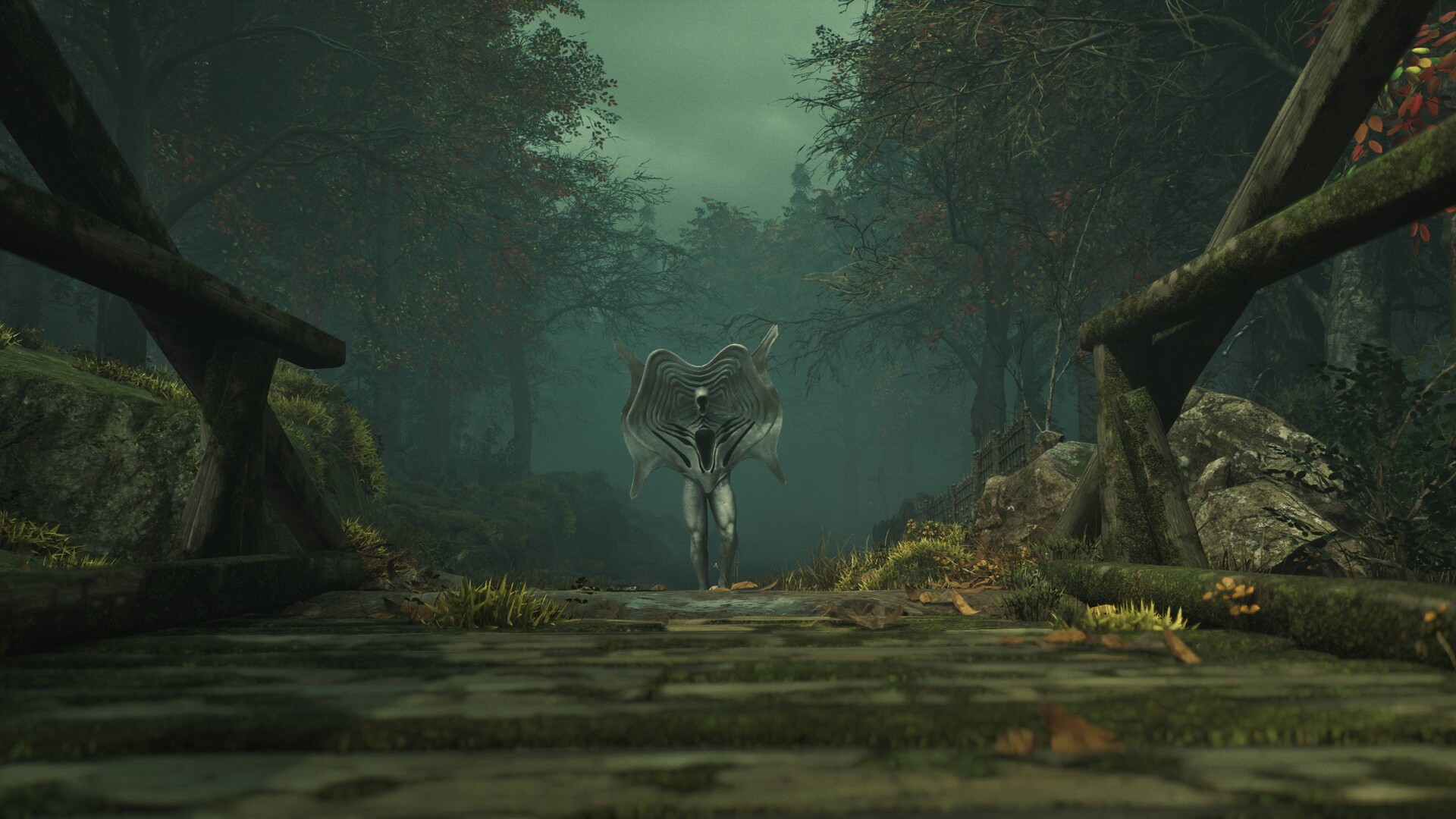
The world is arranged as an interconnected journey through regions scarred by war and the Calamity, with conversations, environmental clues, hostile encounters and secrets sharing the same spaces. Hell is Us asks the player to pay attention to direction, landmarks and local accounts instead of expecting the interface to explain every route. Its combat systems provide a contrasting form of close observation: watch enemy patterns, manage health and decide how Rémi’s weapon and drone should be used. An overlooked clue can lead back through familiar ground, while a new tool can change what is possible there. The adventure advances by connecting evidence and moving through danger, with Rémi’s family search as the human focus inside Hadea’s wider conflict and supernatural crisis.
- Developer
- Rogue Factor
- Genre
- Third-person action-adventure