
About HARVESTELLA
When the mysterious Quietus begins threatening every form of life, a traveller rescued near the village of Lethe joins Aria, a girl who claims to come from the future, in tracing the disaster to the four Seaslights. Between expeditions, the traveller tends a farm, prepares supplies, and builds ties with companions across a changing world.
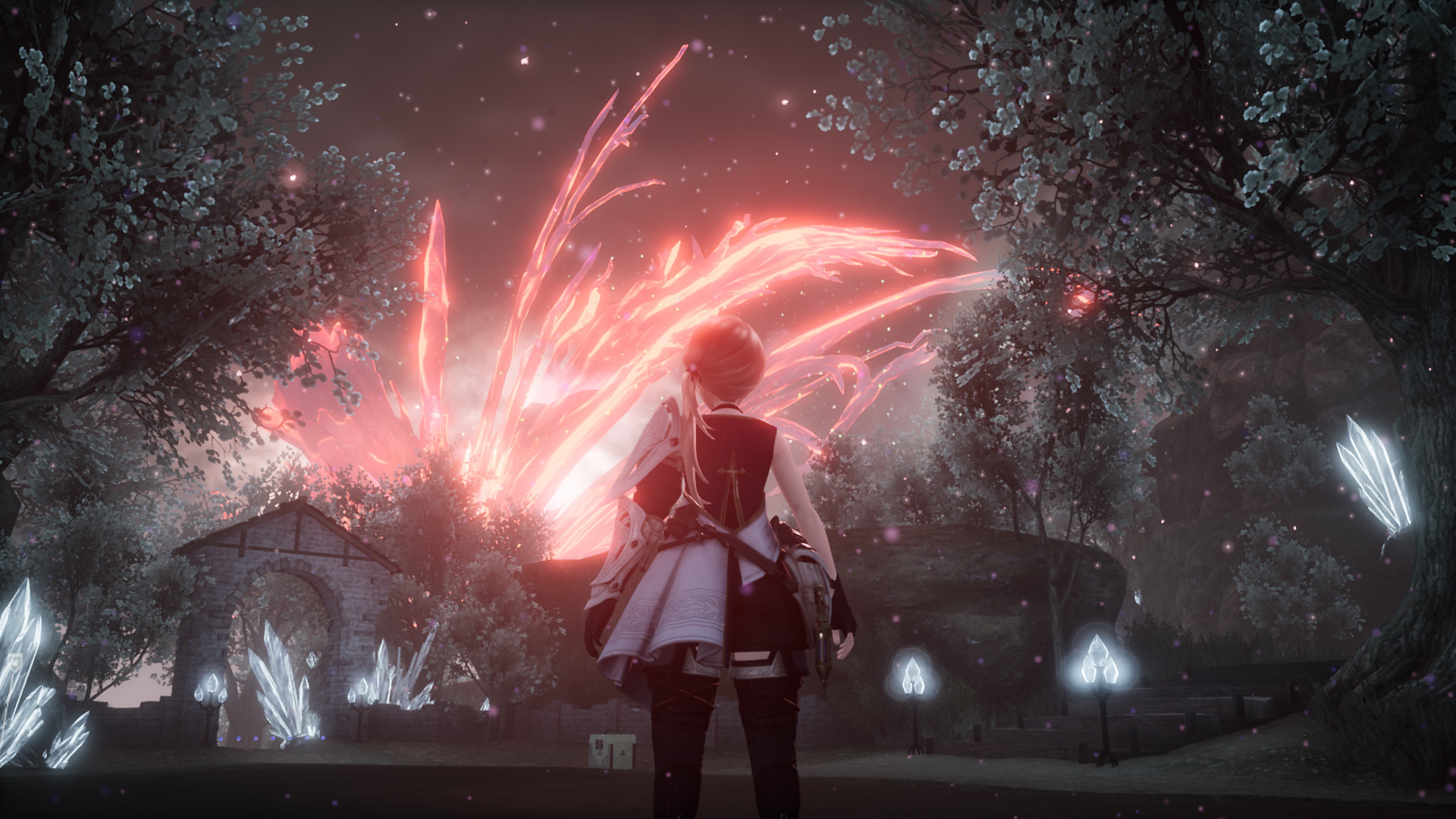
HARVESTELLA takes place on a world whose seasons are governed by four immense crystals called Seaslights. Their influence sustains life, but an unexplained change has brought Quietus: a deadly season that arrives at the turn between the familiar seasons. The Seaslights glow abnormally, lethal dust fills the air, crops wither, and people cannot safely go outdoors. The story opens during one such disaster, when a traveller is found collapsed near Lethe. After meeting Aria, a young woman who believes she came from the future, the protagonist sets out with her to investigate Quietus and the world's history. The premise gives ordinary life and the central mystery a shared cause: the seasons determine what can be grown and when, while their dangerous interruption raises the stakes of every transition. The game follows the journey toward the Seaslights and the people affected by them, keeping the origin of Quietus as a question to pursue rather than an answer assumed at the outset.
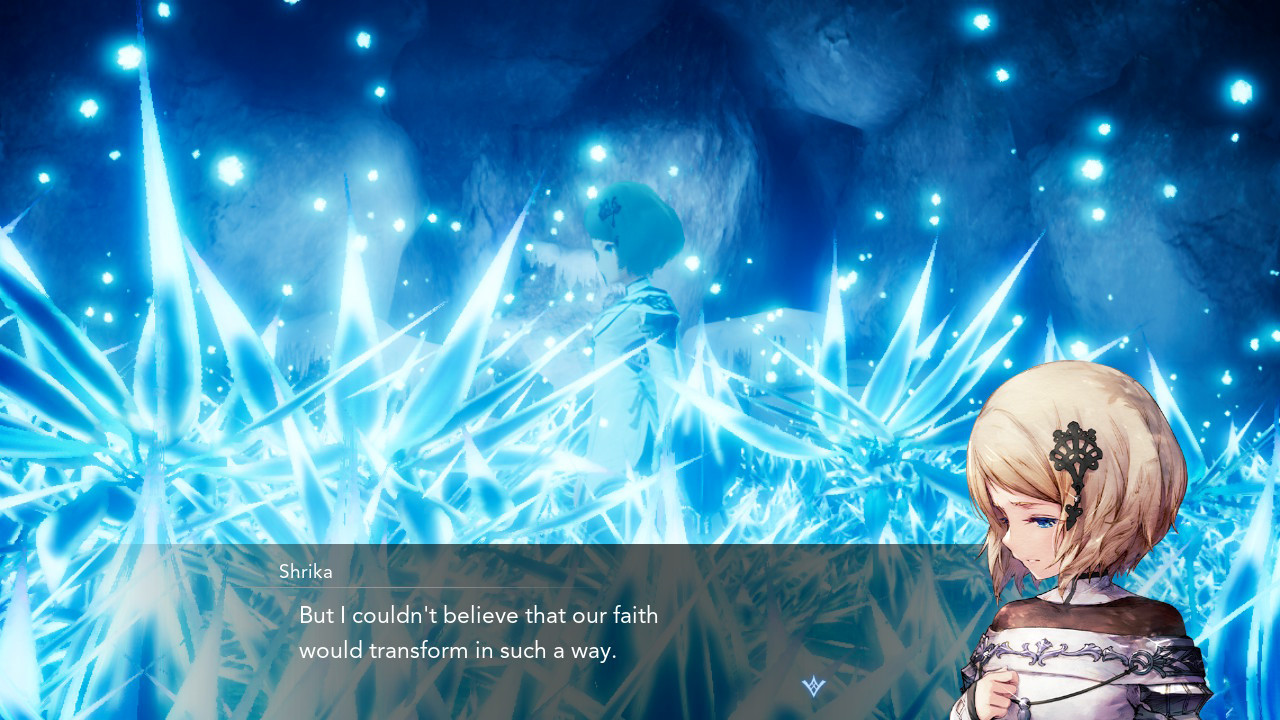
The route between the crystals passes through settlements with different relationships to the seasons and to the wider crisis. Lethe is the protagonist's home region, close to Bird's Eye Brae, the farm that anchors daily routines. Nemea lies near the spring Seaslight; cherry trees flower there throughout the year, and the town's orphanage is home to many children. Shatolla is a fishing town on the coast, where workers gather at a large tavern after returning from the sea. The Holy Capital of Argene is a snow-covered religious centre: the Seaslight of winter stands nearby, and clergy of the Order of the Seaslight visit a sacred cave to worship. The world also includes the Omen, a people regarded with suspicion by humans. Their armoured members investigate the Seaslights, leading some residents to blame them for Quietus, though their purpose remains uncertain. These places make the seasonal system visible in local customs, livelihoods, and beliefs, while encounters with people met along the way give the larger investigation a human scale.
Adventure takes the party from towns into dungeons and along hazardous paths toward the Seaslights. A world map connects settlements and their respective dungeons, while individual field areas contain enemies and routes forward. Suddenly mutated enemies and unusually powerful creatures can threaten the route, so the trip is not just travel between story scenes. The player explores each region, fights through its obstacles, and advances far enough to reach the next objective. At the farm, the Totokaku pet can be raised and ridden to move quickly across the world map. Its development also expands what it can do during travel, including digging up items along the way. Movement upgrades are consequently tied to a living system at home, not simply to a menu unlock. Fishing offers another reason to spend time in the field: designated spots produce different catches according to location and conditions, and improving the rod can make rarer fish obtainable. The game links forward movement, optional gathering, and preparations for the next expedition across a continuous route from the farm to distant regions.
The farm turns the calendar into a resource plan. Fields support seasonal vegetables, grains, and fruit; some crops can be harvested throughout the year, while others are limited to particular seasons. Special crops require unusual surroundings such as water or caves, so the growing area is not one uniform plot. Harvests can be shipped for money, kept as cooking ingredients, or used as raw materials. Fishing complements the fields: catches can also be sold or cooked, and the local conditions affect what appears. These choices make a harvest useful in more than one way. Selling creates income, while keeping produce can support recovery and temporary stat boosts on dangerous outings. Farm output can also be processed: crafted machines turn materials into goods that can sell for more. Livestock adds a separate supply chain, producing items such as milk and eggs for meals. Feed is made with a feed maker, and expanding the farm through renovation allows more animals to be kept. The routines of planting, collecting, processing, and shipping therefore feed directly into the equipment, provisions, and money needed for exploration.
Cooking and crafting are expedition preparation, not isolated household activities. Meals can restore HP and stamina, and some recipes temporarily raise attributes; Steam's product description also identifies food as a source of HP recovery and short-term stat increases. Stamina matters because the game expects the player to work through days at home and then spend time travelling and fighting, so supplies collected from crops, fish, and animals have practical value beyond sale. Crafting creates machines for processing and tools that support the farm economy, while prepared dishes convert the same harvest into adventure resources. The different uses make planning concrete: a player can ship produce for money, reserve it for a meal, or route it into a processed product with a better selling price. Fairy Orders, recorded in a book at home, provide another structured farm goal. Completing and reporting these requests awards useful rewards, including improvements that let the player till or harvest a broad area at once. As those conveniences arrive, the farm's routines change in scale, freeing effort for other work without removing the seasonal decisions about what to plant and how to use it.
Combat is real-time and built around choosing a job to suit the enemy. Each job has a distinct weapon and attack style, and recruiting a character who owns a job makes that job available to the protagonist. Fighter uses quick sword attacks for single targets or groups; Shadow Walker fights with twin blades and can strengthen itself; Mage attacks from range with several elements; Sky Lancer uses wind-aligned spear strikes over a broad area. Other jobs add further options, including the science-based Assault Savant, the song-based Woglinde, Mechanic's physical attacks and weakening effects, and ranged jobs that can change their attacks' elemental properties. Bosses and other strong enemies have four weakness attributes, and striking them with the relevant attributes fills a Break Gauge. Reaching Break increases damage dealt; a further adjacent gauge in Break can enable Double Break, while allies' special techniques become available once a neighbouring gauge is broken. Job-specific skill boards contain both activated battle skills and passive effects. Switching jobs during combat lets the player respond to a foe's weakness and use different tools as the fight develops.
Progress comes from pushing the investigation forward, developing the jobs available to the protagonist, and forming closer relationships with companions. Skill boards let players acquire active and passive job skills, so a job's identity becomes more capable through its own set of choices. Character stories follow allies such as Shrika, a missionary seeking a new faith; Heine, a mechanic; Asyl, a descendant of the Wind Readers; and Aria, whose claim about her origin frames the central mystery. These stories focus on problems and responsibilities that shape each person's life. Raising affinity can provide combat benefits and rewards, while eating with companions during an expedition improves a meal's effects and can reveal a special scene. Quests also bring local residents' concerns into the journey. Across its towns and dungeons, HARVESTELLA uses seasonal scenery as more than backdrop: the cherry-filled Nemea, coastal Shatolla, four-season Lethe, and snowy Argene express different parts of the same world. Released for PC and Nintendo Switch, the full game brings those daily routines together with the journey between four season-governing Seaslights.
- Developer
- Square Enix (Steam credits Square Enix; development-studio credit is not asserted here)
- Genre
- Life-simulation RPG; Steam categories Action, RPG and Simulation