
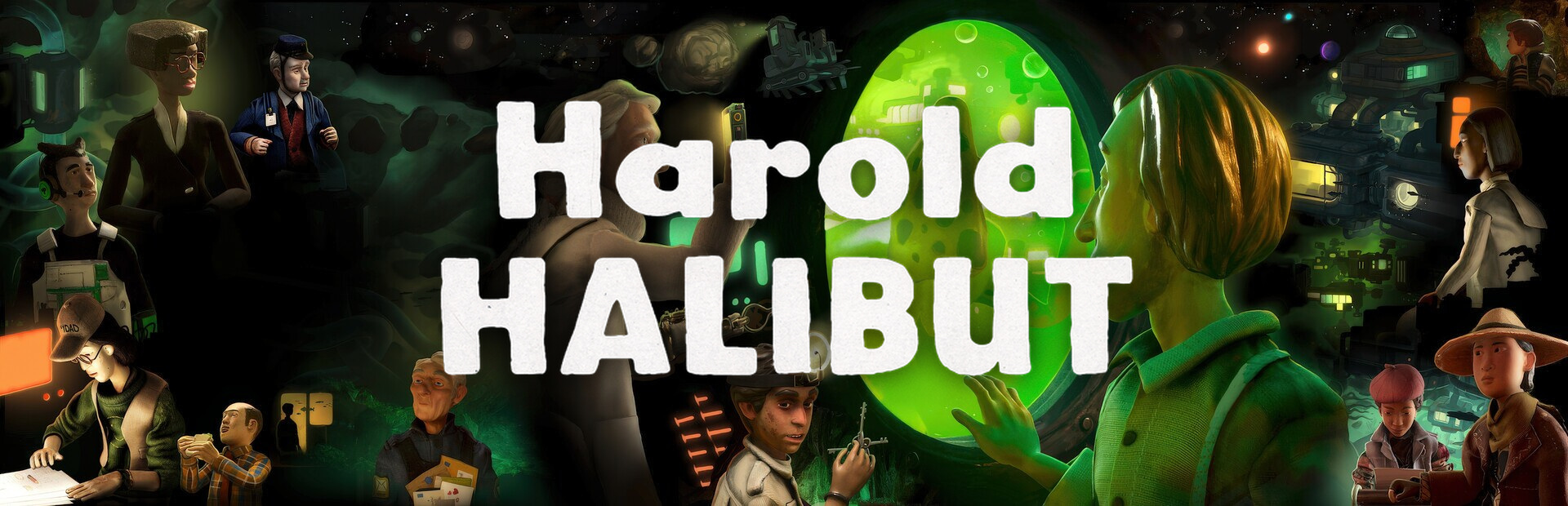
About Harold Halibut
Harold Halibut follows a laboratory assistant aboard the Fedora I, a city-sized spaceship stranded beneath an alien ocean. While chief scientist Jeanne Mareaux searches for a way to leave, Harold gets to know the ship's residents through conversations and everyday errands. Its characters and rooms began as physical models, giving this story about home an unusually tactile world.
Harold Halibut takes place in a spaceship that has become less a vessel in transit than a place where generations have lived. The Fedora I left Earth when a looming cold war made an off-world future seem urgent. About 250 years later, it rests beneath the ocean of an alien planet, with its passengers' descendants adapting to a life that the original mission was meant to escape. Harold works as an assistant to Jeanne Mareaux, the ship's lead scientist, who still hopes to get the vessel moving and find a new home on dry land. Many of the people around them have made a different accommodation with their surroundings. They work, argue, form relationships and carry on with routines inside a structure that was built to take them somewhere else. That disagreement between departure and belonging runs through the game's premise without reducing any one resident to a symbol. Harold's position is useful because he moves among these people in the course of ordinary work, while Mareaux's scientific project keeps the abandoned ambition of the ship close at hand.
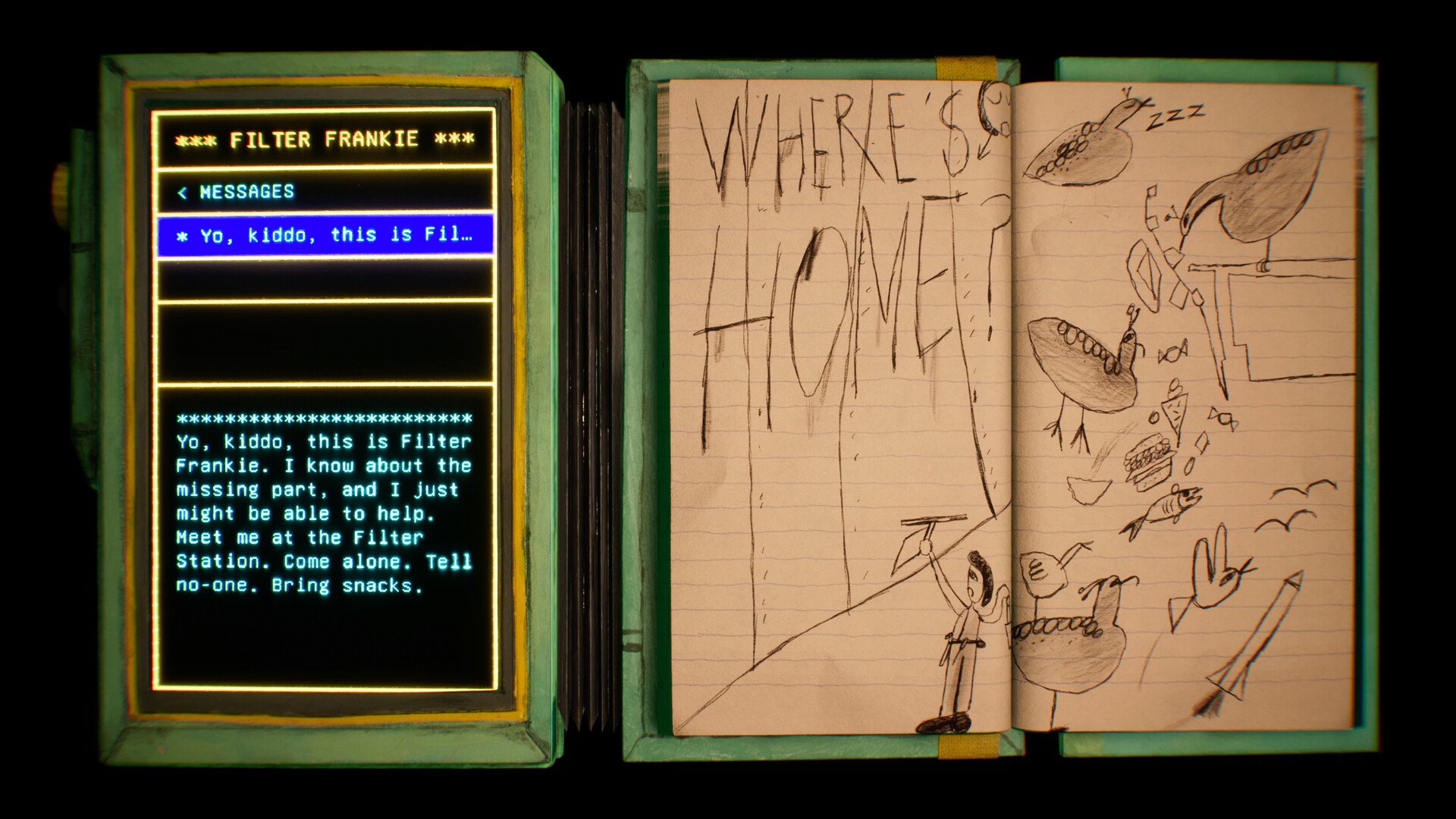
The Fedora I is large enough to have separate districts, and the player travels between them through a water-tube transport system. That detail gives the place a particular logic: it is a sealed, engineered environment whose residents nonetheless treat its routes as the everyday streets of a town. Harold can move between work areas and social spaces, speak to the people he finds there, and become involved in problems smaller than Mareaux's long-term plan. A missing pet bird or a shopkeeper's domestic trouble can matter because these concerns reveal how people actually live aboard the ship. The conversations are not merely stops between major plot scenes; they are how the player learns the personalities, loyalties and routines that make Fedora feel inhabited. Slow Bros. designed exploration so that finding one's way and encountering residents would matter more than following a constant marker toward the next dramatic event. The player gradually learns the layout and the rhythms of its districts rather than treating the ship as a line of unrelated sets. The transport tubes make travel a visible part of this civic machinery rather than an invisible jump between menus. Each trip reminds the player that this community survives inside a ship with systems designed by people who imagined an entirely different future. That contrast makes its most ordinary destinations interesting: a shop is also a part of a stranded vessel, and a conversation about a relationship happens under an ocean that the passengers were never supposed to call home.
Harold's daily work makes him a plausible listener. He is neither the ship's commanding officer nor the scientist with the definitive solution, so other residents can draw him into their immediate concerns. The resulting play is a narrative adventure focused on movement, observation and conversation, with occasional small tasks and interactions. The developer has contrasted its design with adventures built around combining inventory objects to unlock the next door; dialogue and the ship's people are more central here. That does not mean the player only watches a sequence of scenes. Walking to a resident, noticing a detail in their surroundings and returning after another conversation gives the ship a sense of continuity. Its small errands let a person who is not in charge still make himself useful. The question of how Harold belongs to this place grows out of these repeated encounters. A large science-fiction setting can therefore support a very local story: who knows whom, what a neighbour needs, and why an apparently minor request might alter Harold's sense of his home.
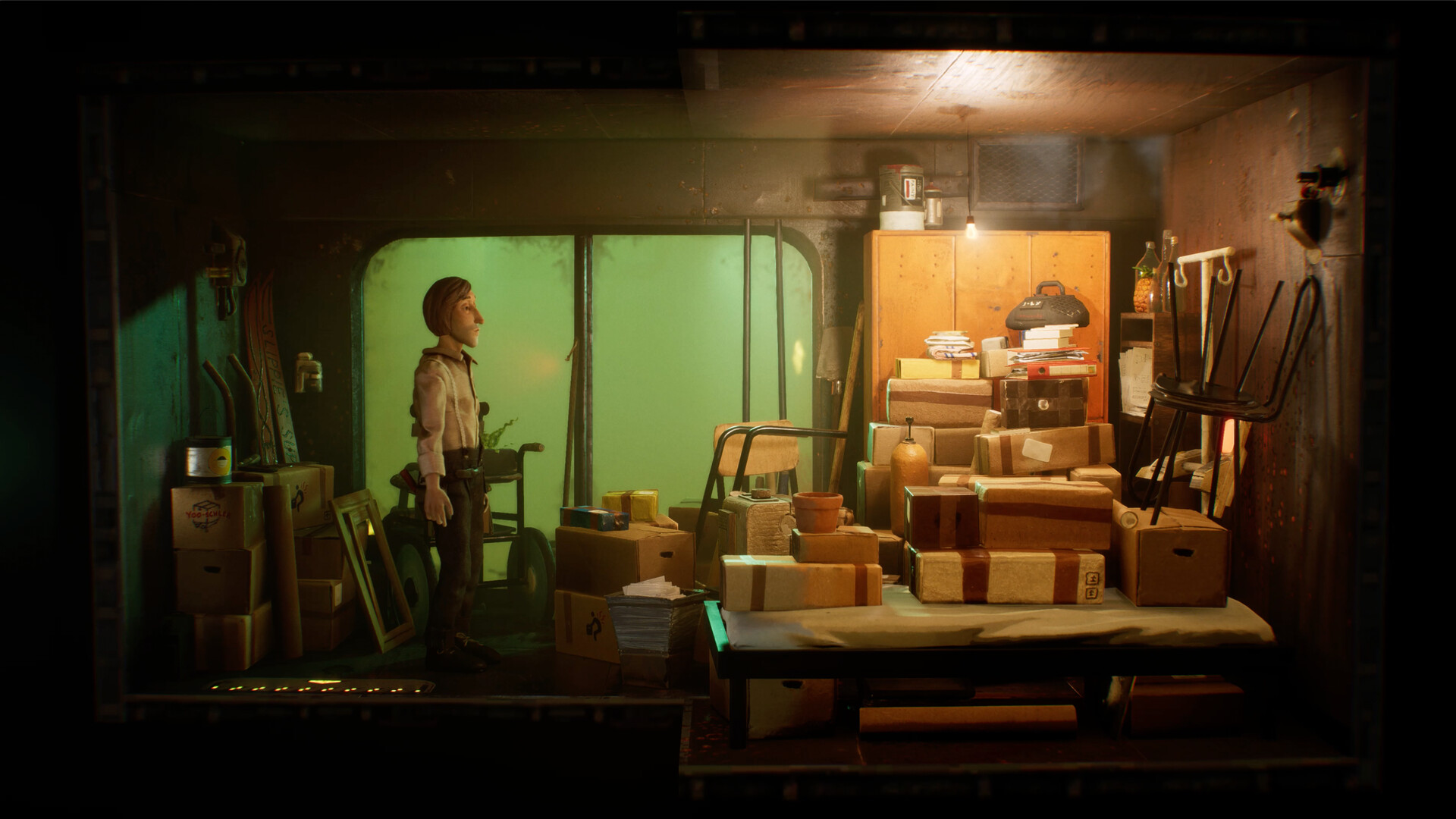
The most immediately striking part of Fedora is that its surfaces started outside a computer. Slow Bros. built dollhouse-sized sets, puppets, clothing and props, then scanned the physical work into a digital world. Metal, sewn fabric, tiny wooden floors and clay faces retain the evidence of materials handled by real people. The ship is not a filmed stop-motion sequence that allows only a fixed camera path: it is an explorable game environment assembled from those scanned models and animated digitally. Nearly a thousand handmade objects were imported into the Unity engine, while many two-dimensional effects were drawn by hand as well. That process explains why a room can look simultaneously like a miniature set and a space Harold can move through. A fabric edge, painted panel or irregular sculpted face is part of the world's identity. The art is especially fitting for a story about a ship whose inhabitants have built a lived-in life out of something originally intended as a temporary journey. The physical origin of the assets does not disappear when the player takes control. It can be seen in the varied shapes and textures of objects that would look too regular if they had been built only from repeated digital components. Even the way a room catches light matters, because scanned cloth, clay and metal need to behave as different materials for the miniature world to retain its substance on screen.
The presentation extends beyond the model-making. English voice performances give the ship's ensemble distinct conversational presences, while the script moves between mundane humour and the more troubling implications of a colony that may never fulfil its original purpose. A physically built puppet must still act convincingly once placed in a real-time scene; animation, lighting and camera work help turn each model into a character rather than an exhibit. The developers used the game engine's lighting and texture systems to preserve detail from the scanned materials across changing interiors. That technical work is not an optional flourish: the player is expected to spend time in the same districts and remember their layout, so the rooms must feel coherent under repeated visits. Harold's own room can accumulate mementos as the story moves forward, giving a personal scale to an environment otherwise large enough to feel like a whole city. The material detail and the routine return to familiar spaces reinforce one another; both make the Fedora feel occupied rather than staged solely for a single scene. The same care helps conversations feel grounded. A resident has a place to stand, an object to handle and a history implied by the room around them. When Harold returns after an errand, the setting is more than a neutral backdrop for the next line of dialogue; it is a place the player can recognise. That familiarity gives small personal changes somewhere to register.
The story's broader movement begins from a question the Fedora's people cannot answer in the same way. Mareaux's search for a way out holds onto the voyage's original promise, while people born aboard the vessel may understand home through relationships and habits formed beneath the ocean. Harold stands between those views as an assistant, neighbour and curious observer. A later encounter opens another possibility beyond the routines he knows, but the nature of that discovery belongs to the game's unfolding story. Slow Bros. released Harold Halibut in 2024 for PC, PlayStation 5 and Xbox Series X|S, pairing its unusual production method with a fairly approachable narrative structure. It asks for attention to dialogue, geography and the character of a place, not mastery of a combat system or a vast equipment tree. Its handmade appearance is the first invitation, but the continuing reason to explore Fedora is to understand the people who have turned a stranded ship into a community. The game lets Harold's errands and relationships carry that larger question about where a person belongs.
- Developer
- Slow Bros.
- Genre
- Handmade narrative adventure