
About Half-Life 2
After Earth’s defeat in the Seven Hour War, Gordon Freeman arrives in the Combine-occupied City 17 and becomes part of a human resistance. Half-Life 2 is a first-person shooter campaign that links firefights, environmental puzzles, vehicle travel and physics-based interaction through a continuous journey across an alien-controlled world.
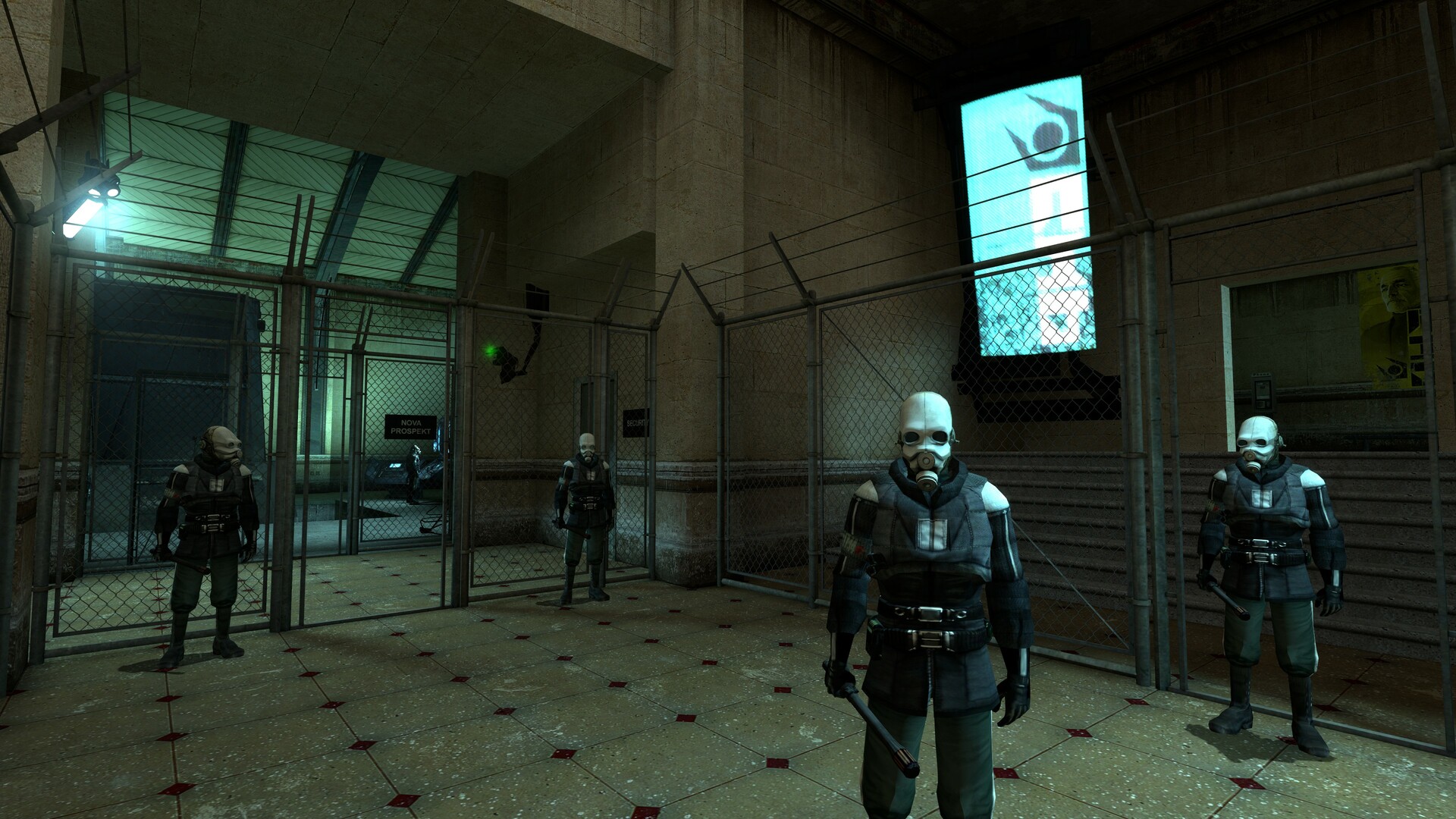
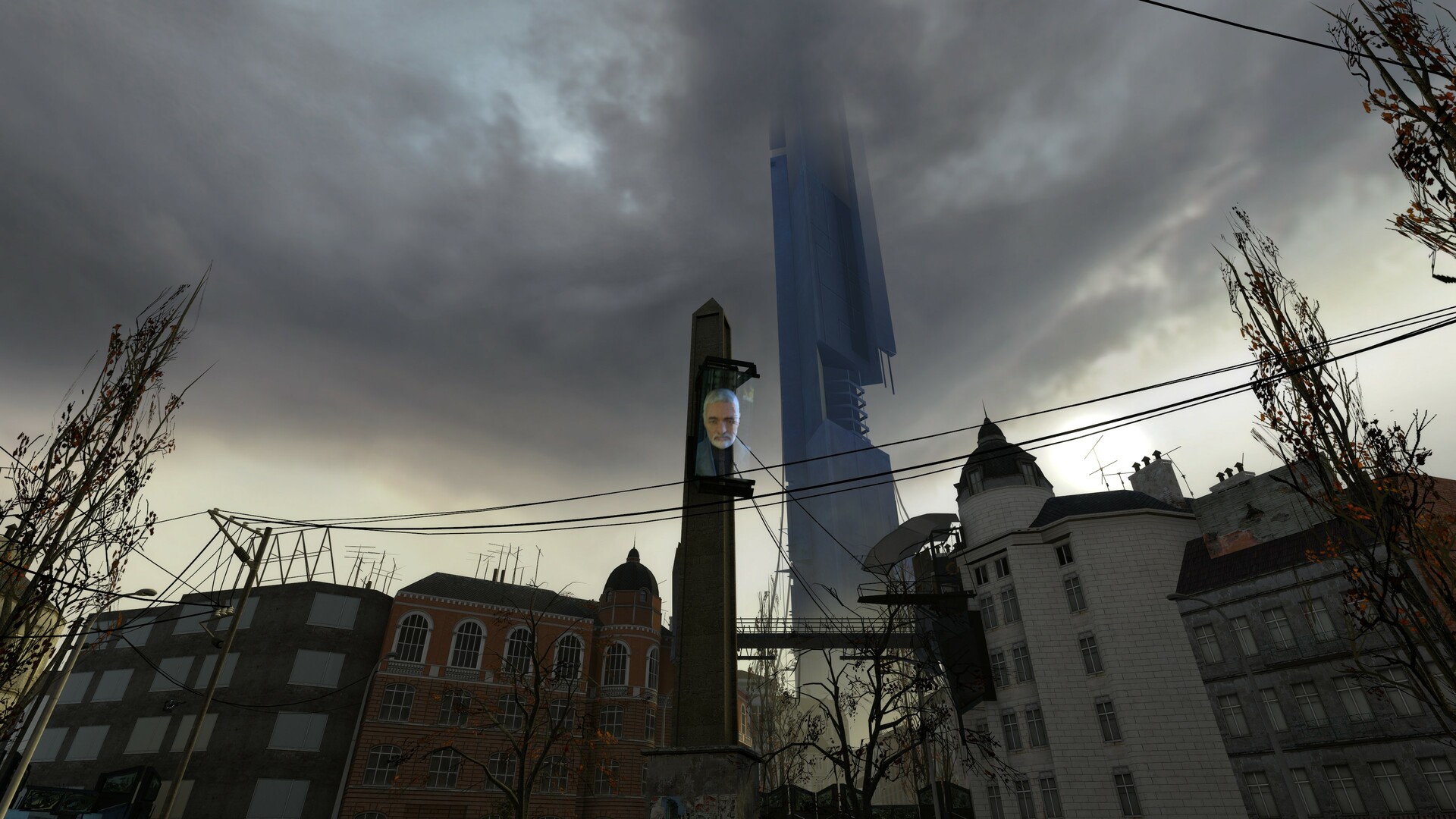
Gordon Freeman returns to a world changed by the aftermath of Black Mesa. Earth has surrendered after the Seven Hour War, and the alien Combine rule through an occupation that reaches into daily life and public spaces. City 17 is an occupied metropolis where Civil Protection patrols streets and controls movement. Gordon’s arrival sets the campaign in motion, while resistance figures including Alyx Vance, Eli Vance, Dr. Isaac Kleiner and Barney Calhoun give him routes through a society where open opposition is dangerous. The world is communicated through architecture, overheard exchanges and scattered signs of displacement as much as through direct explanation. The campaign follows Gordon through city streets, industrial waterways, a coastal road, hostile settlements and Combine facilities as his role in the resistance grows.
The game is played from Gordon’s first-person viewpoint, keeping movement, combat and environmental problem-solving connected. A route may lead through an apartment block, a canal-side industrial site, a vehicle crossing or a fortified building, and transitions usually happen within the same continuous journey rather than through detached mission screens. Doors, ladders, barricades, movable objects and hostile patrols shape how the player advances. Exploration often reveals the immediate route or a usable object, while characters encountered along the way provide context and help explain the resistance’s circumstances. Combat breaks up these passages, but the spaces remain interactive: crates can be moved, explosive barrels can be used against enemies, and ordinary props can become cover or temporary obstacles. The result is a campaign built around switching between movement, observation, fighting and practical environmental challenges as the setting changes around Gordon.
Gordon’s weapons provide distinct responses to those changing encounters. The crowbar handles close threats and breakable objects, while firearms cover different distances and enemy groupings; later weapons add tools such as the shotgun, crossbow and rocket launcher. Ammunition and health pickups make the environment part of combat preparation, and the game introduces new weapons along the campaign so that each can be learned in a relevant setting. Combine soldiers use firearms and grenades, while headcrabs, zombies, manhacks, gunships and Striders demand different positioning and timing. A rocket launcher’s laser guidance, for example, lets a shot follow a moving aircraft rather than relying on a straight, unguided projectile. Fighting therefore mixes weapon choice with cover, movement and the geometry of the current space. The route continues after individual firefights, so supplies and surviving health matter as the next area opens.
The Zero Point Energy Field Manipulator, usually called the Gravity Gun, makes movable debris a central combat and puzzle system. Its beam can draw suitable objects toward Gordon, hold one in front of him and launch it away; a quick close-range pulse can shove an obstruction without first collecting it. Crates, barrels, furniture and other solid props can block a path, act as temporary cover or be thrown at a target. The same interaction changes how environmental hazards work: a barnacle’s tongue can be distracted with an object, and a grenade can be sent back toward its thrower. Ravenholm, a settlement overrun by zombies and headcrabs, builds encounters around this tool and objects such as circular saw blades and explosive canisters. The gravity-driven traps make the room itself part of the available arsenal, while its confined lanes and ambushes make attention to sound, sightlines and escape routes important.
Travel sections widen the scale of the same systems. In the canals and Water Hazard, Gordon uses an airboat to move through waterways, pass barriers and engage threats from its mounted gun. Later, a buggy carries him along the coast and through areas where roadblocks, Combine positions and antlion territory turn driving into navigation and combat. The vehicles handle differently from on-foot movement, and the route repeatedly makes the player leave them to open a passage, restore power or deal with an obstacle. Antlion pheropods add another way to influence a fight: in the Sandtraps stretch, the insect creatures can be directed toward marked targets, changing how Gordon approaches Combine groups. These sequences keep the campaign from relying on one arena pattern; the scale shifts from individual rooms to roads, bridges and exposed shorelines, while physics props, weapons and enemy responses remain part of the problem-solving toolkit.
The resistance campaign develops through encounters in which allies, enemy formations and the environment overlap. Alyx and other human characters appear within the journey, helping Gordon navigate through parts of the occupied world and making the resistance visible as a network rather than an abstract cause. The Combine’s forces range from human patrols to machines such as gunships and Striders, whose reach encourages the player to break line of sight and move between cover. New weapons appear across the journey, with situations that give the player reasons to change tools: a shotgun suits close pressure, while the rocket launcher is used against gunships. In the Citadel, an altered Gravity Gun and energy-orb interactions extend physics-based combat into Combine technology. That late shift carries a familiar object-manipulation system into the regime’s most controlled architecture.
- Developer
- Valve
- Genre
- First-person shooter