
About Grounded
Four teenagers find themselves shrunk to the size of ants and stranded in a backyard where ordinary grass, garden structures and insects become a vast survival environment. Gather and analyze materials, make equipment, build shelter, and follow a chain of labs and discoveries to learn why the group was miniaturized and how they might return home.
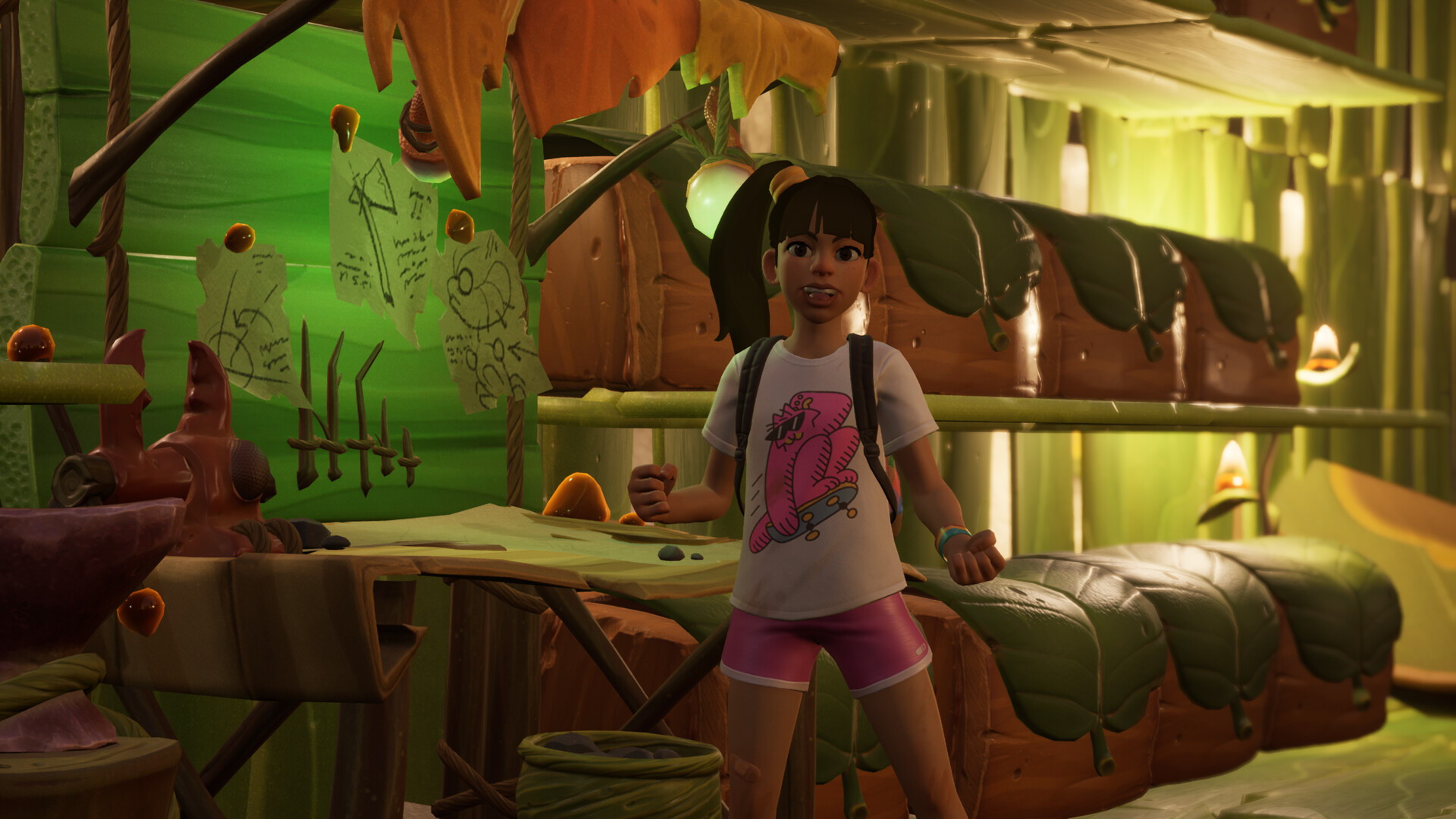
Grounded turns a familiar garden into an open survival landscape by placing its young explorers at insect scale. The playable teens are Max, Willow, Pete and Hoops; the player chooses one before setting out alone or with up to three friends. Blades of grass become sight-blocking walls, a puddle can be a landmark, and a fallen object can shelter creatures much larger than the characters. The story begins with the unexplained transformation and asks the group to discover who is responsible and how to get home. Its central mystery is tied to the backyard itself, so moving through new areas, locating laboratories and reading the evidence there advances both exploration and the narrative. The full story is part of the 2022 release, while the route through it remains connected to the survival work needed to reach each new place.
The yard is explored on foot, through tunnels and across landmarks that look small from normal height but become major terrain at this scale. Grasslands, the Hedge, the Oak Tree, the Koi Pond, the Haze, the sandbox and the Upper Yard each introduce different materials, routes and creatures. Dense plants can obscure what is ahead, while elevated objects offer a view over nearby ground and can help with navigation. Trail Markers let players flag a base, a useful resource patch or a Field Station, then find it again while moving through the grass. Finding a safe line between landmarks matters because insects have their own territories and some areas require stronger equipment or more preparation than others. The landscape is therefore both a resource source and a navigational puzzle: the player climbs, crosses, marks and revisits places as new tools make more of the backyard reachable.
Field Stations make gathering feed directly into crafting. At an Analyzer, the player scans collected materials to reveal ideas for recipes that use them; plant fibers, sprigs, sap, grass pieces and insect parts can all become useful research inputs. Stations have limited scanning capacity before they need to recharge, so a new find creates a decision about whether to analyze it now or return later. Discovering a recipe does not provide the finished object: its ingredients still have to be collected and brought to the appropriate crafting station. The loop encourages players to examine unfamiliar drops after a fight or a trip into a new area, then use the resulting knowledge to prepare for the next one. The same process gradually opens better tools, armor and facilities, turning curiosity about a material into a practical way to extend the range of future expeditions.
Hunger and thirst shape how long an expedition can last. Mushrooms provide an accessible food source, while meat from small creatures can be cooked over a fire for a more substantial meal. Clean water often appears as dew hanging from grass blades; puddle water can restore thirst but also harm health. A water container lets the player carry a reserve, and a dew collector can generate drops at a home base once its recipe and materials are available. Lean-tos provide a place to sleep and set a respawn point, while fires and cooking equipment support longer trips. These needs interact with distance: carrying food and water makes a journey safer, but a player may still need to decide when to turn back, especially if the return route passes through hostile territory or the light is fading.
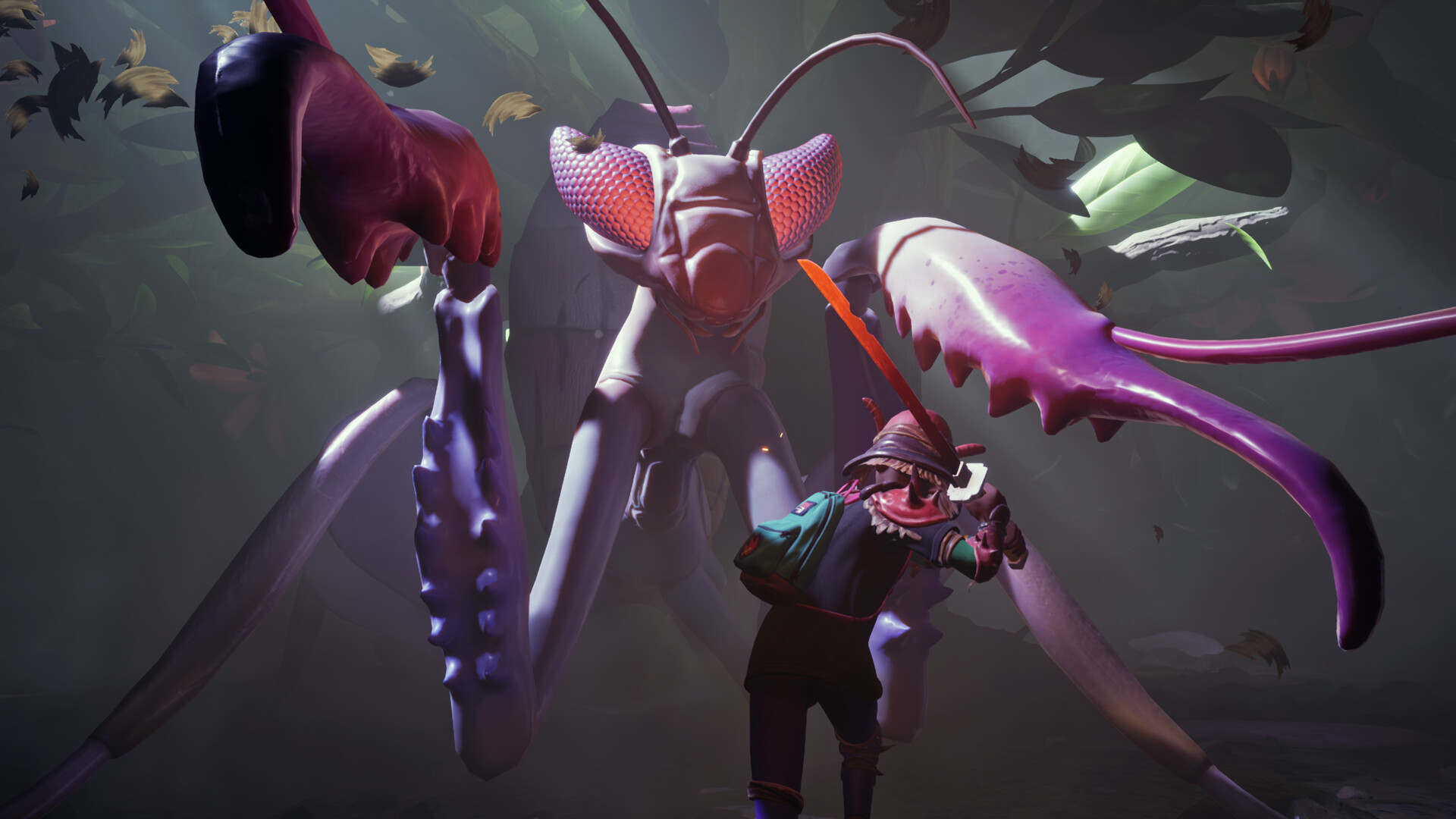
Crafted tools and equipment determine which materials can be gathered and which creatures can be confronted safely. Basic axes and hammers break different resources, while spears, clubs, bows and other weapons allow both close and ranged attacks. Insects telegraph many of their strikes, giving the player a moment to block, dodge sideways or time a perfect block that reduces damage. Repeated swings and blocks consume stamina, so combat rewards controlled attacks rather than continuous button presses. Some creatures ignore the player unless provoked; others defend their territory or actively hunt. Armor provides protection and can offer different perks, while weapon properties such as stun affect how an encounter unfolds. Parts collected from defeated insects can become new gear, making combat one route into stronger crafting recipes and access to more dangerous parts of the yard.
Building gives gathered materials a lasting purpose. Players can place a lean-to, workbench, storage and other utilities, then expand a shelter with walls and floors made from processed plant materials. Choosing the site is a strategic decision because a base can be attacked, and a location near useful resources may also sit close to a bug's territory. The construction system becomes more capable as the player follows story objectives and unlocks additional building patterns; early foundations and later floors support different layouts. A base can serve as a respawn point, a place to store materials and a workshop for preparing equipment, rather than just a wall between the player and wildlife. The threat can also respond to interference with nearby creatures, so fortifying a camp and deciding where to build are part of the wider relationship between gathering, combat and exploration.
Story progress is delivered through encounters with labs, objectives and the people and machines connected to the shrinking experiment. BURG.L, a robot found in a lab beneath the Oak Tree, provides quests and exchanges Raw Science for new recipes, upgrades and blueprints. Raw Science can be found in the yard and also earned through quests or crafting, giving exploration and making items a second kind of reward. Main objectives uncover more of the mystery, while other tasks direct attention toward missing chips or particular crafting work. Personal progression adds more choices: Mutations grant selected bonuses, and Milk Molars can be spent to improve character statistics. Online play supports up to four explorers, with shared worlds retaining group progress even when the original host is away. Whether solo or cooperative, the adventure continues through preparation, discovery and the gradual expansion of what the group can survive and build.
- Developer
- Obsidian Entertainment
- Genre
- Survival-adventure