
About GRIS
GRIS follows a young woman through a symbolic, largely wordless world shaped by sorrow. As she travels across painted landscapes, gains new ways to move, and restores colour, the player solves light environmental puzzles, finds star-like fragments, and opens routes forward. Its progression joins gentle platforming with visual storytelling.
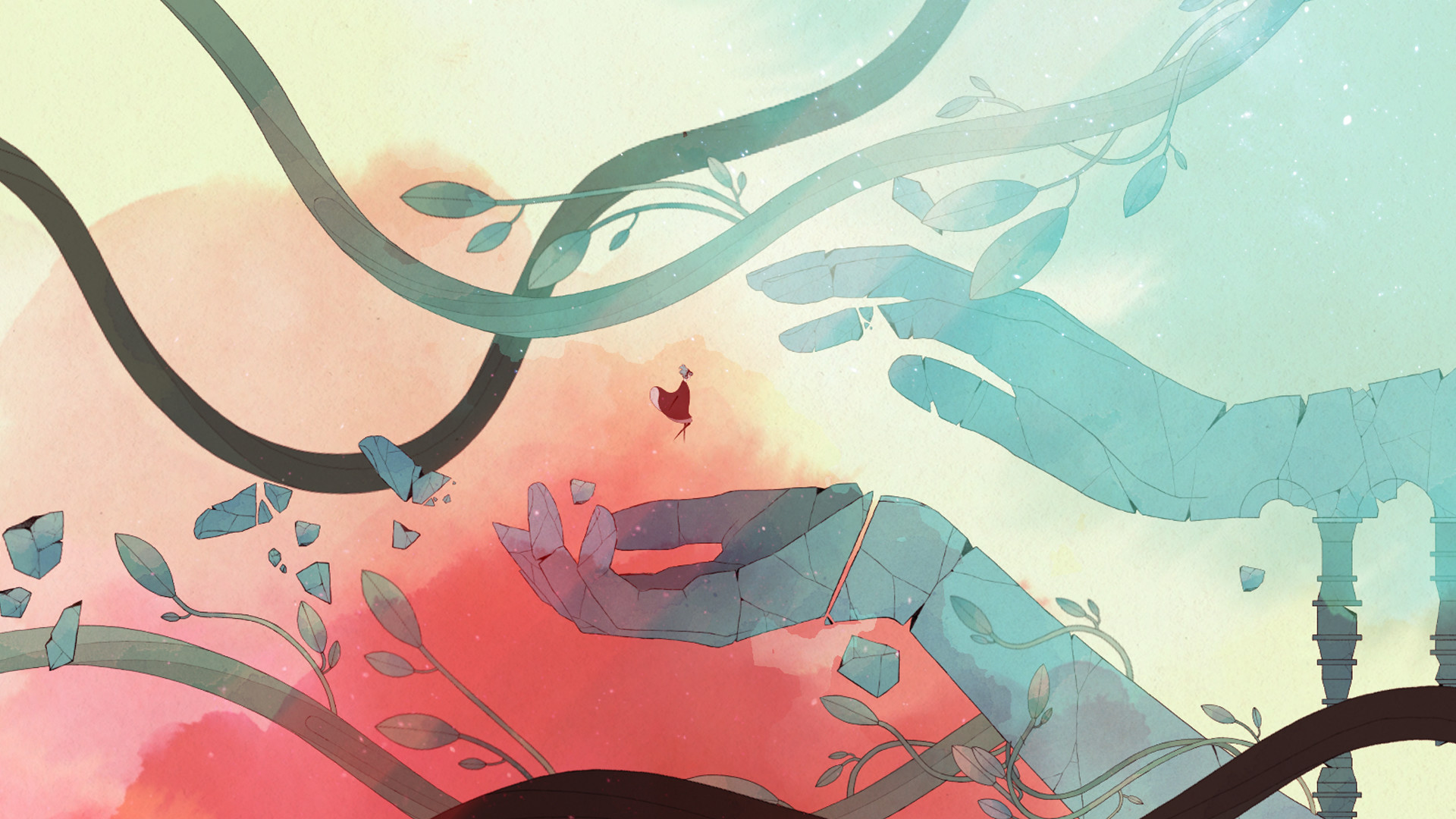
GRIS begins with its heroine falling from the hand of a monumental stone figure into a sparse world drained of colour. She is alone, and the game leaves the painful experience behind her deliberately unnamed; instead, the journey expresses her changing state through places, movement, sound, and the gradual return of colour. The world is not presented as a conventional map with towns, dialogue, or a cast of speaking characters. It is a series of connected environments that shift in shape and mood as Gris continues onward. Shadowy forms sometimes gather into threats or monumental set pieces, but the game’s focus is on moving through them and understanding their visual role rather than fighting a roster of enemies. Almost no text is used, so the player reads the journey from changes in the landscape and from simple illustrated prompts.
At first, Gris can walk and jump, and the central activity is learning how the environment is arranged. The side-view stages ask the player to cross ledges, time jumps, and look for routes through structures that may seem like part of the painted scenery. Some passages open into broader spaces where exploring in more than one direction reveals routes and points of interest. The controls remain intentionally limited, but the game gradually makes that small set of actions more expressive by changing what Gris can do with her dress and by introducing new environmental conditions. Small puzzles are interwoven with traversal: rather than stopping for a separate puzzle screen, the player observes a platform, current, switch, or obstacle and tests how movement and newly learned abilities interact with it. There is no combat system built around attacks, health, or defeating ordinary enemies.
The first major change to movement is Gris’s ability to turn her dress into a rigid, block-like form. The added weight lets her resist powerful gusts that would otherwise push her away, and dropping in this form can break fragile floors or objects beneath her. These uses make the ability both defensive and practical: wind becomes something to brace against, while cracked surfaces become possible routes rather than barriers. The transformation is introduced in spaces that show its basic purpose, then returns in combinations with jumping and environmental timing. A small companion creature provides another variation on this idea. Gris can feed it apples knocked from a tree; it then imitates her ground-pound, making that action useful for light puzzles that involve coordinating her movement with its response. These short encounters add interaction without turning the creature into a combat partner or a permanent party member.
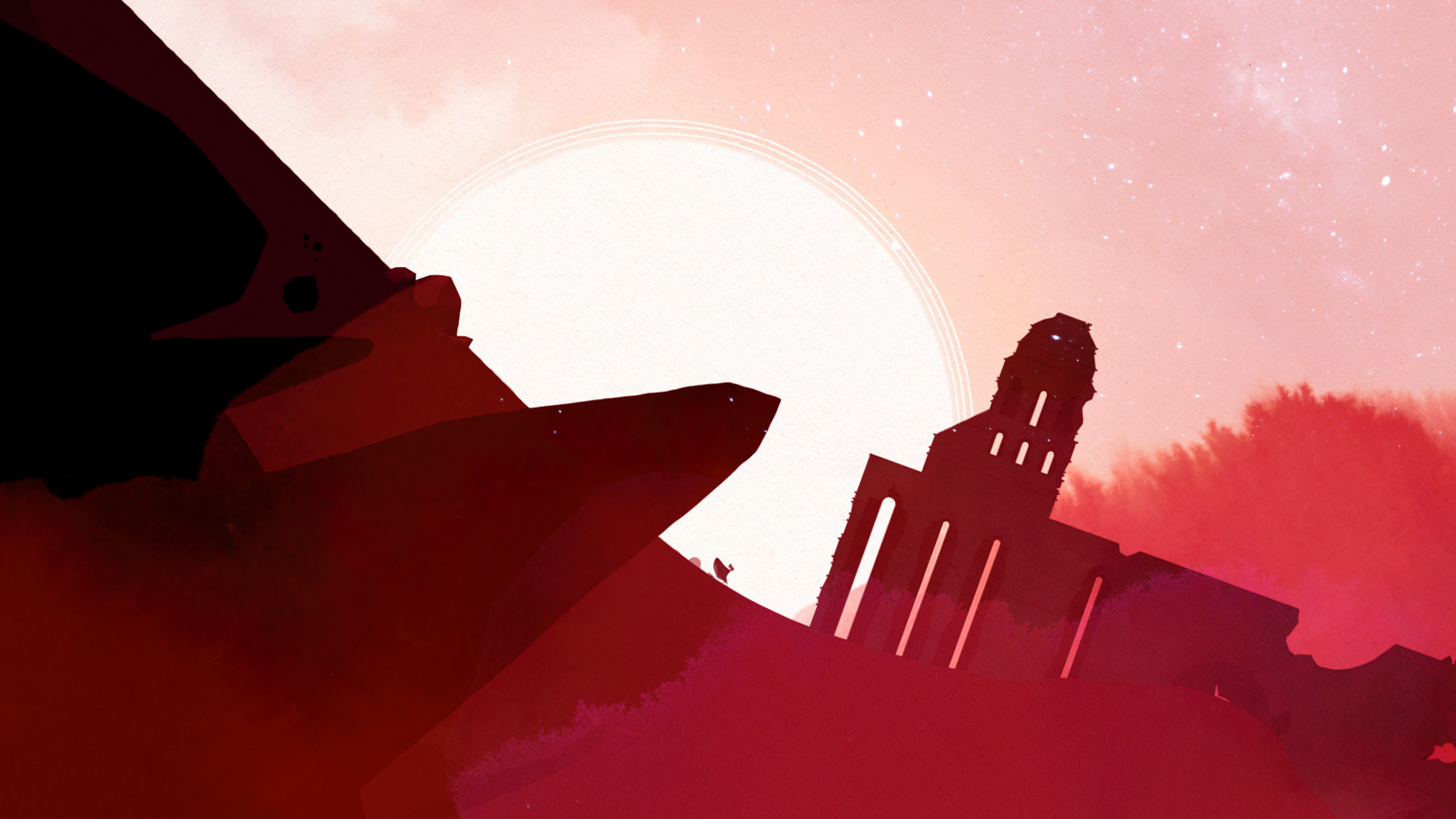
Progress is also measured through glowing white stars. They appear along the route and, as Gris gathers them, trail behind her. In several areas, faint constellation patterns mark a gap or an otherwise impassable route. Bringing enough stars to a pattern completes its outline and turns it into a solid path, allowing Gris to cross to the next section. This gives exploration a clear purpose without relying on written quest markers: the player sees the destination, searches the nearby space for missing fragments, then watches the route assemble. Some stars sit along the obvious path, while others reward looking above or below the main line of travel. The game uses this loop to make progression legible while preserving its quiet presentation. Collecting stars is not a currency shop or character-stat system; they serve the specific role of completing these connective constellations.
As colour returns, the available movement expands and earlier actions gain new contexts. Gris learns to jump again in mid-air, giving her more reach across gaps and making sequences of moving or temporary platforms possible. The game later introduces swimming through submerged spaces, where currents and vertical movement alter the rhythm of navigation; underwater routes continue the same explore-and-traverse structure in a different physical setting. The cloak’s transformations and later abilities are used in gentle puzzles as well as platform sections, so players often have to read the space before deciding whether to jump, brace, descend, or swim. Some areas also play with gravity and with surfaces that appear, disappear, or move in patterns, asking for attention to timing rather than reflex combat. Optional skill-based challenges sit alongside the main route, offering additional tests for players who explore beyond the direct path.
In the later journey, singing becomes another way for Gris to affect the world. Her voice can activate dormant parts of the scenery, bringing vegetation to life and producing platforms or boosts that make new movement possible. This ability changes the relationship between Gris and the environment: earlier progress often depends on adapting to what is already there, while singing lets her prompt certain parts of a space to respond. The end sections bring several learned abilities together, asking the player to recognise which movement tools fit the obstacles in front of her. The game also stages encounters with large dark forms, but they function as cinematic hazards and sequences of movement rather than conventional boss fights with health bars and attack patterns. The result is a gradual shift from tentative movement through an empty landscape toward more confident navigation of a world that now answers Gris in new ways.
The score gives each area a distinct identity alongside its colour and architecture. Berlinist, the group that composed the music, assigned a different musical character to each region and experimented with chords associated with its colours. Quiet passages can leave room for the sounds of movement and surroundings; other sections build in intensity as Gris reaches a new obstacle or the scenery changes. That approach lets a player hear a transition as well as see it. The voice heard when Gris sings also changes the soundscape from within the action: using the ability produces an audible response while awakening parts of the environment. Even without spoken dialogue, the journey has a carefully shaped sequence of sound, silence and movement that accompanies its increasingly varied spaces.
- Developer
- Nomada Studio
- Genre
- Single-player platform adventure with light environmental puzzles