
About Green Hell
Anthropologist Jake Higgins is stranded in the Amazon while searching for his missing wife, Mia. Green Hell combines their story with close survival management: read the signs on Jake's body, balance four nutritional needs, find safe water, craft tools and shelter, and navigate threats that can turn an expedition into a medical emergency.
Green Hell places anthropologist Jake Higgins in the Amazon rainforest, where he is searching for Mia, his wife, after she disappears while conducting research there. Their relationship and the circumstances that brought them into the jungle frame a first-person survival story: Jake must make sense of a remote environment while staying alive long enough to continue the search. Human traces in the forest and dangers beyond hunger or exposure gradually connect his surroundings to the history he shares with Mia. The story begins with that search and the immediate challenge of surviving in an unfamiliar place, leaving its later revelations to unfold during play.
Survival begins with a set of needs that move independently. Jake’s watch helps track hydration and three food nutrients—proteins, fats and carbohydrates—so a meal that fills one need may leave another low. Fruit, nuts and animal foods contribute in different ways, while water gathered from the jungle may need treatment before it is safe. Dirty or unsafe water can bring parasites, and food can cause illness if handled poorly or left to spoil. The practical loop is to forage, hunt or fish, cook and carry supplies, then pay attention to what the watch says is missing instead of treating hunger as one bar.
The inspection view makes health problems something to diagnose rather than a single number to refill. Jake can examine his limbs to find leeches, bites, rashes, wounds or other afflictions and use the appropriate item or treatment. A cut that is left open can become infected; an animal bite may require a different response from a leech that can simply be removed. Dirt also matters because it can contaminate food or contribute to infection, so washing is a useful part of returning to camp. The body system connects observation to preparation: bandages, clean water and basic remedies become expedition equipment, not just resources to collect after trouble starts.
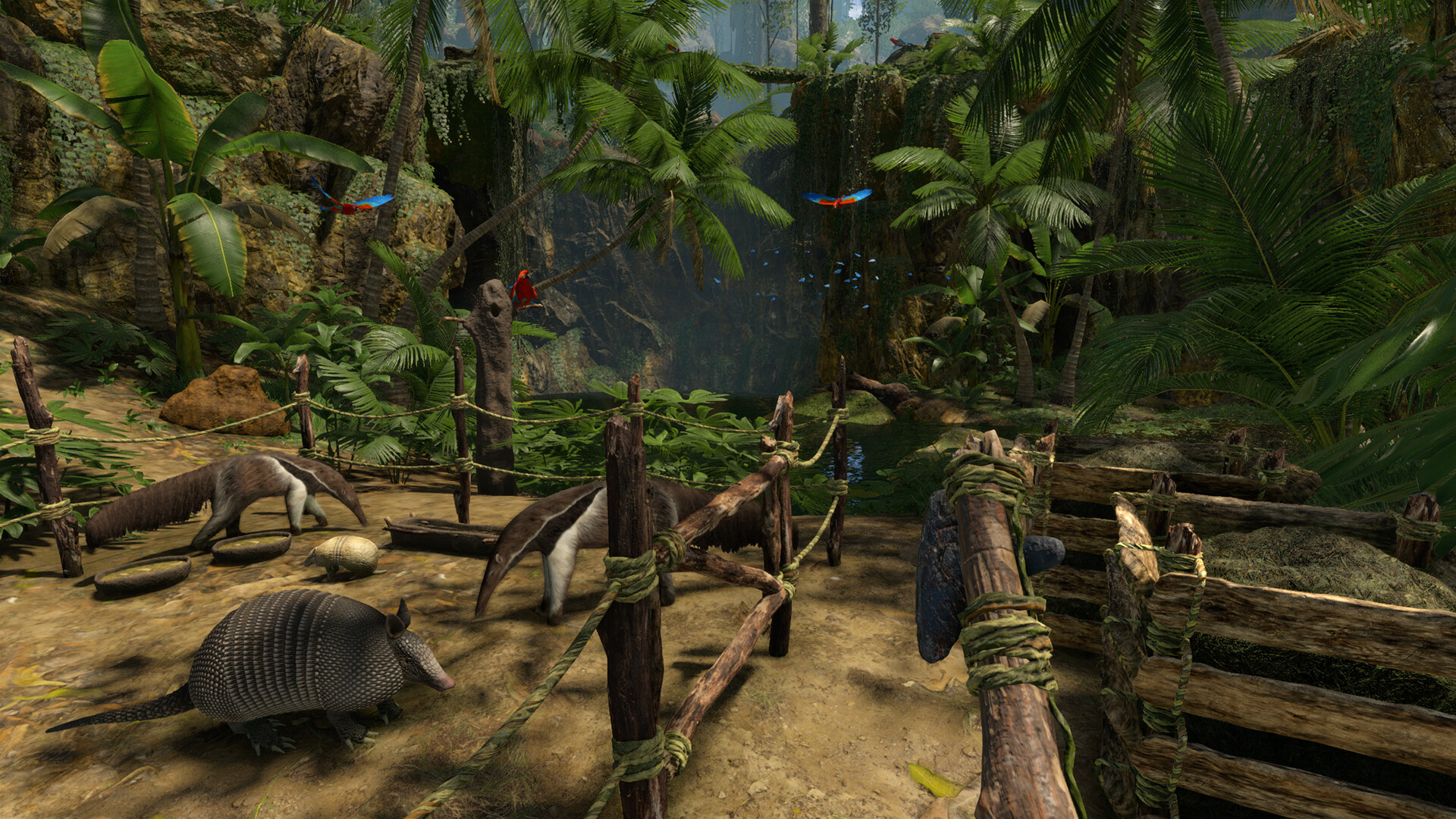
The Amazon also asks players to navigate without relying on a marked route through every task. Jake’s watch provides orientation and location information, while recognizable terrain and man-made landmarks help connect one excursion to the next. Rivers, slopes, dense vegetation and changes in elevation affect where a route can lead, and moving away from camp means deciding what can be carried back. Wood, stones, sticks, rope and plants serve as ingredients for tools and camp structures. A simple shelter or fire can make a place safer to rest and prepare food, but hauling every material through the forest is not practical, so a camp’s position and its nearby supplies influence what is worth building there.
Crafting turns gathered materials into equipment for distinct jobs. Sticks and stones can become cutting tools and weapons; plant fibres provide lashings, while suitable plants can be made into bandages. A blade helps harvest materials, a spear can support hunting, and fire lets the player cook food and prepare water. Recipes are discovered as Jake handles the world and its objects, then assembled from items in his inventory. Buildings use gathered components as well: shelter and storage support a place to sleep, cook and prepare for another trip. The systems reinforce one another because an expedition that produces food may also use tool durability, medical supplies and carrying space.
Mental health is another survival concern, and it is connected to the strain of isolation, illness and harmful choices. The game tracks sanity alongside physical condition; letting it fall can affect what Jake experiences and how stable he remains. Adequate rest, food and care help preserve the capacity to keep travelling, while some ways of coping with hunger or injury have costs of their own. This makes a wound or a bad meal more than a brief interruption: it can create a chain of problems that consumes time and supplies. Taking stock before leaving camp is therefore part of the central play loop, alongside crafting and looking for the next source of food or water.
Building can grow from a place to sleep into a substantial home in the canopy or on the forest floor. Wood, bamboo, stone, mud and rope support structures of different sizes; the current game also lets players furnish, decorate, fortify and light a base. Farming gives food production a longer horizon through water management and plant growth, while some animals can be bred and cared for using resources gathered in the jungle. These additions change what a camp can become without removing its central purpose: a reliable place to recover, prepare supplies and choose the next journey.
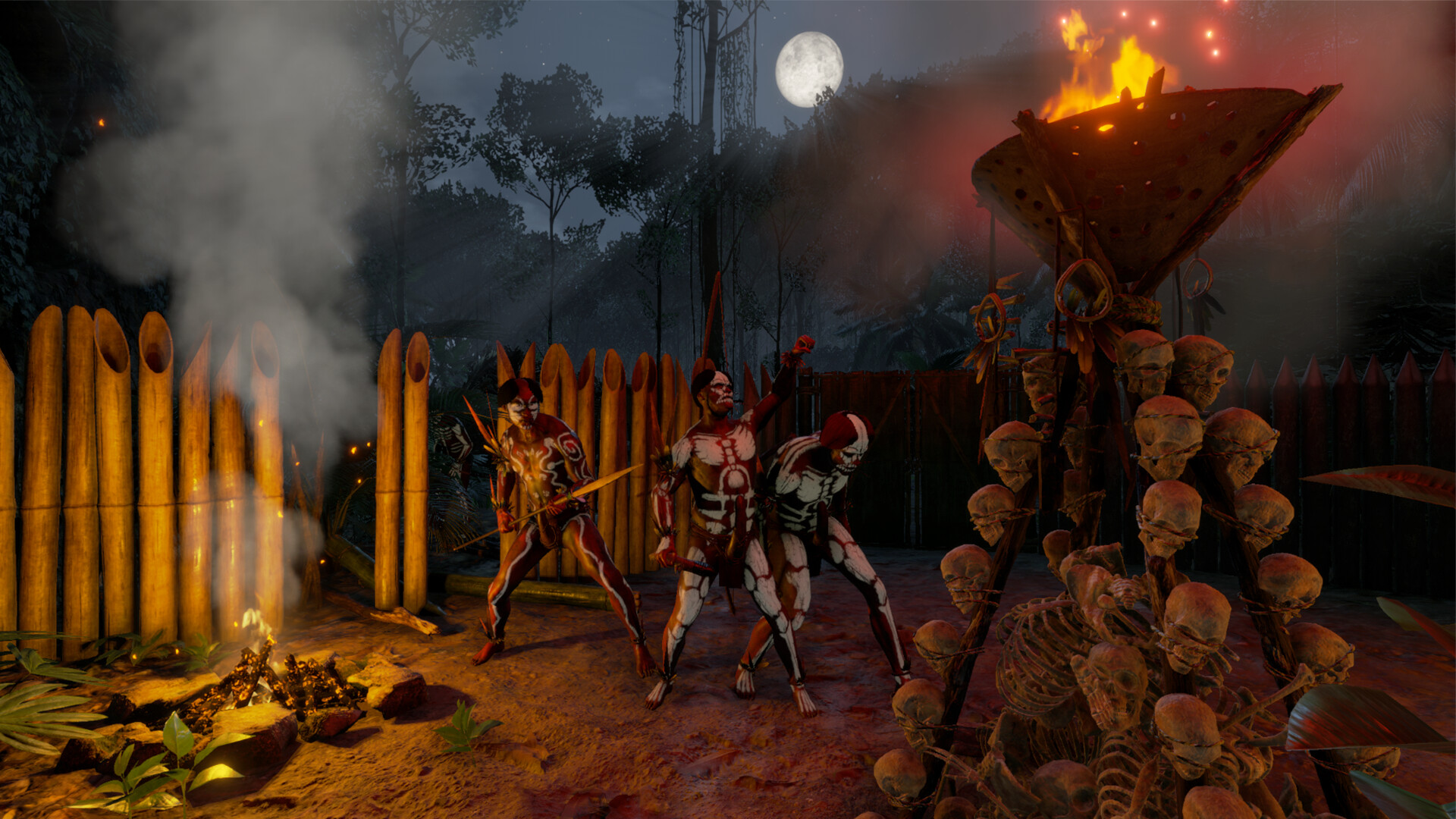
Green Hell separates its story-led campaign from survival-focused play. The main campaign follows Jake's search for Mia, while Spirits of Amazonia is a distinct prequel campaign about events leading up to that story. Endless Mode removes the campaign focus and concentrates on surviving, building and managing the jungle's recurring demands. The game also supports co-operative play. These modes use the same Amazon setting and survival systems to serve different goals: following Jake's story, exploring an earlier part of the setting, or sustaining a camp without a story objective.
- Developer
- Creepy Jar
- Genre
- Open-world survival simulation