
About Granblue Fantasy: Relink
Captain a skyfaring crew in the Zegagrande Skydom, where primal beasts guard floating islands and the Church of Avia draws Lyria into a wider conflict. Build a four-person party from a diverse roster, fight in real time, link attacks into chain bursts, and take on story and co-op quests.
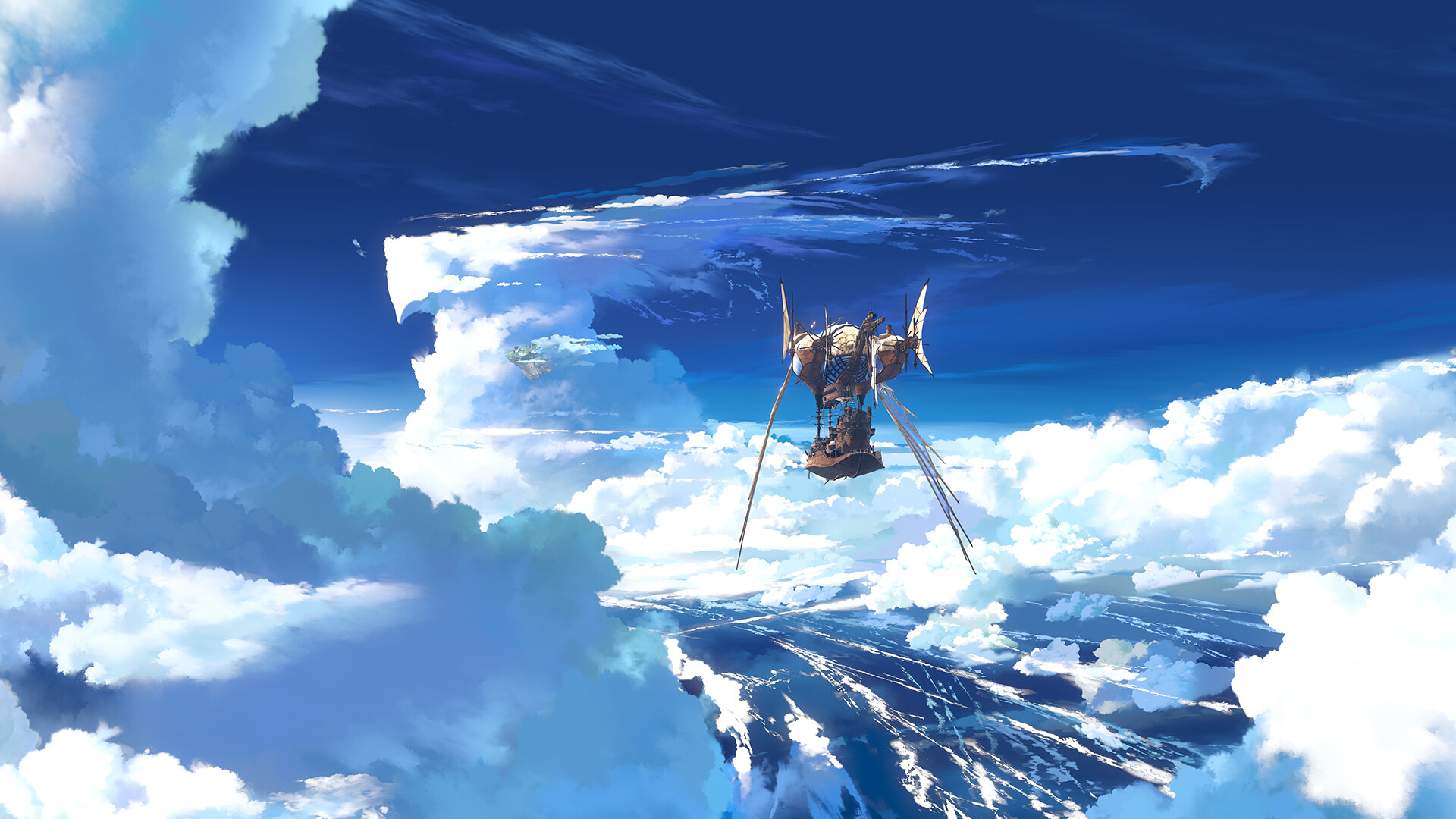
Granblue Fantasy: Relink takes place in the Sky Realm, a vast blue expanse scattered with floating islands. The player takes the role of the Captain, leading a crew that includes Vyrn, a small dragon, and Lyria, a young woman with mysterious powers. Their destination is Estalucia, a legendary island said to lie beyond the end of the skies. The crew’s journey enters the Zegagrande Skydom, where powerful primal beasts protect the islands. Rumors of the secretive Church of Avia point to an intrigue that reaches beyond the skydom and threatens the wider realm. This is a new story in the Granblue Fantasy universe, built around a travelling crew rather than the structure of its original mobile RPG. The Captain’s voyage brings familiar skyfarers together with the unfamiliar places and dangers of Zegagrande. The larger setting remembers an earlier struggle as well: the Astrals once tried to seize control of the Sky Realm, but its people repelled them and entered a period of peace. It balances the promise of reaching a fabled destination with local conflicts and creatures whose presence can change the very landscape around them.
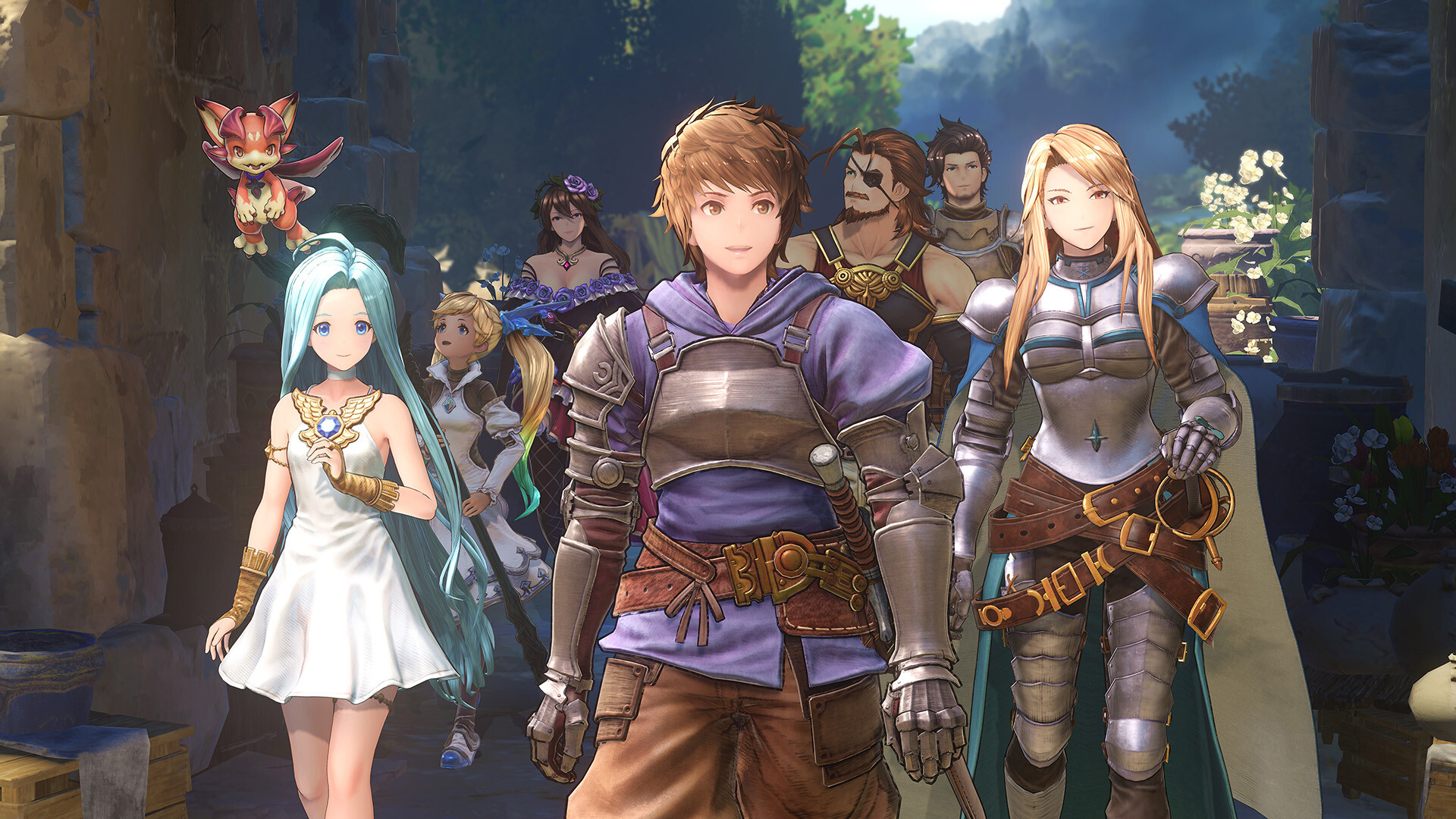
The crew is both the narrative’s anchor and the player’s range of combat options. The Captain travels with Lyria and Vyrn, while a colorful group of allies—including adventurers, rulers and other misfits—joins the journey. The game asks the player to choose four party members from a roster of skyfarers, and each one has a distinct weapon, set of skills and combat style. Katalina is a former knight now sworn to protect Lyria, Rackam pilots the airship Grandcypher, and Io is a young mage; those identities make the traveling crew feel like a functioning company, not only a list of battle options. That choice affects how the group handles the fast, real-time fights: some characters favor quick and nimble movement, while others are built around heavier attacks or ranged approaches. In the story, characters banter while travelling and even during battles, giving the crew a presence outside cutscenes. Fate Episodes provide individual crew backstories, while Lyria’s journal can be opened to read about the peoples, places and history of the Sky Realm. These features help connect the immediate trip through Zegagrande to the larger setting. One unusual companion is Rolan, a man from the western skies whom the crew meets by chance and who travels with them for a time. Among the forces opposing the crew, Id is a mysterious swordsman who stands in the Captain’s way, while Lilith leads the Church of Avia and seeks the ideal land Estalucia. Their aims connect the immediate conflict to the destination that drew the crew into the western skies.
The Zegagrande journey moves through large areas rather than a single seamless open world. The Sky Realm itself is made of floating islands, and its societies include humans, Erunes, Harvins and Draphs. Humans form the largest part of society; many Erunes are known for magical talent, Harvins for business acumen, and Draphs for physical strength and crafts such as smithing. These differences give the towns and settlements more context than simple stops between fights. The setting’s primal beasts also carry cultural weight. Created by the Astrals, many fell into slumber after an ancient war, and their presence influenced local customs; some people regard them as part of nature rather than threats to be subdued. An awakened beast can become a calamity, so encounters sit within a world where communities may disagree about what these powerful beings mean. The explorable areas contain story missions, hidden treasure and optional bosses, while the town quest counter offers more than one hundred missions with their own objectives and side goals. Successful completion grants experience and treasure, and the missions can be taken on alone or online with up to four players. Stickers and emotes provide communication tools during co-op, letting players react to one another while working toward the objective. The quest board thus supports both short repeatable challenges for character growth and shared sessions where the party can coordinate without relying on ordinary dialogue.
Combat happens in real time with the active party of four acting together against enemies. Every character has a basic approach shaped by their weapon and combat style, as well as special skills that can deal damage, weaken foes, strengthen allies or restore health. Up to four skills can be assigned to a character, giving the player a chance to choose a loadout suited to the team. Attacks fill an enemy’s stun gauge; once full, it opens a chance for a simultaneous Link Attack by the party. Certain actions also raise the party’s link level. At 100%, a successful Link Attack triggers Link Time, which temporarily slows enemy actions and grants beneficial status effects. Enemies can apply status effects, force the crew apart and disrupt the links that make the strongest coordinated attacks possible. The player must balance direct attacks with skills that restore or strengthen allies, while looking for a chance to bring the party together again. A linked strike therefore depends on how the team handles pressure during the encounter, not only on filling a gauge. Skybound Arts are powerful attacks on their own; chaining the Arts of other party members produces a damaging aftershock called a Chain Burst. The player can use that burst to concentrate fire on a dominant threat or hit a swarm of enemies. These linked systems reward both direct control of one character and attention to timing across the whole four-person team.
Character growth is organized around individual talent trees, weapons and sigils. Assigned abilities can complement one another across the party, so preparation considers how skills work together alongside each fighter’s own development. Unlocking abilities adds new actions to a crew member’s repertoire, while weapons and sigils customize that character’s capabilities through equipment choices. Each member develops along a personal track, so building a roster means deciding which characters to invest in and what roles they should fill. A player might focus one fighter on support while equipping another for direct damage, then use the remaining slots to round out the group. Quest rewards provide experience and treasure, giving optional challenges a practical link to later encounters and gear improvements. Assist and Full Assist provide different levels of input support: Assist simplifies combos and attacks, while Full Assist allows characters to attack and perform combos automatically. These settings change how directly the player executes the action without changing the party-based structure. Character-specific development, equipment decisions and input options therefore shape separate parts of preparation: who to develop, how to equip them and how much direct control to use in battle. A preferred roster can be tuned for a chosen approach while alternatives remain available for other fights.
Cygames carries the franchise’s two-dimensional artwork into three-dimensional scenes through painterly lighting and shading, with environments designed around crafted landscapes and objects rather than photorealism. The range runs from airship decks to towns and broad hillsides, while character models, weapons and facial expressions keep the travelling crew readable in motion. This art direction links quiet conversations on the Grandcypher to large encounters across the floating islands without changing the world’s illustrated identity. The base game is available on Windows, PlayStation 4 and PlayStation 5. Endless Ragnarok is a separate upgrade and bundle with additional content beyond the base adventure.
- Developer
- Cygames, Inc.
- Genre
- Action role-playing game