
About Gothic II: Gold Edition
Gothic II: Gold Edition follows the former prisoner known as the Nameless Hero after the Barrier falls. Across Khorinis, the Valley of Mines and the Night of the Raven expansion’s additional world, the player takes quests, chooses a guild, trains combat or magic, and confronts a growing threat to the island.
After the events of Gothic, the Nameless Hero is rescued by the demon summoner Xardas and sent toward Khorinis. The magical Barrier around the penal Colony has fallen, but the island has not returned to normal: former prisoners and other bandits trouble the roads, and the Paladins sent to investigate the Valley of Mines have not reported back. Xardas directs the Hero to find the Paladins and recover the Eye of Innos, an amulet tied to the threat gathering around the island. Gothic II moves the setting beyond the first game’s enclosed Colony to Khorinis itself, where a walled port town, farms, a monastery, settlements and the Valley of Mines connect into a larger journey. The player starts with the Hero weakened after his earlier ordeal, so the immediate work is to find help, useful equipment and a way into the city before pursuing the larger crisis.
Khorinis is a working town with guarded districts, merchants, craftsmen and people whose routines shape when and how the player can approach them. The route into the city is not a single fixed conversation: the surrounding farms and roads offer work, goods and contacts that can help establish access. Inside, errands can lead toward the upper quarter and Lord Hagen, commander of the Paladins, while conversations with townspeople provide smaller jobs and information. The farms have their own disputes over taxes and protection, and the roads between them expose the player to bandits and creatures. A task may therefore be a way to earn gold or experience, a way to gain a person’s trust, or a step toward an institution that controls further progress. The open structure lets the player follow several local threads while the main search for the Eye of Innos remains in view.
During the first chapter, the Hero joins one of three principal guild paths, and that decision affects character development and the story. Service in the town militia can lead to the Paladins; the mercenaries at Onar’s farm can advance into Dragon Hunters; and a novice at the monastery can become a Fire Mage. These paths have distinct access, teachers and strengths. Paladins combine weapon training with access to special magic runes, mercenaries are oriented toward weapons and forging, and mages develop spell use and rune-making. Other organisations and local groups remain part of the world, but they are different from the three main guild careers. Guild membership also shapes how some residents respond and which skills certain teachers can offer, giving the player’s early errands a practical connection to the longer character build.
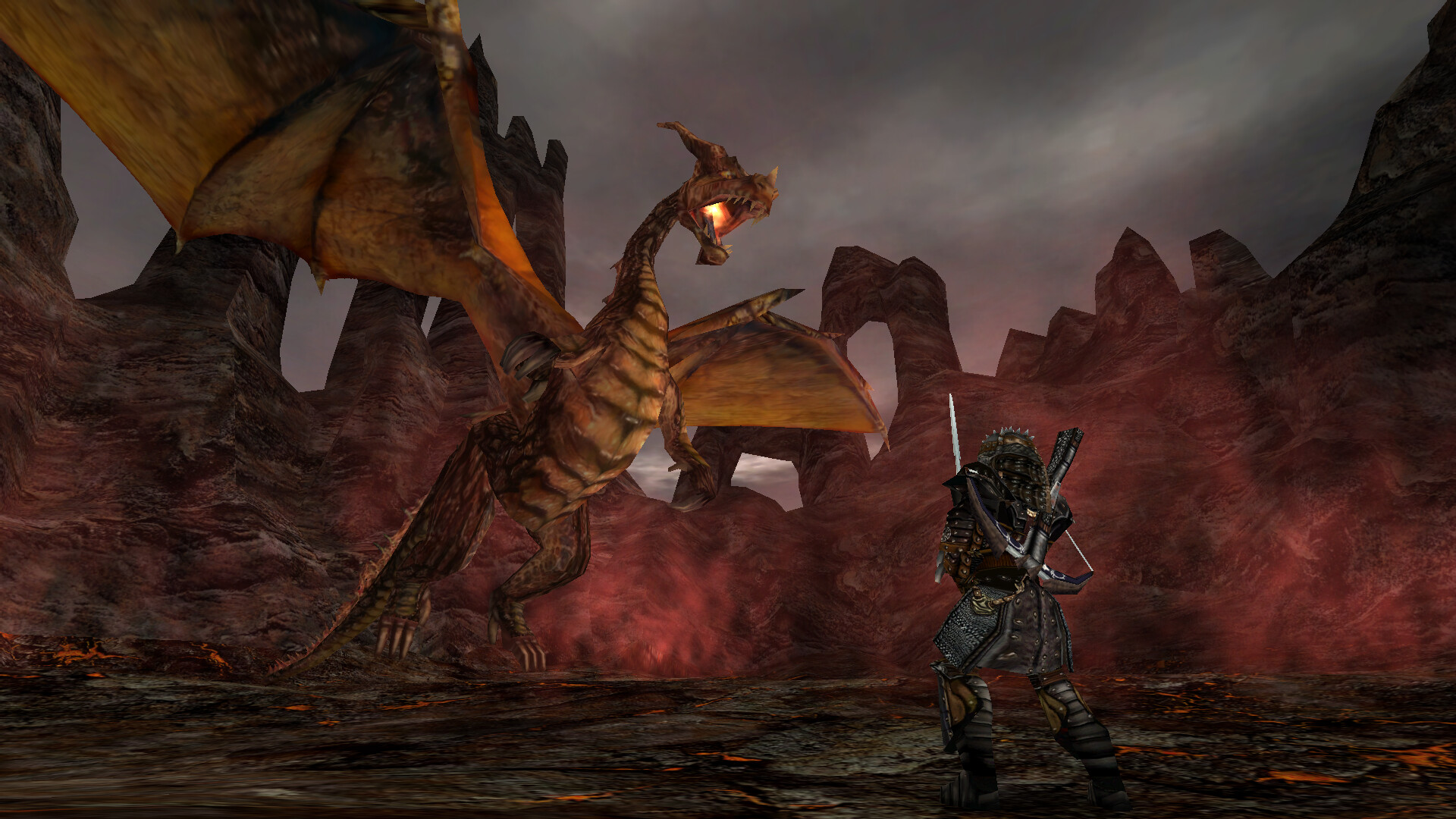
Experience from defeated monsters and solved quests raises the Hero’s level and awards learning points. These points can be spent with teachers to improve attributes or learn talents, and guild membership may affect who can teach a skill or how much training costs. Strength affects melee damage and the weapons the Hero can use; dexterity supports bows, crossbows and thief skills; mana is needed for spells. Combat talents in one-handed, two-handed and ranged weapons improve the chance of landing a powerful strike as the character’s training grows. The system rewards focus: the player chooses how to develop the Hero rather than selecting a fixed class before play, and guild-specific services add to that choice. Encounters can be delayed while the Hero gains experience or better equipment, since the world contains threats that are dangerous early in the journey.
Preparation extends beyond combat training. A character who learns blacksmithing can use raw materials and a forge to make weapons, while alchemy combines ingredients at a table to produce potions. Hunters can learn to collect useful trophies from creatures, and cooking raw meat over a stove restores more health than eating it uncooked. Thief skills add sneaking, lockpicking and pickpocketing options, with dexterity affecting lock and theft outcomes. Equipment, food, plants and monster drops can be sold, kept for crafting or used to improve the Hero, so exploration feeds both character progression and the economy. Non-player characters react to actions such as theft, threats and attacks, and those reactions can change the available routes through a situation. The result is a loop of exploring, taking local work, collecting resources, training with specialists and returning to harder encounters with better preparation.
Gothic II: Gold Edition includes Night of the Raven, whose story is integrated alongside the main campaign rather than presented as a separate replacement game. The expansion adds a new world beyond the mountains and a route to reach it with help from the Ring of Water. The Water Mages, including Vatras’s fellow mages, play a larger role there; the Ring is an organisation that assists them, while the pirates are a separate group based along Khorinis’s coast. The expansion also adds new monsters and spells, including magic from Adanos and Beliar, and further material connected to the island’s past. This additional strand sits within the same broader adventure, alongside travel through Khorinis and the Valley of Mines. Gold Edition therefore joins the original Gothic II campaign and the added Night of the Raven content in one edition, with the expansion’s story running in parallel to the normal events.
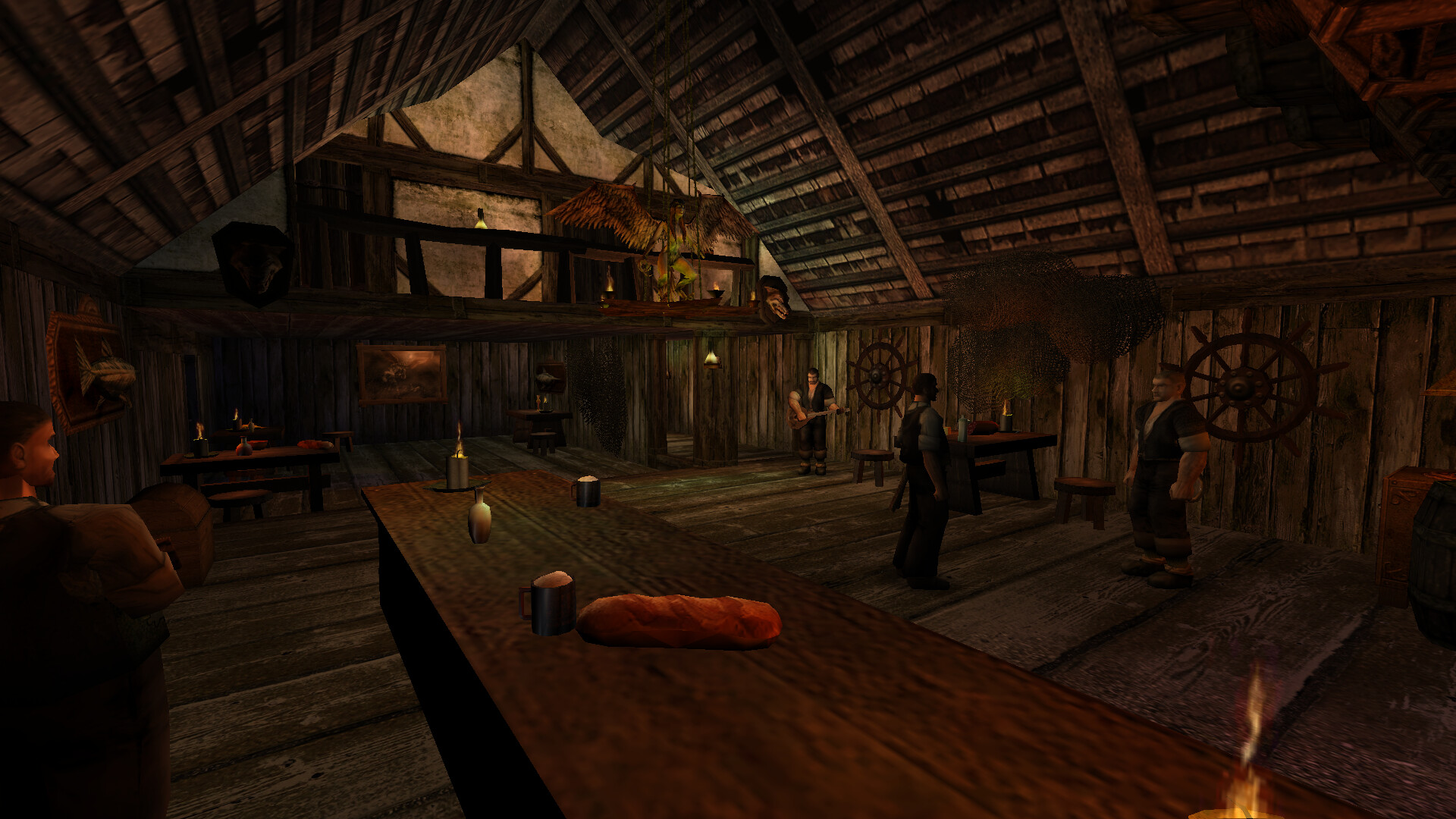
The Valley of Mines gives the Paladins’ investigation a distinct setting from the farms and city: it is the former penal territory, now damaged by the danger that followed the Barrier’s collapse. The player travels through its routes, meets survivors and Paladin patrols, and looks for evidence that can answer what happened there. Across each region, the same basic actions—speaking with people, searching for supplies, learning from trainers, and choosing which encounters to face—connect the story to the role-playing systems. The Hero’s guild and skill path shape how he handles these problems, whether through weapons, ranged attacks or magic. With its linked campaigns, local errands, guild progression and return to the Valley of Mines, the Gold Edition follows the aftermath of the first game while expanding the places and groups involved in the island’s conflict.
- Developer
- Piranha Bytes
- Genre
- Action, RPG