
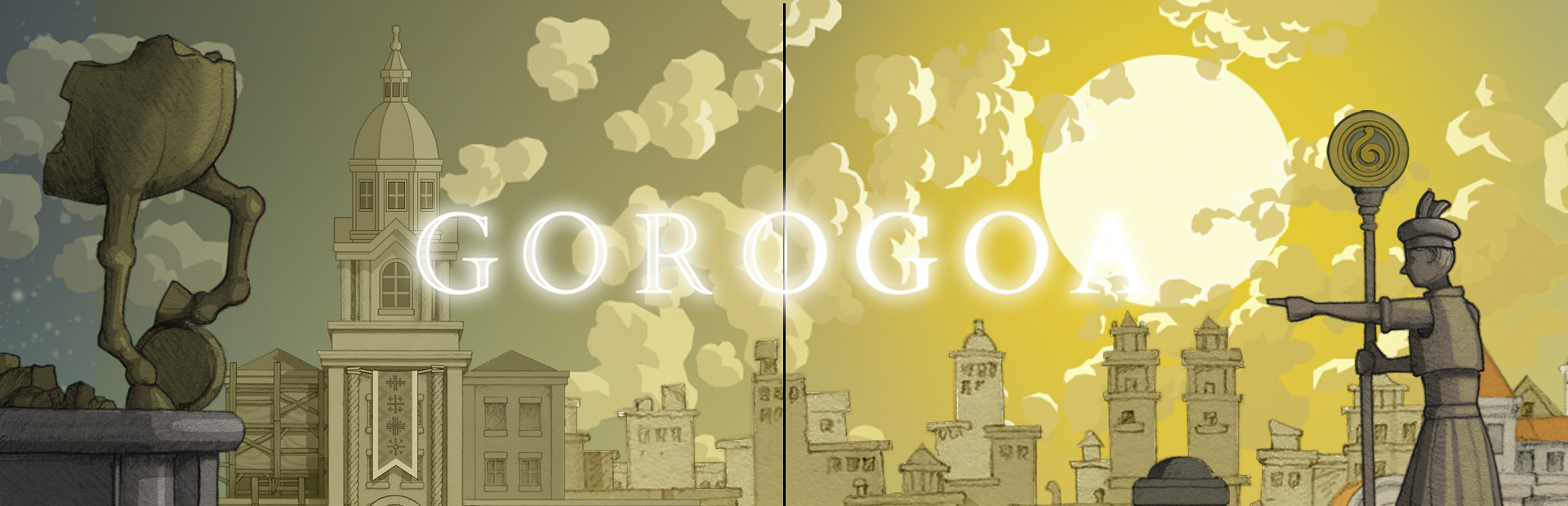
About Gorogoa
A boy sets out to find a mysterious, dragon-like creature in Gorogoa, a wordless puzzle adventure built from hand-drawn images. Players arrange, layer, separate and zoom through illustrated panels, discovering paths where visual details align and images connect. The journey unfolds through shifts in scale and perspective, with its story conveyed through scenes rather than explanatory dialogue.
Gorogoa follows a boy whose attention is caught by a mysterious dragon-like creature. His pursuit becomes a sequence of visual puzzles and changing scenes, with no conventional dialogue explaining the world or spelling out the creature’s significance. The narrative gives the player a clear immediate impulse—follow the creature—while leaving much of its symbolic meaning open. The boy’s journey is presented through images that shift from domestic interiors to distant places and unfamiliar objects. The same visual elements can recur in transformed contexts, so the story advances through recognition and change rather than a written quest log. As the boy moves through the illustrated world, each solved arrangement can create both a new route and a new narrative image. The game’s quiet presentation asks the player to read the scenes without requiring a fixed interpretation of every motif. It is a compact, wordless adventure in which looking closely and changing what is seen are the main ways of following the boy’s pursuit.
The puzzle interface is a two-by-two arrangement of illustrated panels. Each panel can hold a scene, a detail within a scene, or an image moved into relation with another. Players select and reposition panels, zoom in or out, and separate layers inside an illustration. The pictures behave like spaces with depth: their borders can be moved, their contents can be enlarged, and two images can be composed so that a figure or object continues across them. This means the player works with context rather than a separate inventory. An item is useful because of where it appears and what it can connect to, not because it has been stored for later use. The four positions keep the immediate puzzle field compact, while the layered illustrations allow details to be hidden inside a larger image. A panel can therefore change from a view of a complete scene into a close-up of a small route or object. The game’s central skill is reading those visual relationships and testing how they change when the composition is rearranged.
The panels support several distinct kinds of visual reasoning. Sometimes an edge or opening must line up with another image so that a path appears continuous. In other moments, the player has to recognize that a familiar object can take on a different role in a new setting. Clock hands can become a compass on a table, while a wall painting can become a garden statue when its layer is moved. Those transformations show how the game uses likeness and context together: the player is not matching two identical pictures but finding an image relationship that makes sense within the scene. Placement can also make separate events interact. A rooftop doorway, for example, can be layered over the image of the boy in a closet so that he can pass between the two settings. These solutions are legible through what changes on screen. The boy moves, a scene opens, or the relation between images becomes a route. That feedback lets the player test a hypothesis without needing a written explanation of the underlying rule.
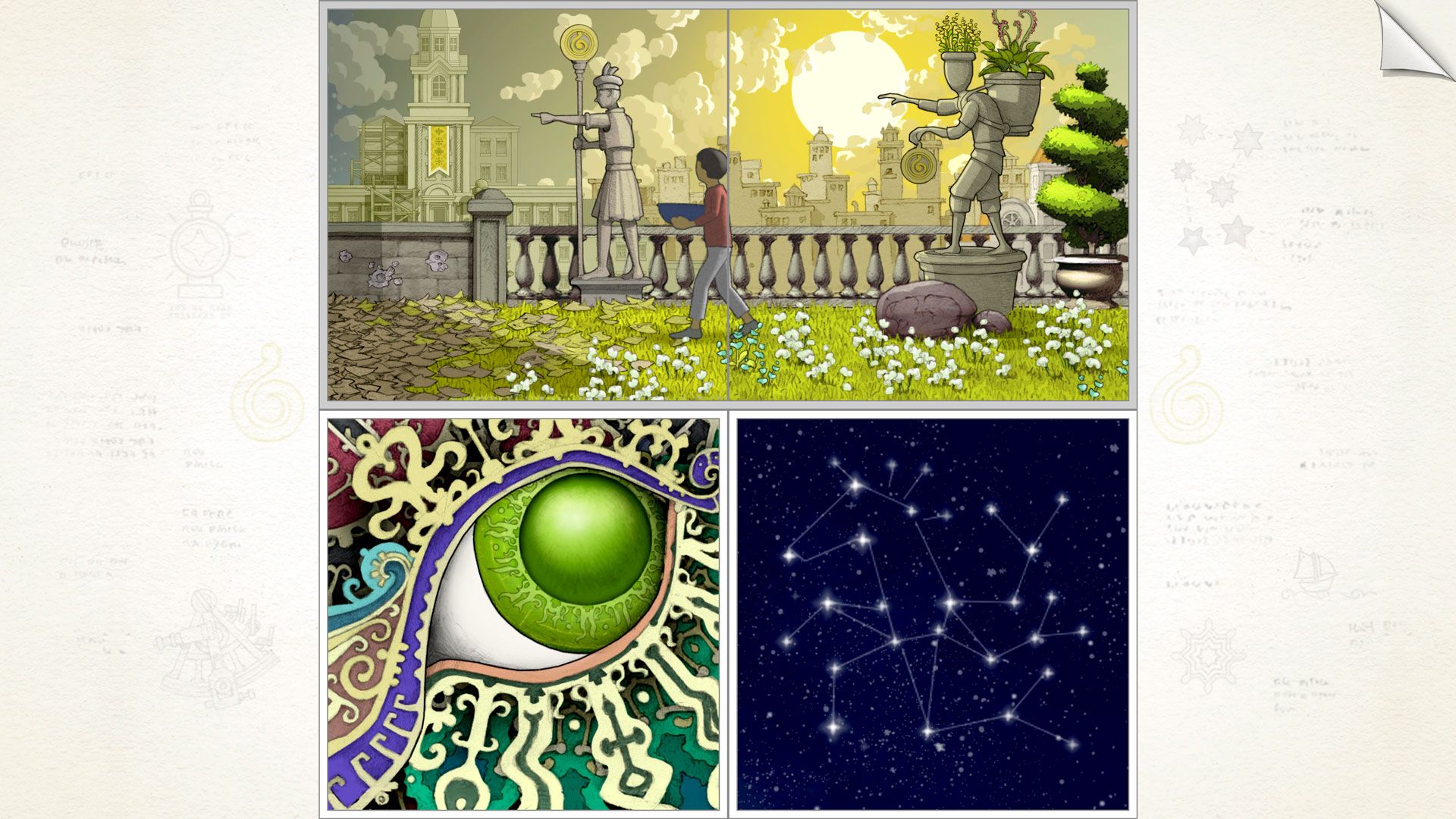
Zooming and layer separation make inspection part of the puzzle rather than a pause between actions. An illustration may conceal another image beneath its visible surface; pulling a layer away changes what the panel contains. Zooming can reveal a smaller setting inside a larger one, so what looked like background can become an area with its own details. The player can move between scales by interacting directly with the drawing, without navigating a conventional map. A clock face, a doorway or a painting may first read as part of the composition and later function as a connector or object in another scene. This gives the player a reason to revisit an image after learning something new elsewhere. The useful detail might sit at the frame’s edge, behind another layer, or within an object that seemed incidental. Discovery depends on careful looking and deliberate manipulation: enlarge the relevant area, separate its surface, then consider how the revealed image could relate to the other panels. The game’s illustrations serve as both the scenes to understand and the material from which new scenes are assembled.
The game introduces its rules through visual consequences instead of written instructions. A line, opening, repeated shape or moving figure may suggest how two panels could work together. The player can try a placement, observe whether the boy’s movement continues, and revise the arrangement if it does not. Some puzzles depend on several changes in sequence: first finding a useful detail, then changing its scale or context, then placing it where it completes a larger composition. A successful sequence can require recognizing a useful detail, revealing it at the right scale, and then placing it where it completes a larger composition. The challenge is interpretive as well as spatial, because players must decide which visual similarities matter. The four-panel layout limits the active field, but concealed layers mean that not every possibility is visible at once. The screen can highlight interactive items, but that cue only narrows attention; it does not identify which layers or panel arrangement will complete a scene. There is no conventional hint menu to explain a solution, so getting stuck means returning to the images and testing another relationship. The game varies its puzzles by recombining these actions rather than adding combat, timed sequences or a character-stat system.
The hand-drawn presentation carries information that another game might put into dialogue or interface text. Fine lines and carefully composed objects encourage close inspection, while changes in scale let an ordinary detail open onto a new setting. The panel borders are active parts of the image: moving them can reveal a layer, alter a scene’s context or make two illustrations form one continuous composition. Those changes advance the story as well as the puzzle. The boy’s pursuit of the dragon-like creature remains the through-line, but the game leaves its broader imagery open to interpretation. Sound and music accompany the quiet pace, while visible clues do most of the work of directing attention. There are no spoken exchanges that explain every transition. Instead, the player follows what the boy does and notices how the drawings respond. This visual approach binds presentation to interaction: the illustrations are not decoration over a separate puzzle system, but the objects the player examines, reshapes and connects in order to move the journey forward.
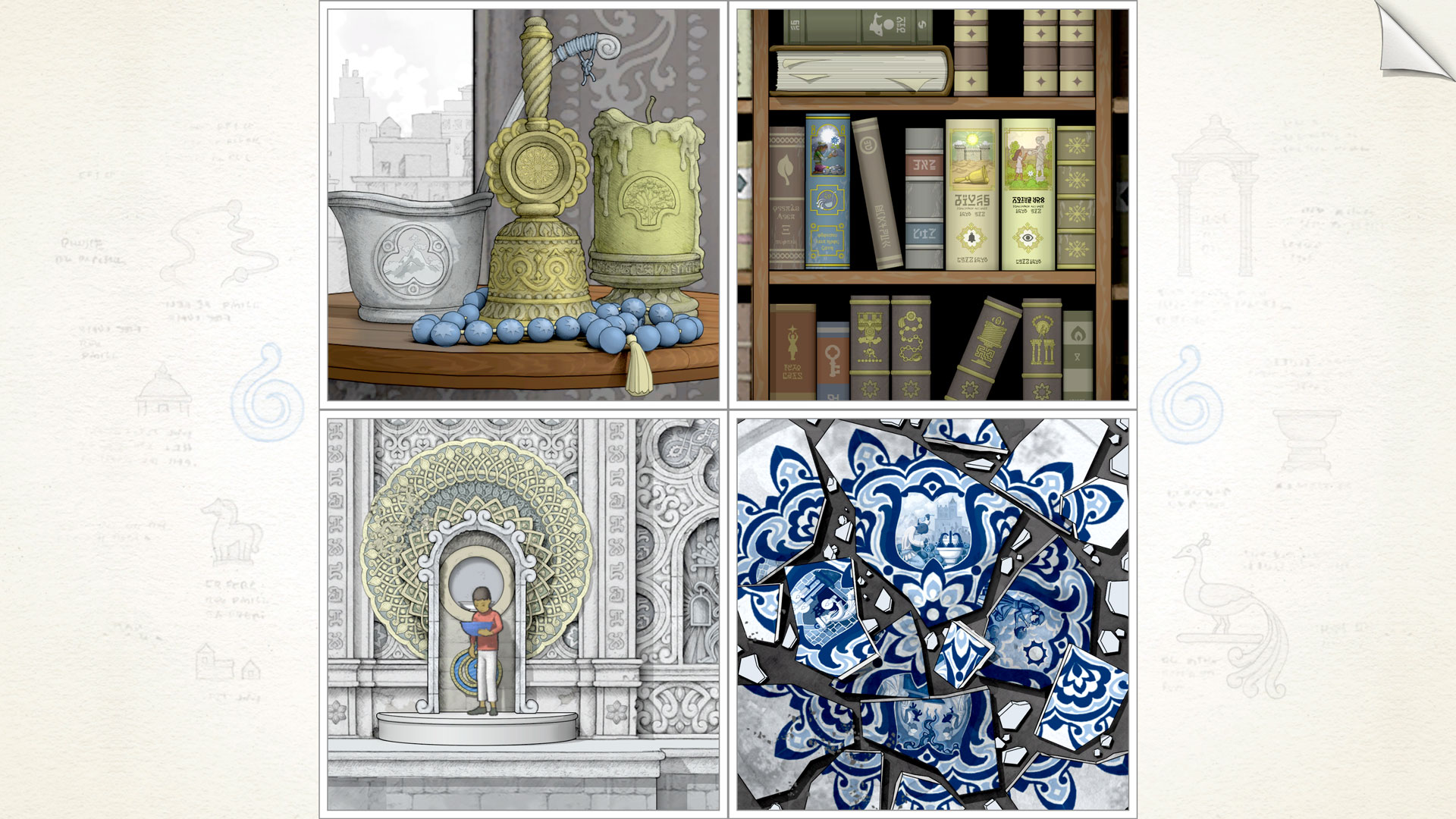
Gorogoa’s progression is a sequence of illustrated problems connected by the boy’s pursuit of the creature. The player gradually learns to look for layers within an image, changes of scale, and visual details that can connect separate panels. Those habits return in different combinations, so a solution may depend on recognizing a function that was not apparent when an object first appeared. An image connection can do double work by creating a route for the boy while moving the story into another scene. There is no equipment collection or combat repertoire to build; forward movement comes from understanding how the images can be rearranged. The narrative remains largely wordless, and its recurring imagery is open to interpretation. What remains concrete is the player’s activity: inspect the panels, reveal or reposition a detail, and see whether the new composition lets the boy continue. The game’s central idea persists through its changing scenes without requiring a fixed explanation of every symbol.
- Developer
- Buried Signal (Jason Roberts); Steam credits Buried Signal
- Genre
- Illustrated puzzle adventure