
About Gone Home
On a stormy night in 1995, Kaitlin Greenbriar returns from a year abroad to find her family’s new home empty. Explore the house, open doors and drawers, and examine belongings, notes and recordings to piece together what has happened to the Greenbriar family.
Gone Home begins on a stormy night in 1995, as Kaitlin Greenbriar arrives at her family’s new house after a year abroad. She expects someone to be there, but the house is empty. A note at the entrance asks her not to investigate what happened, leaving the player with an immediate mystery and a specific place to search. The house is a large residence belonging to the Greenbriar family, and the story is told through its rooms and the objects left behind. It is not a haunted-house game built around a threat stalking Kaitlin. There are no enemies to fight and no combat. The tension comes from not knowing where the family members are or why they are absent, while the storm outside and the darkness inside make the familiar setting feel unsettled. The investigation gradually reveals that an apparently ordinary home contains several overlapping personal stories, each tied to the people who lived there.
Exploration is first-person and largely player-directed. Doors and drawers can be opened, many objects can be picked up and examined, and notes, letters, recordings and other items provide information about the people who lived in the house. Each room contributes a different kind of evidence: possessions reflect routines and interests, while written or recorded messages preserve conversations that Kaitlin did not witness. The player decides where to look and how thoroughly to search, rather than following a sequence of combat encounters or puzzle rooms. A locked area or a discovered key can direct attention toward another part of the house, but these simple gates serve the exploration and do not form a complex puzzle system. The family’s story is embedded in mundane details, from what they keep to what they communicate. Reading and listening are therefore as important as movement, and a detail that first appears decorative may become meaningful when considered alongside evidence found elsewhere.
The Greenbriar house itself is the game’s central environment. It combines family living areas with storage rooms, offices, bedrooms and other spaces that reflect how the home has been used and altered. As Kaitlin moves through it, the building’s layout establishes a sense of domestic geography: private rooms, shared spaces and tucked-away corners each offer different perspectives on the household. The setting evokes the mid-1990s through its objects, media and everyday technology, while rain and thunder provide a constant presence beyond the windows. The house does not merely contain clues; its arrangement helps show how family members occupied overlapping but distinct parts of their lives. A half-finished task or an item left in an unusual place can imply a recent departure without spelling out its significance. Returning to familiar areas with new information may change how earlier discoveries read, encouraging the player to build an account across the whole house rather than treating each room as an isolated scene.
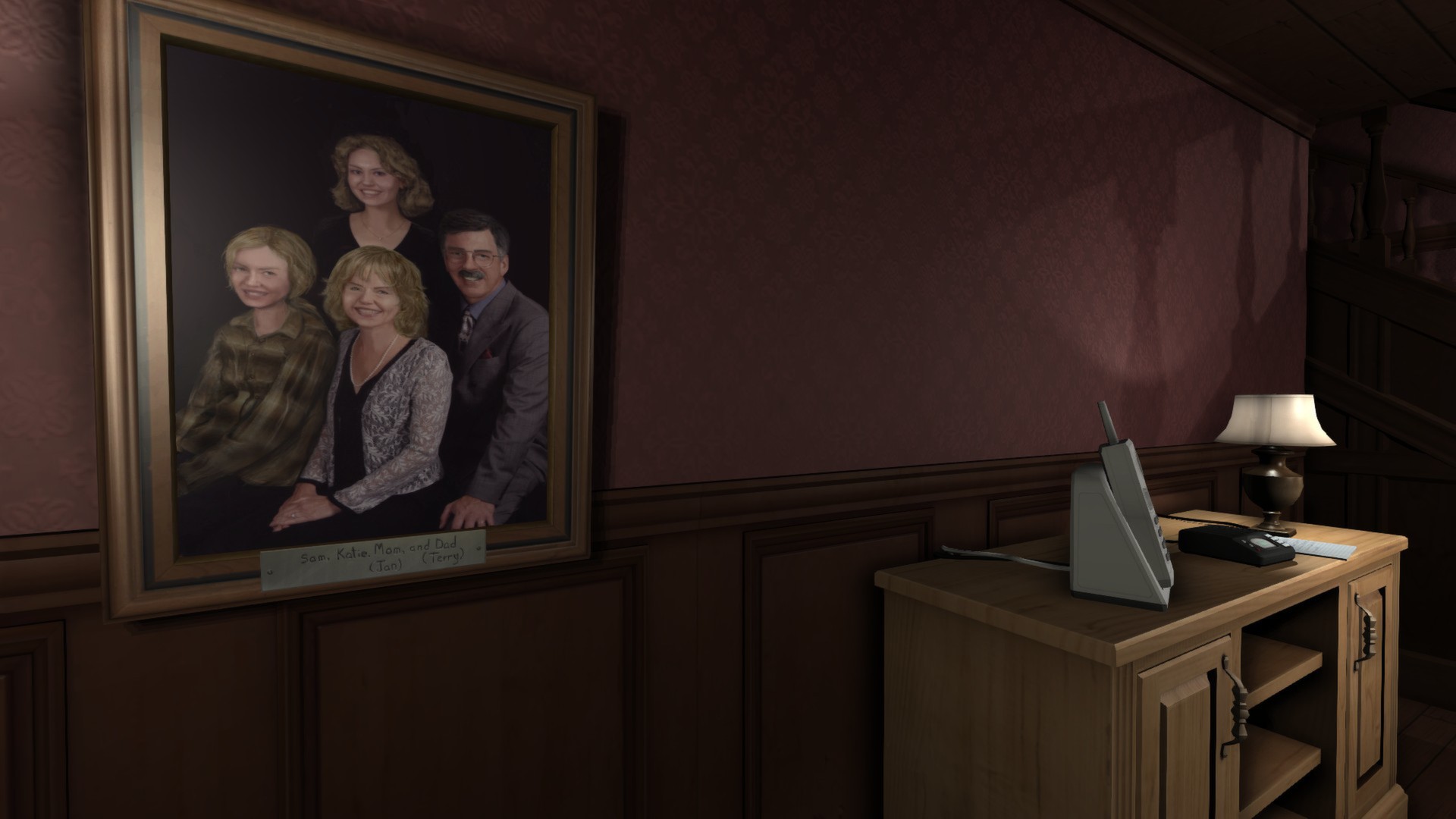
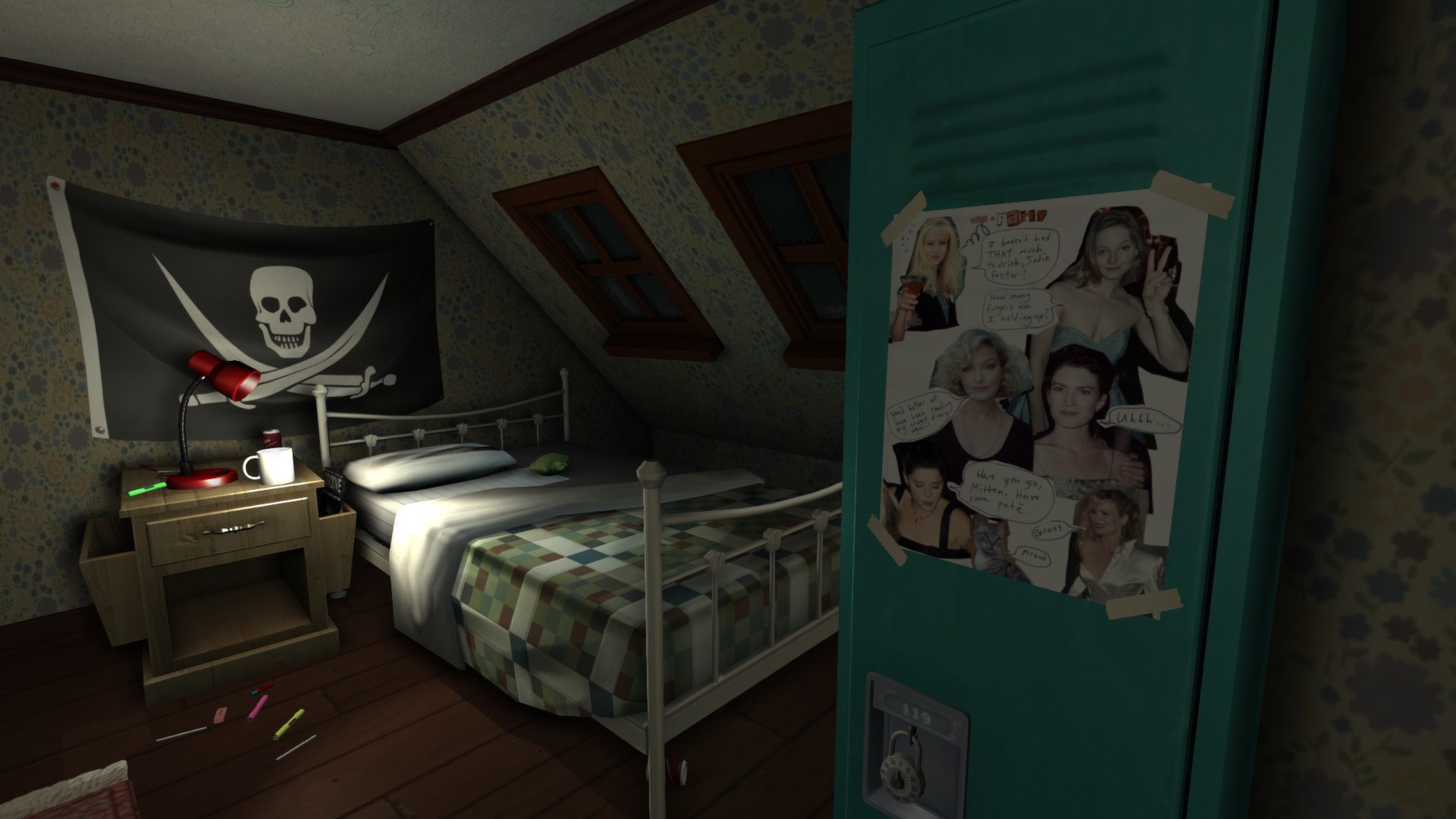
The story concerns Kaitlin, her parents Terry and Janice, and her younger sister Samantha. Kaitlin knows these people, but she has been away and must reconstruct what has changed during her absence. Documents and audio diaries allow other perspectives to emerge, including the concerns, conflicts and decisions that family members have not directly explained to her. The game is especially attentive to Samantha’s experiences as a teenager: her interests, friendships and developing identity are conveyed through personal writing and the things she has chosen to keep. The family’s circumstances are not presented through a single explanatory conversation. Instead, the player pieces together several strands, moving between what is known about the parents’ lives and what becomes apparent about Samantha. That structure makes the investigation personal: Kaitlin is not searching an unknown building for a generic answer, but a family home for an understanding of people she cares about. The mystery’s resolution focuses on relationships and changes rather than on a supernatural cause.
Gone Home describes itself as an exploration simulator and explicitly avoids combat and conventional puzzles. Its central loop is to investigate: enter a room, inspect its objects, read a document or listen to a recording, then use what was learned to decide what to examine next. Optional discoveries can add texture and context, while key finds open access to further portions of the home. This makes the pace flexible, since players can search carefully or move more directly through the main route. A behind-the-scenes commentary mode is also available, with commentary from developers, musicians and voice talent that can be accessed through the game’s modifiers. It is an additional feature separate from the story investigation. The game’s sound design, including the persistent storm and the recorded voices, gives the empty rooms a sense of presence without introducing an adversary. Its distinctive content comes from treating ordinary domestic objects as narrative evidence and letting the player assemble a family story through close attention. The house rewards careful observation throughout the investigation.
- Developer
- Fullbright
- Genre
- First-person story exploration / interactive exploration simulator