
About God of War
In God of War, Kratos leaves his Greek past behind and travels through the Norse wilds of Midgard with his son Atreus. Their personal quest crosses forests, mountains and mythic realms, while a new father and a young hunter learn to rely on one another against creatures and gods.
God of War follows Kratos and Atreus after the death of Faye, Kratos’ wife and Atreus’ mother. Her final request sends the father and son on a journey to scatter her ashes from the highest peak in the realms. Kratos is trying to raise a boy in a dangerous world while keeping the violence of his own past at a distance; Atreus wants to prove that he can take part in the journey. Their relationship develops through travel, conversation and battles, with Mimir’s stories and the people they meet widening the family’s understanding of the Norse world. The story is set in a rugged, pre-Viking interpretation of Norse myth, where gods, monsters and the landscape share the same routes. The family’s loss gives their travels a specific destination even as encounters draw them into the lives and conflicts of others.
Midgard is the journey’s central region, built around the Lake of Nine, a hub that Kratos and Atreus cross by playable boat. They stop at docks and beaches to reach landmarks where combat, environmental puzzles, lore and optional favors branch away from the main route. The lake’s shoreline links back to paths on foot, and the boat gives the pair time to trade stories as Mimir recounts Norse history. The axe and Atreus’ arrows also serve as tools: a thrown axe can strike distant mechanisms, while the boy can shoot targets or interact with objects that block a path. Returning to previously visited areas can reveal newly reachable routes after the pair gain a needed ability. Realm travel extends the setting beyond Midgard, with each destination presenting a different landscape and collection of threats. The map is therefore a connected expedition space, revisited as the main story changes what the pair can reach.
Combat is viewed close behind Kratos, so the player aims the Leviathan Axe and tracks immediate threats while also watching for attacks outside the camera’s centre. Light attacks deliver quick axe strikes and heavy attacks commit to weightier blows; holding the aim control throws the weapon, and calling it back sends it along a return path that can hit enemies again. Kratos can fight bare-handed while the axe is away, using punches to build an enemy’s stun and create an opening for a finishing grab. His Guardian Shield blocks attacks and can parry a well-timed, blockable strike, while red-marked attacks require evasion. Spartan Rage is a separate burst of close-range force. These options make weapon recall, crowd control and defensive timing parts of the same encounter rather than isolated special moves.
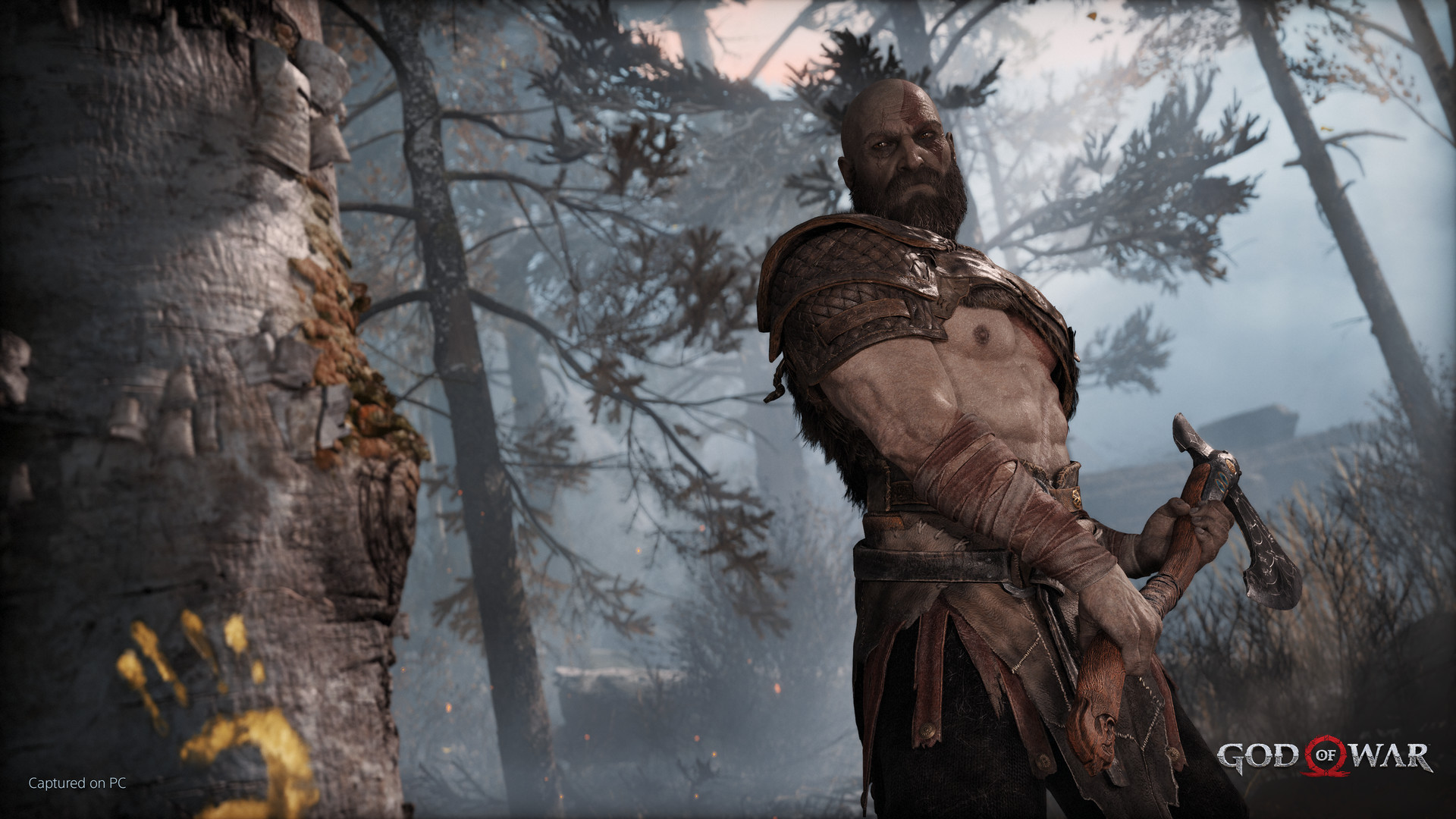
Atreus acts as an active combat partner through the Talon Bow. A button command sends arrows toward Kratos’ target, and aiming first lets the player direct him at a different enemy. His shots can interrupt or build stun, supporting Kratos when a foe is difficult to approach; as Atreus gains skills, he can also contribute with close-range attacks and more advanced bow techniques. New arrow types arrive during the story and have distinct effects in combat and on environmental objects. The player does not steer Atreus independently in ordinary fights, but can call for his support while controlling Kratos’ movement, aim and attacks. Outside battle, Atreus can read runes and help solve environmental puzzles. This keeps his role connected to both the practical route through a space and the way a fight is managed.
Experience points earned from quests, enemies and story progress unlock techniques in skill trees for Kratos’ weapons and Atreus’ bow, and can strengthen equipped Runic abilities. Some skills become available only after the relevant weapon has received a story-linked upgrade, so experience alone does not open every move at the beginning. The Leviathan Axe and Atreus’ Talon Bow each develop their own branches of attacks, follow-ups and utility. Runic attacks are equipped as specific abilities rather than ordinary strikes: the axe has light and heavy Runic slots, which can be activated to deliver short bursts of elemental damage, crowd control or movement. Upgrading an ability with experience can improve its effect or add further actions. The result is a growing moveset shaped by both the player’s purchases and the timing of weapon upgrades.
Equipment adds a separate layer of character development. Brok and Sindri’s shops let Kratos craft or improve armour, axe components and talismans using materials collected along the route. Chest, wrist and waist armour can be mixed, and sockets in eligible pieces hold enchantments with stat bonuses or combat perks. Strength raises damage from ordinary attacks, Runic improves Runic ability damage, Defence reduces incoming harm, while Vitality, Luck and Cooldown affect other parts of the build. The axe’s pommel changes its bonuses, and its two Runic slots let the player select different special attacks. Atreus also has armour choices that affect his support role. Because equipment level contributes to overall readiness, upgrading a few parts and considering the enemy-level indicators can matter as much as purchasing another skill.
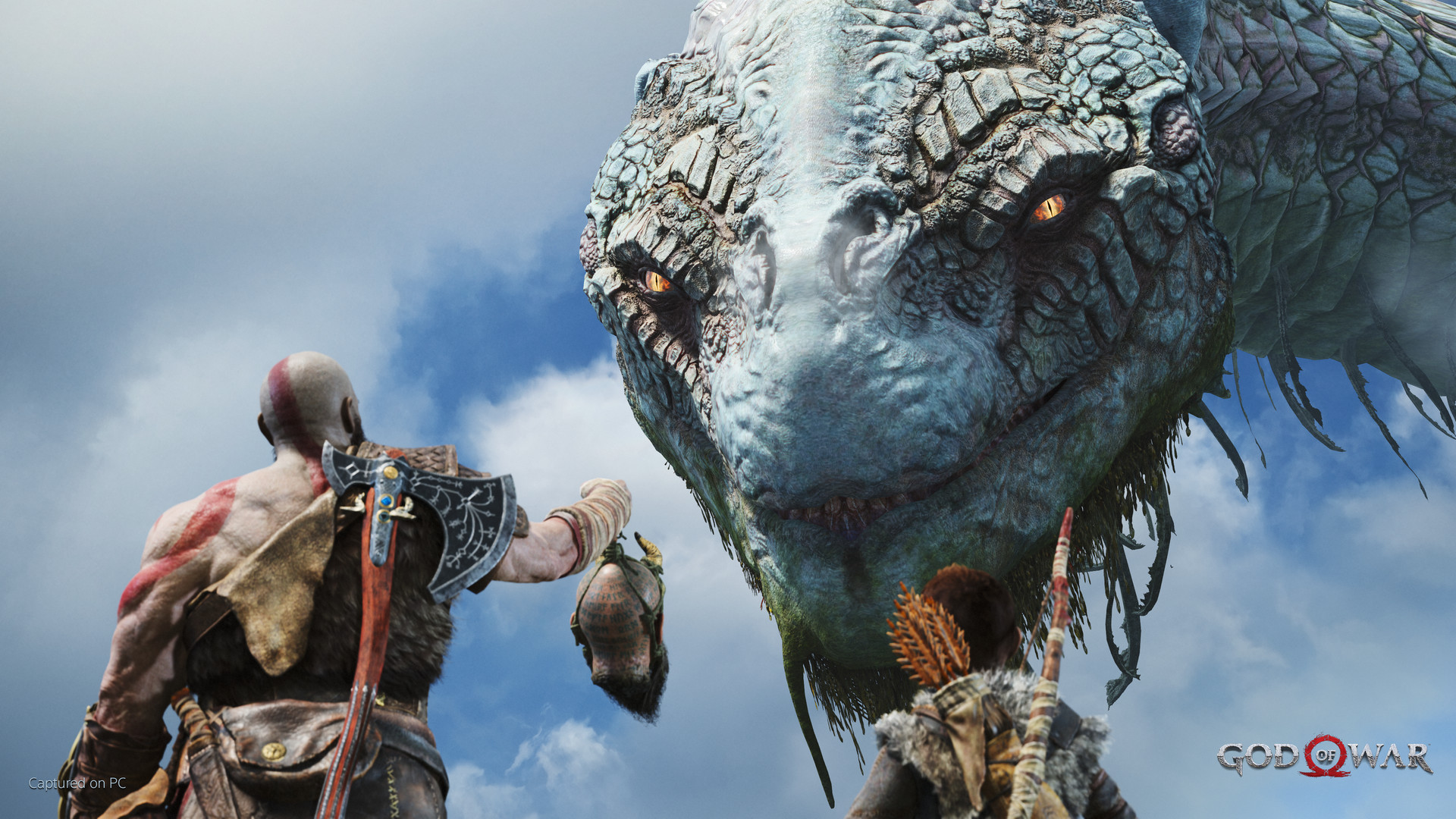
The world also has activities built for players who want challenges beyond the main journey. Optional favors add encounters and character stories, while Muspelheim contains combat trials and Niflheim’s poisonous mist puts a time limit on its exploration challenges. These areas use the same axe, shield, bow and equipment systems but ask for different preparation and repeat attempts. After the story campaign is complete, New Game+ becomes available: it carries armour, enchantments, talismans, resources and abilities into a replay, lets players choose a difficulty, and introduces higher-level enemies and Skap Slag for crafting or upgrading gear. That mode gives the build system another purpose, with retained equipment meeting tougher encounters and additional gear options.
- Developer
- Santa Monica Studio
- Genre
- Single-player action-adventure