
About God of War Ragnarök
As Fimbulwinter settles over the Norse realms, Kratos and Atreus seek answers about the coming Ragnarök and Atreus’ place in it. Their journey spans all Nine Realms, where familiar weapons, new combat abilities, allies and enemies shape a struggle to protect their family and the worlds around them.
God of War Ragnarök continues Kratos and Atreus’ story several years after their first Norse journey. Fimbulwinter is underway, and Atreus wants to understand a prophecy associated with the name Loki and decide what role he has in the approaching Ragnarök. Kratos is wary of the past repeating itself and must weigh protecting his son against the danger spreading across the realms. Their travels bring them into contact with Norse gods, dwarven allies, creatures and people with competing ideas about what the coming conflict means. The game keeps the family relationship at its centre, but Atreus’ growing independence gives the pair different questions to pursue. Father and son must decide how far to pursue answers when the consequences could reach beyond their own family.
This time the expedition reaches all Nine Realms, with Midgard’s frozen landscape only one part of a broader route through mythic environments. Each region folds paths, combat spaces, puzzle objects and optional branches into the main journey. Kratos and Atreus travel between realms through mystic gateways, and the dwarven brothers Brok and Sindri provide a hub for repairs and equipment. In Svartalfheim, water, machinery and geysers shape navigation; elsewhere, the axe’s frost and the blades’ fire can affect obstacles as well as enemies. The player moves between story destinations and can return to side activities, collect hidden materials, or take on Favors that add character stories and rewards. A compass helps track objectives, while the map records explored areas and routes not yet reached.
Kratos begins with the Leviathan Axe and Blades of Chaos available together, expanding the opening toolkit compared with the 2018 game’s initial axe-focused moveset. The axe channels frost: aimed light throws travel laterally, heavier throws can pin or freeze targets, and a recall can strike along the return path. The chained blades channel fire, reach across space and pull some enemies closer. Each weapon has its own light and heavy attacks, elemental charge move and Runic slots, so switching weapons responds to enemy status resistance as well as range. A third weapon, the Draupnir Spear, joins the base-game arsenal later through story progress, adding another weapon moveset to build around. Axe and blade Runic attacks use their own equipped light and heavy abilities, found through the Nine Realms.
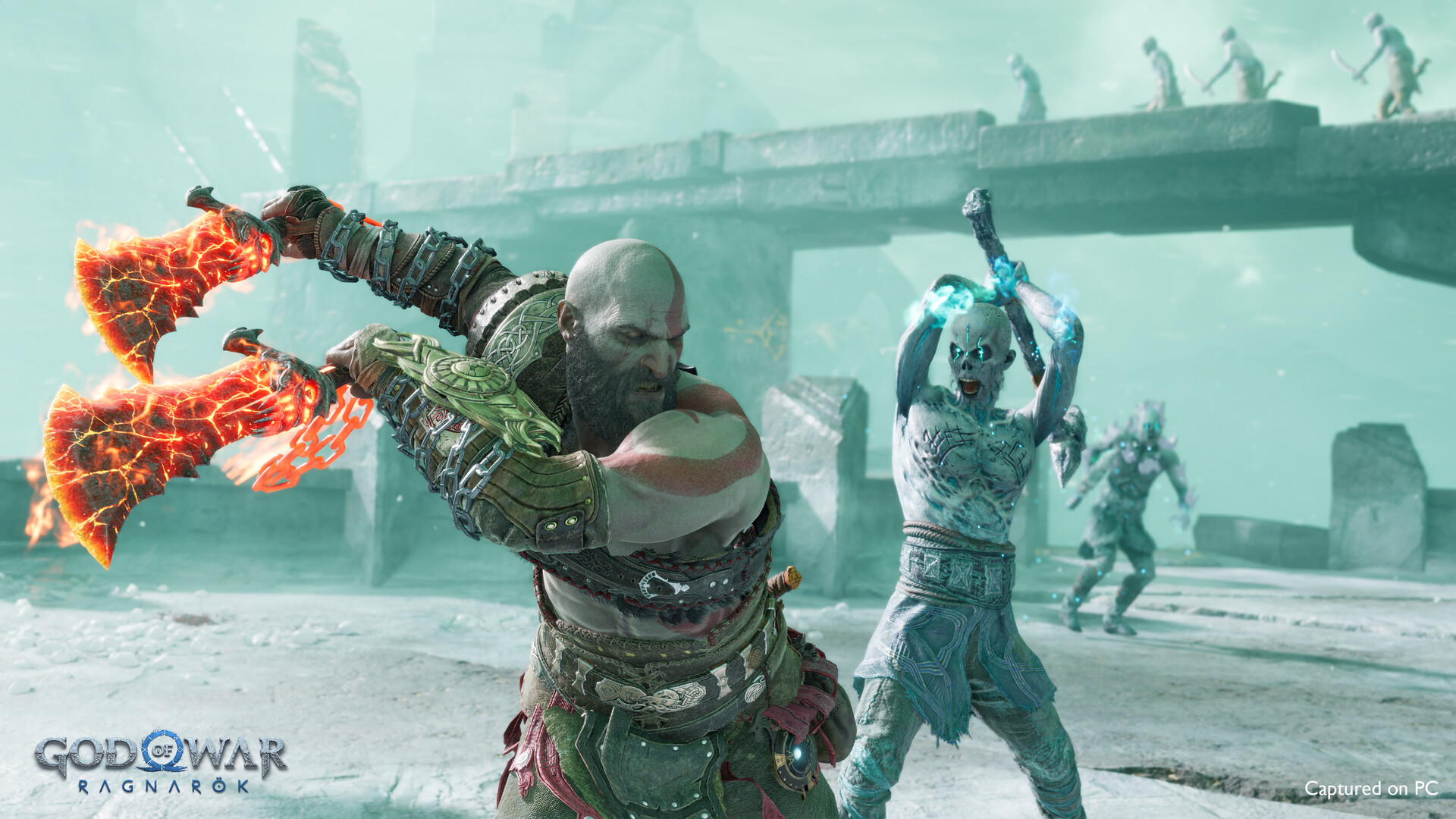
Defense is more varied than simply holding the shield. A normal block can stop many attacks, a carefully timed parry against a yellow-ringed strike staggers the attacker, while red-ringed attacks need to be avoided or interrupted. Double-blue rings identify attacks that can be broken up with a double shield tap. Several shields support different approaches: some absorb more force, others reward accurate parries with stronger counters. Kratos can also reposition with sidesteps and rolls, and Ragnarök makes the arena’s height part of the attack plan. The Blades of Chaos can grapple to ledges and across gaps; leaping from a ledge or grappling over a gap can become a Death From Above slam that damages and stuns enemies below. Environmental hazards such as explosive jars and movable objects give another way to manage groups.
Atreus remains a combat partner whose bow can interrupt enemies, build stun and support Kratos while the player controls the Spartan. His skills and arrows develop as the story advances, and later sonic arrows let him break certain glowing barriers and objects that conceal routes or resources. That ability makes him a practical partner in environmental puzzles, alongside his ranged support in fights. Atreus also becomes playable in dedicated story sections, bringing his bow into the player’s own hands and giving his character growth a distinct combat role. Outside these sequences, the player still directs Kratos while issuing companion commands and choosing the equipped support options. Together, bow effects, Kratos’ frost and fire attacks, and environmental interactions form a cooperative loop in which the two characters can open space or expose an enemy for the other to exploit.
Progression broadens the predecessor’s equipment model. In God of War (2018), many armour pieces and weapon attachments had only a few upgrade steps; in Ragnarök, equipment with a Power Level can be upgraded to Level 9, and the old rarity tiers are removed. Brok and Sindri improve armour, weapon attachments and shields using materials and Hacksilver, while optional exploration and Favors can uncover gear. Experience buys skills for Kratos and Atreus, and many skills track use through Skill Labors: repeated use raises a skill toward Gold Tier and opens a Skill Mod Slot for customization. Enchantments move to the Amulet of Yggdrasil rather than individual armour sockets; matching three enchantments from a realm set grants a set perk. These changes let a player keep a chosen item relevant while making progression depend on use and combinations as well as drops.
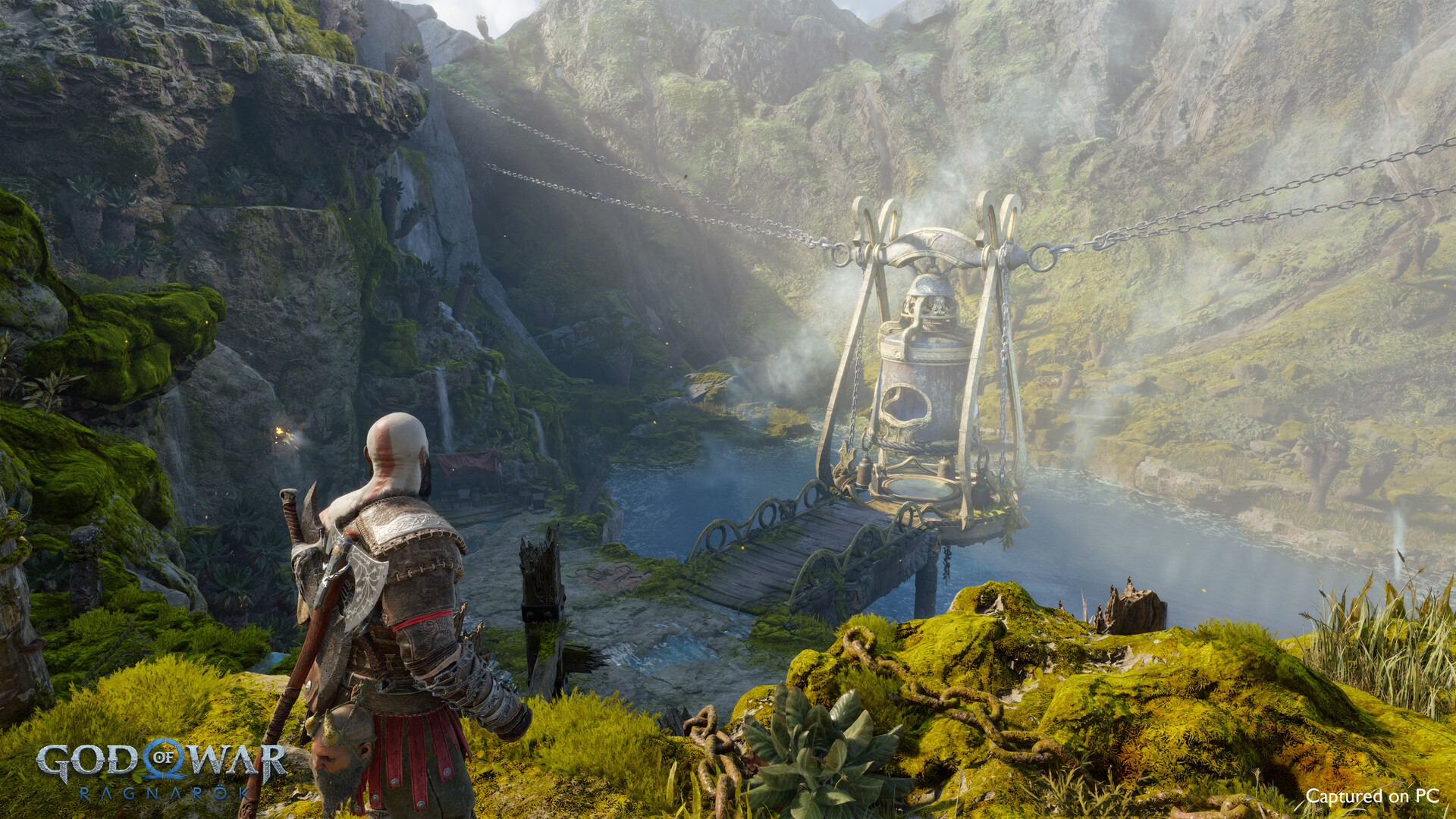
The realms also contain optional activities with their own small goals. Favors send Kratos and Atreus to address problems beyond the main route, and completion can unlock a story thread or special loot; they do not expire if the player continues the central quest first. Puzzle chests conceal valuable equipment materials behind environmental tasks, such as lighting braziers or striking gongs, so looking for symbols and mechanisms becomes part of exploration. After completing the campaign, New Game+ allows a replay with carried-over weapons, equipment and skills, while raising the level cap and adding equipment, enchantments and enemy adjustments. The separate Valhalla add-on is a post-story roguelite adventure; it adds a separate sequence of combat runs and progression beyond the original campaign.
- Developer
- Santa Monica Studio
- Genre
- Single-player action-adventure