
About Gloomwood
After being abducted into a cursed Victorian city, the Doctor must find a way through its fogbound streets and dangerous interiors. Gloomwood is a first-person stealth horror game where light, sound, weapons, routes and scarce inventory shape each encounter. Its Early Access build includes several connected districts and continues to evolve.
Gloomwood begins with the Doctor, a physician seized and brought to a dark Victorian metropolis under an ancient curse. The immediate problem is survival and escape: the city’s streets, tunnels and decaying buildings are occupied by hostile people and creatures, while the reason for the Doctor’s abduction sits behind the mystery of the place. Rather than follow a conventional line of gunfights, the player reads rooms and routes, looking for a way past danger or a moment to act. The setting combines industrial machinery, old architecture and supernatural menace. The game is a first-person stealth horror adventure, and its spaces are built to support observation and improvised movement as much as direct combat.
The city is made from distinct spaces that connect through passages, vertical routes and the Mirror Realm. The current Early Access store description names areas including the Fishery, cliffside caves, mines, cliffs, tavern, lighthouse, Market District, Power Station, Hive and parts of Hightown. Within a location, a locked door, raised ledge, waterway or blocked opening can change the route available to the Doctor. The player searches rooms for keys, notes, useful objects and clues to mechanisms, then tests how the environment can be used: objects can be picked up, thrown, climbed, smashed or placed. A side passage may avoid a guarded approach, while an exposed route may be shorter but harder to cross unseen.
Stealth depends on what enemies can see and hear. Darkness provides cover, but light can expose the Doctor, and footsteps or thrown objects can draw attention. The ring gives a visual cue about detection, while leaning around a corner, listening for nearby movement and eavesdropping on conversations help the player judge a patrol before crossing its path. Noise can also be used deliberately: throwing a bottle or another object can pull a guard toward a different part of a room. Enemies have acute senses, so a distraction creates an opening rather than making a space permanently safe. If an approach goes wrong, detection does not automatically end the attempt; the player can retreat, find cover or shift into a fight.
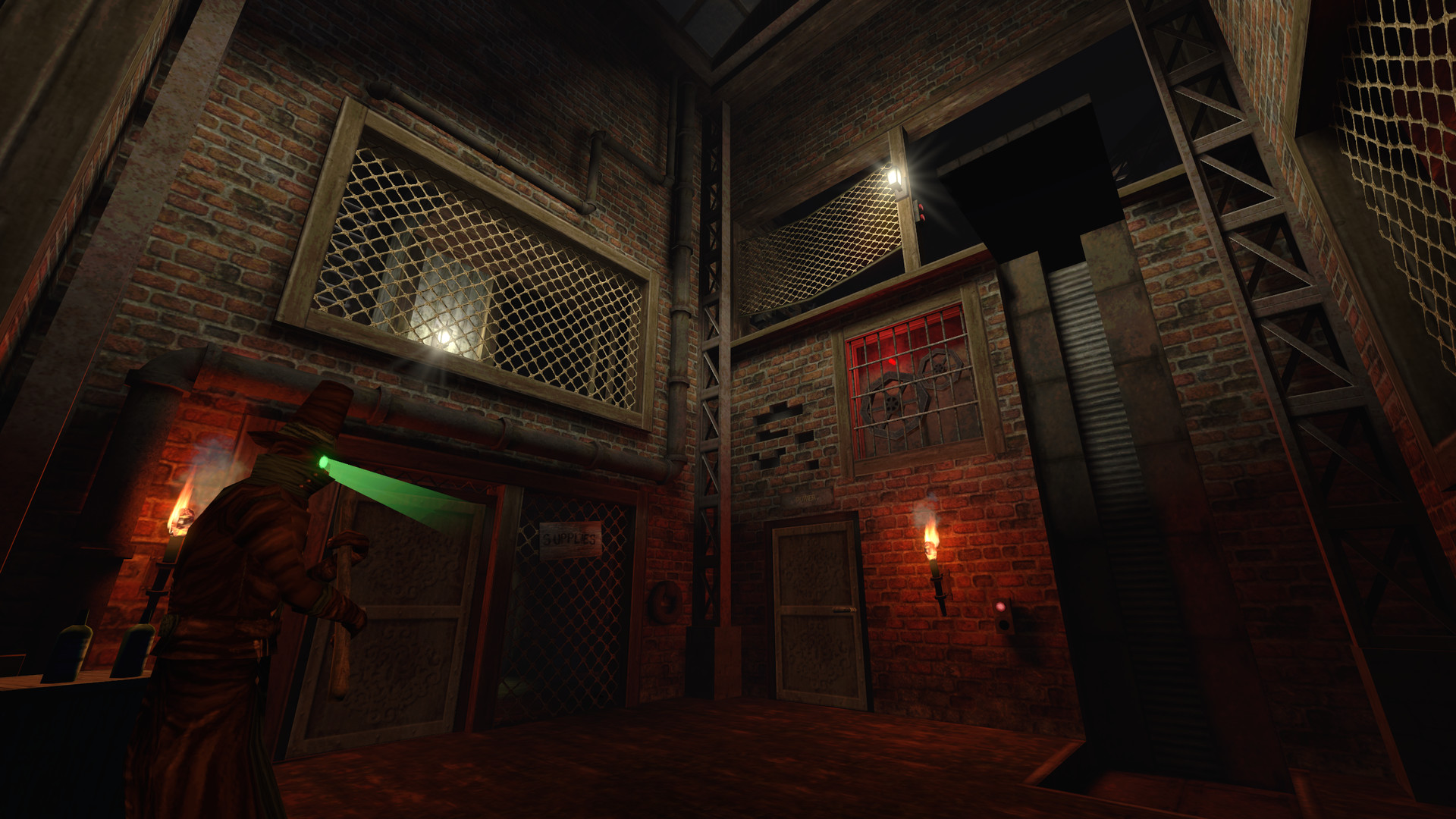
The Doctor can answer a threat quietly or with firearms. The canesword supports close-range attacks and stealthy takedowns, while the six-shot revolver and folding shotgun offer louder responses that consume ammunition and can expose the player to other enemies. The wider arsenal includes traps and a rope-slinging harpoon rifle, with tools suited to different situations. Gloomwood also treats weapons as objects the player inspects: checking bullets in a firearm makes its remaining ammunition part of deciding whether to fire or conserve it. Hand-placed traps, throwable objects and interactive scenery add other ways to control a space. Combat remains possible, but the Doctor has to weigh its immediate force against noise, incoming damage and the supplies left for later.
Exploration feeds a compact, spatial inventory. Items occupy room in the luggage case, so finding ammunition, medicine, keys or a new weapon can require reorganizing what the Doctor carries. The player can examine and combine objects, load ammunition into weapons, and keep documents, keys and maps in the journal. Searching is therefore practical as well as atmospheric: a note may reveal a mechanism or hidden route, and valuables or supplies can reward detours. The Doctor can climb onto reachable ledges and move through water, allowing levels to be approached from above, below or around a patrol. A cartography shop in the Market District offers maps of the Market and Plaza, giving the player another way to orient themselves among the connected streets.
Progression currently also includes a research system tied to the Doctor’s laboratory in the Mirror Realm. The player can study monster parts and combine them with substances gathered in the city to make serums. Researching Crowmen, Goatmen, Bat Barbers and Huntsmen can yield temporary abilities and permanent passive bonuses; some serums support multiple doses. This gives encounters a second purpose beyond removing an obstacle: the remains of a creature can become material for research, while using a serum changes what the Doctor can do. It is a separate loop from collecting ammunition or opening a route, and it depends on reaching the laboratory and assembling the required components.
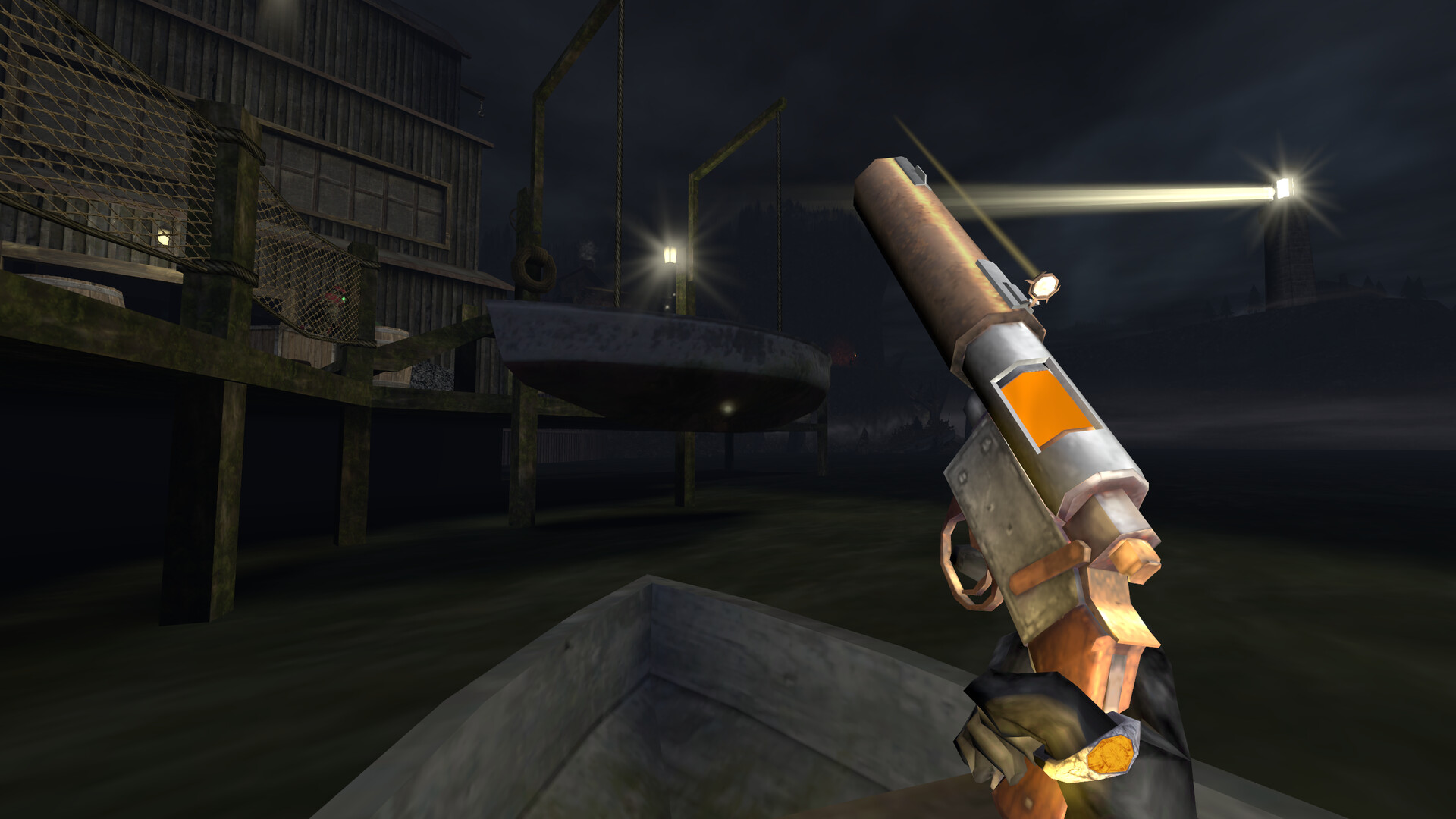
The city also responds to story progress. One-time encounters and changes to weather, music and inhabitants can greet the Doctor on returning to earlier places, connecting backtracking with a world that has moved on. Hightown adds a large, vertical district and the Constables, a more coordinated enemy force. Its scale makes height part of route planning: the Doctor can look for ledges and overhead approaches before crossing an exposed space, while coordinated patrols make a direct path more dangerous. A Mirror Realm connection links Hightown back to the Market District, letting the player return to an earlier part of the city with newly found items and knowledge. Even familiar routes may need to be read again when an encounter or patrol has changed.
- Developer
- Dillon Rogers; David Szymanski; Nate Berens; Thomas Porta
- Genre
- First-person stealth horror / immersive sim